
Unlocking Catnip’s Magic for Your Feline Friend
Discover how catnip captivates cats, its science-backed benefits, safe usage tips, and why it might transform playtime for your pet.
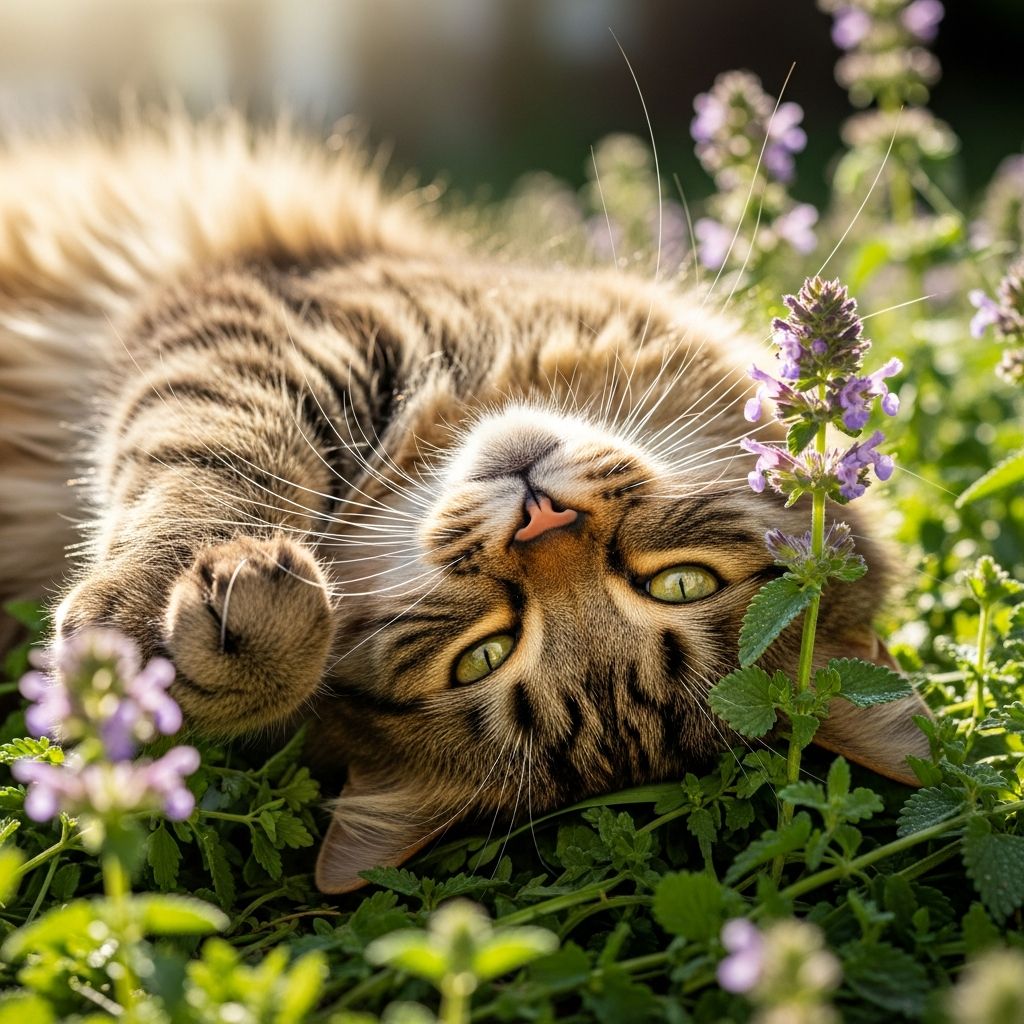
Catnip, a humble herb from the mint family, holds a special place in the hearts of cat owners worldwide. Known scientifically as Nepeta cataria, this plant triggers extraordinary reactions in many cats, turning ordinary moments into bursts of joy and activity. Understanding its effects can help you enrich your cat’s life safely and effectively.
The Science Behind the Feline Frenzy
At the core of catnip’s appeal lies nepetalactone, a terpene compound produced uniquely in the plant’s leaves and stems. Recent research from the John Innes Centre reveals how catnip biosynthesizes this chemical through an unusual enzymatic pathway, distinct from typical plant terpene production. When cats inhale nepetalactone, it binds to receptors in their nasal tissue, sparking a neurological response.
Studies indicate this interaction mimics opioid activity in the feline brain. Exposure elevates beta-endorphin levels, the body’s natural ‘happiness hormone,’ similar to how certain pain-relievers work in humans but without addictive risks for cats. This explains the euphoric behaviors: rolling, rubbing, pouncing, and vocalizing that last about 10-15 minutes before receptors desensitize temporarily.
Not all cats succumb to its charms. Genetic factors determine sensitivity, with roughly 80% of domestic cats—and many wild felines like lions and leopards—exhibiting a response. Kittens under six months and seniors often remain unaffected, as the trait matures later.
Typical Reactions and What to Expect
Cats under catnip’s influence display a spectrum of behaviors, from hyperactive zooming to mellow lounging. Common signs include:
- Intense sniffing and rubbing against the source
- Flipping onto their back for belly rubs (uncharacteristically!)
- Playful batting, chasing imaginary prey
- Drooling, wide eyes, and unusual meows or purrs
- Occasional zoning out in blissful relaxation
These reactions peak within minutes and fade as the brain’s receptors saturate, granting a refractory period of 30 minutes to two hours. Repeated exposure doesn’t lead to tolerance; cats regain sensitivity quickly.
| Behavior Type | Description | Duration |
|---|---|---|
| Excited | Running, jumping, attacking toys | 5-10 minutes |
| Relaxed | Lying still, purring deeply | 10-15 minutes |
| Mixed | Alternating play and rest | Up to 20 minutes |
This table summarizes observed patterns from behavioral studies, highlighting catnip’s versatility in mood enhancement.
Beyond Catnip: Other Plants That Thrill Cats
Catnip isn’t alone. Silver vine (Actinidia polygama), native to Asia, contains nepetalactol, a related iridoid even more potent for some cats. Experiments with feral cats, leopards, lynxes, and jaguars showed universal appeal across species, unlike dogs or mice. Tatarian honeysuckle (Lonicera tatarica) also elicits similar euphoria.
These alternatives prove useful for ‘catnip non-responders,’ expanding enrichment options. Their compounds transfer to fur during rubbing, offering dual benefits.
Health and Practical Benefits for Cats
Catnip transcends mere entertainment. Primary research demonstrates its iridoids repel mosquitoes effectively. In controlled tests, nepetalactol-treated cat heads attracted half as many mosquitoes as controls, positioning it as a natural pest deterrent. This protects felines from bites and diseases during outdoor time.
Enrichment-wise, catnip combats boredom-induced stress, promoting exercise and mental stimulation. Vets note it aids appetite in picky eaters and eases anxiety during vet visits or travel when sprinkled strategically.
Safe Ways to Introduce Catnip to Your Cat
Start small to gauge response. Fresh leaves offer strongest potency, but dried varieties suffice for toys and scratchers. Forms include:
- Sprinkled on scratch posts to encourage use
- Stuffed in kickers or mice for interactive play
- Baked into treats for controlled dosing
- Sprays for furniture or carriers (alcohol-free preferred)
Use sparingly—once or twice weekly prevents habituation. Store in airtight containers away from light to preserve oils. Introduce gradually to avoid overstimulation in sensitive cats.
Potential Risks and When to Avoid It
Catnip is non-toxic and non-addictive, per veterinary consensus. Overuse might cause mild digestive upset from ingestion, so supervise play. Cats with schizophrenia-like symptoms or seizure history warrant vet consultation, though rare interactions occur.
Pregnant cats or those on sedatives should skip it, as effects amplify relaxation. Always source organic, pesticide-free products to minimize contamination risks.
DIY Catnip Projects for Endless Fun
Harvest or grow your own for freshness. Plant in sunny spots; it’s hardy and deer-resistant. Simple crafts amplify engagement:
- Catnip Sock Toy: Fill old socks with dried catnip and knot securely.
- Fleece Wand: Sew fleece strips to a stick, dip in diluted catnip infusion.
- Hidden Treat Puzzle: Bury kibble in catnip-dusted shredded paper.
These low-cost ideas foster bonding and creativity.
FAQs About Catnip and Cats
Is catnip safe for daily use?
No, limit to 1-2 times weekly to maintain novelty and prevent diminished response.
Why doesn’t my cat react to catnip?
About 20-30% lack the genetic trait; try silver vine as an alternative.
Can catnip help with aggression?
It redirects energy positively but consult a vet for persistent issues.
Does catnip work on big cats?
Yes, studies confirm responses in leopards, jaguars, and lions.
How long do effects last?
Typically 10-15 minutes, with full sensitivity returning in 1-2 hours.
Growing Your Own Catnip Garden
Cultivating catnip empowers self-sufficiency. Sow seeds indoors in spring, transplant after frost. It thrives in well-drained soil, reaching 2-3 feet. Pinch tips for bushiness and harvest leaves mid-season for peak nepetalactone. Companion plant with veggies to deter pests naturally.
Indoor pots suit apartments; use saucers to contain invasiveness. Dry excess by hanging bundles in shaded, airy spots.
Catnip in Veterinary and Research Contexts
Historically, catnip served medicinal roles for humans, from teas for colds to sedatives. Modern research eyes its terpenes for cancer therapies, leveraging catnip’s unique biosynthesis. Behavioral studies refine enrichment protocols, improving shelter cat welfare.
Opioid-like effects inform pain management analogs, minus human risks.
References
- How catnip makes nepetalactone — John Innes Centre. 2023-10-04. https://www.jic.ac.uk/press-release/how-catnip-makes-nepetalactone/
- Behavioral differences among domestic cats in the response — PMC (PubMed Central). 2022-08-15. https://pmc.ncbi.nlm.nih.gov/articles/PMC9414117/
- Why do cats go crazy for catnip? — The Ohio State University TPSGP. 2024-05-20. https://tpsgp.osu.edu/blog/why-do-cats-go-crazy-catnip
- Why cats are crazy for catnip — Science.org. 2024-06-12. https://www.science.org/content/article/why-cats-are-crazy-catnip
- What Is Catnip and What Does It Do to Cats? — PetMD. 2025-01-10. https://www.petmd.com/cat/general-health/what-is-catnip
- Catnip: Its uses and effects, past and present — PMC (PubMed Central). 2006-07-01. https://pmc.ncbi.nlm.nih.gov/articles/PMC1480656/
(Word count: 1678)
Similar Articles








Read full bio of medha deb




