

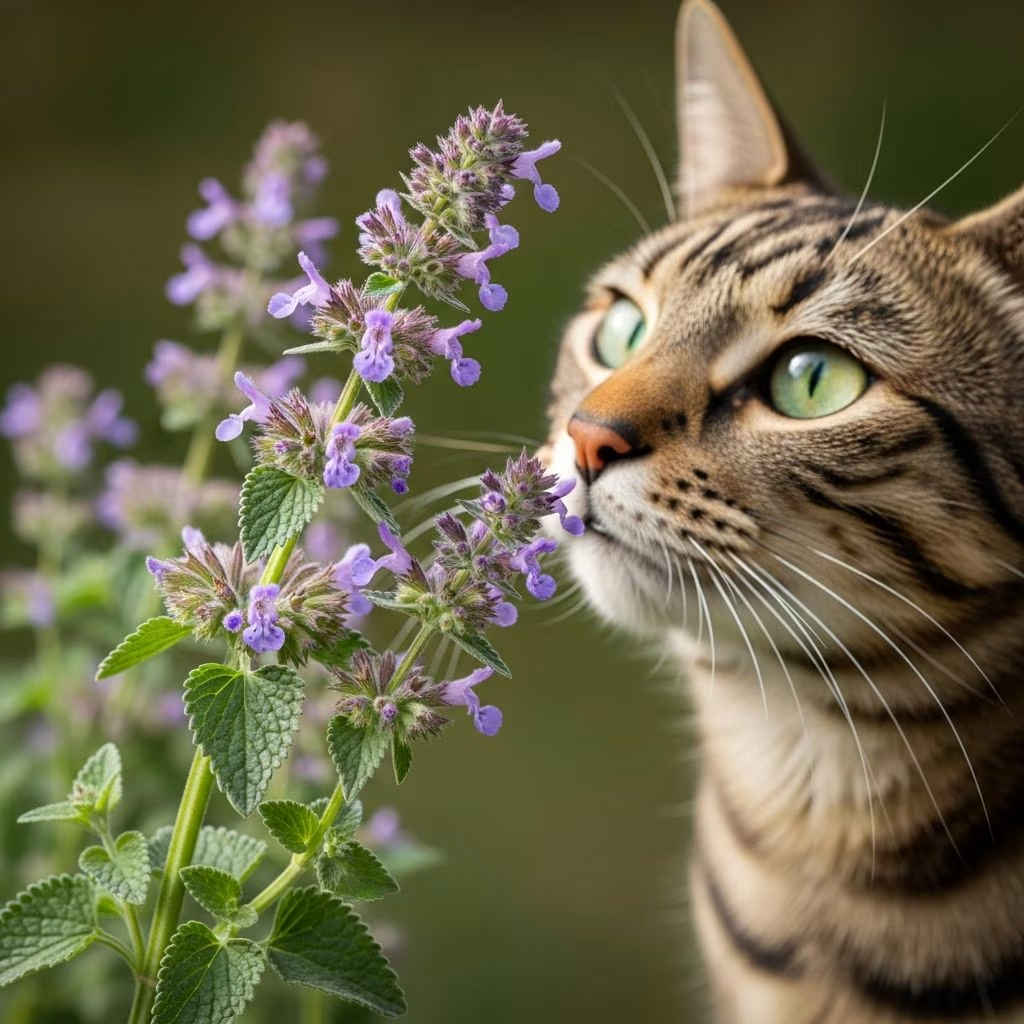
Catnip, a humble herb from the mint family, ignites wild joy in many cats, transforming ordinary pets into playful whirlwinds of energy. This natural phenomenon stems from specific volatile compounds that interact uniquely with feline biology, offering insights into animal behavior and potential practical applications for humans.
The Botanical Origins of Catnip Magic
Nepeta cataria, commonly known as catnip or catmint, thrives as a perennial herb native to Europe, Asia, and parts of Africa. It features heart-shaped leaves and clusters of small lavender flowers, growing up to three feet tall in sunny, well-drained soils. While humans have cultivated it for teas and remedies for centuries, its fame exploded due to its irresistible allure for domestic cats.
The plant produces essential oils concentrated in its leaves and stems, particularly during summer blooming. These oils contain terpenes—aromatic hydrocarbons that give plants their scents and flavors. Among them, nepetalactone stands out as the primary active ingredient responsible for feline frenzy. Recent research from the John Innes Centre reveals how catnip biosynthesizes this compound through an unusual enzymatic pathway involving iridoid precursors, a process not commonly observed in other plants.
- Nepetalactone structure: A bicyclic terpenoid with a minty aroma.
- Production mechanism: Enzymes convert geraniol into intermediates, cyclizing into the potent nepetalactone.
- Concentration peaks: Highest in dried leaves, making catnip toys effective.
How Catnip Triggers Feline Euphoria
When a cat encounters catnip, it sniffs the nepetalactone-laden oils, which bind to receptors in the olfactory epithelium. These signals travel via the vomeronasal organ—a specialized scent detector in the mouth’s roof—to the brain, mimicking pheromones and sparking a cascade of neurological responses.
Studies from Iwate University demonstrate that nepetalactone and related iridoids, like nepetalactol from silver vine, elevate beta-endorphin levels, activating the opioid system similarly to morphine in humans. Cats exposed to these compounds show spiked ‘happiness hormone’ concentrations within minutes, leading to uninhibited behaviors without the disorientation of true intoxicants.
| Behavior | Description | Duration |
|---|---|---|
| Rolling | Cats rub cheeks and body on the source | 2-5 minutes |
| Zoomies | Frantic running and leaping | 5-15 minutes |
| Purring/Drooling | Intense vocalization and salivation | Throughout episode |
| Licking/Chewing | Gentle nibbling followed by relaxation | 1-3 minutes |
These reactions last 5-15 minutes, followed by a refractory period of about an hour where cats ignore catnip, preventing overstimulation.
Why Only Some Cats Succumb to Catnip
Genetic inheritance governs catnip sensitivity, with veterinary research estimating 60-80% of domestic cats respond positively. This trait follows a dominant autosomal pattern: kittens from non-responders rarely react, while those from responders often do.
Breed variations exist; Siamese and related breeds show higher sensitivity rates. Big cats like lions, leopards, and jaguars also react, as confirmed in zoo studies with nepetalactol, suggesting an ancient evolutionary trait across Felidae.
- Non-responders (20-40%): Lack specific olfactory receptors; try alternatives.
- Kittens under 6 months: Immature neural pathways; sensitivity develops later.
- Senior cats: Diminished response due to age-related sensory decline.
Notably, dogs exhibit sedative effects from catnip, highlighting species-specific responses.
Beyond Pleasure: Evolutionary and Practical Benefits
Catnip’s allure isn’t mere whimsy; it serves survival purposes. Researchers hypothesize wild felines rub against catnip to self-apply nepetalactone as a mosquito repellent. Experiments placing sedated cats’ heads in mosquito chambers showed 50% fewer landings on treated fur compared to controls, rivaling DEET efficacy.
This behavior likely evolved as iridoids in catnip deter aphids from plants, and cats co-opt them for pest protection. Silver vine, Actinidia polygama, offers similar benefits with nepetalactol, attracting 70-90% of non-catnip responders.
For pet owners, catnip provides enrichment: reducing stress, alleviating separation anxiety, and distracting from destructive habits. Veterinarians recommend it for pain relief in responsive cats, as opioid activation soothes without pharmaceuticals.
Safe Ways to Introduce Catnip to Your Cat
Fresh or dried catnip works best; potency fades after months, so store in airtight containers away from light. Sprinkle on scratchers, stuff toys, or grow indoors for ongoing supply.
- Start small: Offer a pinch to gauge response.
- Rotate toys: Prevent habituation; use weekly.
- Mix with meals: Small amounts aid digestion as a mild carminative.
- Avoid overfeeding: Excess causes vomiting or lethargy.
Cats can safely ingest catnip; it’s non-addictive and non-toxic, historically used in human herbal medicine for digestion.
Alternatives for the Catnip-Indifferent
For non-responders, explore these iridoid-rich plants:
| Plant | Active Compound | Response Rate | Availability |
|---|---|---|---|
| Silver Vine | Nepetalactol | 90% (incl. non-catnip cats) | Online pet stores |
| Valerian Root | Valepotriates | 80% | Health shops |
| Tatarian Honeysuckle | Iridoils | 70% | Garden centers |
Studies confirm these elicit similar euphoria, expanding enrichment options.
Human Uses and Emerging Research
Catnip’s nepetalactone shows promise beyond pets. Patents exist for nepetalactol-based repellents effective against mosquitoes and other pests. Biosynthetic pathways uncovered by Dr. Benjamin Lichman could inspire cancer drug development, leveraging catnip’s unique chemistry.
Traditionally, catnip tea soothes human digestion and aids sleep, with mild sedative properties contrasting feline stimulation.
Frequently Asked Questions About Catnip
Is catnip addictive for cats?
No, cats cannot overdose or become dependent; effects are short-lived and self-regulating.
Does catnip work on kittens?
Typically not until 6-12 weeks old, as neural sensitivity matures.
Can catnip calm aggressive cats?
Yes, for responsive cats, it redirects energy positively, reducing anxiety.
Is catnip safe during pregnancy?
Limited data; consult vets, but moderate external use poses no known risks.
How long does a catnip high last?
5-15 minutes, with a 30-60 minute cooldown.
Growing Your Own Catnip Garden
Easy to cultivate: sow seeds in spring, space 12 inches apart, harvest leaves regularly. Companion plant with veggies to repel pests naturally. Indoor pots suit apartments, ensuring year-round feline delight.
References
- How catnip makes nepetalactone — John Innes Centre. 2023-07-12. https://www.jic.ac.uk/press-release/how-catnip-makes-nepetalactone/
- Why cats are crazy for catnip — Science | AAAS. 2021-12-01. https://www.science.org/content/article/why-cats-are-crazy-catnip
- Catnip and Its Effect on Cats, Dogs and Humans — Promega Connections. 2022-05-15. https://www.promegaconnections.com/catnip-and-its-effect-on-cats-dogs-and-humans/
- What Is Catnip and What Does It Do to Cats? — PetMD. 2024-03-20. https://www.petmd.com/cat/general-health/what-is-catnip
- How Catnip Takes Cats to their Happy Place — GoldBio. 2023-08-10. https://www.goldbio.com/blogs/articles/how-catnip-take-cats-to-their-happy-place
- Catnip Study — Cats Cradle Senior Cat Sanctuary. 2022-11-05. https://www.cats-cradle.org/catnip-study.html
- Catnip: Its uses and effects, past and present — PMC – NIH. 2003-02-01. https://pmc.ncbi.nlm.nih.gov/articles/PMC1480656/



