

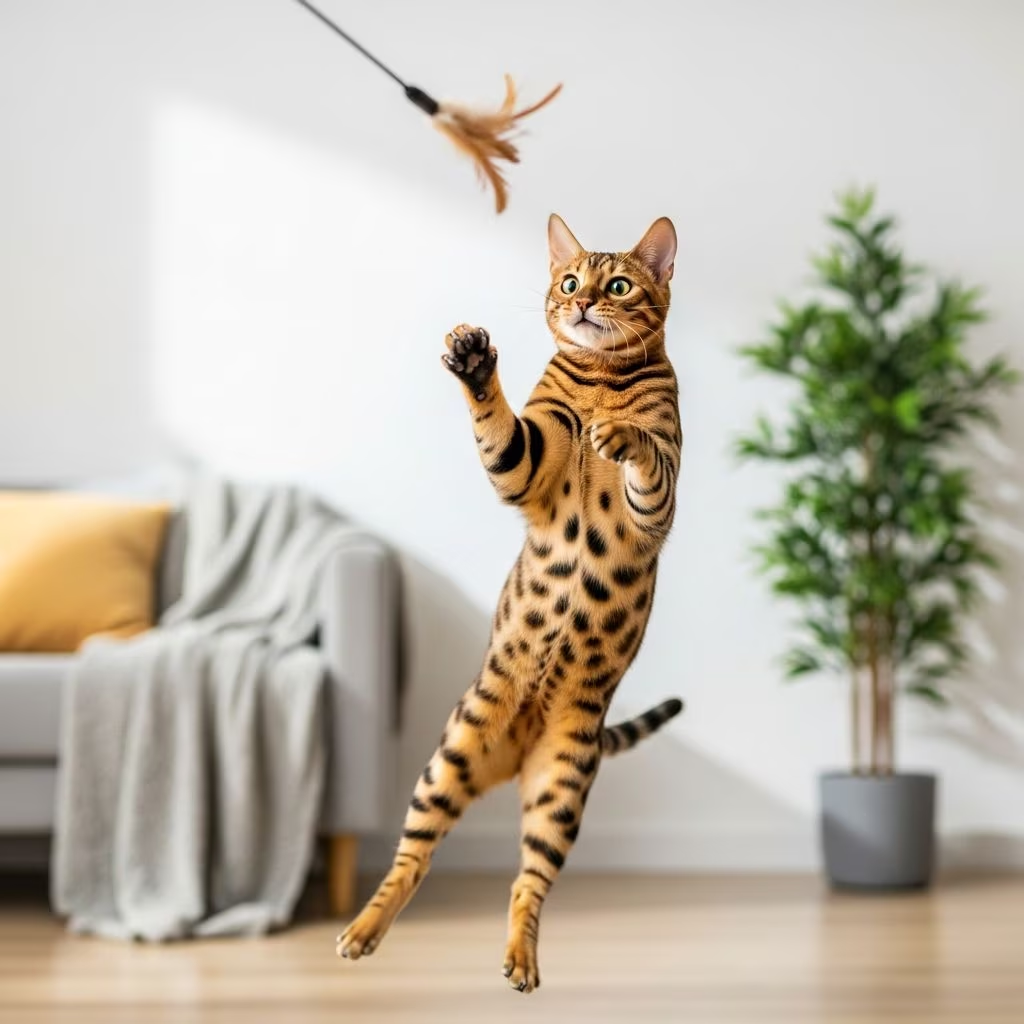
Interactive play forms the cornerstone of a fulfilling life for domestic cats, mimicking their innate hunting drives while fostering physical fitness and emotional well-being. Engaging your cat in regular play sessions not only prevents boredom-related issues but also deepens the human-feline bond, as supported by behavioral studies showing play’s role in stress reduction and skill development.
The Science Behind Feline Play Instincts
Cats retain strong predatory impulses from their wild ancestors, where play served as practice for survival skills like stalking and pouncing. Modern research reveals that behaviors such as fetching toys emerge spontaneously in many cats, even without training, with 94% of observed felines displaying this trait early in life, often under one year old. This spontaneity underscores play’s instinctive nature, driven by the brain’s SEEKING system, which motivates exploration and manipulation of objects or prey-like items.
Play encompasses various forms: solitary object manipulation, predatory simulations with toys, and social exchanges with owners or other cats. Unlike dogs, cats prefer controlling the pace, initiating sessions by dropping toys or staring expectantly, which leads to longer, more enthusiastic interactions. Understanding this psychobiological framework—focusing on emotional states and motivations—helps owners tailor activities to match their cat’s needs, avoiding frustration and enhancing enjoyment.
Types of Play and Their Unique Benefits
Diverse play styles cater to different instincts, each contributing to holistic health.
- Solitary Play: Cats batting at strings or chasing laser dots hone motor skills and provide mental stimulation, ideal for independent felines.
- Predatory Play: Toys mimicking prey, like feather wands, satisfy hunting urges, reducing stress as play activates the same neural pathways as real predation.
- Fetch Play: Surprisingly common, this game builds endurance and reinforces positive owner interactions when cats lead.
- Social Play: Mutual chasing or wrestling with compatible cats or humans strengthens bonds but requires reciprocity to remain playful.
A table summarizing play types and benefits:
| Play Type | Key Instinct | Health Benefits |
|---|---|---|
| Solitary | Object manipulation | Improves agility, reduces anxiety |
| Predatory | Hunting simulation | Boosts cardiovascular health, mimics natural behavior |
| Fetch | Retrieval control | Enhances endurance, deepens trust |
| Social | Reciprocal interaction | Builds social skills, prevents isolation |
Regular engagement in these activities correlates with happier, healthier cats, as play buffers against stress and supports resilience.
Recognizing Healthy Play Versus Aggression
Distinguishing play from aggression is crucial, especially in multi-cat homes or with high-energy kittens. Healthy play features relaxed body language: ears forward, tail up or gently swishing, and vocalizations like chirps rather than hisses.
Signs of sociable play include:
- Reciprocal actions, where both cats take turns chasing or pouncing.
- Soft bites and retracted claws.
- Breaks for grooming or resting, indicating enjoyment.
Conversely, play aggression—common in young, bored cats—escalates with intense stares, flattened ears, growling, and unbalanced pursuits where one cat dominates. This peaks mornings and evenings, mirroring wild hunting times, and stems from unmet needs like insufficient outlets for energy.
In human interactions, play aggression manifests as stalking ankles or nipping hands, treatable by redirecting to toys and scheduling sessions to curb excess energy.
Practical Tips for Effective Play Sessions
To maximize benefits, structure play around your cat’s preferences and schedule 15-30 minute sessions twice daily.
- Choose the Right Toys: Opt for interactive items like wand toys or balls that roll unpredictably to trigger chase responses.
- Let Cats Lead: Wait for initiation cues like toy-dropping; end when they walk away or lie down to respect boundaries.
- Vary Routines: Alternate solo puzzles with partner games to prevent habituation.
- Monitor Multi-Cat Dynamics: Intervene if play turns one-sided, using distractions to reset.
For play-aggressive cats, ignore rough behaviors and reward gentle ones, gradually building tolerance through consistent redirection.
Play’s Role in Overall Cat Welfare
Beyond fun, play combats obesity by promoting exercise, sharpens cognitive function, and alleviates stress in new environments or multi-pet homes. In shelters or rescues, structured play aids adjustment, fostering trust with caregivers. Owners report stronger bonds when play becomes routine, as cats associate humans with positive, rewarding experiences.
Research emphasizes play’s evolutionary roots: since domestication hasn’t dulled hunting drives, daily simulations keep cats content. Neglect leads to issues like destructive scratching or excessive meowing, underscoring play’s preventive power.
Common Play Challenges and Solutions
Challenges like toy disinterest or mismatched play styles with housemates are common. Rotate toys weekly to maintain novelty, and for inter-cat mismatches—energetic kittens versus sedate adults—provide separate play zones or timed sessions.
Senior cats benefit from gentler options like food-dispensing puzzles, adapting play to age-related changes while preserving mental acuity.
FAQs on Cat Play
Q: How often should I play with my cat?
A: Aim for two 15-minute sessions daily, adjusting based on age and energy levels for optimal engagement.
Q: Why does my cat bring toys to me?
A: This signals a desire to initiate fetch or predatory play, allowing them to control the interaction.
Q: Is rough play between cats normal?
A: Yes, if reciprocal with relaxed cues; monitor for escalation to non-play aggression.
Q: Can play help shy cats?
A: Absolutely—gentle, consent-based play builds confidence and trust over time.
Q: What if my cat ignores toys?
A: Introduce hunger-motivated play with larger items or use scent-enhanced lures to spark interest.
Enriching Environments for Endless Fun
Complement sessions with environmental tweaks: cat trees for climbing, window perches for bird-watching, and puzzle feeders for foraging. These passive plays extend activity between active bouts, promoting a balanced lifestyle.
In multi-cat setups, resources like multiple litter boxes and elevated rest spots minimize play-related tensions, ensuring harmony.
References
- Play behaviour of cats surprises scientists — Burgess Pet Care. 2023. https://www.burgesspetcare.com/blog/cat/play-behaviour-of-cats-surprises-scientists/
- Are These Cats Playing? A Closer Look at Social Play in Cats — NIH/PMC. 2021-07-28. https://pmc.ncbi.nlm.nih.gov/articles/PMC8343019/
- Cat-Cat Play: The Good, the Bad, and the Ugly — IAABC Journal. N/A. https://journal.iaabcfoundation.org/play-the-good-the-bad-and-the-ugly/
- Play Aggression (Cats) — San Francisco SPCA. N/A. https://www.sfspca.org/resource/play-aggression/
- Why You Should Play with Your Cat More — Psychology Today. 2024-02. https://www.psychologytoday.com/us/blog/animal-emotions/202402/playful-cats-are-happier-and-healthIER-feline-friends
- Cornell Feline Health Center: Feline Behavior Problems — Cornell University. N/A. https://www.vet.cornell.edu/departments-centers-and-institutes/cornell-feline-health-center/health-information/feline-health-topics/feline-behavior-problems-aggression



