

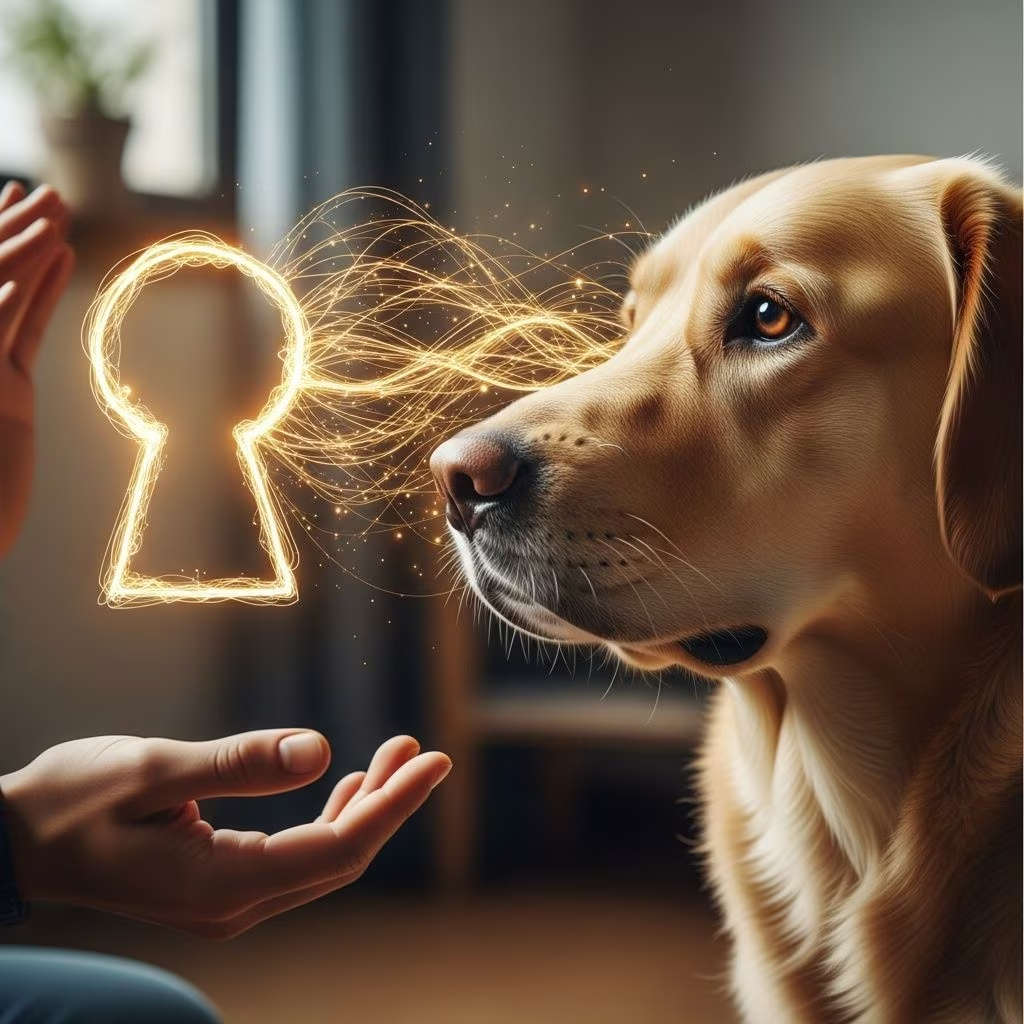
Effective communication forms the cornerstone of successful dog training. Dogs process human words, tones, and gestures in unique ways, making clarity essential for building trust and achieving desired behaviors. By refining your language choices and delivery, you can significantly improve your dog’s responsiveness and comprehension.
The Foundation of Dog-Human Dialogue
Dogs rely on a combination of sensory inputs to interpret our intentions. Unlike humans, they prioritize visual cues, scents, and vocal inflections over abstract speech. Mastering this interplay allows owners to convey instructions reliably, reducing confusion and frustration during training sessions.
Research from veterinary sources highlights that canine communication heavily features body postures, pheromones, and vocalizations. Visual signals often outweigh spoken words, explaining why consistent gestures paired with voice enhance learning efficiency.
Building Vocabulary: Selecting the Right Words
Start by observing your dog’s daily motivations. Note actions like pacing for walks or staring at the door for playtime. These moments reveal high-value words to introduce first, such as “outside,” “play,” or “food.”
- Identify frequent requests: Track what your dog seeks most, like toys or affection.
- Prioritize motivators: Choose terms tied to rewards they crave.
- Limit initial set: Begin with 2-3 words to avoid overload.
Consistency in word selection prevents mixed signals. Repeating the same term for the same action reinforces associations quickly. For instance, always use “walk” instead of alternating with “stroll” or “outing.”
Verbal Cues: Clarity and Enthusiasm Matter
Deliver commands in a clear, upbeat tone. Short, simple phrases work best since dogs grasp about 165 words on average, focusing on tone and repetition. Enthusiasm signals positivity, encouraging engagement.
| Command | Purpose | Example Delivery |
|---|---|---|
| Sit | Basic obedience | “Sit!” (firm, short) |
| Come | Recall | “Come here!” (excited) |
| Stay | Impulse control | “Stay good!” (calm) |
Pair verbal cues with immediate rewards. Timing is critical—respond within seconds to link the word to the outcome. This builds reliable responses over time.
Hand Signals: Visual Reinforcement for All Dogs
Hand signals complement verbal commands, especially for deaf or distracted dogs. They provide a silent, precise alternative that leverages dogs’ strong visual acuity.
To teach them:
- Get attention: Use your dog’s name or a gentle wave.
- Demonstrate signal: Pair with verbal cue and lure if needed, like holding a treat above the nose for “sit.”
- reward promptly: Praise with treats or toys upon compliance.
- Fade verbal: Gradually rely more on the gesture.
Common signals include a flat palm for “stay,” fingers to eyes for “look,” and thumbs-up for “yes.” These visuals cut through noise and distance barriers effectively.
Decoding Dog Body Language
Understanding your dog’s signals is as vital as giving yours. Key indicators include ear position, tail wag style, and posture. Relaxed ears forward signal interest; pinned back suggest fear or aggression.
- Tail wags: Broad, full swings mean joy; stiff, high wags can indicate alertness or threat.
- Eye contact: Soft gaze shows trust; hard stare warns of tension.
- Posture: Play bows invite fun; stiff body signals discomfort.
By reading these, you respond appropriately, strengthening communication. Ignoring them leads to mishaps, like petting a stressed dog.
Consistency: The Key to Lasting Results
Involve all household members in uniform language use. Inconsistent cues confuse dogs, stalling progress. Create a family training plan outlining words, tones, and rewards.
Practice daily in short bursts. Model desired behaviors by pressing buttons or using signals yourself during natural opportunities, like mealtime or walks. This passive teaching accelerates adoption without pressure.
Advanced Tools: Communication Buttons
Buttons programmed with pre-recorded words offer a novel way to expand dialogue. Start with target training: Press a “food” button and dispense a treat repeatedly until your dog noses it independently.
Progress by:
- Modeling naturally: Say and press “outside” before opening the door.
- Waiting patiently: Stand by buttons when your dog shows interest, allowing self-initiated presses.
- Ending positively: Stop sessions on successes to build confidence.
Avoid forcing interaction; let curiosity drive learning. This method fosters initiative, turning passive listeners into active communicators.
Common Pitfalls and Fixes
Owners often undermine training unintentionally. Yelling “no” repeatedly dilutes its impact, while vague phrases like “be good” lack specificity.
| Pitfall | Impact | Fix |
|---|---|---|
| Inconsistent words | Confusion | Standardize vocabulary |
| Delayed rewards | Weak association | Act immediately |
| Ignoring signals | Miscommunication | Study body language |
Address owner habits too. If family members reinforce bad behaviors, diplomatically explain impacts and demonstrate alternatives during sessions.
Training Sessions That Engage
Keep sessions brief (5-10 minutes) and fun. Use high-value treats for new skills, transitioning to praise for mastered ones. Incorporate play to maintain focus—training isn’t drudgery.
Build engagement by starting in low-distraction environments, gradually adding challenges. This progressive approach ensures solid foundations before complexity.
FAQs
How many words can dogs learn?
Dogs vary, but many understand 100-200 words with consistent training. Focus on quality over quantity.
Are hand signals better than verbal commands?
They’re complementary. Signals excel in noisy or distant scenarios, while voice adds emotional nuance.
What if my dog ignores commands?
Check consistency, motivation, and timing. Revisit basics and increase rewards.
Can puppies start early?
Yes, from 8 weeks. Short, positive sessions suit their attention spans.
How do buttons help service dogs?
They enhance team communication, aiding tasks like alerting to needs.
Real-World Applications
Apply these in daily life: Use “wait” at doors for safety, “gentle” for food manners. Consistent use turns routines into learning opportunities, fostering a harmonious home.
Professional trainers emphasize owner-dog rapport. Clear language bridges species gaps, preventing behavioral issues rooted in misunderstanding.
References
- Canine Communication – Interpreting Dog Language — VCA Animal Hospitals. 2023. https://vcahospitals.com/know-your-pet/canine-communication—interpreting-dog-language
- A List of Dog Commands & Hand Signals for Beginners — Taste of the Wild Pet Food. 2024. https://www.tasteofthewildpetfood.com/articles/training-and-behavior/list-of-dog-commands-hand-signals-for-beginners/
- The Complete Guide To Teaching Dogs To Talk with Buttons — FluentPet. 2023. https://fluent.pet/pages/getting-started-with-talking-buttons
- Canine Communication Skills for Working with Shelter Dogs — ASPCA Pro. 2022. https://www.aspcapro.org/resource/canine-communication-skills-working-shelter-dogs
- Why Dog Trainers Must Communicate Effectively With Dogs AND Owners — International Dog Trainer School. 2023. https://internationaldogtrainerschool.com/effective-communication-between-dog-trainers-and-dog-owners/



