

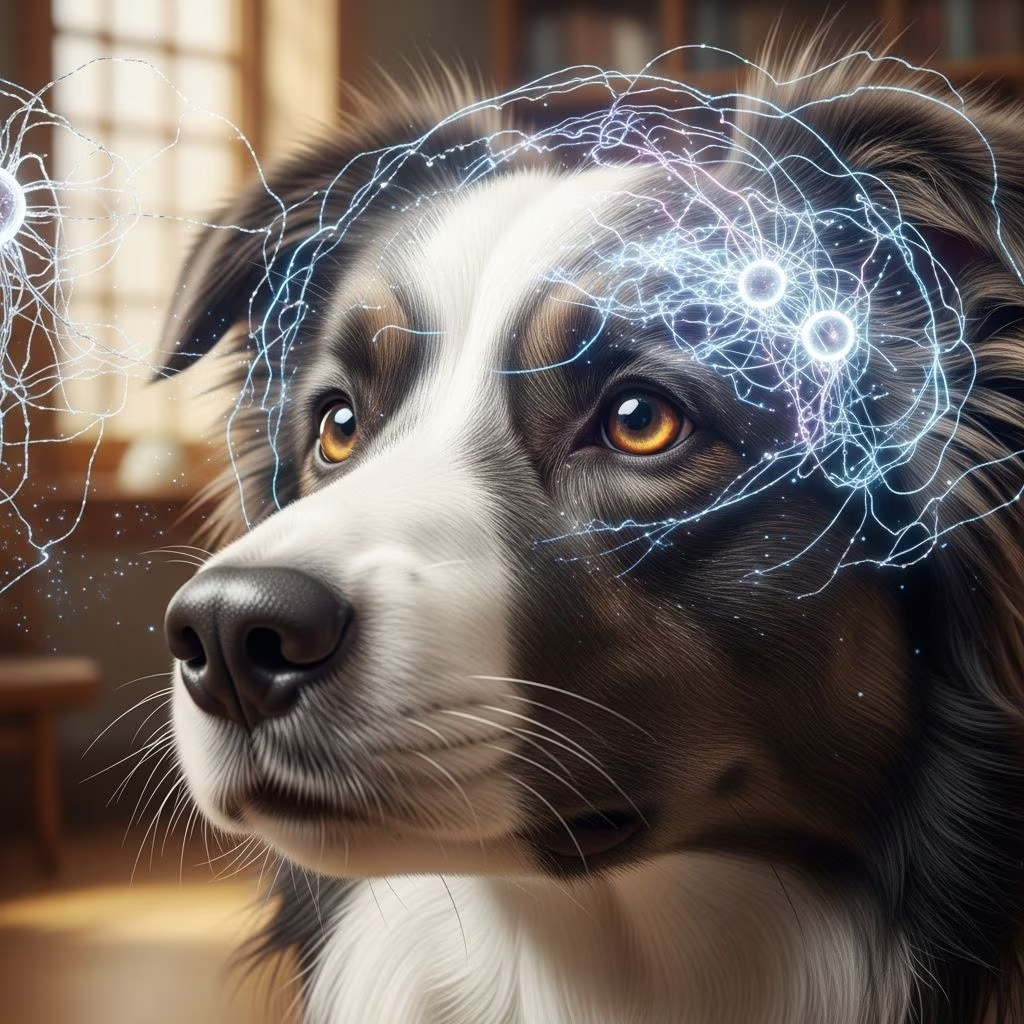
Canine cognition represents a dynamic field of study that reveals how dogs perceive, process, and interact with their world. This understanding not only deepens our bond with these animals but also revolutionizes training approaches for pets and working dogs alike.
The Foundations of Dog Intelligence
Dogs possess a unique cognitive profile shaped by thousands of years of domestication alongside humans. Unlike their wolf ancestors, domestic dogs excel in reading human social cues, a skill that sets them apart in the animal kingdom. Research highlights that dogs can follow human pointing gestures more effectively than chimpanzees, demonstrating an innate sensitivity to our intentions.
This social intelligence forms the bedrock of canine cognition. Dogs interpret not just gestures but also eye direction and vocal tones, allowing them to anticipate human needs. Such abilities stem from selective breeding for traits that favor cooperation with people, making dogs unparalleled companions.
How Dogs Learn: Conditioning at Work
At the heart of dog training lie two primary learning mechanisms: classical and operant conditioning. Classical conditioning, pioneered by Ivan Pavlov, involves pairing a neutral stimulus with a significant one to elicit a response. For instance, a bell ringing before mealtime can make a dog salivate at the sound alone.
Operant conditioning, developed by B.F. Skinner, focuses on consequences shaping behavior. Positive reinforcement—rewarding desired actions with treats or praise—proves most effective and humane. This method increases behaviors by adding pleasant outcomes, fostering enthusiasm without fear.
- Positive Reinforcement: Add rewards to boost good behaviors, like treats for sitting.
- Negative Reinforcement: Remove aversives, such as leash pressure, when the dog complies.
- Positive Punishment: Add discomfort to decrease unwanted actions (less recommended).
- Negative Punishment: Withdraw rewards, like attention, for misbehavior.
Focusing on positive reinforcement minimizes stress and builds trust, aligning with modern force-free training philosophies.
Cognitive Styles in Individual Dogs
Not all dogs think alike; each exhibits a distinct cognitive style influenced by genetics, early experiences, and environment. Some dogs are independent thinkers, relying less on human guidance, while others thrive on social cues.
Studies from centers like Duke’s Canine Cognition Center reveal variability in how dogs solve problems. For example, dogs raised in human-centric homes follow verbal and gestural hints more readily than those from less interactive settings. Identifying your dog’s style—whether bold explorer or cautious follower—tailors training for optimal results.
| Cognitive Style | Characteristics | Training Tips |
|---|---|---|
| Independent | Solves puzzles alone, less reliant on humans | Provide puzzle toys, allow trial-and-error |
| Social | Seeks human input, follows cues easily | Use gestures, praise, collaborative games |
| Observant | Watches and imitates others | Demonstrate tasks, use ‘do it’ commands |
Emotions and Their Impact on Behavior
Dogs experience a rich emotional life, including joy, fear, and frustration, which profoundly influences cognition. Emotional states affect decision-making; a fearful dog may shut down learning, while a confident one engages eagerly.
Research indicates dogs form attachments similar to human infants, using owners as secure bases for exploration. Recognizing signs like tail wags for happiness or tucked tails for anxiety allows owners to support emotional well-being, enhancing cognitive performance.
Working Dogs: Cognition in Action
Working dogs, such as service and detection animals, showcase peak canine cognition. Success hinges on cognitive batteries assessing memory, problem-solving, and social skills. Models predict training outcomes with up to 95% accuracy by evaluating puppies early.
Genetic studies link cognitive traits to brain development genes, enabling selective breeding for superior performers. Heritability of emotional reactivity further refines selection, promising higher success rates in demanding roles.
Enhancing Cognition Through Training
Owners can boost their dog’s mental acuity with targeted activities. Imitation training, like the ‘do as I do’ method, teaches dogs to copy human actions after a single demonstration, expanding their behavioral repertoire.
Incorporate scent games, agility courses, and memory tasks to stimulate different brain areas. Regular enrichment prevents boredom and cognitive decline, especially in seniors.
- Start with simple commands demonstrated visually.
- Progress to complex sequences using cues.
- Reward generously to reinforce neural pathways.
Memory, Time, and Abstract Thinking
Dogs possess short- and long-term memory, recalling trained behaviors months later. They understand time to some extent, anticipating routines like dinner time. Emerging research explores numerical comprehension and logical reasoning, though dogs lag behind primates in abstract tasks.
These capacities inform patient training; consistency aids memory consolidation, while varied routines challenge temporal understanding.
Practical Applications for Everyday Owners
Apply cognitive insights daily: Use your dog’s social savvy for leash manners by pointing to desired paths. For reactive dogs, address underlying emotions before commands.
Technology like apps from Dognition offers citizen science games to profile your dog’s mind, personalizing approaches[10].
Common Challenges and Solutions
Cognitive mismatches cause frustration. An independent dog may ignore cues, mistaking it for stubbornness. Solution: Shift to self-directed puzzles.
Aging brings decline; counter with simplified tasks and health checks for sensory issues.
FAQs
How can I test my dog’s cognitive style?
Use online assessments or simple tests like pointing to hidden treats. Observe preferences for solo vs. guided tasks.
Does breed affect cognition?
Yes, but individual variation trumps breed averages. Working breeds often excel socially.
Can older dogs learn new cognitive skills?
Absolutely, with patience and positive methods. Neuroplasticity persists lifelong.
What’s the best way to teach imitation?
Employ ‘do as I do’: Demonstrate, cue, reward matching actions promptly.
How does emotion impact learning?
Positive emotions enhance focus; negatives hinder. Prioritize welfare.
Future Directions in Canine Research
The field surges with potential, from AI-aided selection to social learning paradigms replacing rote training. Comparative studies with apes illuminate evolutionary paths.
As cognition research advances, expect tailored programs elevating dog potential across roles.
References
- Is cognition the secret to working dog success? — PMC/NCBI. 2021-12-01. https://pmc.ncbi.nlm.nih.gov/articles/PMC8670203/
- Dog Psychology and Canine Cognition Introductory Guide — Sniffspot. 2025-04-15. https://www.sniffspot.com/blog/dog-training/dog-psychology-all-you-need-to-know
- Dog Emotion and Cognition — Coursera. 2023. https://www.coursera.org/learn/dog-emotion-and-cognition
- Canine Cognition — Positively.com. N/A. https://positively.com/dog-training/article/dog-science-canine-cognition
- The Thinking Animal: Cognition and its Role in Behavior — IAABC Foundation. N/A. https://iaabcfoundation.org/courses/the-thinking-dog-cognition-and-its-role-in-behavior/
- Duke Canine Cognition Center — Duke University Evolutionary Anthropology. N/A. https://evolutionaryanthropology.duke.edu/research/dogs



