

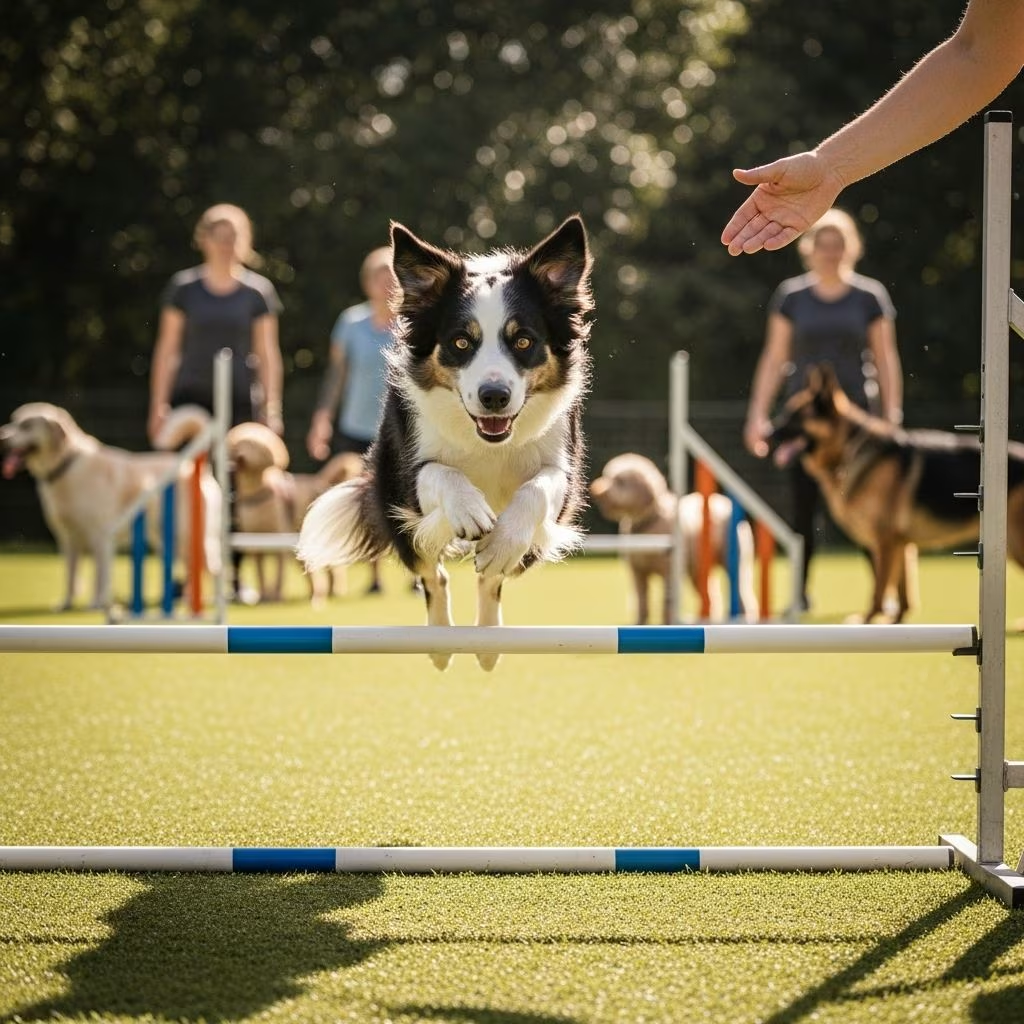
Training your dog goes beyond basic obedience; it’s about building a deeper connection and unlocking their full capabilities. With the right approach, any dog can learn essential commands and even advanced tricks, leading to a happier, more harmonious life together. This guide draws on proven methods to help you succeed.
Foundations of Successful Dog Training
Effective training starts with understanding core principles. Positive reinforcement, where rewards follow desired behaviors, forms the bedrock of modern methods. This technique encourages dogs to repeat actions voluntarily, fostering enthusiasm rather than fear.
Key elements include short sessions to maintain focus, consistency in cues and rewards, and selecting high-value motivators like treats or toys tailored to your dog’s preferences. Begin in low-distraction environments, such as your home, gradually progressing to busier settings for better generalization.
- Short Sessions: Limit to 5-15 minutes to prevent fatigue and ensure high engagement.
- Consistency: Use the same words and actions every time to avoid confusion.
- Positive Rewards: Praise, treats, or play immediately after the behavior.
- Patience: Progress at your dog’s pace, celebrating small wins.
Mastering Essential Obedience Commands
Core commands provide safety and control. Start with simple ones to build confidence before advancing.
The Sit Command: Building Impulse Control
To teach sit, hold a treat above your dog’s nose and slowly move it back over their head. Their bottom will naturally lower; mark the moment with a clicker or word like “yes” and reward. Practice repeatedly, then fade the lure by saying “sit” without the treat visible.
| Step | Action | Tips |
|---|---|---|
| 1 | Lure with treat | Use high-value treat; move slowly. |
| 2 | Mark and reward | Timing is crucial—reward instantly. |
| 3 | Add verbal cue | Say “sit” just before luring. |
| 4 | Practice without lure | Randomize rewards for reliability. |
Down: Encouraging Calm Submission
From a sit, lure downward with a treat between their paws while gently guiding if needed. Reward when elbows touch the ground. This command helps in relaxed states and vet visits.
Stay: Developing Self-Control
With your dog in sit or down, say “stay,” step back briefly, then return to reward. Gradually increase duration and distance. Use a release word like “okay” to end.
Recall Training: The Lifesaver Command
Teaching a reliable recall prevents runaway risks. Start indoors: say your dog’s name and “come” in an excited tone, rewarding heavily upon arrival. Use a long leash outdoors, practicing from short distances amid mild distractions.
- Always reward recalls lavishly to make coming to you the best choice.
- Avoid calling for unpleasant tasks like baths; reserve for positive interactions.
- Practice daily in varied locations for proofing.
Leash Skills: Loose Leash Walking and Heel
Pulling frustrates walks. For loose leash walking, stop when tension occurs, rewarding slack. Teach “heel” by luring to your side with treats, marking position at your knee.
Introduce a “go sniff” cue for breaks, balancing structure with freedom. Variable rewards prevent anticipation of exact timing.
Advanced Techniques for Behavior Shaping
Once basics are solid, use shaping to teach complex behaviors. Reward approximations toward the goal, like paw lifts for “shake.” This builds problem-solving skills and creativity.
Counterconditioning modifies reactions to triggers, pairing feared stimuli with treats to create positive associations. Habituation exposes dogs gradually to neutral stimuli, reducing overreactions.
Tools and Rewards: Equipping for Success
A clicker or marker word pinpoints exact behaviors. Charge it by pairing with treats repeatedly. Choose soft, smelly treats for motivation; vary to maintain interest.
Leashes (6ft non-retractable), harnesses, and toys enhance sessions. Track progress in a journal to note improvements.
Common Challenges and Solutions
Dogs may regress in new environments—return to basics there. If motivation dips, upgrade rewards or shorten sessions. Watch for stress signals like yawning or lip-licking to adjust pace.
| Challenge | Solution |
|---|---|
| Ignores commands outdoors | Practice with higher rewards; increase distance gradually. |
| Pulls on leash | Stop moving; reward slack leash only. |
| Fearful of new things | Use desensitization with positive pairings. |
| Bored during sessions | Incorporate games; vary routines. |
Designing Effective Training Sessions
Structure sessions with rituals: start with a favorite trick, teach new skills mid-session, end on success. Multiple daily shorts outperform one long one. Incorporate play for fun.
Generalize by training in parks, cars, and crowds. Track metrics like success rate per 10 reps.
Building Lasting Habits: Proofing and Maintenance
Proof behaviors under distraction: add movement, noise, or distance. Use variable reinforcement schedules for real-world reliability. Involve family members for consistency.
Continue lifelong learning with tricks like spin or high-five to keep minds sharp and bonds strong.
FAQs
What age is best to start training?
Puppies can begin as early as 8 weeks; adults benefit anytime with patience.
How often should I train?
3-5 short sessions daily yield best results without overwhelming your dog.
What if my dog doesn’t respond to treats?
Try toys, praise, or play; find individual motivators.
Is a clicker necessary?
No, but it provides precise marking for faster learning.
Can rescue dogs be trained?
Yes, with tailored positive methods addressing past experiences.
Next Steps: Elevate Your Training Journey
Join classes or use apps for guided practice. Observe body language to personalize approaches. Consistent effort transforms average dogs into exceptional partners.
References
- Dog Training 101: Basic Training Tips for Dogs and Puppies — CareCredit. 2023. https://www.carecredit.com/well-u/pet-care/how-to-train-your-dog/
- Dog Training 101 Ep. 1: How To Get Started with Training — 3 Lost Dogs. 2022. https://www.3lostdogs.com/dog-training-101-ep-1-how-to-get-started-with-training/
- Dog Training Basics — FOUR PAWS USA. 2024. https://www.fourpawsusa.org/our-stories/publications-guides/dog-training-basics
- Dog Training For Dummies Cheat Sheet — Dummies.com. 2023. https://www.dummies.com/article/home-auto-hobbies/pets/dogs/training/dog-training-for-dummies-cheat-sheet-208990/
- How to Train a Dog & Dog Obedience Training — American Kennel Club (AKC). 2025. https://www.akc.org/expert-advice/training/
- Dog Training Tips for Beginners — Earthborn Holistic Pet Food. 2024. https://www.earthbornholisticpetfood.com/blog/training-behavioral/dog-training-tips-for-beginners/



