

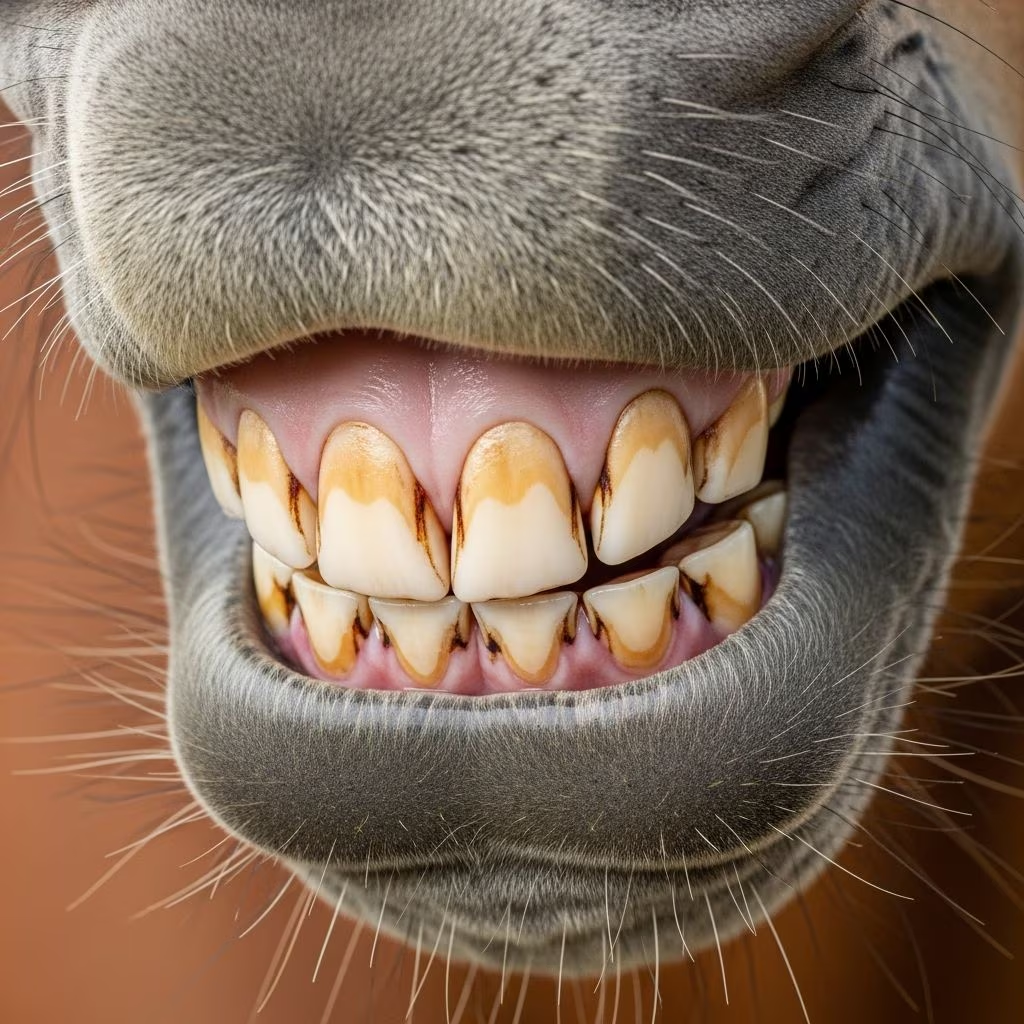
Horses rely on healthy teeth for proper nutrition and overall well-being, but uneven tooth wear can disrupt this balance, leading to pain, poor performance, and serious health issues. This condition arises from natural grinding patterns, dietary factors, and age-related changes, requiring proactive veterinary intervention.
Understanding the Basics of Equine Dental Anatomy
Horse teeth are uniquely adapted for a lifetime of grinding tough forage. The hypsodont structure features continuously erupting teeth with enamel ridges that wear against each other to form sharp points and flat occlusal surfaces. In young horses, deciduous teeth give way to permanent ones by age five, establishing the foundation for lifelong mastication. As horses age, wear accelerates, potentially causing irregularities if not monitored.
Key anatomical features include incisors for cropping grass, premolars and molars for grinding, and canines primarily in males. Enamel, being the hardest substance, covers softer dentin and cementum, creating natural wear patterns. Disruptions in this equilibrium lead to hooks, ramps, and steps that impede chewing efficiency.
Primary Causes of Irregular Dental Wear
Several factors contribute to uneven wear. Dietary inconsistencies, such as switching from pasture to hay, alter grinding angles. Hard feeds promote excessive incisal wear, while soft diets allow overgrowth. Age plays a pivotal role; seniors over 18 often develop wave mouths or smooth mouths due to differential eruption rates.
- Genetic predispositions: Some breeds exhibit inherited malocclusions.
- Behavioral habits: Chewing on fences or cribbing accelerates enamel loss.
- Pathological conditions: Periodontal disease and infundibular caries exacerbate uneven surfaces.
EOTRH, increasingly common in older horses, involves odontoclastic resorption and hypercementosis, primarily affecting incisors and canines. This progressive syndrome causes root fragility and bulbous enlargements, stemming from inflammatory responses.
Recognizing Symptoms of Dental Imbalance
Early detection hinges on observing subtle behavioral shifts. Horses with uneven wear often drop feed from their mouths (quidding), salivate excessively, or chew slowly on one side. Performance declines manifest as head tossing, resistance to the bit, or reluctance to turn.
Physical signs include facial swelling, foul breath, nasal discharge from sinusitis secondary to tooth root abscesses, and weight loss despite ample feed. In severe cases, impacted food leads to colic risks. Owners should note changes in manure consistency or undigested hay particles.
| Symptom | Associated Condition | Urgency Level |
|---|---|---|
| Quidding and drooling | Sharp enamel points | High |
| Head tilting while eating | Wave mouth | Medium |
| Tooth fractures or loose teeth | EOTRH | Critical |
| Poor body condition | Smooth mouth in seniors | High |
Diagnostic Approaches for Equine Oral Health
Veterinarians start with a full physical exam, followed by sedation for speculum placement. This allows visualization of occlusal surfaces using mirrors or endoscopes. Radiographs are essential for subsurface issues like periapical abscesses or EOTRH resorption.
For foals, early checks correct congenital misalignments. Annual exams for adults, biannual for seniors, use power floats to address points. Bloodwork rules out systemic diseases mimicking dental pain.
Treatment Options for Correcting Wear Patterns
Corrective floating balances teeth by reducing hooks and ramps, performed under sedation for precision. Advanced cases may require motorized tools or osteotomies for displaced teeth.
EOTRH demands extraction of affected incisors, often bilaterally, under standing sedation. Post-procedure care includes soft feeds and antibiotics. Prognosis improves with early intervention, allowing adaptation via remaining teeth.
- Diastema treatment: Widening gaps to prevent food traps, with 50-70% success.
- Senior management: Chopped hay, beet pulp soaks for smooth mouths.
- Endodontics: Rare, for select caries cases.
Preventive Strategies for Long-Term Dental Wellness
Routine care prevents most irregularities. Schedule exams every 6-12 months, more frequently for performance horses or those over 17. Balanced diets with long-stem hay promote even wear.
Monitor for vices like wood chewing. Geriatric protocols include frequent floats and radiographic surveillance. Training horses benefit from pre-start checks to avoid bit-related issues.
Age-Specific Dental Considerations
Juvenile Horses (Under 5 Years)
Focus on eruption monitoring and cap removal. Uneven wear here stems from retained deciduous fragments.
Adults (5-17 Years)
Annual floats maintain alignment. Address hooks from unilateral chewing.
Seniors (18+ Years)
Expect wave patterns and EOTRH. Semi-annual exams with X-rays are standard. Special feeds mitigate malnutrition.
Nutritional Impacts and Management
Uneven wear impairs digestion, reducing nutrient absorption and increasing colic risk. Compensate with mashes, senior feeds, and slow feeders. Avoid hard grains that worsen incisal attrition.
Role of the Equine Dentist vs. Veterinarian
Qualified technicians perform routine floats, but vets handle diagnostics, extractions, and pathologies. Collaboration ensures comprehensive care.
Frequently Asked Questions (FAQs)
How often should I have my horse’s teeth checked?
Adults annually, seniors every 6 months, foals at key milestones.
What is horse teeth floating?
Filing sharp points and balancing occlusion under sedation.
Can uneven wear cause colic?
Yes, via poor chewing and impactions.
Is EOTRH curable?
Not reversible; extraction manages symptoms effectively.
What diet helps senior horses with dental issues?
Chopped forage, pellets, beet pulp.
Advancements in Equine Dentistry
Recent progress includes powered instrumentation, 3D imaging, and minimally invasive extractions. Research emphasizes preservation over reduction.
References
- EOTRH – Dental Disease In Horses: Common Causes Symptoms & Treatment — Advanced Equine of the Hudson Valley. 2024. https://www.advancedequinehv.com/eotrh-dental-disease-in-horses-common-causes-symptoms-treatment/
- Bad Teeth in Horses: Symptoms & Treatment — Bluegrass Equine. 2024-05-23. https://www.bluegrassequine.com/site/blog/2024/05/23/bad-teeth-horses
- Dental disease – common problems and management — Vet Times. 2024-02-20. https://www.vettimes.com/news/vets/equine/dental-disease-common-problems-and-management
- Caring for your old horse’s teeth — Colorado State University Veterinary Teaching Hospital. N/A. https://vetmedbiosci.colostate.edu/vth/animal-health/caring-for-your-old-horses-teeth/
- Bad Horse Teeth: Symptoms & Treatment — Meadow Vista Veterinary Clinic. 2024-07-30. https://www.meadowvistavet.com/site/blog/2024/07/30/bad-horse-teeth
- Dental Disorders of Horses – Horse Owners — Merck Veterinary Manual. N/A. https://www.merckvetmanual.com/horse-owners/digestive-disorders-of-horses/dental-disorders-of-horses



