

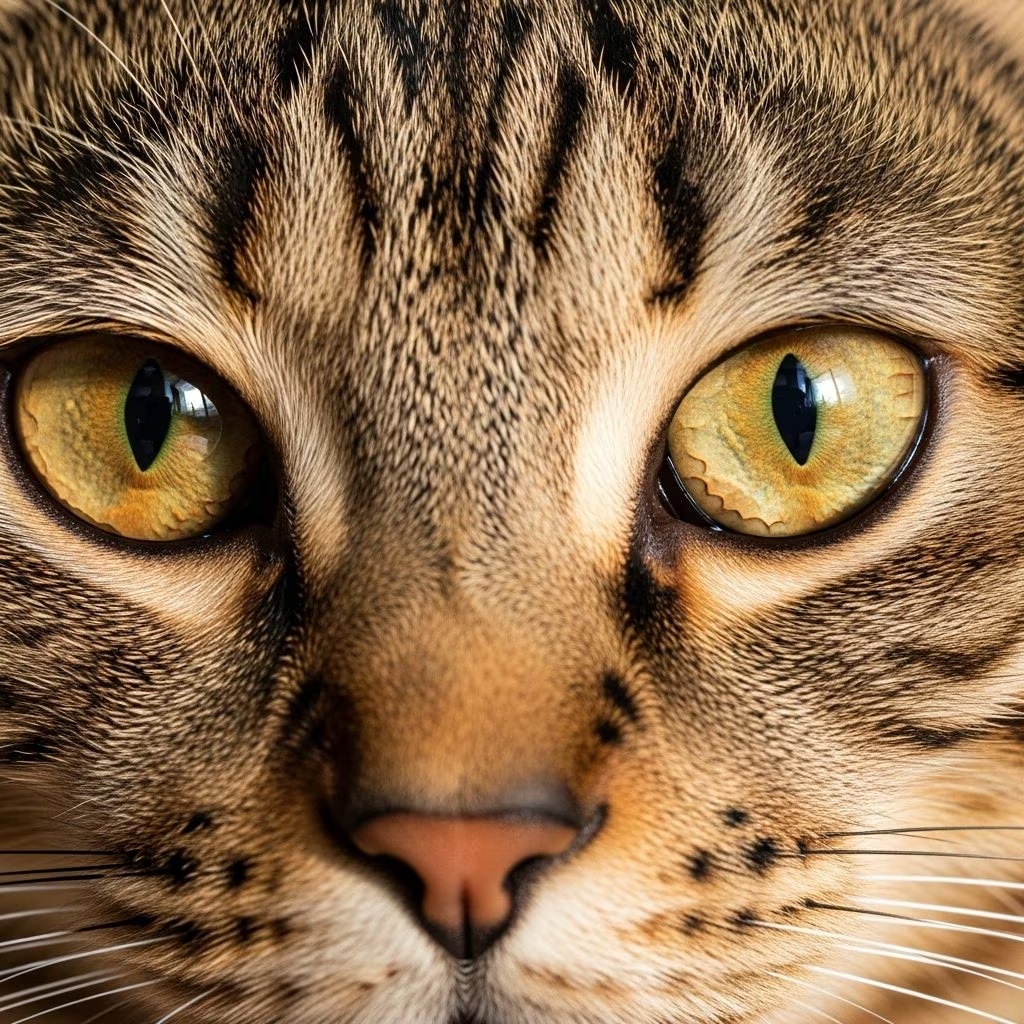
Unequal pupil sizes in cats, a condition called anisocoria, often signals an underlying health problem that requires prompt attention. This guide examines the reasons behind this eye irregularity, accompanying signs, evaluation processes, management strategies, and steps for prevention to help cat owners safeguard their pets’ vision.
Understanding Pupil Inequality in Felines
In healthy cats, pupils constrict and dilate symmetrically in response to light changes, ensuring balanced vision. When one pupil remains larger or smaller than the other regardless of lighting, it disrupts this harmony and may point to ocular or systemic issues. This asymmetry can appear suddenly or develop gradually, affecting cats of any age, though seniors face higher risks from age-related changes.
Primary Triggers of Unequal Pupils
Numerous factors contribute to anisocoria, ranging from localized eye conditions to broader neurological or infectious diseases. Identifying the root cause is essential for effective intervention.
- Eye Inflammation (Uveitis): Swelling in the eye’s middle layer causes pupil constriction due to pain and spasms.
- Glaucoma: Elevated pressure inside the eye leads to pupil dilation and potential vision loss if untreated.
- Neurological Conditions: Disorders like Horner’s syndrome interrupt nerve signals, resulting in a smaller pupil on one side.
- Infections: Pathogens such as toxoplasmosis, feline leukemia virus (FeLV), or feline immunodeficiency virus (FIV) inflame eye tissues.
- Trauma or Injury: Direct damage to the eye or head alters pupil function through swelling or bleeding.
- Tumors: Growths near the eye or brain compress structures controlling pupil size.
- Corneal Damage: Ulcers or scratches provoke reflexive pupil changes.
- Age-Related Iris Thinning: In older cats, iris muscles weaken, causing irregular pupil shapes.
- Drug Effects: Certain medications, like atropine, temporarily dilate one pupil.
- Inherited Issues: Some kittens are born with iris defects leading to persistent inequality.
Observable Signs Beyond Pupil Changes
Anisocoria rarely occurs alone; watch for these indicators that demand veterinary review.
| Symptom | Description | Potential Implication |
|---|---|---|
| Eye Redness | Visible blood vessels or pink hue in the white of the eye | Inflammation or pressure buildup |
| Discharge | Clear fluid, pus, or mucus from the eye | Infection or ulcer presence |
| Squinting | Frequent blinking or half-closed eyes | Pain or light sensitivity |
| Cloudy Cornea | Hazy or bluish eye surface | Glaucoma or edema |
| Head Tilting | Leaning to one side persistently | Brain or inner ear involvement |
| Lethargy | Reduced activity, appetite loss | Systemic illness |
Sudden onset, especially with behavioral shifts, classifies as an emergency.
Step-by-Step Diagnostic Process
Veterinarians employ a multi-layered approach to pinpoint anisocoria’s origin, starting with history and physical checks.
- Initial Assessment: Review of medical history, medication use, and recent injuries.
- Eye Examination: Tools like slit lamps reveal internal structures; tonometry gauges pressure.
- Neurological Testing: Checks for symmetry in reflexes and coordination.
- Laboratory Work: Blood panels detect infections or organ dysfunction; urine analysis rules out systemic disease.
- Advanced Imaging: X-rays, ultrasounds, CT, or MRI visualize tumors or brain anomalies.
- Specialized Tests: Fluorescein staining identifies ulcers; viral screenings confirm FeLV/FIV.
Referral to a veterinary ophthalmologist may follow for complex cases.
Tailored Treatment Strategies
Management targets the specific cause, with no universal fix for anisocoria itself. Prognosis varies but improves with early action.
- For Inflammation or Infection: Anti-inflammatory drops, antibiotics, or antivirals reduce swelling.
- Glaucoma Control: Pressure-lowering drops like timolol; surgery in advanced stages.
- Neurological Support: Medications for Horner’s syndrome; monitoring for resolution.
- Surgical Interventions: Tumor excision, ulcer repair, or lens removal for cataracts.
- Symptomatic Relief: Pain meds like onsior; fluids for dehydrated cats.
- Observation: Benign cases like mild iris atrophy need only regular check-ups.
Follow-up visits track progress and adjust plans.
Preventive Measures for Eye Health
While not all causes are avoidable, proactive steps minimize risks.
- Vaccinate against FeLV and FIV to curb infectious triggers.
- Conduct bi-annual vet exams, especially for seniors.
- Secure environments to prevent trauma from fights or falls.
- Avoid toxic plants or chemicals that irritate eyes.
- Maintain nutrition with taurine-rich diets supporting retinal health.
- Monitor for early signs during daily interactions.
Prognosis and Long-Term Outlook
Many cats recover fully with timely care, though some conditions like advanced glaucoma lead to partial vision loss. Iris atrophy progresses slowly without pain. Regular monitoring ensures quality of life, as cats adapt remarkably to visual impairments.
Frequently Asked Questions
Is anisocoria always serious in cats?
Not necessarily, but it warrants a vet visit to exclude grave issues like tumors or glaucoma.
Can stress cause unequal pupils?
Stress may dilate pupils temporarily and symmetrically; persistent inequality suggests pathology.
How quickly should I seek help?
Immediately if sudden or paired with pain, discharge, or behavior changes.
Will my cat go blind from this?
Depends on cause and speed of treatment; early intervention often preserves sight.
Are certain breeds prone to it?
No breed specificity noted; all cats can be affected.
References
- Anisocoria in Cats: Vet-Approved Guide to Causes, Diagnosis… — AskAVet. 2025. https://askavet.com/blogs/news/anisocoria-in-cats-vet-approved-guide-to-causes-diagnosis-treatment-in-2025-%F0%9F%90%B1%F0%9F%91%81%EF%B8%8F
- Unequal Pupils (anisocoria) in Cats – Causes, Treatment… — Vetster. N/A. https://vetster.com/en/symptoms/cat/unequal-pupils
- Anisocoria in Cats: Causes, Symptoms, & Treatment — Animal Emergency Urgent Care. N/A. https://www.animalemergencyurgentcare.com/anisocoria-in-cats/
- Anisocoria in Cats: A Closer Look — PetCareRx. N/A. https://www.petcarerx.com/article/anisocoria-in-cats-a-closer-look/6829
- Anisocoria in Cats — The Cat’s Meow Rescue. N/A. https://www.thecatsmeowrescue.org/blog-feline-friends/anisocoria-in-cats
- Anisocoria in Cats: Why My Cat’s Pupils Are Different Sizes — Rover. N/A. https://www.rover.com/blog/anisocoria-in-cats/



