

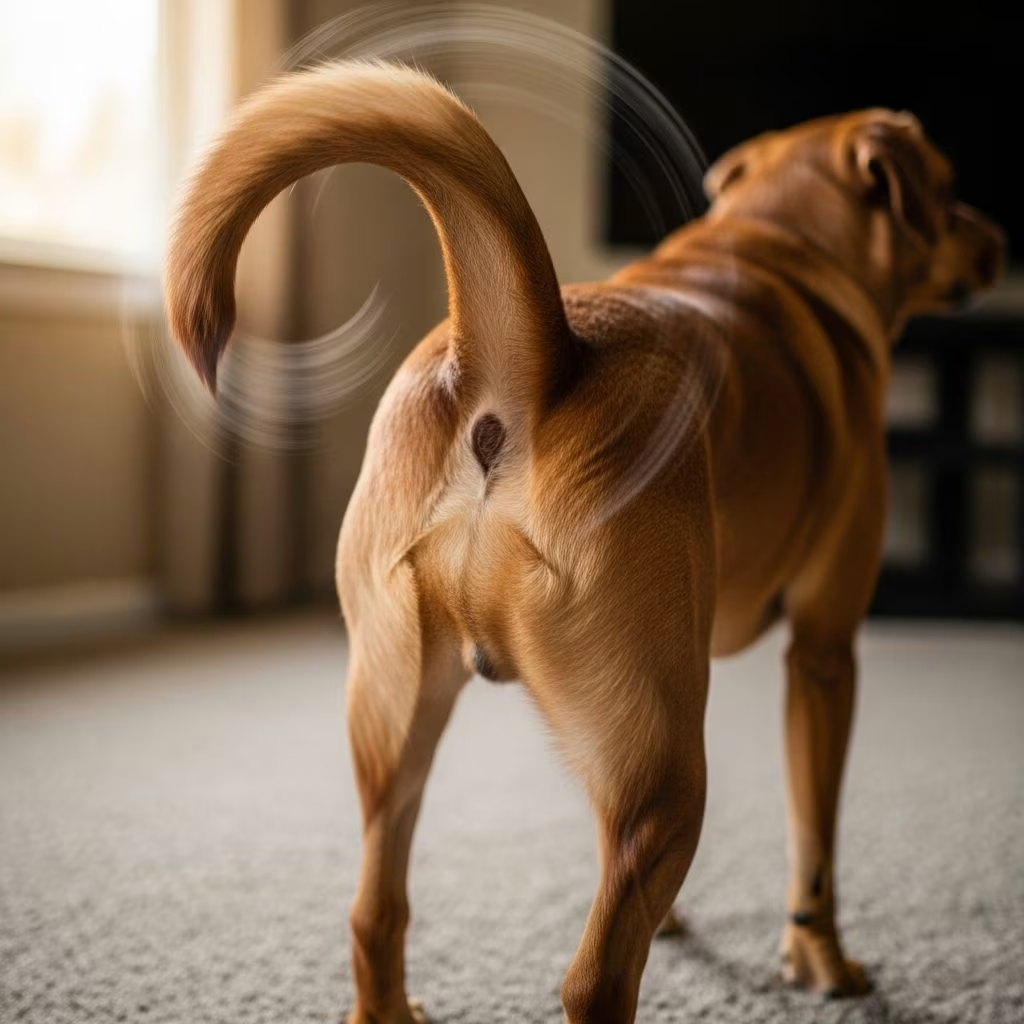
The way your dog moves their tail is one of the clearest windows into their emotional world. Among all the tail signals dogs use, the circle tail wag (often called a helicopter tail or propeller wag) stands out as one of the most joyful and eye-catching. This distinctive wag usually appears when your dog is especially delighted to see someone or anticipating something wonderful.
Understanding what a circle wag means — and how it fits into the broader language of tail movements — can help you read your dog more accurately, respond to their needs, and keep interactions with other dogs and people safer and more comfortable.
Tail Wags as a Window Into Canine Emotion
Dog tails are not just for balance; they are powerful tools of communication. Research and clinical observation show that changes in a dog’s tail position, speed, direction, and overall fluidity convey nuanced emotional states, from relaxed friendliness to fear or conflict.
Key dimensions of tail communication include:
- Height of the tail: Higher positions often signal alertness or arousal, while lower positions can indicate uncertainty, fear, or submission.
- Speed of the wag: Faster wags typically mean stronger emotion, but that emotion can be positive or negative depending on context.
- Range and looseness: Broad, loose wags often align with friendliness, whereas short, tight wags may indicate tension or agitation.
- Direction of movement: Studies show that tail bias toward the right can be associated with more positive states, while left-sided bias can be linked to more negative or cautious emotions, underlining the complexity of tail language.
Many people assume that any wagging tail means a dog is friendly. Behavior experts and veterinarians emphasize that this interpretation is oversimplified and potentially unsafe, because some dogs wag even when feeling conflicted, fearful, or ready to escalate an interaction.
What Is a Circle Tail Wag?
A circle wag is a specific type of tail movement where the tail doesn’t just swing from side to side — it rotates in a broad circle at the base, causing the tip to trace a circular path. Guardians often describe it as:
- Helicopter tail – the tail spins like rotor blades.
- Propeller wag – the tail looks as though it could lift the dog off the ground.
Unlike smaller, lateral wags, a true circle wag is usually big, loose, and often involves the entire back end of the dog’s body. Many dogs pair a circle wag with bouncing steps, relaxed facial expressions, and an overall squirmy body posture that makes their joy unmistakable.
What Does a Circle Wag Usually Mean?
Most of the time, a circle wag is one of the most reliable signs of positive social emotion a dog can show. It is strongly associated with:
- Delighted greetings – especially when reuniting after an absence.
- High-level social joy – such as seeing a beloved person, familiar dog friend, or favorite caregiver.
- Anticipation of good things – heading out for a walk, starting a favorite game, or receiving attention from a special person.
In many reunion videos and case reports, dogs perform exuberant circle wags when a family member returns after deployment, a long trip, or even just a workday. Some dogs show this movement every time they greet close family, no matter how short the separation. Others save it only for the most exciting moments, like meeting their best canine buddy or realizing they are about to go on a cherished outing.
Because of its association with loose muscles, soft body posture, and a joyful context, the circle wag is often considered the least ambiguous “happy” wag in canine body language. For many guardians, seeing a helicopter tail is confirmation that their dog feels safe, secure, and socially open in that moment.
Circle Wags and Whole-Body Language
Although the tail is important, no tail signal should be read in isolation. The meaning of a circle wag is best understood by looking at the whole dog. Veterinary and humane society guidance stresses that posture, facial expression, and movement all combine to reveal a dog’s emotional state.
In friendly circle-wag situations, you will often see:
- Loose, wiggly body from shoulders through hips.
- Soft eyes, often blinking, with relaxed facial muscles.
- Open mouth, sometimes panting lightly or appearing to “smile.”
- Forward or gently neutral ears (depending on the dog’s natural ear set).
- Bouncy steps or small hops, as if the dog struggles to contain excitement.
The more the wag seems to travel through the entire body, the more likely it is that the dog’s intentions are genuinely friendly and affiliative. A circle wag combined with a full-body wiggle is often seen when socially confident dogs greet those they love most.
When a Circle Wag Is Not So Simple
Although a circle wag is usually a strong indicator of happiness and friendliness, there can be exceptions. Behavior professionals describe dogs who do a helicopter wag while also showing signs of tension, such as:
- Stiffened legs or a more rigid posture.
- Barking or intense vocalizing toward another dog or person.
- Tight facial muscles or hard staring.
In some of these cases, dogs may be experiencing ambivalent emotions — for example, being excited about the possibility of play but also worried about the other dog or the situation. The circle wag might then reflect anticipation of a positive outcome mixed with nervousness. This kind of emotional conflict is consistent with broader research showing that dogs can wag even when they are unsure, stressed, or attempting to defuse tension.
Because of this, it is wise to treat even very enthusiastic wags as just one part of the communication picture. If the rest of the body language looks tense or the context is confrontational, the dog may not be as purely relaxed as the tail alone suggests.
Circle Wags vs. Other Common Tail Wags
To better understand what makes circle wags special, it helps to compare them with other familiar tail patterns described by behavior experts, humane organizations, and veterinarians.
| Tail Pattern | Typical Appearance | Likely Emotional Meaning* |
|---|---|---|
| Circle / helicopter wag | Tail spins in a wide circle, often with whole-body wiggle. | Strongly positive social emotion: joy, friendly excitement, anticipation of affection or play. |
| Neutral-height, loose wag | Tail at mid-height, swinging in moderate arcs. | Relaxed, friendly engagement; open to interaction. |
| Low tail wag | Tail below midline, moving with smaller arcs. | Uncertainty, fear, or submission; may be defensive if the dog feels pressured. |
| High, tight wag | Tail carried high, wagging in short, tense movements. | Heightened arousal, assertiveness, or possible agitation; not necessarily friendly. |
| Tucked tail with minimal wag | Tail held close to body or between legs. | Fear, high stress, or efforts to avoid conflict and remain unnoticed. |
*Always interpret tail signals in context and alongside full-body cues.
Why Dogs Show Circle Wags With Some People and Not Others
Many guardians notice that their dog reserves the helicopter tail for a small circle of favorite individuals or highly valued experiences. The circle wag seems especially likely when:
- The dog feels a strong emotional bond with the person.
- The reunion follows a long or unpredictable absence.
- The person is consistently associated with positive events such as play, training, walks, or special treats.
Other dogs are naturally more exuberant and may spin their tails in circles for many different people, including new acquaintances they instantly decide are friends. Individual temperament, past learning, and breed-related tendencies can all influence how readily a dog offers a circle wag.
Circle Wags, Context, and Safety
Because tail wags are often misread, humane societies and veterinary behaviorists emphasize caution when approaching any dog, especially one you do not know well.
To stay safe and respectful even when you see a circle wag:
- Scan the whole body: Confirm that muscles are loose, eyes are soft, and the dog’s movements are relaxed rather than stiff.
- Respect signals of discomfort: If the dog freezes, turns away, or lowers their tail suddenly, pause or step back.
- Let the dog choose: Allow them to approach you rather than reaching over them or leaning in quickly.
- Teach children carefully: Explain that a wagging tail does not automatically mean “safe to hug.”
Combining respect for canine body language with the joyful information provided by circle wags allows for more harmonious, trusting relationships.
Why Tail Wags Are So Complex
Studies of canine communication suggest that the tail is part of a larger emotional and social signaling system shaped by evolution and domestication. Tail movements can influence how other dogs respond, including whether they approach, avoid, or attempt to de-escalate a situation.
Some important points about this complexity include:
- Breed differences: Dogs with docked or naturally very short tails may have limited ability to display large circle wags, even when they feel intense joy.
- Physical conformation: Dogs with tightly curled tails or tails carried over the back may not be physically able to perform a classic propeller wag, so they “speak” through other body signals.
- Learning history: Dogs adjust how they communicate based on what has worked for them in the past. A dog who has always been warmly reinforced for enthusiastic greetings may show more dramatic circle wags over time.
Understanding that even the most joyful-looking wag can be influenced by anatomy, experience, and context can help you avoid overgeneralizing from any single movement.
How Guardians Can Respond to Circle Wags
When your dog greets you with a helicopter tail, you are witnessing a powerful sign of social connection. Many guardians understandably want to respond in ways that reinforce trust and happiness.
Helpful ways to respond include:
- Offering calm affection: Get down to your dog’s level if possible, use a gentle voice, and pet them in the spots they typically enjoy.
- Matching their energy thoughtfully: Some dogs love a big, excited greeting back; others become overstimulated. Adjust your response to what helps your dog stay happy and under control.
- Using the moment for connection: A circle wag greeting can be a great time to slip in a brief training cue, like “sit” before petting, to build manners without dampening enthusiasm.
- Observing patterns: Notice when and with whom your dog offers circle wags. This can reveal which relationships and activities they value most.
Frequently Asked Questions (FAQs)
Q: Does a circle tail wag always mean my dog is happy?
A: A circle wag almost always reflects strong positive social emotion, such as joy or friendly excitement, especially when combined with a loose, wiggly body. However, dogs can feel mixed emotions, so always check the full body language and the situation rather than relying solely on the tail.
Q: Why does my dog only do a helicopter tail for certain people?
A: Many dogs reserve circle wags for those they feel most bonded to or for especially thrilling moments, like reunions after an absence or the anticipation of a favorite activity. It usually reflects the strength and history of that specific relationship.
Q: Is it safe to approach any dog that is wagging its tail?
A: No. Tail wagging alone does not guarantee friendliness. Some dogs wag when they are nervous, conflicted, or even prepared to act defensively. Always look at the whole dog — posture, facial expression, and movement — and approach politely or ask the guardian before interacting.
Q: Can all dogs physically do a circle wag?
A: Not necessarily. Dogs with docked tails, very short tails, or certain tail conformations may not be able to perform a full helicopter-style circle. They may still be just as joyful but show it through broader body wiggles, facial expressions, and other movements.
Q: How can I learn to read my dog’s tail language better?
A: Start by observing your dog’s tail in different situations and pairing what you see with the context. Consulting educational resources from veterinarians and humane organizations can also help you learn the typical meanings of tail positions and wags, while always remembering that your individual dog has their own nuances.
References
- Interpreting Tail Wags in Dogs — Humane Society of Missouri. 2019-08-01. https://hsmo.org/portfolio-item/interpreting-tail-wags-in-dogs/
- Interpreting Tail Wags in Dogs — VCA Animal Hospitals. 2021-06-15. https://vcahospitals.com/know-your-pet/interpreting-tail-wags-in-dogs
- Dog Tail Meaning: Dog Tail Language — Whole Dog Journal. 2020-11-10. https://www.whole-dog-journal.com/behavior/dog-tail-language/
- Dog Body Language: Tail Position and Movement — American Kennel Club. 2022-03-28. https://www.akc.org/expert-advice/health/dog-tail-language/
- Behavioral Lateralization in Tail Wagging by Dogs — Vallortigara, G. et al., Current Biology. 2007-11-20. https://doi.org/10.1016/j.cub.2007.09.060



