Understanding Snakes: Behavior and Safety
Discover essential insights into snake biology, habitats, behaviors, and safe coexistence strategies for humans in snake-prone areas.
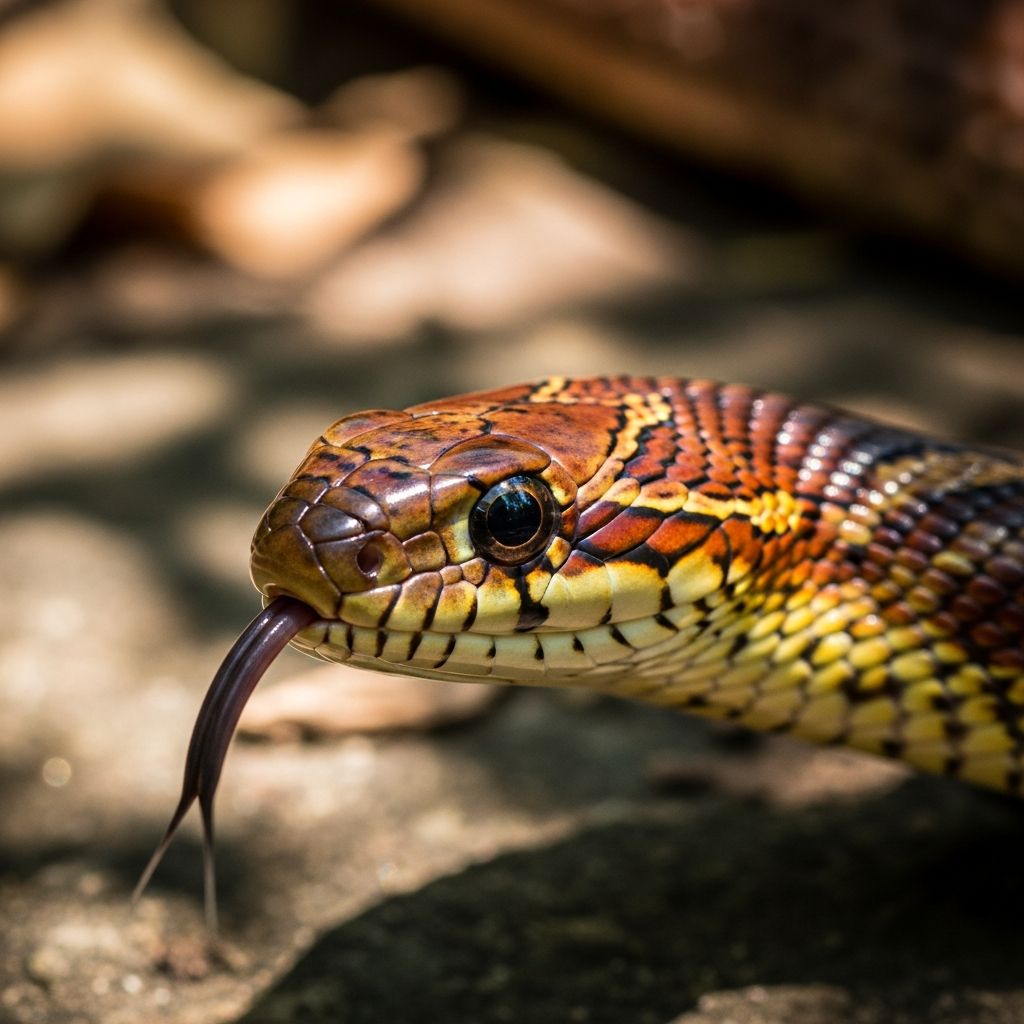
Snakes represent one of nature’s most adaptable reptile groups, inhabiting virtually every corner of the globe from deserts to rainforests. Their limbless bodies enable efficient movement across varied terrains, while ectothermic physiology ties their activity closely to environmental conditions. This article delves into their ecological roles, behavioral patterns, and strategies for safe human interaction, drawing from authoritative wildlife resources.
Adaptations for Global Survival
Snakes have evolved remarkable traits allowing them to occupy terrestrial, arboreal, subterranean, and aquatic niches worldwide. Unlike lizards, they extend into higher elevations and northern latitudes, avoiding only the most extreme heat by shifting to nocturnal patterns. Limblessness, far from a limitation, enhances their prowess in burrowing, climbing, and swimming, contributing to their widespread success.
In diverse habitats, snakes demonstrate flexibility: desert species endure arid dunes, while others navigate swamps, mountains, or urban areas. This versatility stems from behavioral thermoregulation, where they bask to warm up or seek shade to cool down, as internal heat generation is absent.
Temperature-Driven Lifestyles
As ectotherms, snakes rely on external heat sources for essential functions like digestion and movement. Activity peaks when air temperatures suit their needs; extremes prompt retreat. In hot climates, they emerge at dawn, dusk, or night, while cold snaps induce hibernation below freezing thresholds.
- Basking behavior: Snakes absorb solar heat or retain warmth from paved surfaces at night to elevate body temperature.
- Cooling tactics: They retreat to burrows, rock crevices, or water bodies during peak heat.
- Hibernation patterns: Prolonged cold triggers communal dens where snakes cluster for shared warmth, emerging en masse in spring.
These adaptations ensure survival in equable climates but limit them from polar extremes. For instance, species like timber rattlesnakes may hibernate over five months, confining active periods to warmer seasons for foraging and breeding.
Daily Behaviors and Sensory World
Most snakes lead solitary, sedentary lives, migrating minimally if at all. Shy by nature, they prioritize concealment over confrontation, using cryptic coloration and stealth. Sensory perception relies heavily on the forked tongue, which samples air and ground particles via Jacobson’s organ for chemical cues on prey or mates.
Activity cycles vary: diurnal species hunt by day, nocturnal ones by night, influenced by temperature and prey availability. In captivity or the wild, they prowl sparingly, mainly for food, water, or territory—needs often minimized in controlled settings.
| Behavior Type | Description | Examples |
|---|---|---|
| Ambush Hunting | Coiled wait near trails for prey movement | Timber rattlesnakes staking rodent paths |
| Active Pursuit | Periscope head scanning for motion | American racers in open fields |
| Climbing | Ascending trees or shrubs for prey/rest | Red-tailed green rat snakes |
| Burrowing | Submerging in substrate for safety/prey | Sand boas in fine soils |
Hunting Strategies and Prey Diversity
Snakes employ sophisticated methods tailored to their morphology and habitat. Constrictors like rat snakes overpower rodents via coils, while venomous species inject toxins for subduing quarry. Active hunters elevate heads to spot frogs or mice amid vegetation.
Prey ranges from insects and amphibians to birds, mammals—even other snakes—showcasing dietary flexibility. This predatory role controls rodent populations, benefiting ecosystems and agriculture.
Reproduction and Family Dynamics
Mating often follows hibernation emergence in spring, with snakes congregating at dens for courtship. Males pursue females through pheromonal trails detected by tongues. Reproduction varies: oviparous species lay leathery eggs in concealed sites like leaf litter, while viviparous or ovoviviparous ones birth live young after internal development.
- Oviparity: Eggs incubated externally, hatching independently.
- Viviparity: Nourished embryos born live, enhancing survival in harsh climates.
Females select sites rich in cover and prey, such as rodent-abundant meadows attracting gopher snakes or vegetated ponds drawing water snakes.
Creating Snake-Friendly Habitats
Wild snakes favor areas mirroring natural preferences: rocky outcrops for basking, dense vegetation for ambush, and burrows for refuge. Properties with small mammal populations or water features naturally draw them, underscoring their ecological value.
For pet owners, enclosures must replicate these: dual-zone temperatures (warm basking side, cooler hide), species-specific humidity for shedding, and enrichments like branches, rocks, or substrates for climbing/burrowing. Overheating risks sunburn; improper humidity hinders sheds.
Preventing Unwanted Encounters
Human-snake conflicts arise from habitat overlap. To minimize risks:
- Yard maintenance: Trim tall grass, remove debris piles, seal home foundations.
- Structural barriers: Install fine-mesh fencing (1/4-inch), extend underground to deter burrowing.
- Lighting and activity: Use motion lights; avoid dusk/dawn wandering in snake areas.
- Pet protection: Supervise dogs/cats outdoors; vaccinate against leptospirosis from rodent urine trails.
These steps preserve snakes’ benefits—like pest control—while enhancing safety.
Safe Response to Sightings
Upon spotting a snake, maintain distance: most flee when approached. Never handle unfamiliar species; use long tools for relocation if necessary. In homes, employ snake hooks or tongs (minimum 4 feet) to guide out calmly, avoiding provocation.
For bites, seek immediate medical care without capturing the snake—descriptions suffice for antivenom selection. Professional removal services handle persistent issues.
FAQs
Are most snakes dangerous to humans?
No, the majority are non-venomous and evade confrontation. Bites are rare, defensive acts.
How do snakes sense their surroundings?
Via flicking tongues collecting particles for Jacobson’s organ analysis, plus heat-sensing pits in some species.
What attracts snakes to yards?
Food (rodents), water, shelter like woodpiles or mulch.
Do snakes make good pets?
Many species do with proper husbandry: heat gradients, humidity, enrichment mimicking wild habitats.
When are snakes most active?
Tied to temperature—day in mild weather, night in heat; inactive in extreme cold.
Conclusion
Appreciating snakes’ roles fosters coexistence. Their behaviors, honed by evolution, sustain biodiversity; informed actions ensure safety for all.
References
- Snake FAQ — Texas Parks & Wildlife Department — Texas Parks & Wildlife Department. 2023. https://tpwd.texas.gov/education/resources/texas-junior-naturalists/snakes-alive
- Snake Owning 101: Heat, Humidity, and Habitat — CyFair Animal Hospital. 2024. https://cyfairanimalhospital.com/snakes/snake-owning-101-heat-humidity-habitat/
- DNR: Fish & Wildlife: Snakes — Indiana Department of Natural Resources. 2025-01-15. https://www.in.gov/dnr/fish-and-wildlife/wildlife-resources/animals/snakes/
- Snake facts | Amphibians & Reptiles — BBC Earth. 2023. https://www.bbcearth.com/factfiles/animals/amphibians-reptiles/snake
- How Snakes Behave — PetPlace.com. 2024. https://www.petplace.com/article/reptiles/general/how-snakes-behave
- Snakes! Behavior, Feeding and Diversity — Cornell University. 2022. http://www.cornell.edu/video/snake-behavior-feeding-diversity
Similar Articles








Read full bio of medha deb