

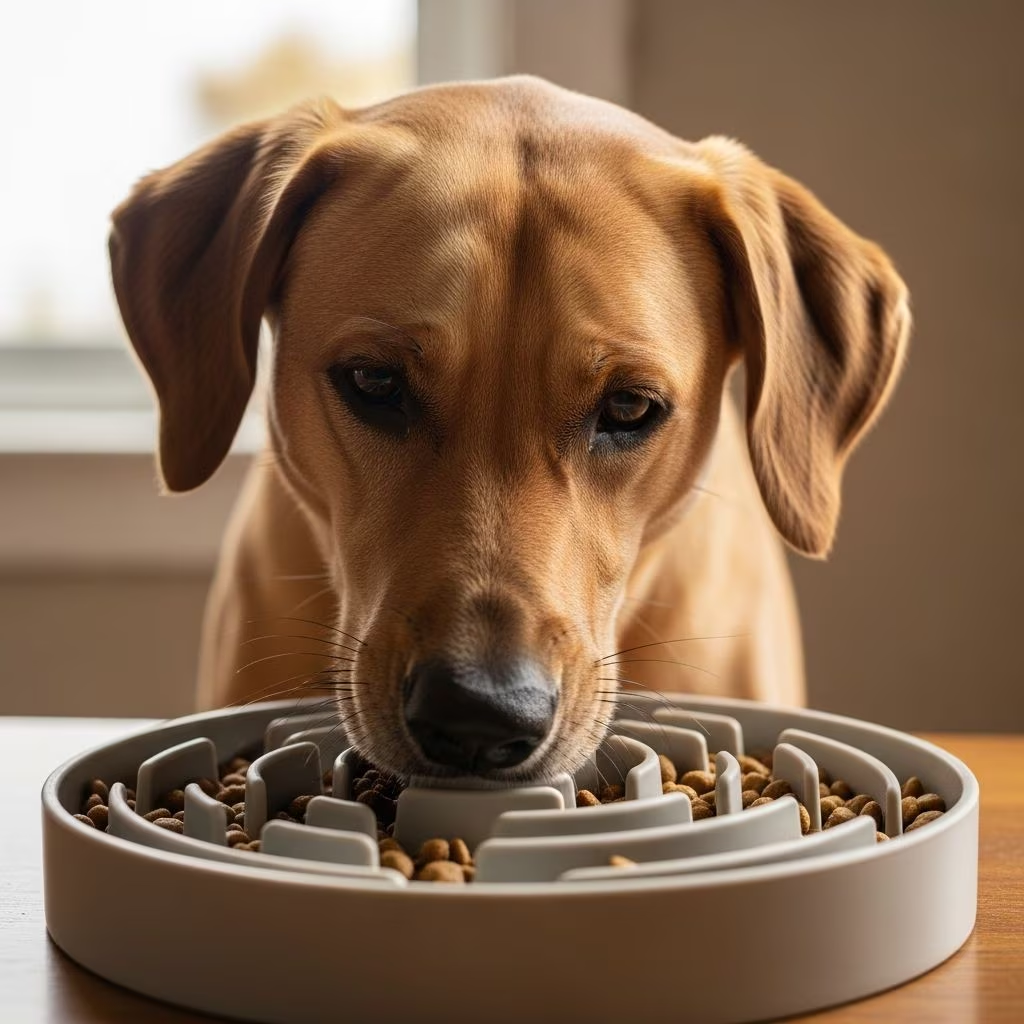
Many dog owners observe their pets consuming meals with remarkable speed, sometimes finishing a bowl of food in mere seconds. This rapid consumption, commonly referred to as gulping or wolfing down food, is a behavior that raises questions about both the underlying causes and potential health implications. While some dogs naturally eat faster than others, understanding the reasons behind this behavior can help owners make informed decisions about feeding practices and overall canine wellness.
The Evolutionary Foundation of Rapid Eating
To understand why dogs engage in fast eating, it’s essential to consider their evolutionary history. Dogs are descended from wolves, animals that existed in competitive environments where food sources were unpredictable and scarce. In such conditions, the ability to consume food quickly offered a survival advantage. A wolf or early canine that ate rapidly could secure more nutrition before competitors arrived or before the opportunity disappeared entirely.
This ancestral behavior pattern remains embedded in canine biology and psychology today, even though domesticated dogs typically have reliable access to food. The instinct to eat quickly persists as a vestigial survival mechanism, manifesting in many modern dogs regardless of their living conditions. Some dogs exhibit this behavior more prominently than others, and certain breeds with stronger pack or hunting heritage may demonstrate particularly intense rapid-eating tendencies.
Pack Competition and Social Dynamics
In multi-dog households, rapid eating often intensifies due to perceived competition among pack members. When dogs share feeding spaces or eat near one another, they may unconsciously accelerate their eating pace to avoid losing food to competitors. This competitive feeding response can emerge even in households where dogs have never actually fought over food or experienced genuine scarcity.
Dogs are highly attuned to the presence and actions of other animals around them during meals. The mere sight of another dog eating can trigger faster consumption in response dogs, creating a feedback loop where all animals in the household accelerate their eating speed. This behavior can develop gradually over time, becoming habitual regardless of whether genuine competition exists.
Psychological Factors and Behavioral Conditioning
Beyond evolutionary influences, psychological factors significantly contribute to rapid eating patterns. Dogs that have experienced food insecurity or limited access to meals may develop anxious eating behaviors characterized by speed and intensity. Rescue dogs or those with uncertain backgrounds sometimes display pronounced rapid eating, reflecting learned survival strategies from their past.
Owner behavior also plays a substantial role in shaping eating habits. If an owner responds to slow eating by removing the bowl after a set period, the dog may learn to eat faster to ensure they consume sufficient amounts. Additionally, inconsistent feeding schedules or irregular meal provision can condition dogs to eat rapidly when food becomes available, treating each meal as potentially the last.
Environmental factors create additional psychological influences. Dogs fed in busy, stimulating environments may eat faster due to distraction or excitement. Conversely, dogs with anxiety issues may eat rapidly as a stress response, using the consumption of food as a coping mechanism.
Health Implications of Rapid Food Consumption
While fast eating represents a natural behavior, it carries several potential health risks that warrant attention. The primary concern involves gastrointestinal distress. When dogs consume large quantities of food rapidly, they ingest significant amounts of air alongside their meals. This air becomes trapped in the stomach, causing bloating and discomfort.
More seriously, rapid eating increases the risk of gastric dilatation-volvulus (GDV), commonly known as bloat. This condition, which can be life-threatening, occurs when the stomach distends with gas and potentially twists on itself. Large and deep-chested breeds face elevated risk for GDV, making feeding pace management particularly important for these populations.
Rapid eating also interferes with proper digestion. The digestive system functions optimally when food enters at a moderate pace, allowing digestive enzymes to work effectively and nutrient absorption to occur efficiently. When dogs consume food too quickly, digestive efficiency decreases, potentially resulting in nutrient malabsorption and related deficiencies.
Additionally, fast eating can contribute to obesity. Dogs that consume meals rapidly may not receive adequate satiety signals before consuming excessive calories. The sensation of fullness develops gradually as food moves through the digestive tract, but rapid eaters finish meals before satiety signals register in the brain.
Practical Strategies to Moderate Eating Speed
Several evidence-based approaches can help reduce rapid eating in dogs:
Specialized Feeding Equipment
Slow feeder bowls featuring raised obstacles or maze-like patterns force dogs to navigate around barriers to access food. This physical impediment naturally increases meal duration without restricting total food consumption. Puzzle feeders present similar benefits, engaging the dog’s problem-solving abilities while distributing food intake across extended time periods.
Lick mats and enrichment feeders smear food across surfaces, requiring dogs to use their tongues to extract nutrition gradually. These methods prove particularly effective for dogs that enjoy interactive feeding experiences.
Portion and Feeding Adjustments
Dividing the daily food allowance into multiple smaller meals distributed throughout the day reduces the volume consumed during any single feeding. A dog eating three smaller portions experiences less urgency than one receiving a single large meal.
Hand feeding or tossing kibble pieces individually slows consumption and strengthens the human-dog bond simultaneously. This approach requires more owner time but proves highly effective for motivated dogs.
Environmental Modifications
Feeding dogs in separate locations eliminates competitive dynamics that accelerate eating speed. Ensuring calm, distraction-free feeding environments reduces excitement that contributes to rapid consumption. Some dogs benefit from background music or other calming auditory cues during mealtimes.
Behavioral Training Approaches
Teaching a “wait” command before meals establishes owner control and reduces the dog’s anticipatory excitement. Training dogs to make brief eye contact or perform a sit-stay before eating provides mental engagement that can moderate enthusiasm.
Nutritional Considerations and Feeding Choices
The composition of a dog’s diet influences eating speed and related behaviors. Diet quality affects digestive health and satiety, with nutrition playing a pivotal role in behavioral regulation. Dogs receiving balanced, nutrient-dense meals experience appropriate satiety responses, while those consuming lower-quality diets may eat more rapidly in attempts to achieve nutritional sufficiency.
The macronutrient balance of food affects eating speed as well. Diets higher in protein and fiber tend to produce greater satiety than carbohydrate-heavy formulations, potentially moderating consumption speed naturally. Consulting with veterinary nutritionists can help identify dietary compositions that support optimal eating behaviors.
When to Seek Professional Guidance
While rapid eating represents a common behavior, certain situations warrant veterinary evaluation. If rapid eating appears suddenly in a previously moderate eater, underlying medical conditions like hyperthyroidism or malabsorption disorders may require investigation. Dogs that develop bloating, vomiting, or gastric distress following rapid eating need professional assessment to rule out GDV or other gastrointestinal issues.
Behavioral specialists can address anxiety-based rapid eating or competition-driven consumption patterns in multi-dog households. Professional guidance proves particularly valuable for breeds predisposed to GDV or for dogs with complex behavioral histories.
Frequently Asked Questions
Is rapid eating always a sign of underlying problems?
Not necessarily. Many dogs eat quickly due to natural evolutionary instincts without experiencing health problems. However, monitoring for associated symptoms like bloating, gas, or vomiting helps identify situations requiring intervention.
Can training eliminate a dog’s natural eating speed?
Training and management strategies can significantly moderate eating pace, but completely eliminating natural tendencies proves difficult. The goal is harm reduction rather than complete behavioral transformation.
Do all dog breeds display rapid eating equally?
Predisposition to rapid eating varies by breed, with those bred for hunting or pack behavior often showing more pronounced tendencies. Individual personality differences also create substantial variation within breeds.
How long should a dog’s meal take to consume?
Ideally, dogs should spend 10-15 minutes consuming meals. Slower consumption promotes digestive efficiency and provides greater satiety signaling.
Are expensive slow feeder bowls necessary?
While specialized equipment helps, simple alternatives like spreading food across a larger surface or hand-feeding provide effective results without significant expense.
Summary and Key Takeaways
Rapid eating in dogs stems from multiple influences including evolutionary programming, psychological factors, and environmental conditions. While representing natural behavior, fast eating carries potential health risks ranging from minor digestive discomfort to serious conditions like bloat. Implementing practical management strategies such as specialized feeding equipment, environmental modifications, and behavioral training effectively addresses this behavior. Nutrition quality and feeding schedule consistency support natural moderation of eating speed. Veterinary consultation helps identify whether rapid eating reflects normal behavior or signals underlying health concerns requiring professional intervention.
References
- The Link Between Diet and Behaviour in Dogs — CanineCeuticals. 2024. https://canineceuticals.com.au/blogs/news/the-link-between-diet-and-behaviour-in-dogs
- How Owner Behaviour Affects How Dogs Eat Their Food — Pure Pet Food. 2024. https://www.purepetfood.com/blog/how-owner-behaviour-affects-how-dogs-eat-their-food
- Dog Pica: Unusual Eating Habits in Dogs — Grove Animal Hospital. 2024. https://groveanimalhospital.com/blog/dog-pica/
- Why Does My Dog Eat Everything? — Animal Health Clinic. 2021. https://www.animalhealthvet.com/site/blog/2021/12/15/dog-eat-everything



