

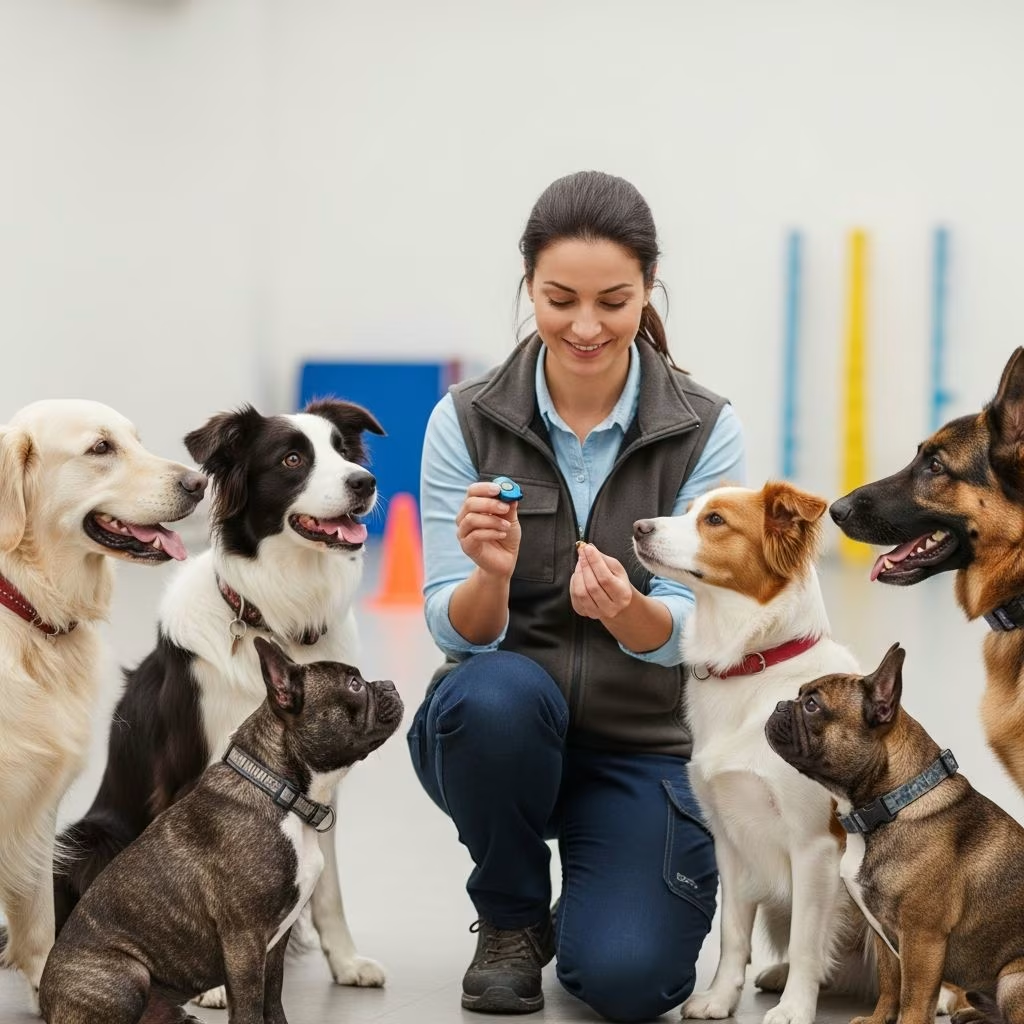
Modern dog training offers many methods, labels, and philosophies, and it can be confusing for guardians trying to decide what is safe, ethical, and effective for their dogs. This guide explains the most common approaches you will see advertised by trainers today, what they mean in practice, and how each method may affect your dog’s behavior, welfare, and your relationship together.
Because there is no single, legally enforced standard for dog training, the same words can be used very differently by different professionals. Learning what stands behind terms like force-free, balanced, LIMA, and boot camp helps you ask better questions, spot red flags, and choose training that aligns with your values and your dog’s needs.
Why Dog Training Methods Matter
Dog training is not just about teaching manners or tricks; it directly affects your dog’s emotional state, long‑term behavior, and quality of life. Scientific research shows that training methods based on positive reinforcement are associated with better welfare indicators, more relaxed body language, and stronger human–dog bonds than methods that rely heavily on fear, pain, or intimidation.
Methods that emphasize punishment or confrontation may sometimes appear to “fix” a problem quickly, but they can suppress behavior without addressing the underlying emotion, such as fear or anxiety. This can create hidden stress and, in some cases, increase the risk of aggression later on. In contrast, reward‑based approaches aim to teach dogs what to do instead, change their feelings about triggers, and reduce the risk of fallout.
Key Concepts in Learning and Behavior
Most modern training systems, regardless of label, are based on principles from learning theory in behavioral science. Understanding a few core ideas will make the different methods easier to compare.
- Positive reinforcement: Adding something the dog likes (for example, food, play, or access to sniffing) right after a behavior to make that behavior more likely in the future.
- Negative reinforcement: Removing something the dog finds unpleasant when they perform a desired behavior (for example, pressure on a collar that stops when the dog moves in the right direction).
- Positive punishment: Adding something unpleasant after a behavior to make that behavior less likely (for example, a leash correction or electronic shock when the dog pulls or barks).
- Negative punishment: Taking away something the dog wants to reduce a behavior (for example, turning away and ending attention when the dog jumps up).
- Classical conditioning: Learning that one event predicts another, such as learning that a click sound predicts a treat, or that strangers predict good things rather than threats.
Every training system uses at least some of these processes. What differs between methods is how heavily they rely on reward versus aversive tools, how carefully they protect welfare, and how they prioritize ethics when choosing an intervention.
Force‑Free and Reward‑Based Training
Force‑free, reward‑based, or “purely positive” trainers aim to avoid deliberately using fear, pain, or intimidation in their work. Instead, they focus on rewarding behaviors they want and managing situations so that unwanted behaviors are less likely to occur in the first place.
Core Principles of Force‑Free Training
- Use of positive reinforcement as the main tool for teaching skills and manners.
- Encouraging behaviors that are incompatible with problem behaviors (for example, teaching a dog to sit politely instead of jump on guests).
- Frequent use of clickers or verbal markers to clearly indicate when the dog has done the correct behavior, followed immediately by a reward.
- Strategic management of the environment so that dogs are less likely to practice unwanted behaviors, such as blocking access to the front door to prevent rehearsing jumping or bolting.
- Avoidance of choke, prong, and electronic shock collars; reliance instead on harnesses, flat collars, and other low‑risk equipment.
How Force‑Free Training Looks in Practice
In a force‑free program, a trainer might:
- Teach a dog to walk on a loose leash by rewarding the dog each time the leash slackens and by changing direction when the dog pulls, rather than adding leash jerks.
- Work on reactivity by pairing the presence of other dogs with high‑value treats at a distance where the dog still feels safe, gradually decreasing distance as the dog’s emotional response improves.
- Address jumping on guests by coaching guardians to ignore jumping and reward sitting, ensuring visitors only greet the dog when all four paws are on the floor.
Research shows that positive reinforcement‑based methods not only teach skills effectively but also reduce stress and fear, making learning more enjoyable for both dogs and people.
Limitations and Misunderstandings
Even within force‑free training, results can vary depending on the trainer’s skill. For example, a trainer who exposes a fearful dog to triggers too quickly, even with treats, can accidentally increase fear rather than relieve it. Similarly, if they do not adequately coach guardians to continue the process between sessions, progress may stall or backslide.
Balanced Training
Balanced trainers describe their approach as using “both rewards and corrections.” In practice, this can include a wide range of tools, from treats, toys, and praise to prong collars and electronic shock collars. The idea is to reward correct behavior and punish or correct unwanted behavior.
Core Features of Balanced Training
- Use of both positive reinforcement (rewards) and positive punishment (corrections).
- Potential combination of clickers or verbal markers with aversive tools like choke chains or e‑collars.
- Belief that some problems or some dogs require stronger, more aversive interventions to be effective, especially around serious behaviors like chasing wildlife or avoiding hazards.
- Wide variability: some balanced trainers use mild corrections rarely, while others rely heavily on punishment in day‑to‑day work.
Example: Rattlesnake Avoidance
Many balanced trainers argue that dogs can be taught tricks or basic manners using only rewards, but that avoiding severe dangers (like rattlesnakes) requires pairing the animal with something unpleasant, often an electronic shock. Force‑free trainers and many behavior specialists dispute this claim and argue that aversive methods are not the only, nor necessarily the safest, way to achieve reliable avoidance.
Welfare Considerations
Scientific and professional bodies have raised concerns about the routine use of aversive tools, particularly electronic collars. For example, several European countries have restricted or banned shock collars due to welfare risks, and professional bodies in North America have recommended that such tools be avoided in favor of reward‑based strategies whenever possible.
Studies have found that dogs trained with primarily aversive methods can show more stress‑related behaviors, such as lip‑licking, yawning, and tense body posture, compared with dogs trained with reward‑based methods. For guardians, it is essential to ask balanced trainers exactly how and when they use punishment and what safeguards they put in place to protect the dog’s welfare.
LIMA and the Humane Hierarchy
LIMA (Least Invasive, Minimally Aversive) and the Humane Hierarchy are frameworks used mainly in professional circles to describe an ethical decision‑making process for behavior change. They are referenced by major professional organizations, including the International Association of Animal Behavior Consultants and the Association of Professional Dog Trainers.
What LIMA Means
LIMA requires that trainers and behavior consultants:
- Select interventions that are effective and as minimally aversive as possible.
- Exhaust low‑risk, reward‑based and environmental strategies before moving to any potentially aversive techniques.
- Consider the individual animal, the environment, and the guardian’s skills and resources when designing a plan.
- Regularly reassess and adjust the plan, moving back up the hierarchy to less invasive options whenever feasible.
The Humane Hierarchy
The Humane Hierarchy, developed by psychologist Dr. Susan Friedman, organizes possible interventions from least to most likely to cause harm. Although specific versions differ slightly, the general sequence often looks like this:
| Level | Focus | Typical Strategies |
|---|---|---|
| 1 | Medical, nutritional, and physical factors | Veterinary exam, pain control, diet review, rule out illness or injury. |
| 2 | Antecedent (environment) arrangements | Changing the environment to prevent problem behavior and make desired behavior easier. |
| 3 | Positive reinforcement | Teaching and reinforcing alternative behaviors that meet the same function for the dog. |
| 4 | Negative punishment, extinction, and differential reinforcement | Removing expected rewards for problem behavior while heavily rewarding alternatives. |
| 5 | Negative reinforcement | Limited, carefully monitored removal of mild aversives when the dog performs desired behavior. |
| 6 | Positive punishment | Adding aversives only as a last resort, under strict safeguards, if at all. |
Why LIMA and the Humane Hierarchy Matter
When a trainer advertises that they work under LIMA or follow the Humane Hierarchy, it signals that they are at least aware of current discussions in behavior science and ethics and that they intend to minimize harm. In practice, trainers who adopt these frameworks typically rely almost entirely on reward‑based methods for everyday obedience and only consider more intrusive tools in exceptional circumstances, often in collaboration with veterinarians or veterinary behaviorists.
Boot Camp and Military‑Style Training
Programs marketed as boot camp, board‑and‑train, or using other military language often promise quick results for “out‑of‑control” dogs by sending them away to a facility for intensive training. While there are responsible board‑and‑train services that use reward‑based methods, the specific term “boot camp” usually suggests a trainer who emphasizes control, dominance, and punishment as primary tools.
Common Characteristics of Boot Camp Programs
- Focus on strict compliance and fast suppression of unwanted behaviors, such as pulling, barking, or jumping.
- Frequent use of aversive tools or confrontational techniques framed as “being the alpha” or establishing dominance.
- Limited transparency for guardians about exactly what happens during training sessions, especially when dogs are housed away from home.
- Appeal to guardians who feel overwhelmed or embarrassed by their dog’s behavior and want a complete, rapid “fix.”
Risks and Ethical Concerns
Suppression of behavior through harsh methods can make dogs appear obedient quickly, but underlying fear or anxiety may remain or worsen. Studies in animal welfare highlight that repeated exposure to unavoidable aversive events can lead to increased stress and learned helplessness, where animals stop trying to respond at all. In family settings, this may look like a dog that is quiet and still but also shut down, less playful, or more unpredictable under pressure.
Because boot camp models often separate dogs from their guardians, owners may have little opportunity to learn how to read their dog’s body language, reinforce good behavior, or manage the environment after the program. This can lead to problems returning once the dog is back home, especially if the dog has learned to respond only to one specific handler or under tightly controlled conditions.
Comparing Dog Training Methods
The table below summarizes key differences among the main training labels discussed.
| Method | Primary Tools | Use of Aversives | Ethical Emphasis | Typical Goals |
|---|---|---|---|---|
| Force‑Free / Reward‑Based | Treats, toys, play, praise, management, clickers. | Avoided deliberately; focus on preventing fear and pain. | High emphasis on welfare, relationship, and emotional state. | Teach alternative behaviors; change emotions; build confidence. |
| Balanced | Mix of rewards and corrections; may use prong or e‑collars. | Accepted and often central; type and intensity vary by trainer. | Emphasis on effectiveness and control; ethics vary widely. | Suppress unwanted behavior; increase reliability and compliance. |
| LIMA / Humane Hierarchy | Primarily rewards and management; systematic decision process. | Minimized; considered only after less invasive options fail. | Formal commitment to least intrusive, minimally aversive methods. | Resolve behavior issues while protecting welfare and autonomy. |
| Boot Camp / Military‑Style | High control, corrections, rigid routines; may use aversive tools. | Often frequent and central to program. | Control and speed prioritized; welfare sometimes secondary. | Quick suppression of problem behaviors; outward obedience. |
How to Choose a Trainer and Method
When selecting a trainer, labels are only a starting point. Two trainers who both call themselves “balanced” or “force‑free” may behave very differently in practice. Asking specific, concrete questions is the best way to understand what will happen with your dog.
Questions to Ask a Potential Trainer
- What methods and tools do you use, and can you show me exactly how? Look for clear explanations that emphasize rewards and management and that avoid vague references to “discipline” or “energy” without detail.
- How do you handle fear, aggression, or anxiety? Evidence‑based trainers will describe gradual exposure, counter‑conditioning, and careful observation of body language rather than flooding or forcing.
- Do you follow any professional guidelines, such as LIMA or the Humane Hierarchy? Membership in reputable organizations and adherence to their codes of ethics can be a positive sign.
- Can I observe a class or session before enrolling? Ethical trainers are usually comfortable with appropriate observation and transparency.
- How will you involve me in the process? Sustainable change depends on coaching guardians, not just working directly with the dog.
Signs of a Welfare‑Friendly Program
- Dogs appear relaxed, curious, and willing to engage.
- Trainers reward generously and adjust the environment to help dogs succeed.
- There is no repeated yelping, harsh yelling, or physical intimidation.
- Trainers invite questions and explain the reasoning behind their choices.
Frequently Asked Questions (FAQs)
Q: Is positive reinforcement enough for serious behavior problems?
A: In many cases, yes. Behavior professionals using positive reinforcement combine it with management, environmental change, and careful behavior modification plans, and research supports its effectiveness for issues like aggression, fear, and reactivity when properly applied and supervised.
Q: Are shock collars safe when used correctly?
A: Major welfare and veterinary organizations have raised concerns about electronic collars because of evidence linking aversive tools to increased stress and potential behavioral fallout; many recommend avoiding them in favor of humane, reward‑based strategies whenever possible.
Q: What does “minimally aversive” really mean in LIMA?
A: Under LIMA, a trainer must first explore options that rely on medical assessment, management, and positive reinforcement, and may consider mildly aversive strategies only after less intrusive options have been tried and found insufficient, always monitoring impact on the dog’s welfare.
Q: Are boot camp or board‑and‑train programs always bad?
A: Not necessarily. Some board‑and‑train services use reward‑based methods and emphasize transparency and owner coaching. However, programs marketed as “boot camp” and relying on dominance and heavy punishment present higher welfare risks, so it is essential to ask detailed questions and verify methods before enrolling.
Q: How can I tell if my dog is stressed by a training method?
A: Watch for signs such as tucked tail, flattened ears, lip‑licking, yawning, avoidance, sudden stillness, or panting unrelated to heat or exercise. If you see these repeatedly in training, discuss alternatives with your trainer or seek a second opinion from a reward‑based professional or veterinary behaviorist.
References
- Training your dog with science — Illinois Science Council / Lynn Meador. 2019-04-02. https://www.illinoisscience.org/blog/lynnmeador/
- Why positive reinforcement training works — Kinship / Karen London PhD. 2022-03-10. https://www.kinship.com/dog-behavior/positive-reinforcement-training-works
- Understanding popular dog training methods — Kinship. 2021-06-15. https://www.kinship.com/dog-behavior/dog-training-methods
- Changing dimensions of power in dog training cultures in the UK — Mara Miele. 2021-07-01. https://orca.cardiff.ac.uk/id/eprint/141870/1/M%20Miele%202021%20fulfilling%20your%20dogs%20potential%20postprint.pdf
- LIMA: Least Intrusive, Minimally Aversive Effective Behavior Intervention Policy — International Association of Animal Behavior Consultants. 2018-06-01. https://m.iaabc.org/resources/lima/



