

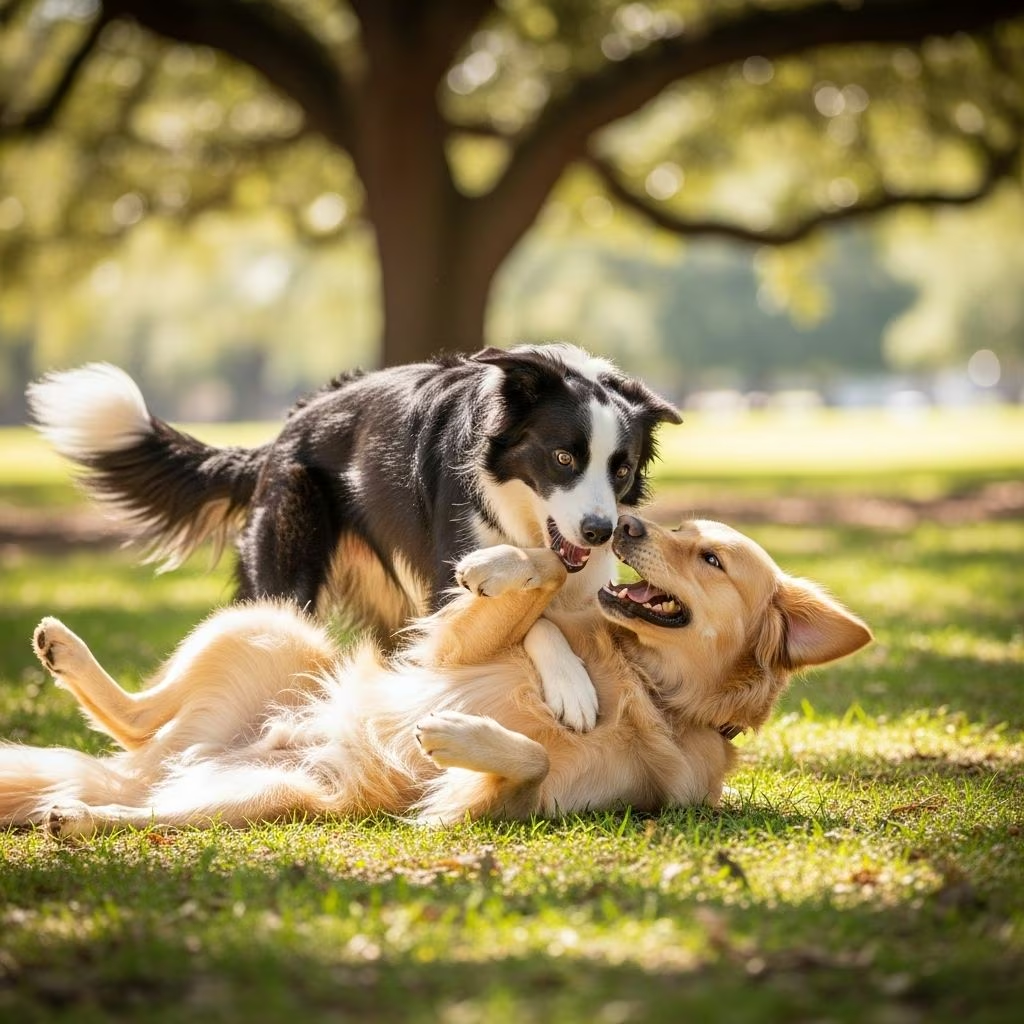
When two dogs start wrestling, chasing, and growling, it can be hard to tell whether they are just having a good time or on the verge of a serious fight. Learning to distinguish non-aggressive fights (rough play and harmless scuffles) from genuine aggression is essential for every dog guardian, both for safety and for your dog’s emotional well-being.
This guide explains what non-aggressive dog fights look like, why they happen, how to read canine body language, and when you should calmly step in. You will also learn practical ways to prevent play from escalating and how to support dogs that struggle to interact politely with others.
Why Dogs Engage in Non-Aggressive Fights
Dogs are social animals. Much of what can look like fighting—wrestling, chasing, mouthing—is actually part of normal social play and communication. Through these interactions, dogs practice skills they need for life: reading signals, controlling their bite, and negotiating boundaries.
Normal Social Play vs. True Aggression
In most cases, what owners describe as a “fight” is actually rough but healthy play. Dogs naturally use behaviors that resemble fighting—biting, pouncing, pinning—but with inhibited force and mutual cooperation.
- Play fighting allows dogs to rehearse hunting and combat skills in a safe context.
- It helps them learn impulse control—how hard to bite, when to stop, and how to respond to another dog’s signals.
- Well-socialized dogs take turns being the chaser and the chased, or the one on top and the one on the bottom.
By contrast, true aggression is rooted in fear, stress, pain, resource guarding, or frustration, and involves intent to drive the other dog away or cause harm.
Benefits of Controlled Rough Play
When properly supervised, non-aggressive scuffles and rough play can benefit dogs in several ways:
- Physical exercise – burns energy and reduces pent-up arousal that can fuel tension.
- Social skills development – dogs learn to read and respond to subtle communication cues.
- Stress relief – play can reduce stress hormones when dogs feel safe and understood.
- Bonding – strengthens relationships between housemate dogs or regular playmates.
How to Tell Play From Real Fighting
The clearest way to distinguish non-aggressive fights from serious conflict is to look at the overall pattern and body language of both dogs.
Key Signs of Playful, Non-Aggressive Fights
In non-aggressive interactions, you should see many of these features:
- Loose, wiggly bodies – muscles soft, backs not stiff, hips and shoulders relaxed.
- Play bows – front legs lowered, hind end up, often with a wagging tail; this is a universal invitation to play.
- Role reversals – dogs take turns chasing, pinning, or being on top; no one dog always dominates the game.
- Self-handicapping – bigger or stronger dogs gently restrain themselves, going easy on smaller partners.
- Short pauses in the action – dogs break, look away, or sniff briefly, then quickly re-engage if they are still having fun.
- Soft or rhythmic growls – growling can occur in play but tends to be higher-pitched and intermittent, without stiffening.
- Quick recovery – if one dog yelps, the other immediately backs off or changes behavior.
Warning Signs of Escalating Aggression
If you see several of the following signs together, the interaction may be shifting from play to conflict, and it’s time to intervene calmly:
- Stiff, tense bodies – muscles rigid, tails high and rigid or tucked tight.
- Hard staring – unblinking, direct eye contact combined with a frozen posture.
- Hackles raised – fur along the back standing up, especially with other tension signs.
- One-sided interaction – one dog repeatedly pinning, chasing, or cornering the other; no turn-taking.
- Attempts to escape – one dog consistently trying to get away, hide behind people, or avoid contact.
- Ignored signals – the more assertive dog ignores yelps, lip licking, turning away, or freezing from the other.
- Deep, continuous growling – especially combined with snarling, baring teeth, or lunging.
- Escalating intensity – noise and force are increasing instead of cycling between high and low.
| Feature | Playful Scuffle | True Aggression |
|---|---|---|
| Body posture | Loose, bouncy, curved | Rigid, stiff, leaning forward |
| Facial expression | Open mouth, relaxed eyes | Closed or tight mouth, hard stare |
| Vocalization | Intermittent, higher-pitched growls or barks | Deep, sustained growls, snarling |
| Control and response | Pauses, responds to yelps and signals | Ignores signals, intensity increases |
| Outcome | Dogs quickly shake it off and re-engage or walk away | Dogs remain aroused, may show lingering tension or injury |
Common Triggers for Dog-to-Dog Scuffles
Even among dogs that generally get along, certain situations make non-aggressive fights more likely. Most of these involve stress, over-arousal, or competition.
Resource Guarding
Resource guarding occurs when a dog feels the need to protect something valuable—food, toys, beds, or even people—from another dog.
- Guarding can range from subtle stiffening and side-eye looks to growling or snapping.
- In multi-dog homes, tension often appears at mealtimes, around chews, or near favorite resting spots.
- Minor guarding may lead to brief, non-injurious scuffles that look like fights but resolve quickly.
Because resource guarding can escalate, it is important to manage the environment (separate feeding spaces, supervised toy use) and consult a qualified trainer or behavior professional if guarding becomes frequent or intense.
Over-Arousal, Hyperactivity, and Anxiety
Many non-aggressive fights begin when dogs become too excited to think clearly. Hyperactivity and anxiety are well-known drivers of aggressive behavior in dogs.
- Dogs that are rarely taught to settle or control impulses may react explosively to stimulation.
- Over-excitable dogs often ignore other dogs’ calming signals, which pushes playmates to use louder corrections—sometimes resulting in a fight.
- Chronic anxiety, especially without adequate outlets for exercise and mental work, increases the risk of reactivity in social settings.
A balanced diet, sufficient daily exercise, and structured training that builds calm behavior have been shown to reduce stress-related aggression.
Environmental and Routine Stressors
Changes in the environment or routine—new pets, visitors, loud noises, or disruptions in daily schedules—can raise general stress and make scuffles more likely.
- Dogs are sensitive to routine changes and may redirect tension onto one another.
- Noise triggers such as vacuum cleaners, construction, or frequent doorbell ringing can elevate baseline arousal.
- In multi-dog homes, tension can surface as short, non-injurious quarrels that resemble sibling spats.
Medical or Pain-Related Causes
When a dog that was previously tolerant suddenly reacts to other dogs, pain or illness should be ruled out first.
- Dogs in pain may snap or growl simply to keep others from touching or jostling them.
- Conditions affecting mobility, vision, or hearing can increase fear and startle responses, making minor scuffles more likely.
- Veterinary examination is strongly recommended whenever new or unexplained aggression appears.
How to Safely Manage Non-Aggressive Fights
Even when you are confident dogs are playing, supervision and management are crucial. Non-aggressive fights can escalate suddenly if one dog becomes overwhelmed or if triggers such as resources enter the picture.
When to Let Dogs Work It Out
For well-matched, socially skilled dogs, it is often safe to allow rough play or brief, non-injurious scuffles to continue if:
- Both dogs return repeatedly to the interaction, seeking more play.
- They take regular mini-breaks and show relaxed body language afterward.
- Corrections (a brief growl or snap) result in immediate de-escalation and changed behavior.
These moments can help dogs refine their social skills, as long as humans are ready to step in if intensity rises.
Clear Signals It Is Time to Intervene
Intervene early and calmly if you notice:
- One dog consistently trying to escape or hide.
- Repetitive pinning or body slamming from one dog without role reversal.
- Growls deepening in tone while bodies become stiffer.
- Fights breaking out repeatedly around specific triggers such as toys, food, or doorways.
Use a calm voice, separate dogs by calling them away to different directions if they have reliable recall, or briefly use barriers or leashes if needed. Avoid yelling or physical punishment, which can add stress and worsen future interactions.
Practical Prevention Strategies
Preventing scuffles from turning serious relies on managing both the environment and the dogs’ emotional states.
- Provide adequate daily exercise – including not only high-energy play but also calm walks and mentally focused activities like training or scent games.
- Support calm, settled behavior – teach dogs to relax on a mat, practice “settle” or “place” commands, and reinforce quiet behavior.
- Manage resources – feed dogs separately, supervise high-value chews or toys, and remove items likely to cause conflict.
- Create safe spaces – each dog should have a quiet area or crate where they can retreat without being disturbed.
- Use structured introductions – introduce new dogs on neutral ground, using parallel walking and gradual proximity.
- Address chronic anxiety – consult a veterinarian or veterinary behaviorist if your dog struggles to relax even in calm environments.
The Role of Training and Socialization
Training and early socialization significantly influence how dogs handle conflict, frustration, and excitement around other dogs.
Early Socialization and Dog Etiquette
Puppies that experience well-managed, positive interactions with a range of dogs are more likely to become adults who can navigate social situations without resorting to aggression.
- Puppy classes and supervised play groups allow young dogs to practice signals and limits with peers.
- Exposure should be gradual and controlled, avoiding overwhelming or chaotic environments.
- Dogs that miss out on early social learning may overreact or misread other dogs’ intentions later in life.
Impulse Control and Obedience Skills
Core training skills directly reduce the likelihood that non-aggressive fights will escalate:
- Reliable recall – calling dogs away from rising tension before a fight starts.
- Leave it / drop it – preventing conflicts over toys, food, or found objects.
- Settle / place – teaching dogs to relax among distractions, lowering overall arousal.
- Loose-leash walking – reduces frustration and anxiety when encountering other dogs.
Training should be consistent, reward-based, and aimed at building calm confidence rather than fear.
When to Seek Professional Help
Even if scuffles do not cause injury, frequent or intense conflict may indicate deeper behavioral or medical issues.
- Contact your veterinarian if aggression is new, sudden, or out of character, to rule out pain or illness.
- Consult a qualified trainer or behaviorist (preferably one using humane, evidence-based methods) if:
- Dogs in your household fight regularly, even if the fights appear non-aggressive.
- One dog seems constantly anxious, hyper-alert, or unable to settle.
- Growls and snaps are escalating or occurring in more situations over time.
- You feel nervous allowing your dogs to interact without tight control.
Early intervention can prevent minor conflicts from hardening into lasting aggression patterns, improving safety and quality of life for both dogs and humans.
Frequently Asked Questions (FAQs)
Q: Is growling during play always a bad sign?
A: No. Many dogs growl during enthusiastic play, especially in tug or wrestling games. Look at the whole picture: if bodies are loose, roles are switching, and both dogs keep returning to play after short breaks, the growling is likely part of normal, non-aggressive interaction.
Q: My dogs sometimes snap at each other over toys. Should I stop all play?
A: Occasional brief snaps that end the moment a dog backs off can be normal corrections. However, if conflicts are frequent, intense, or tied to specific items, manage those resources (separate toys, supervised play) and work with a trainer to reduce guarding tendencies.
Q: How long should I let rough play continue?
A: Limit play sessions to short bursts, especially for excitable or young dogs. Provide regular breaks by calling dogs apart, rewarding calmness, and checking that both still appear relaxed and eager to continue before allowing more play.
Q: Can a friendly dog suddenly become aggressive with other dogs?
A: Yes. Sudden changes in social behavior may stem from pain, illness, negative experiences, or chronic stress. Any new or unexplained aggression should first be evaluated by a veterinarian and then, if needed, addressed with a qualified behavior professional.
Q: Are dog parks safe for dogs that get into non-aggressive fights?
A: Dog parks can be overwhelming for many dogs due to high arousal, mismatched play styles, and limited human control. For dogs prone to scuffles, controlled small-group play or structured socialization under professional supervision is generally safer and more beneficial.
References
- How to Stop Your Dogs from Fighting — Holiday Barn Pet Resorts. 2017-03-14. https://holidaybarn.com/blog/a-home-divided/
- Triggers and Underlying Causes of Dog Aggression: Part 2 – Hyperactivity and Anxiety — Thriving Canine. 2013-06-24. https://www.thrivingcanine.com/blog/triggers-and-underlying-causes-dog-aggression-part-2-hyperactivity-and-anxiety/
- My Dog Used to Be Friendly with Other Dogs, Now He’s Not — Redeeming Dogs. 2019-08-01. https://redeemingdogs.com/dog-used-friendly-dogs-now-hes-not/
- How to Prevent Dogs from Fighting with Positive Associations — Dog Gone Problems. 2020-07-10. https://www.doggoneproblems.com/arwen-pippen-luthian-stop-dog-fighting/
- Play Fighting vs. Aggression — The DogFather. 2018-05-02. https://www.thedogfather.com/training-tips/play-fighting-vs-aggression
- Friendly Dogs Can Cause Fights — Take the Lead K9 Training. 2017-08-11. https://taketheleadk9training.com/blog/2017/8/11/friendly-dogs-can-cause-fights



