

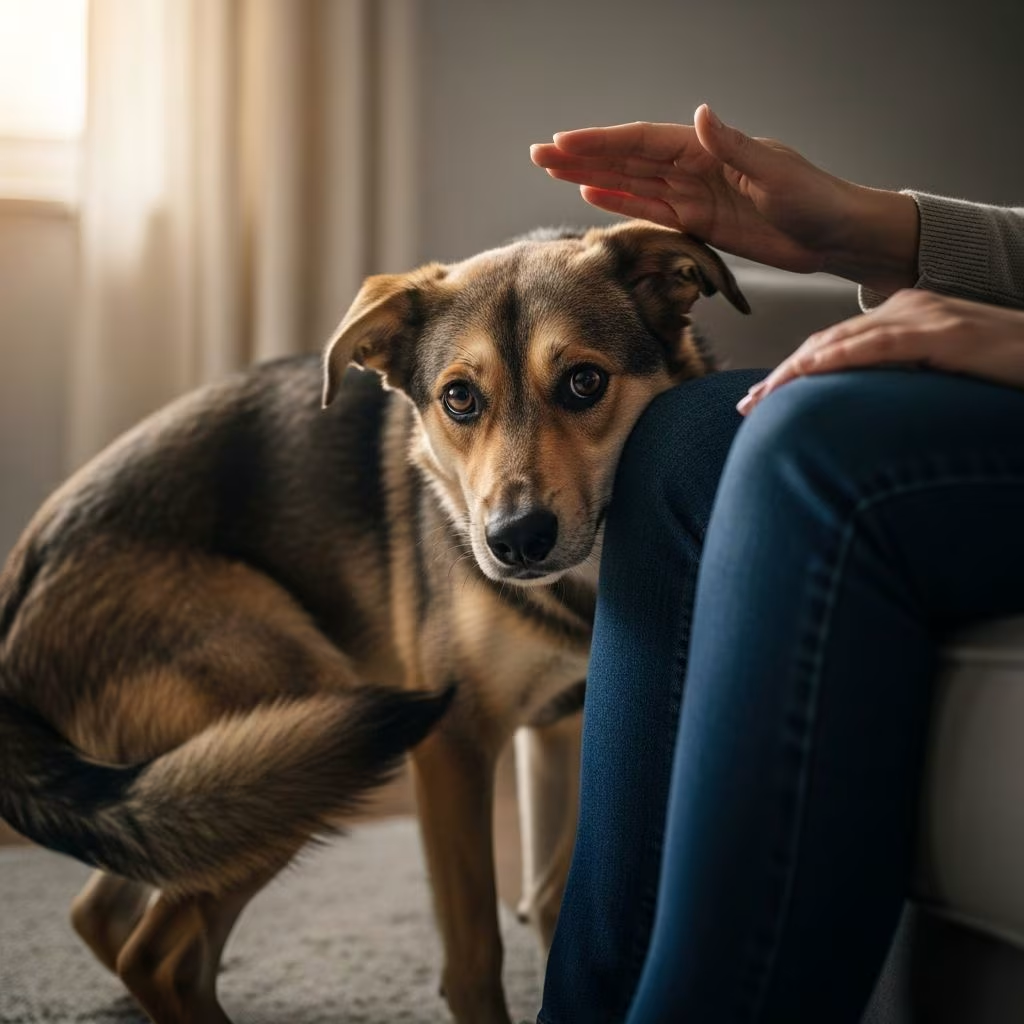
Some dogs seem to move through the world with easy confidence, while others shy away from new people, startle at small noises, or cling to their caregivers in unfamiliar situations. These naturally fearful dogs are not “bad” or “broken”; fear is a normal emotional response that can be shaped by genetics, early life experiences, health, and the environment.
This article explains why some dogs are more fearful than others, how to recognize both obvious and subtle signs of fear, and what you can do to support a sensitive dog with humane, science-based strategies.
What Does It Mean for a Dog to Be Naturally Fearful?
Fear is an instinctive feeling of threat or danger that triggers the dog’s autonomic nervous system and prepares the body for fight, flight, freeze, or fidget responses. In moderation, fear is adaptive and keeps dogs safe. Problems arise when fear is intense, frequent, or interferes with normal daily life.
A naturally fearful dog typically shows:
- A consistent pattern of worry or nervousness in new or mildly challenging situations
- Strong reactions to common triggers (strangers, sounds, being handled, new environments)
- Difficulty relaxing in unfamiliar places, even when no obvious threat is present
- Slow recovery after a scare, compared to more resilient dogs
This temperament often reflects a mix of genetic predisposition and early experiences, rather than a single event or “misbehavior.”
Why Are Some Dogs More Fearful Than Others?
Multiple factors can contribute to a dog’s natural fearfulness. Most fearful dogs are influenced by more than one of the following:
Genetics and Inherited Temperament
Research and clinical reports show that some dogs are born with a more cautious or anxious temperament, much like people. Fearfulness can run in families; if one or both parents are fearful, their puppies are more likely to show fear-based behaviors.
Key points about genetic influence include:
- Breed tendencies: Certain breeds and lines are noted to be more prone to profound fear or anxiety-related issues.
- Heritable sensitivity: Brain systems involved in threat detection and stress responses can be more reactive in some dogs from birth.
- Interaction with environment: Genetics set a baseline, but environment, training, and handling still play a major role in how fear is expressed.
Lack of Early Socialization
Puppies have a critical socialization window, generally around 3–14 weeks of age, when they are especially open to learning that people, animals, places, and sounds are safe.
When puppies do not receive positive exposure during this period, they are more likely to react fearfully later to:
- Unfamiliar people (especially men, children, or people with hats, canes, etc.)
- Other dogs and animals
- Everyday environments (traffic, city noise, elevators, busy sidewalks)
- Routine handling (veterinary exams, grooming, nail trims)
Lack of socialization is one of the most common reasons for fearful behavior in adult dogs.
Trauma and Negative Experiences
Even a genetically confident dog can become fearful after a frightening or painful event, and naturally fearful dogs are especially vulnerable. A single traumatic incident—such as being attacked by another dog, harsh handling, or a loud, sudden noise—can lead to long-lasting fear or phobias.
Common examples include:
- Being grabbed, pinned, or yelled at by a person
- Dog fights or repeated bullying at the dog park
- Rough or painful handling at grooming or vet visits
- Exposure to loud noises (fireworks, thunderstorms, construction) without support
In some dogs, that fear stays very specific (for example, to nail trims), while in others it generalizes to a wider range of situations (such as fear of all handling or all new people).
Environment and Daily Stress
Ongoing stress can maintain or worsen fearfulness. For a sensitive dog, seemingly ordinary experiences can be overwhelming, such as:
- Chaotic or noisy households
- Unpredictable interactions with people or other animals
- Frequent moves or changes in routine
- Limited safe spaces to rest and decompress
Living in a shelter or busy urban setting can heighten anxiety for already cautious dogs.
Medical Conditions and Aging
Physical health has a strong impact on emotional wellbeing. Pain, sensory changes, and neurological issues can all increase fear or startle responses.
- Painful conditions (such as arthritis) make dogs more sensitive to touch and movement, which can lead to defensive or avoidant behavior.
- Sensory loss (vision or hearing decline) may cause a dog to be startled by things they cannot fully see or hear coming.
- Cognitive changes in older dogs can cause confusion, disorientation, and increased anxiety.
Any sudden change in behavior or fear level should prompt a veterinary exam to rule out medical causes.
Recognizing Signs of Fear in Dogs
Being able to read subtle body language is essential when living with a naturally fearful dog. Some fear signals are very obvious; others are easy to miss until the dog is at their limit.
Common Body Language and Behavioral Signs
Fear in dogs can show up as withdrawal, appeasement, or aggression when escape is not possible.
| Subtle or Early Signs | Moderate Signs | Severe Signs |
|---|---|---|
|
|
|
A fearful dog might show only a few of these behaviors, and they can switch rapidly between freezing, fleeing, and fighting depending on the situation.
Context Matters
Whether fear is considered normal or problematic depends on context. A mild fear response to a truly threatening situation can be appropriate. However, fear becomes a welfare concern when:
- The reaction is much more intense than the situation warrants
- The dog cannot function (eat, rest, interact) in everyday life
- Caretakers cannot safely handle or transport the dog
- The dog is frequently exposed to the trigger and cannot escape it
Common Triggers for Naturally Fearful Dogs
While every dog is an individual, naturally fearful dogs often share certain triggers:
- Strangers and unfamiliar people – especially those approaching quickly, bending over the dog, or reaching to touch.
- Other dogs or animals – particularly if the dog has had negative social experiences.
- Noises – fireworks, thunderstorms, gunshots, construction, household appliances, or even sudden laughter.
- Handling and restraint – vet visits, grooming, nail trims, lifting, or being hugged tightly.
- New environments – crowded streets, busy parks, vehicles, or unfamiliar indoor spaces.
- Being alone – some fearful dogs also develop separation-related distress.
Identifying your dog’s specific triggers helps you plan management and training steps that feel safe and achievable.
How to Support a Naturally Fearful Dog
Living with a fearful dog requires patience, empathy, and a willingness to go at the dog’s pace. The goal is not to turn a sensitive dog into a bold, fearless one, but to help them feel safe and confident enough to enjoy everyday life.
Create a Predictable, Low-Stress Environment
- Establish routines: Keep feeding, walks, and rest times consistent so your dog knows what to expect.
- Provide safe spaces: Set up quiet, comfortable areas (a crate, bed, or room) where your dog can retreat without being disturbed.
- Limit overwhelming situations: Avoid crowded events, off-leash dog parks, or chaotic gatherings that exceed your dog’s coping ability.
- Control introductions: Introduce new people and animals slowly, with space and the option for your dog to move away.
Use Positive Reinforcement and Gentle Handling
Fearful dogs learn best when they feel safe and in control. Coercive methods tend to increase anxiety and can trigger defensive aggression.
- Reward calm behavior with food, play, or gentle praise.
- Avoid punishment, leash corrections, or scolding for fear-based behaviors.
- Let your dog choose to approach or retreat; do not force them into contact.
- Teach cooperative care skills (like chin rests or targeting) to make handling less scary.
Desensitization and Counterconditioning
Two core behavior-modification techniques can help fearful dogs form new, positive associations:
- Desensitization: Gradually exposing the dog to a trigger at a low, non-scary level (far distance, low volume, brief duration), and slowly increasing intensity only when the dog remains relaxed.
- Counterconditioning: Pairing the trigger with something the dog loves (usually high-value food) so the presence of the trigger predicts good things.
For example, a noise-sensitive dog might hear a very soft recording of thunder while receiving treats, with the volume increased over weeks or months as comfort grows.
Many families find it helpful to work with a veterinary behaviorist or qualified reward-based trainer when using these methods, especially with severe fear or aggression.
Consider Veterinary and Behavioral Support
Because medical and emotional factors are often intertwined, a comprehensive approach usually works best:
- Veterinary exam: Rule out pain, sensory loss, or illness that may be contributing to fear.
- Behavior consultation: A veterinarian with behavior training or a board-certified veterinary behaviorist can design a tailored plan.
- Medications or supplements: In some cases, anti-anxiety medications or adjunctive products are recommended to lower baseline fear and make learning possible.
Medication is not a shortcut or a replacement for training, but it can be an important tool for improving welfare and speeding progress when fear is severe.
Helping Fearful Dogs Build Confidence
Even naturally fearful dogs can gain skills and resilience over time. Small, consistent steps are more effective than dramatic exposures.
Confidence-Building Activities
- Enrichment games: Food puzzles, sniffing activities, and simple search games allow dogs to explore and succeed at their own pace.
- Choice-based training: Teaching simple behaviors (touch, sit, hand-target) with rewards builds communication and predictability.
- Low-pressure socialization: Watching people, dogs, and traffic from a comfortable distance, with treats and the option to retreat.
- Body-awareness exercises: Walking over different surfaces, stepping onto low platforms, or navigating gentle obstacles can improve coordination and confidence.
Setting Realistic Expectations
Progress is rarely linear. Fearful dogs may have good days and setbacks, especially during life changes or stressful events. Helpful mindset shifts include:
- Celebrating small improvements, such as accepting a treat in a new place or choosing to approach a calm stranger.
- Respecting your dog’s limits and avoiding comparisons with more outgoing dogs.
- Focusing on safety, comfort, and quality of life rather than perfection.
Frequently Asked Questions (FAQs)
Q: Is my dog just being stubborn, or are they truly fearful?
If your dog avoids, freezes, or reacts strongly to certain situations and shows body language like a tucked tail, lowered posture, or lip licking, they are likely experiencing fear rather than stubbornness. Treating these behaviors as fear and using gentle, reward-based methods is both safer and more effective.
Q: Can a naturally fearful dog ever become confident?
Many fearful dogs can become significantly more comfortable and functional with patient training, environmental management, and, when needed, veterinary support. Their temperament may remain on the sensitive side, but their ability to cope and enjoy life can improve greatly over time.
Q: Should I force my fearful dog to face their fears?
Flooding a dog with intense exposure (forcing them to “get over it”) often increases fear and can damage trust. Planned, gradual desensitization and counterconditioning at intensities your dog can handle are safer and more effective approaches.
Q: When should I talk to a veterinarian or behaviorist?
Seek professional help if your dog’s fear interferes with daily life, leads to aggression, or appears suddenly without an obvious cause. A veterinarian can rule out medical issues, and a behavior professional can guide you through a tailored behavior-modification plan.
Q: Are certain breeds more likely to be fearful?
Some breeds and bloodlines show higher rates of anxiety or profound fear, likely due to genetic factors, but individuals vary widely. Regardless of breed, early socialization, kind handling, and appropriate training strongly influence how fear is expressed.
References
- Extreme Fear and Anxiety in Dogs — PetMD / Dr. Tammy Hunter & Dr. Ernest Ward. 2019-09-23. https://www.petmd.com/dog/conditions/behavioral/c_dg_fears_phobia_anxiety
- Fearful Behavior in Dogs — Scottish SPCA. 2015-01-01. https://www.sspca.org/sites/main/files/file-attachments/fearful_dogs_0.pdf
- Fear in Dogs — UC Davis School of Veterinary Medicine. 2020-01-01. https://healthtopics.vetmed.ucdavis.edu/health-topics/canine/your-dogs-fear
- Fears and Phobias in Dogs – Animals and People — VCA Animal Hospitals. 2021-06-15. https://vcahospitals.com/know-your-pet/fears-and-phobias-in-dogs—animals-and-people
- Bringing Home a Fearful Dog — Wisconsin Humane Society. 2018-01-01. https://www.wihumane.org/behavior/ask-the-experts/dogs/bringing-home-a-fearful-dog
- Why Are Some Dogs So Anxious and Fearful? — Stanley Coren, Psychology Today. 2011-11-30. https://www.psychologytoday.com/us/blog/canine-corner/201111/why-are-some-dogs-so-anxious-and-fearful



