

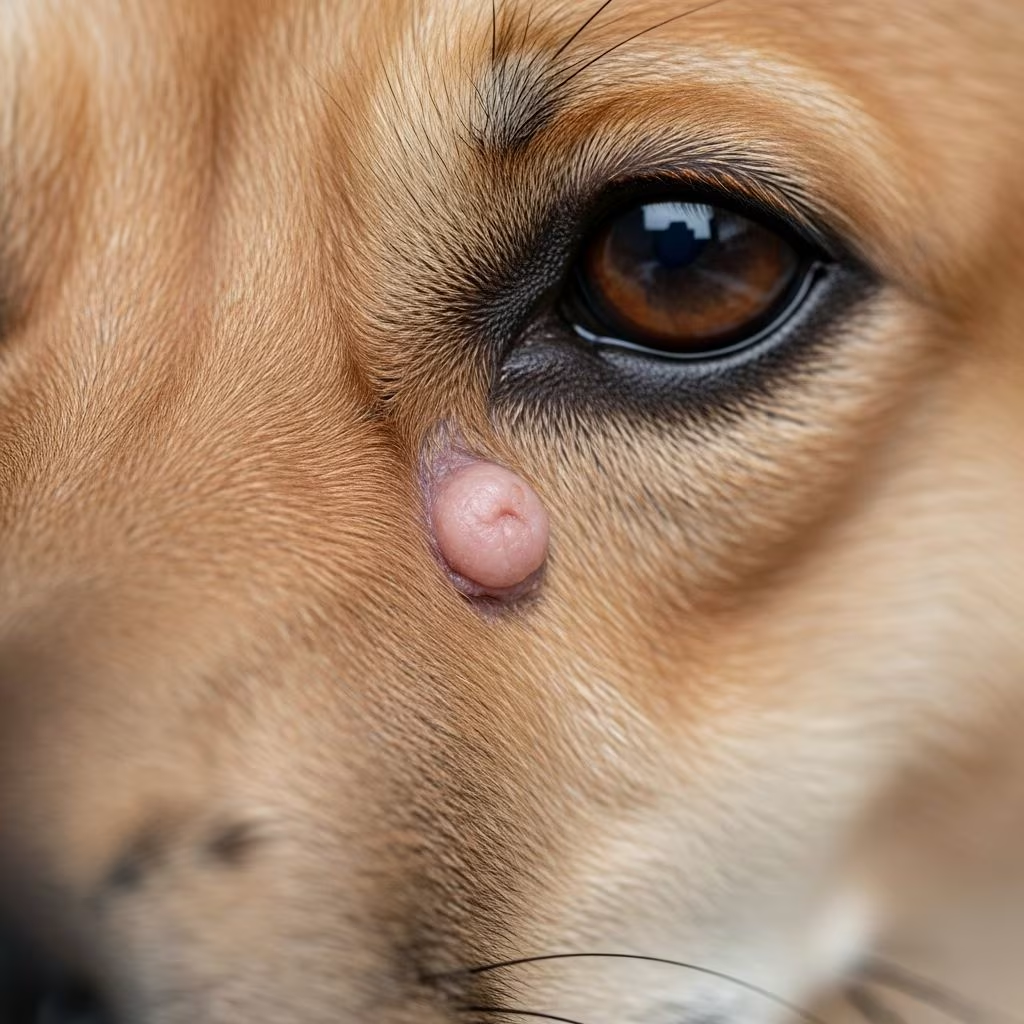
Lumps and bumps are frequent discoveries on a dog’s body, particularly as they age. While many prove harmless, others signal underlying health concerns requiring prompt attention. This guide details common types, evaluation methods, and action steps to safeguard your pet’s well-being.
Why Do Lumps Appear on Dogs?
Dogs develop lumps due to diverse causes, ranging from benign accumulations to infections or malignancies. Aging plays a key role, with older dogs more susceptible to fatty deposits and skin growths. Trauma, allergies, or immune responses can also trigger swellings. Identifying the origin early aids in distinguishing routine findings from urgent issues.
Benign Lumps: Common and Usually Non-Threatening
Most lumps fall into the benign category, posing little risk unless they interfere with daily activities. These often feel soft, move under the skin, and grow slowly.
Fatty Tumors (Lipomas)
Lipomas rank among the most prevalent benign growths, consisting of fat cells forming soft, doughy masses. They typically arise on the trunk, legs, or chest in middle-aged to senior dogs, especially overweight ones or breeds like Labrador Retrievers and Doberman Pinschers. These lumps slide easily when touched and rarely cause pain. Diagnosis involves fine-needle aspiration to confirm fat content. Surgical excision is optional unless the mass hinders movement or exceeds a burdensome size.
Cysts and Sebaceous Growths
Sebaceous cysts emerge from blocked oil glands, creating fluid-filled sacs under the skin. They appear as small, round protrusions that may leak or crust over. Common in older dogs of breeds like Cocker Spaniels, these seldom exceed pea size but can inflame if ruptured. Histiocytomas, button-like red nodules in young dogs, often regress spontaneously as immunity strengthens. Trichoepitheliomas, filled with cheesy material from hair follicles, recur post-removal but remain harmless.
- Key traits: Smooth, fluctuant feel; slow expansion; minimal discomfort.
- Breeds at risk: Terriers, Spaniels, larger breeds.
- Management: Monitor size; drain if infected.
Other Harmless Bumps
Warts, or papillomas, present as cauliflower-textured growths from viral infections, mainly in puppies or immunocompromised adults. They frequently self-resolve within months. Skin tags and cornifying epitheliomas resemble small horns on the back or legs, needing removal only if traumatized. Enlarged lymph nodes from minor infections mimic lumps but normalize post-recovery.
Malignant Lumps: Recognizing Cancerous Threats
Not all lumps are innocuous; cancerous ones demand swift intervention. These often grow rapidly, adhere to tissues, and provoke irritation or ulceration.
Mast Cell Tumors
These skin cancers manifest as firm, raised areas releasing histamines, causing swelling or itching. Prevalent in breeds like Boxers and Retrievers, they vary from low to high grade. Veterinary biopsy grades severity, guiding treatments like surgery, chemotherapy, or radiation.
Squamous Cell Carcinomas and Melanomas
Squamous cell carcinomas appear as crusty, non-healing sores on light-skinned areas, aggressive in hounds and poodles. Melanomas, dark-pigmented and invasive, strike mouths or toes, metastasizing quickly. Sun exposure heightens risk in short-coated breeds.
| Type | Appearance | Common Locations | Treatment |
|---|---|---|---|
| Mast Cell Tumor | Firm, red, itchy | Trunk, limbs | Surgery, chemo |
| Squamous Cell Carcinoma | Ulcerated plaque | Head, legs | Excision, radiation |
| Melanoma | Dark, raised | Mouth, nails | Surgery, amputation if needed |
Rare but Serious: Other Cancers
Fibrosarcomas form deep, invasive masses in the legs or chest. Angiosarcomas, vascular tumors, bruise-like and rapid-spreading, affect sun-exposed undersides. Liposarcomas, malignant fat cancers, recur post-surgery in older males. Lymphosarcomas cause flaky, ulcerated skin patches, responding variably to chemo.
How to Evaluate a New Lump on Your Dog
Regular touch-checks during grooming detect changes early. Assess these factors:
- Size and growth: Benign lumps expand gradually; malignant ones double quickly.
- Texture: Soft and mobile suggest safety; hard or fixed indicate concern.
- Color and shape: Uniform color is reassuring; irregular, ulcerated forms warrant checks.
- Pain or symptoms: Fever, lethargy, or appetite loss accompany infections/cancers.
Use the “ABCDE” rule adapted for pets: Asymmetry, Border irregularity, Color variation, Diameter over 1 cm, Evolving size.
Veterinary Diagnosis: Tests and Procedures
Never self-diagnose; professionals employ:
- Fine-needle aspirate: Extracts cells for microscopic review, non-invasive for lipomas.
- Biopsy: Surgical sampling for ambiguous cases.
- Imaging: Ultrasounds or X-rays probe depths.
- Bloodwork: Detects systemic involvement.
Early diagnostics boost success rates dramatically.
Treatment Options for Dog Lumps
Approaches vary by type:
- Observation: For stable benign lumps.
- Surgery: Gold standard for problematic growths.
- Medications: Antibiotics for abscesses; chemo/radiation for cancers.
- Cryotherapy/Laser: Minimally invasive for surface lesions.
Post-treatment monitoring prevents recurrences.
Prevention and Home Care Strategies
Minimize risks through:
- Weight control to deter lipomas.
- Sun protection for pale breeds.
- Tick/flea preventives against infections.
- Monthly skin exams.
- Balanced diet supporting immunity.
When to Rush to the Vet
Seek immediate care if the lump:
- Grows >10% weekly.
- Oozes, bleeds, or ulcerates.
- Accompanies illness signs.
- Appears suddenly in young dogs.
Frequently Asked Questions (FAQs)
Are all soft lumps on dogs lipomas?
No, while common, cysts or abscesses can feel similar. Vet confirmation is essential.
Can benign lumps turn cancerous?
Rarely; most stay benign, but monitor for changes.
How much does lump removal cost?
Varies by size/location; simple procedures $200–$800, complex $1,000+.
Do certain breeds get more lumps?
Yes, Labs for lipomas, Boxers for mast cells.
Is surgery always needed for lumps?
No, many watchful waiting suffices.
References
- Urgent or Benign? A Pet Owner’s Guide to Lumps on Your Pet — Santa Monica Vet. 2023. https://santamonicavet.com/urgent-or-benign-a-pet-owners-guide-to-lumps-on-your-pet/
- Pet Lumps & Bumps: When to Worry and What to Do — FV Pet Emergency. 2024. https://fvpetemergency.com/pet-lumps-bumps-when-to-worry-and-what-to-do/
- Tumors of the Skin in Dogs – Dog Owners — Merck Veterinary Manual. 2025-02-01. https://www.merckvetmanual.com/dog-owners/skin-disorders-of-dogs/tumors-of-the-skin-in-dogs
- Lumps, Bumps, and Cysts on Dogs — PetMD. 2024. https://www.petmd.com/dog/symptoms/lumps-bumps-and-cysts-dogs
- Identifying Lumps & Bumps in Pets: What Every Fairfax Owner Needs to Know — Fairfax Vet. 2023. https://fairfaxvet.com/identifying-lumps-bumps-in-pets-what-every-fairfax-owner-needs-to-know/



