

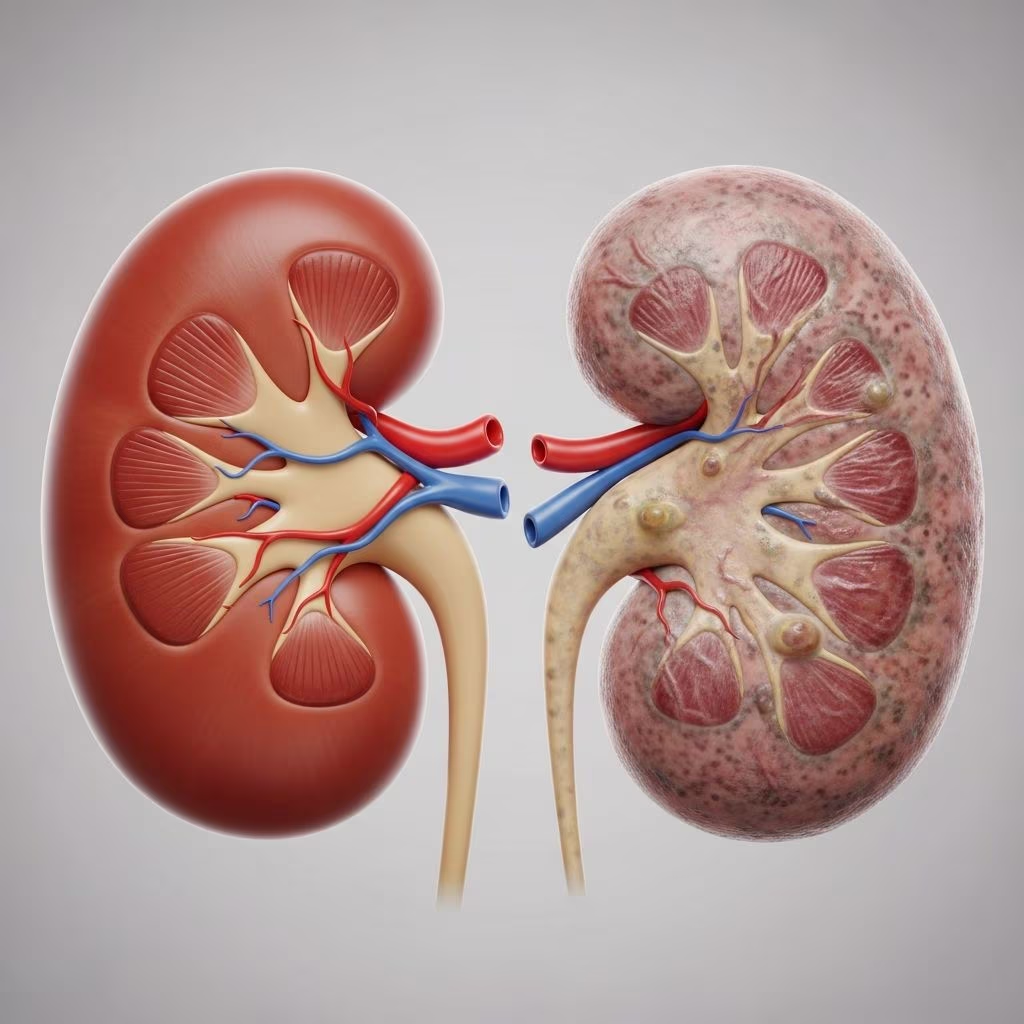
Kidney disease represents one of the most significant health challenges facing older companion animals today. Whether presenting as a gradual decline in function over months or years, or as a sudden crisis requiring immediate intervention, renal dysfunction profoundly affects a pet’s quality of life and longevity. Understanding the nature of kidney disease, how it develops, and what treatment options exist can help pet owners make informed decisions about their animal’s care and work effectively with their veterinary team.
The Spectrum of Renal Disease: From Acute to Chronic
Kidney disease in dogs and cats exists along a spectrum, with two primary classifications that differ significantly in onset, progression, and prognosis. Recognizing which type of kidney disease a pet has developed is essential for determining the appropriate course of treatment and establishing realistic expectations for recovery and management.
The kidneys function as the body’s primary filtration system, removing nitrogenous waste products and excess water from the bloodstream to form urine. When this filtering capacity becomes compromised, waste products accumulate in the blood—a condition known as azotemia—leading to a cascade of metabolic disturbances that can affect multiple organ systems.
Acute Kidney Injury: The Emergency Presentation
Acute kidney injury (AKI) represents a sudden loss of renal function occurring over days to weeks. Unlike chronic conditions that develop silently over extended periods, AKI typically presents with dramatic symptoms that prompt immediate veterinary attention. Affected animals often have a recent history of exposure to toxins, severe infection, significant blood loss, or prolonged low blood pressure states that compromise kidney perfusion.
The hallmark of AKI is the rapid development of clinical signs accompanied by markedly elevated kidney function markers in laboratory tests. Animals may display severe lethargy, vomiting, loss of appetite, and alterations in urination patterns. Some develop oliguria (minimal urine production) or anuria (complete absence of urine output), creating life-threatening electrolyte imbalances and fluid overload that can lead to pulmonary edema.
The potential for recovery in AKI depends on the underlying cause and the severity of kidney damage. If the causative factor can be identified and addressed promptly, some animals recover substantial kidney function, though residual damage may persist. Others progress to chronic kidney disease even after apparent recovery from the acute episode.
Chronic Kidney Disease: The Silent Progression
Chronic kidney disease (CKD) represents the slow, progressive loss of functional renal tissue over months to years, often without an identifiable inciting cause. This progressive deterioration distinguishes CKD from acute presentations and carries different implications for management and prognosis. CKD is remarkably common in older animals, affecting up to 10% of dogs and 60% of cats in geriatric populations at referral institutions.
The gradual nature of CKD means that animals can lose substantial kidney function before clinical signs become apparent. This occurs because the kidneys possess remarkable reserve capacity—animals can maintain relatively normal metabolism with only 5–8% of functional renal tissue. By the time symptoms develop, significant irreversible damage has often already occurred.
Causes and Risk Factors in Renal Disease Development
Understanding what initiates kidney disease helps veterinarians determine whether progression might be slowed or halted. Known causes of CKD include diseases affecting the blood vessels supplying the kidneys, glomerular diseases affecting the filtration structures themselves, interstitial diseases affecting the kidney tissue, and tubular diseases affecting the functional units of the kidney.
Certain dog and cat breeds carry genetic predispositions to inherited kidney disease. These heritable forms often present earlier in life than sporadic CKD, sometimes affecting animals under three years of age. Beyond breed susceptibility, neither sex nor other demographic factors appear to predispose animals to nonheritable CKD in most cases.
Age represents the most significant risk factor for CKD development. While congenital kidney disease causes a temporary increase in prevalence in young animals, the prevalence of kidney disease steadily increases with advancing age from five to six years onward. Cats appear particularly vulnerable, with studies showing that chronic kidney disease affects up to 40% of cats over age 10 and 80% of cats over age 15.
Staging Systems: Measuring Disease Progression
Veterinary medicine employs standardized staging systems developed by the International Renal Interest Society (IRIS) to classify the severity of kidney disease and guide treatment recommendations. These staging systems use blood kidney values (serum creatinine and SDMA) along with urine-specific gravity and the presence of protein in urine to establish disease stage.
Stage 1: Early Detection Without Azotemia
Stage 1 represents kidney disease identified before kidney values become abnormally elevated. This early stage may be detected when evaluating animals for other conditions or when owners notice subtle changes like slightly increased water drinking. Animals in stage 1 typically have no clinical signs, making early detection challenging without regular laboratory screening.
Stage 2: Persistent Mild Elevation in Kidney Values
In stage 2 CKD, the disease has progressed sufficiently that blood kidney values show persistent mild elevation, indicating loss of functional renal tissue. Animals still may lack obvious clinical signs, but subtle changes in water balance become apparent. Impaired urine-concentrating ability emerges as a defining feature, resulting in increased urine volume and corresponding increases in water consumption.
Stage 3: Moderate Elevation with Variable Clinical Presentation
Stage 3 marks further progression with moderate elevation of kidney values in the bloodstream. Clinical signs often become evident at this stage, though the extent and severity vary considerably between individual animals. Some animals display multiple symptoms while others show minimal outward signs despite laboratory evidence of moderate kidney dysfunction.
Stage 4: Advanced Disease with Systemic Consequences
Stage 4 represents advanced kidney disease with severe elevation of kidney values. The risk of uremic crises—acute metabolic derangements causing severe illness—increases substantially at this stage. Animals frequently display multiple clinical signs including nausea, vomiting, poor appetite, anemia, and bone and mineral disturbances.
Recognizing the Clinical Manifestations
The clinical signs of kidney disease often develop insidiously, with owners sometimes unaware that their pet’s behavior has changed until they look back retrospectively. Early signs frequently involve water and urine metabolism, as loss of the kidney’s concentrating ability represents one of the first functional losses in CKD.
Increased water consumption and increased urination represent the most common early manifestations. Owners may notice their cat requesting water more frequently or their dog needing additional outdoor bathroom breaks. Some animals develop house-soiling issues in previously housetrained pets when nighttime urination increases.
As kidney disease progresses, systemic signs become apparent. Appetite loss, weight loss, and lethargy develop as waste products accumulate. Nausea becomes common, leading some animals to refuse meals or vomit intermittently. Bad breath can develop due to uremia. Anemia frequently accompanies advancing CKD as the kidneys produce less erythropoietin, the hormone stimulating red blood cell production. Some animals develop high blood pressure as a consequence of kidney disease, which can lead to additional complications including blindness if the blood pressure becomes severely elevated.
Diagnostic Approaches and Laboratory Assessment
Because CKD typically remains asymptomatic until substantial damage has occurred, regular monitoring of kidney function through laboratory evaluation is critical for early diagnosis. Veterinarians employ multiple diagnostic tools to assess kidney function and stage disease severity.
Blood testing forms the foundation of kidney disease diagnosis. Serum creatinine and blood urea nitrogen (BUN) measure the accumulation of nitrogenous waste products filtered by healthy kidneys. SDMA (symmetric dimethylarginine) serves as a surrogate marker of glomerular filtration rate (GFR) and may detect early kidney disease before creatinine becomes elevated.
Urinalysis provides crucial information about kidney function. The kidneys’ ability to concentrate urine by reabsorbing water represents a sensitive indicator of kidney function. Dehydrated animals with normal renal function should produce concentrated urine with specific gravity greater than 1.030 in dogs and greater than 1.035 in cats. The inability to achieve these concentrations when challenged by dehydration signals early CKD.
Proteinuria—the presence of excessive protein in urine—holds important prognostic significance. In both dogs and cats with CKD, proteinuria represents a negative prognostic indicator, suggesting more rapidly progressive disease and greater risk of poor outcomes. The damaging effects of proteinuria on renal tubules may explain its association with faster progression.
Other factors including breed, sex, age, diet, and medication history should be considered when interpreting laboratory results, as these variables can influence kidney values. A comprehensive diagnostic approach considers the complete clinical picture rather than relying on any single test result.
Treatment Strategies Across Disease Stages
CKD has no cure, but appropriate management can slow progression and extend both the quantity and quality of remaining life. Treatment approaches vary substantially based on disease stage, with early stages requiring different emphasis than advanced disease.
Early-Stage Management: Identifying Underlying Causes
In stages 1 and 2, animals typically have minimal or no clinical signs. This period offers the critical opportunity to identify the primary process causing kidney disease. When a specific cause can be identified and addressed—such as treating infections, managing toxin exposure, or correcting underlying endocrine diseases—progression may be halted or substantially slowed.
Nutritional Intervention: The Foundation of CKD Management
Dietary management represents one of the most evidence-supported interventions in CKD treatment. Dogs and cats with CKD fed renal diets—characterized by low phosphorus content and modest amounts of high-quality protein—demonstrate longer survival times and extended periods before uremic crisis develops.
Renal diets are recommended for animals at stage 2 or higher. The restriction of phosphorus proves particularly important, as elevated phosphorus levels accelerate kidney damage and promote secondary hyperparathyroidism. In cats, body weight loss frequently accompanies CKD, making nutritional support especially critical. When dietary phosphorus restriction fails to normalize serum phosphorus within 2–3 months, phosphate-binding gels containing calcium acetate, calcium carbonate, lanthanum carbonate, or aluminum hydroxide can be administered with meals.
Hydration Support: Critical for Both Species
Maintaining adequate hydration becomes increasingly important as kidney disease progresses. Many animals with CKD develop impaired thirst sensation and reduced voluntary water intake. Cats, as a species, naturally drink less water than dogs, making this species particularly vulnerable to dehydration.
Pet owners can encourage water consumption by providing multiple water bowls throughout the home and using cat water fountains, which appeal to feline preferences for flowing water. When animals cannot maintain adequate hydration through voluntary drinking, subcutaneous fluid therapy—administration of intravenous fluids beneath the skin—becomes necessary. These fluids can be administered at veterinary clinics or, with appropriate training, by owners at home.
Managing Secondary Complications
As kidney disease progresses, multiple metabolic complications develop requiring targeted intervention. Anemia becomes increasingly prevalent and may require treatment with medications stimulating red blood cell production or, in some cases, blood transfusions. High blood pressure frequently accompanies CKD and requires treatment with antihypertensive medications to prevent secondary organ damage. Nausea and vomiting may respond to anti-nausea medications that improve appetite and quality of life.
Advanced Interventions for Severe Disease
When kidney disease reaches stage 4 or when acute kidney injury develops, more aggressive interventions may become necessary. Renal replacement therapy, including hemodialysis, is indicated for animals with severe fluid overload, complete or near-complete cessation of urine output, severe uremia despite supportive care, or life-threatening electrolyte disturbances particularly elevated potassium.
Dialysis works by filtering waste products and excess water from the blood while the kidneys are given time to heal or stabilize. While potentially life-saving, dialysis carries high costs and limited availability, making it inaccessible for many pet owners. For animals unable to access dialysis, diuretic medications may be attempted to increase urine output in oliguric or anuric patients, though results are often limited.
Comparative Prognosis: Dogs Versus Cats
Interestingly, cats with CKD generally have better prognosis and longer survival times compared to dogs with similar kidney disease severity. This difference may relate to cats’ lower baseline protein and phosphorus metabolism or other physiological factors not yet fully understood. In dogs with CKD, better body condition scores are positively associated with improved prognosis and longer survival, suggesting that maintaining appropriate weight supports better outcomes.
The Path Forward: Long-Term Management
Pet owners managing kidney disease should understand that this condition, while serious, can be compatible with extended survival and reasonable quality of life when recognized early and managed thoughtfully. Regular veterinary monitoring allows detection of disease progression and enables timely adjustment of treatment plans. Open communication with veterinary professionals, adherence to recommended dietary and medical interventions, and attention to subtle changes in the animal’s condition form the cornerstone of successful long-term management.
Frequently Asked Questions
How often should a pet with kidney disease be monitored?
Monitoring frequency depends on disease stage. Early-stage disease (stages 1–2) may be monitored every 6–12 months, while more advanced disease typically requires 3–6 month intervals or more frequent assessment if clinical signs worsen or complications develop.
Can kidney disease be prevented?
While some heritable forms of kidney disease cannot be prevented, maintaining appropriate hydration, providing high-quality nutrition, managing underlying diseases, and preventing exposure to nephrotoxins may reduce the risk of acquired kidney disease.
Is kidney disease always fatal?
CKD is not immediately fatal and can be managed for years with appropriate care. However, progression continues, and animals eventually succumb to kidney failure or complications of advanced disease.
What foods should be avoided in kidney disease?
Foods high in phosphorus, sodium, and protein should be avoided. Commercial renal diets are formulated to minimize these components while maintaining adequate nutrition.
References
- Renal Disease in Cats and Dogs—Lessons Learned from Text Mining the Biomedical Literature — National Center for Biotechnology Information (NCBI). 2024. https://pmc.ncbi.nlm.nih.gov/articles/PMC11639467/
- Renal Dysfunction in Dogs and Cats — Merck Veterinary Manual. 2025. https://www.merckvetmanual.com/urinary-system/noninfectious-diseases-of-the-urinary-system-in-small-animals/renal-dysfunction-in-dogs-and-cats
- Acute Kidney Injury in Dogs and Cats — Veterinary Specialists. 2020. https://www.vetspecialists.com/vet-blog-landing/animal-health-articles/2020/04/07/acute-kidney-injury-in-dogs-and-cats
- Chronic Kidney Disease — Cornell University College of Veterinary Medicine. 2024. https://www.vet.cornell.edu/departments-centers-and-institutes/cornell-feline-health-center/health-information/feline-health-topics/chronic-kidney-disease
- Chronic Kidney Disease in Dogs — VCA Animal Hospitals. 2024. https://vcahospitals.com/know-your-pet/kidney-failure-chronic-in-dogs



