Understanding Flea Infestations in Cats
Learn how to identify, prevent, and treat flea problems in your feline companion.
Understanding Flea Infestations in Cats: A Complete Guide
Fleas represent one of the most common parasitic challenges that cat owners face. These tiny, persistent insects can cause significant discomfort and health complications for your feline companion. Understanding the nature of these pests, how to identify them, and what treatment options are available is essential for maintaining your cat’s wellbeing. This guide provides comprehensive information to help you manage and prevent flea infestations effectively.
What Exactly Are Cat Fleas?
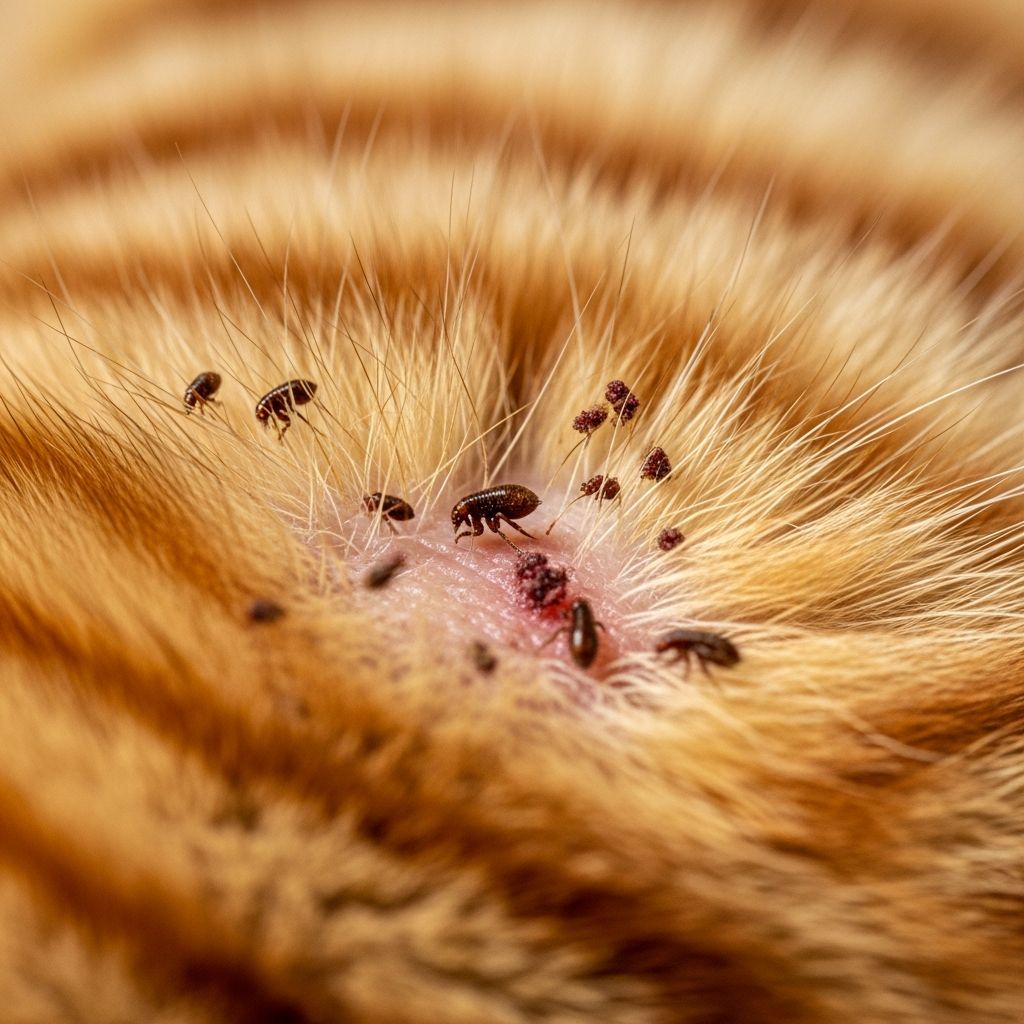
Cat fleas belong to a diverse group of parasitic insects, with the most common species affecting domestic cats being Ctenocephalides felis. These insects are remarkably small, measuring only 2 to 3 millimeters in length, making them difficult to spot with the naked eye. Despite their diminutive size, fleas possess powerful hind legs that enable them to jump considerable distances relative to their body size.
The physical structure of fleas is uniquely adapted for their parasitic lifestyle. Their bodies are flattened laterally, allowing them to navigate efficiently through a cat’s fur. Notably, fleas lack wings entirely, which distinguishes them from many other insects. Instead of wings, they possess backward-pointing bristles that facilitate movement through hair and make removal by grooming extremely challenging. The six legs of a flea, particularly the hind pair, are elongated and specially adapted for jumping, enabling these parasites to move between hosts and environments with remarkable efficiency.
While Ctenocephalides felis dominates as the primary flea affecting cats, researchers have identified more than 2,200 different flea species worldwide. However, the cat flea remains the most prevalent and problematic for domestic feline populations.
Recognizing Flea Infestations in Your Cat
Identifying whether your cat has fleas requires knowledge of the visible signs and behavioral changes that accompany an infestation. Many cat owners first notice the problem through their pet’s behavioral responses rather than observing the fleas directly.
Primary Indicators of Flea Presence
The most obvious symptom of flea infestation is excessive scratching and grooming behavior. Cats often concentrate their scratching efforts on specific body areas, particularly the base of the tail and the back of the neck, where fleas tend to congregate. This intense scratching can lead to secondary skin problems, including visible irritation, hair loss, and potential infections.
Beyond behavioral signs, you can look for physical evidence of fleas or flea byproducts in your cat’s coat. Flea dirt, which is actually the feces of adult fleas consisting of digested blood, appears as tiny black or brown specks resembling pepper flakes scattered throughout your cat’s fur. To identify flea dirt definitively, use a flea comb and collect the debris on a damp white tissue or paper towel. If the specks turn reddish-brown when moistened, this confirms the presence of flea feces and indicates active flea infestation.
Some cats develop flea allergy dermatitis, a severe allergic reaction to flea saliva. In these hypersensitive individuals, even a single flea bite can trigger substantial inflammation and itching throughout the body. Paradoxically, cats with severe flea allergies may show fewer visible fleas on their bodies due to intense grooming behavior that removes the parasites, yet they exhibit dramatic skin problems.
Using Diagnostic Tools
A flea comb serves as one of the most effective diagnostic instruments available to cat owners. This specialized comb features tightly spaced teeth designed to capture fleas and their byproducts. Regular gentle combing through your cat’s coat, with particular attention to the neck and tail base, will collect both adult fleas and flea dirt. For cats suspected of having fleas but showing minimal visible parasites, veterinarians may recommend blood tests measuring antibodies against flea saliva components to confirm infestation.
The Flea Life Cycle: Understanding the Reproductive Timeline
To effectively combat flea infestations, understanding the complete reproductive cycle of fleas is crucial. This knowledge helps explain why comprehensive treatment must target all life stages simultaneously.
Egg Production and Development
Adult female fleas begin reproducing remarkably quickly after establishing themselves on a host. Females can start laying eggs within 1 to 2 days of their first blood meal. Each female produces between 20 to 50 eggs daily throughout her lifetime, with some females capable of generating up to 2,000 eggs total. These eggs are pearly white, oval in shape, and extremely small—approximately 1/32 inch in length.
The eggs lack adhesive properties and readily fall from the cat’s body onto bedding, carpeting, furniture, and other environmental surfaces. This dispersal mechanism explains why treating only the cat while neglecting the home environment proves ineffective. The eggs require a dark, warm, humid environment to develop successfully. They hatch within 2 to 5 days under favorable conditions, releasing tiny larvae into the environment.
Larval and Pupal Stages
Newly hatched flea larvae measure less than 1/4 inch in length and appear as legless, dirty-white organisms. Unlike adult fleas, larvae do not feed on blood directly. Instead, they consume organic debris within their surroundings and flea feces produced by adult fleas. This dependence on organic material makes carpet fibers, cracks in hardwood floors, and damp basements ideal larval habitats indoors.
Larvae possess an aversion to direct light and actively burrow deep into carpet fibers and under debris to avoid exposure. They require adequate moisture to survive, as exposure to relative humidity below 50 percent will prove fatal. Despite their small size and fragility, larvae can migrate as far as 3 feet to locate suitable survival conditions. The larval stage typically persists for 5 to 11 days but may extend 2 to 3 weeks depending on environmental conditions and food availability.
After completing the larval stage, fleas enter the pupal phase. During this transformation, each larva becomes encased within a sticky cocoon. Within this protective structure, the larva metamorphoses into an adult flea. This pupal stage represents the most resilient phase of the flea life cycle. Adult fleas can remain dormant within their cocoons for extended periods—up to two years—awaiting signals indicating a potential host nearby. Once they detect warmth and vibrations from a nearby animal, the adult flea emerges from the cocoon and can attach to a host within mere seconds.
The Complete Cycle Timeline
The duration of the complete flea life cycle—from egg to reproductive adult—varies significantly depending on environmental temperature and humidity levels. Under optimal warm, humid conditions, the entire cycle can complete in as little as 12 to 14 days. However, under most typical household conditions, fleas require 3 to 8 weeks to progress through all developmental stages. In unfavorable environmental conditions, the cycle may extend up to 350 days, demonstrating the remarkable adaptability of these parasites.
Health Consequences of Flea Infestations
Beyond the obvious discomfort of constant itching, flea infestations can trigger serious health complications for cats. Understanding these potential problems emphasizes the importance of prompt treatment and prevention.
The most immediate health concern is flea allergy dermatitis, where sensitive cats experience severe inflammatory responses to flea saliva proteins. This condition can result in extensive hair loss, open sores, scabs, and secondary bacterial infections requiring veterinary intervention. Additionally, fleas serve as intermediate hosts for tapeworms. When cats groom themselves and accidentally ingest fleas during this process, they may contract intestinal tapeworm infections, leading to digestive problems and nutritional deficiencies.
Fleas also possess the capacity to transmit various diseases to cats, including plague, tularemia, and murine typhus.[10] While these conditions are less common in domestic settings, they represent potential serious health risks, particularly for outdoor cats or those in endemic regions.
Comprehensive Treatment Approaches
Veterinary-Prescribed Flea Preventives
The most effective approach to controlling cat fleas involves working with your veterinarian to select appropriate prescription flea preventive medications. These products offer superior efficacy compared to over-the-counter alternatives. Prescription preventives are designed specifically for cats and account for feline physiology, unlike many dog products which can prove toxic to cats. Veterinarians recommend using only products specifically licensed for feline treatment to avoid potential poisoning.
Bathing and Topical Treatments
For immediate flea removal, bathing your cat with flea shampoo specifically formulated for cats can quickly eliminate adult fleas. Medicated flea shampoos contain active ingredients designed to kill fleas on contact, providing rapid relief. For very young kittens or cats sensitive to medicated products, unscented Dawn dish liquid has proven effective, though this should only be used under veterinary guidance. It is essential to remember that bathing removes existing fleas but does not provide long-term protection against reinfestation without ongoing preventive treatment.
Environmental Treatment Requirements
Treating your cat while leaving the home environment untreated virtually guarantees reinfestation. The environment harbors flea eggs, larvae, and pupae at various developmental stages. Comprehensive environmental treatment must include:
- Thorough vacuuming of all carpets, rugs, and upholstered furniture, including areas underneath furniture where eggs accumulate
- Washing all pet bedding, blankets, and toys in hot water
- Cleaning hard flooring surfaces and paying special attention to gaps between hardwood floorboards where larvae hide
- Treating basements and other damp areas where larvae thrive
- Cleaning all areas where your cat rests or plays
- Treating your yard, particularly shaded and moist areas where outdoor flea development occurs
After initial cleaning, using an appropriate household flea insecticide designed to kill immature flea stages proves essential. Vacuum bags should be immediately and carefully disposed of to prevent escaped fleas from reinfesting your home.
Multi-Pet Household Considerations
If you share your home with multiple pets, all animals must receive flea treatment simultaneously, even if only one pet shows symptoms. This includes dogs, other cats, rabbits, guinea pigs, and other mammals in the household. Failure to treat all pets allows fleas to continue breeding and cycling between hosts.
Prevention Strategies for Long-Term Protection
Preventing flea infestations proves far more practical than treating established infestations. Regular prevention keeps your cat protected year-round.
Monthly prescription flea preventives represent the gold standard for protection. These medications work through various mechanisms, including growth regulators that prevent flea reproduction and compounds that kill adult fleas on contact. Consistent year-round use prevents the population explosions that lead to home infestations.
Regular grooming and inspection using a flea comb allows early detection of any breakthrough infestations before they become severe. Maintaining a frequent and thorough sanitation program, including regular vacuuming and washing of pet bedding, reduces environmental flea populations even if some fleas are introduced to the home.
For outdoor cats or cats with outdoor access, environmental management becomes increasingly important. Removing brush, leaves, and other debris from your yard eliminates potential flea breeding grounds. Keeping grass mowed short and removing shaded areas where flea larvae thrive also helps reduce outdoor flea populations.
Removing Flea Dirt Quickly
When you discover flea dirt on your cat, you may want to remove it immediately. Using a flea comb to gently extract the debris works effectively. Following this with a bath using cat-safe flea shampoo or, in emergency situations under veterinary guidance, unscented Dawn dish soap will eliminate visible flea dirt. However, this addresses only the symptom, not the underlying infestation. To prevent rapid reinfestation and future flea dirt accumulation, initiating a long-term prescription flea preventive program remains essential.
When to Consult Your Veterinarian
Professional veterinary guidance is invaluable for effective flea management. Your veterinarian can recommend products specifically suited to your cat’s age, weight, and health status, ensuring safety and efficacy. Cats showing signs of flea allergy dermatitis require professional treatment for secondary skin infections and inflammation. Additionally, if your cat shows signs of tapeworms or other flea-transmitted conditions, veterinary diagnosis and treatment become necessary.
Conclusion
Flea infestations in cats demand comprehensive, multifaceted treatment approaches addressing both the cat and the home environment simultaneously. By understanding flea biology, recognizing infestation signs early, implementing veterinary-recommended treatments, and maintaining consistent prevention protocols, cat owners can effectively protect their companions from these troublesome parasites and the health complications they create. Regular monitoring, prompt action upon discovery, and year-round prevention represent the most practical path to a flea-free household and a healthier, more comfortable cat.
References
- Controlling fleas — Texas A&M AgriLife Extension Service. https://agrilifeextension.tamu.edu/library/insects/controlling-fleas/
- Fleas and flea control in cats — International Cat Care. https://icatcare.org/articles/fleas-and-flea-control-in-cats
- Fleas of Cats — Merck Veterinary Manual. https://www.merckvetmanual.com/cat-owners/skin-disorders-of-cats/fleas-of-cats
- How To Get Rid of Fleas on Cats — PetMD. https://www.petmd.com/cat/general-health/get-rid-of-fleas-on-cats
- Fleas — Companion Animal Parasite Council. https://capcvet.org/guidelines/fleas/
- Everything You Need to Know about Cat Fleas — Elanco. https://yourpetandyou.elanco.com/us/parasites/fleas/can-fleas-make-cats-sick
- Fleas: Life Cycle — UC Statewide IPM Program. https://ipm.ucanr.edu/home-and-landscape/fleas/
- A Guide to Fleas — Alameda County Vector Control. https://acvcsd.org/wp-content/uploads/2016/08/Fleas.pdf
Similar Articles








Read full bio of Sneha Tete