

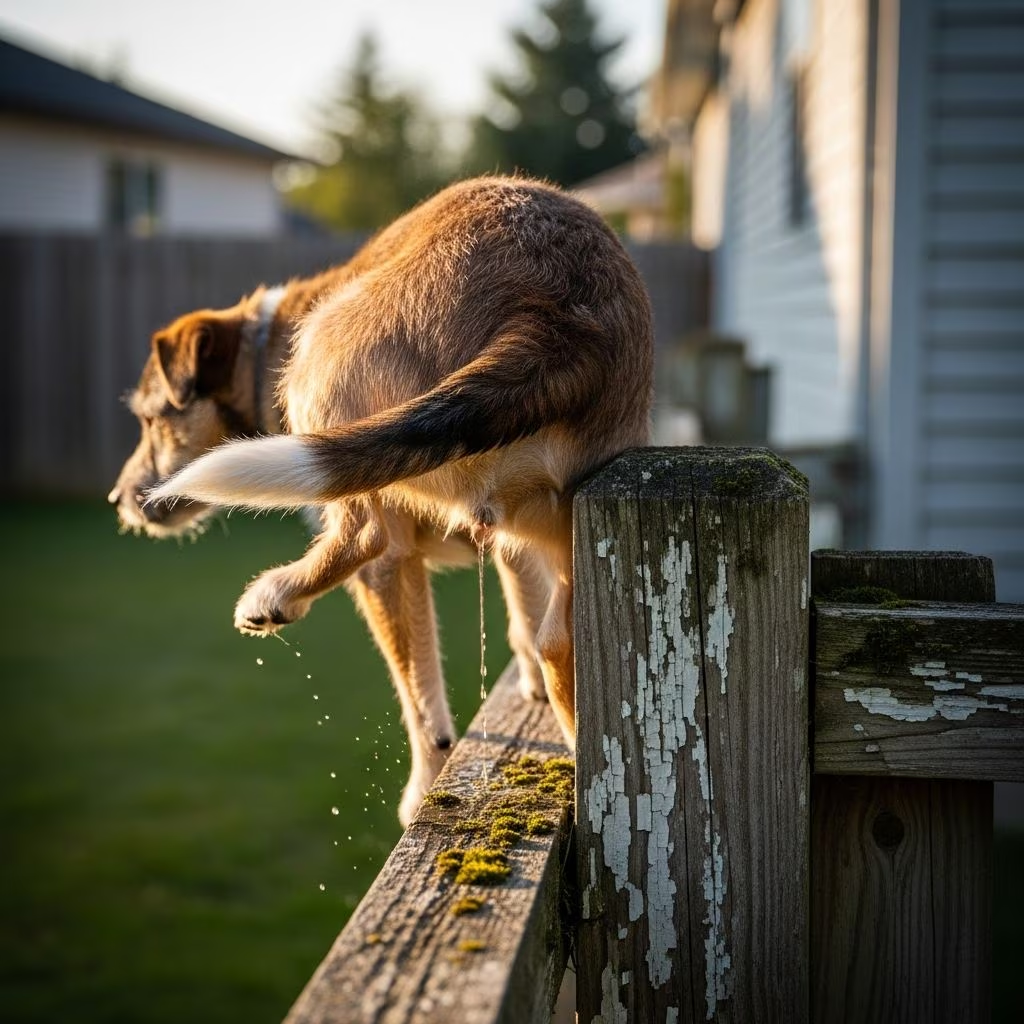
Dog urine marking involves lifting a leg to deposit small amounts of urine on vertical surfaces, serving as a communication method rather than full elimination. This behavior stems from instincts to claim territory or respond to stress, often appearing suddenly in house-trained dogs.
Distinguishing Marking from House Soiling
Unlike typical accidents where dogs squat and release larger volumes, marking features quick leg lifts and minimal urine sprays on walls, furniture, or objects. It signals ownership or alerts others to the dog’s presence, triggered by new environments, visitors, or perceived threats.
- Marking uses small urine quantities on upright items.
- House soiling involves full bladder emptying on horizontal surfaces.
- Positioning: Leg raised for marking versus squatting for elimination.
Primary Triggers for Indoor Marking
Several factors provoke this instinctual response. Territorial drives lead dogs to scent new household items or areas frequented by outsiders. Anxiety from changes like new pets or absences can also prompt marking as a stress outlet.
| Trigger Type | Description | Common Examples |
|---|---|---|
| Territorial | Claiming space against perceived intruders | New furniture, guest scents, neighborhood dogs near home |
| Anxiety-Related | Stress response to uncertainty | Household changes, separation, noises |
| Hormonal | Intact dogs driven by reproductive urges | Unneutered males, females in heat |
External stimuli, such as dogs visible through windows, heighten marking urges by simulating intrusions.
Health Factors Mimicking Marking
Before behavioral interventions, rule out medical issues. Urinary tract infections, diabetes, or kidney problems cause frequent small urinations resembling marks. A veterinary exam ensures no underlying conditions drive the behavior.
Vets recommend urine analysis and bloodwork for sudden onset cases, as timely treatment prevents habit formation.
Role of Spaying and Neutering
Altering intact dogs significantly reduces marking. Studies show neutering cuts the behavior by 50-60% in males, with some research noting 90% reduction in 25-40% of cases regardless of age.
- Effectiveness highest before maturity, preventing habit establishment.
- Multi-pet homes benefit from spaying all to avoid heat-triggered responses.
- Not a universal fix for long-term markers, but first-line approach.
Environmental Management Techniques
Modify surroundings to minimize triggers. Block views of outside dogs with curtains and elevate new belongings to evade scenting.
Clean marked spots thoroughly with enzymatic cleaners to erase odors attracting repeats. Products like Nature’s Miracle break down urine proteins undetectable by regular soaps.
Supervision and Confinement Strategies
Constant monitoring prevents opportunities. Leash-tether indoors or crate when unsupervised, ensuring no prior marking history in confined spaces.
Interrupt pre-marking signals like intense sniffing or circling with a sharp noise, then redirect outside for praise.
Training and Behavior Modification
Positive reinforcement reshapes habits. Reward outdoor elimination lavishly and teach incompatible commands like “sit” during potential marking moments.
Avoid punishment, as it heightens anxiety exacerbating issues. Late discoveries confuse dogs without linking to the act.
- Distract with toys or commands mid-posture.
- Countercondition by associating marked areas with positives like meals or play.
- Professional behaviorists aid chronic cases via tailored plans.
Addressing Anxiety-Driven Marking
Stressors like separation or novelty provoke marking. Pheromone diffusers (e.g., Adaptil) mimic calming maternal scents, while supplements or vet-prescribed medications manage severe cases.
Gradual desensitization introduces changes slowly, pairing with treats to build positive associations.
Multi-Pet Household Challenges
Competition amplifies marking. Resolve hierarchies by feeding separately and providing individual resources. Neutering all pets curbs hormonal escalations.
Rotate play sessions to reduce tension, monitoring for resource guarding signs.
Cleaning Protocols for Lasting Results
Odor persistence invites re-marking. Enzymatic solutions outperform vinegar or bleach by digesting organic residues.
- Blot excess urine immediately.
- Apply enzymatic cleaner, saturating fully.
- Allow 24-hour drying; repeat if odor lingers.
- For fabrics, add baking soda before washing.
Visitor and Novelty Management
Guests carry foreign scents prompting marks. Instruct visitors to offer treats, building positive links. Confine dogs during peaks or use gates.
Store belongings securely until acclimation occurs, typically days.
FAQs on Dog Urine Marking
Will neutering always stop marking?
No, but it resolves 50-90% of cases, especially early intervention. Established habits may need combined training.
How do I clean marked areas effectively?
Use enzymatic cleaners to eliminate scents fully; avoid ammonia-based products mimicking urine.
Is marking a sign of poor house training?
Not usually—it’s communicative behavior distinct from accidents.
Can female dogs mark?
Yes, though less common; intact females or anxious ones participate.
When to see a vet or behaviorist?
Immediately for health checks; if persistent post-neutering/cleaning, consult professionals.
Long-Term Prevention Plan
Combine strategies for best outcomes: Vet visit, neutering if applicable, rigorous cleaning, supervision, and training. Consistency yields results within weeks, fostering a scent-free home.
References
- Curbing the Issue of Dog Marking — American Kennel Club. 2023. https://www.akc.org/expert-advice/training/curbing-marking/
- Marking in Dogs — PetMD. 2024. https://www.petmd.com/dog/behavior/urine-marking-dogs
- Dog Marking and Peeing in the House — Best Friends Animal Society. 2023. https://bestfriends.org/pet-care-resources/dog-marking-and-peeing-house-causes-and-how-stop-it
- Marking — San Francisco SPCA. 2024. https://www.sfspca.org/resource/marking/
- Dog & Cat Territorial Marking Behavior — Santa Barbara Humane. 2023. https://sbhumane.org/resources/territorial-marking/
- Territorial Marking Behavior in Dogs — Oregon Humane Society. 2016-02-16. https://www.oregonhumane.org/wp-content/uploads/2.16.16_Marking-Behavior_Dogs.pdf
- Urine Marking in Dogs — UC Davis School of Veterinary Medicine. 2023. https://www.vetmed.ucdavis.edu/sites/g/files/dgvnsk491/files/inline-files/Urine_Marking_in_Dogs.pdf



