

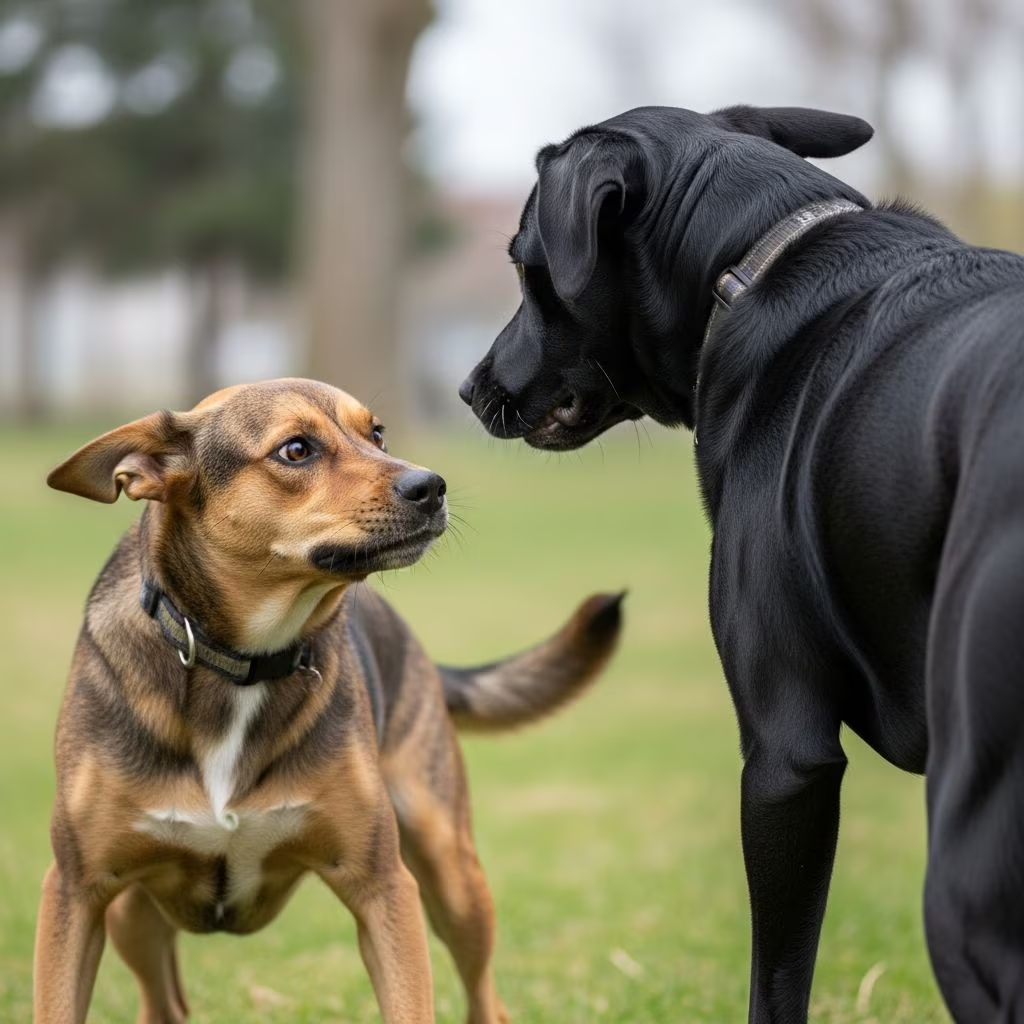
Dog-on-dog aggression manifests when one dog displays hostile behaviors toward another, ranging from growling and stiffening to lunging or biting. This issue affects many households with multiple pets or frequent dog park visits, often stemming from fear, territorial instincts, or resource competition.
Why Dogs Show Aggression Toward Each Other
Aggression between dogs is rarely unprovoked; it serves as a communication tool to establish boundaries or protect perceived needs. Veterinary behaviorists note that fear is the predominant trigger, far outpacing dominance myths. Factors like poor socialization, genetics, trauma, and medical conditions amplify these responses.
- Fear as a primary driver: Dogs aggress to create distance from threats they can’t flee.
- Learned behavior: If snarling successfully deters others, it reinforces the pattern.
- Breed predispositions: Some lines inherit reactive tendencies from fearful parents.
Recognizing Early Warning Signals
Spotting subtle cues prevents escalation. Dogs communicate discomfort through body language before physical confrontations.
| Body Language Sign | Meaning | Example Context |
|---|---|---|
| Stiff posture, raised hackles | Arousal or threat assessment | Approaching another dog on leash |
| Hard stare, whale eye (whites showing) | Intense focus or anxiety | Resource nearby |
| Lip licking, yawning, avoidance | Stress signals | Overstimulation at playgroups |
| Growling, snapping without contact | Boundary setting | Intrusion into personal space |
Owners who ignore these signs risk bites, as pressured dogs may skip warnings.
Fear-Driven Conflicts Between Dogs
The most frequent type, fear aggression occurs when a dog feels cornered or overwhelmed by another canine’s approach. Leashed dogs often react strongly, as flight is impossible, leading to defensive snaps.
Poor early socialization exacerbates this; puppies underexposed to varied dogs develop exaggerated fears. Genetic temperament plays a role, with shy dams producing reactive offspring. Management involves counter-conditioning: pairing distant dog sightings with high-value treats to rebuild positive associations.
Territorial and Protective Reactions
Dogs may aggress to safeguard their home, yard, or family from perceived intruders. This intensifies around fences or gates where unfamiliar dogs pass by. Intact males show heightened responses during female heats, competing for access.
Unlike fear, territoriality motivates approach-and-confront; barking escalates to lunging if the “trespasser” lingers. Desensitization protocols expose dogs gradually to triggers at sub-threshold distances, rewarding calm.
Resource Guarding in Multi-Dog Homes
Possession aggression erupts over food, toys, or resting spots, with the dog stiffening or growling when another nears. This stems from survival instincts, worsened by inconsistent feeding or competition-scarce upbringings.
- Prevention: Feed separately, trade-up low-value items for better ones.
- Training: Teach “drop it” with positive reinforcement, never force.
In households, this can fracture pack harmony if unaddressed.
Frustration and Leash Reactivity
Barrier or leash frustration mimics aggression but arises from blocked access to greet or chase. Dogs lunge and vocalize at restrained distances, frustrating their social or predatory drives.
Common in reactive walkers, it confuses owners mistaking it for outright hostility. Long-line training and impulse control games like “look at that” interrupt the cycle.
Play Escalation Gone Wrong
Normal roughhousing turns aggressive when arousal overrides bite inhibition. Puppies mouth freely, but adults must self-handicap. Signs of trouble: no play bows, persistent pinning, yelps ignored.
Breeds with high prey drives blur play and predation, necessitating structured sessions. Interrupt with breaks, teaching “enough” cues.
Medical Contributors to Inter-Dog Hostility
Underlying health issues mimic or heighten aggression, demanding vet checks first.
- Pain: Arthritis or dental woes make touch defensive; even friendly greetings hurt.
- Neurological: Tumors or epilepsy alter personalities suddenly.
- Hormonal: Hypothyroidism or intact status lowers thresholds.
- Senior changes: Cognitive dysfunction causes confusion-aggression.
- Rabies risk: Sudden shifts in unvaccinated dogs warrant quarantine.
Hypothyroidism links to irritability; bloodwork rules it out.
Sex and Age Influences on Aggression
Males, especially intact, compete resource-wise or over females. Females spike during pseudopregnancy or post-whelping protectiveness. Seniors grow irritable from sensory loss or pain.
Spaying/neutering reduces some risks but doesn’t eliminate fear roots.
Proven Prevention Strategies
Proactive steps build confident, tolerant dogs.
- Socialize broadly pre-16 weeks, supervised positively.
- Train foundational obedience: recall, leave it, emergency stop.
- Exercise mentally/physically daily to curb boredom-aggression.
- Use force-free methods; dominance tactics worsen fear.
- Multi-dog intros: Neutral ground, parallel walks before home merges.
Safe Management Techniques
For ongoing issues:
- Avoid triggers: Muzzle train for safety, skip dog parks.
- Counter-condition: Gradual exposure with rewards.
- Professional help: Vet behaviorists for certified plans (DACVB).
- Medications: Anti-anxiety if behavior mod insufficient.
Rehoming or euthanasia is last resort post-exhaustive efforts.
Common Myths Debunked
Myth: Dominance causes most fights. Fear trumps it; alpha rolls provoke.
Myth: All males are aggressive. Intact status contributes, but socialization overrides.
Myth: Punishment fixes it. Increases anxiety, escalates bites.
FAQs
Can dog-on-dog aggression be cured?
Fully? Rarely. Managed effectively? Often, with commitment.
Should I intervene in dog fights?
Use barriers/wheelbarrow holds, never hands. Prevent via management.
Is breed a reliable predictor?
No; individuals vary by genetics, training.
When to see a professional?
Any bite, escalating warnings, or medical suspicion.
Building Harmony in Multi-Dog Households
Success stories highlight patience: equal attention, structured routines, and professional guidance transform rivals to companions. Monitor dynamics, adjust as needed.
References
- Dog Behavior Problems – Aggression Diagnosis and Overview — VCA Animal Hospitals. 2023. https://vcahospitals.com/know-your-pet/dog-behavior-problems-aggression-diagnosis-and-overview
- 6 Causes of Aggression in Dogs — VEG ER for Pets. 2024. https://www.veg.com/post/aggression-in-dogs
- Aggression in Dogs — PetMD. 2024. https://www.petmd.com/dog/behavior/aggression-in-dogs
- 7 Types of Dog Aggression and How to Nip Them in the Bud — Salish Veterinary Hospital. 2023. https://www.salishvet.com/services/dogs/blog/7-types-dog-aggression-and-how-nip-them-bud
- Dog Aggression: Signs, Causes, and How to Manage — Best Friends Animal Society. 2024. https://bestfriends.org/pet-care-resources/dog-aggression-signs-causes-and-how-manage
- Canine Aggression — AKC Canine Health Foundation. 2023. https://www.akcchf.org/disease-history/canine-aggression/



