

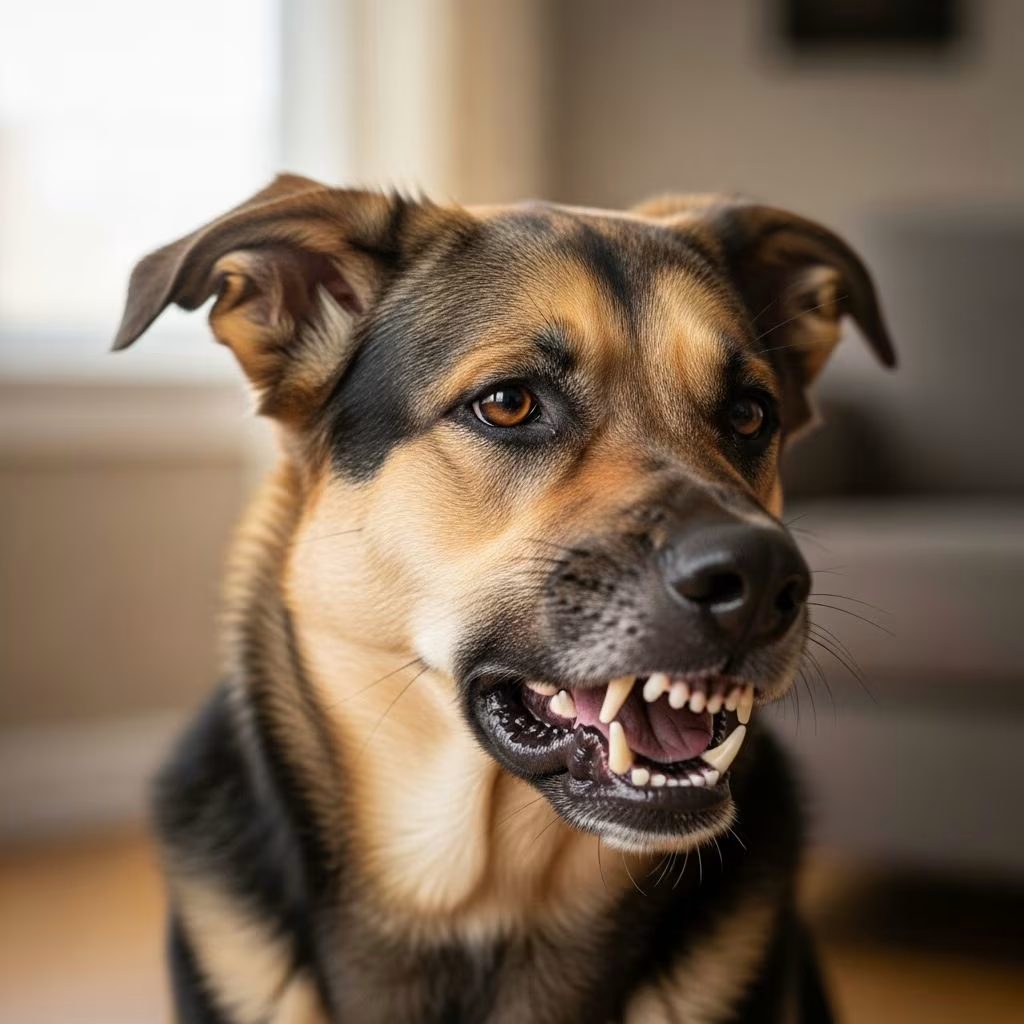
Dog growling serves as a vital form of communication in canines, conveying a spectrum of emotions from joy to discomfort. Far from being solely a sign of aggression, these vocalizations help dogs express needs and boundaries, allowing owners to intervene before situations escalate. Recognizing the context and accompanying body language is key to interpreting these sounds accurately.
The Science Behind Canine Vocalizations
Growling originates from a dog’s throat as a low-frequency rumble, evolved over millennia to signal intent without physical confrontation. Veterinary behaviorists note that this vocalization is part of normal canine interaction, used in social packs to maintain hierarchy and safety. Studies from animal behavior experts emphasize that suppressing growls through punishment can lead to silent bites, increasing danger.
Dogs produce distinct growl tones: deep and prolonged for threats, short and higher-pitched for play. Acoustic analysis reveals that growl pitch correlates with emotional state—lower for fear-based warnings, varied for excitement. Owners attuned to these nuances can prevent misunderstandings.
Primary Types of Dog Growls
Dogs growl for diverse reasons, each tied to specific triggers. Below, we break down the most common categories, supported by observable traits.
- Fear-Based Growls: These occur when a dog perceives a threat, such as unfamiliar people or loud noises. The sound is deep, with a stiff body, raised hackles, and averted gaze. Common in territorial defense or new environments.
- Play Growls: During tug-of-war or roughhousing, dogs emit rhythmic, excited growls. Loose body movements, play bows, and wagging tails distinguish them from aggression. These reinforce social bonds.
- Frustration Growls: Stemming from barriers to desires—like a toy under furniture or leashed greetings—these feature repetitive snarls with pacing. Often misread as hostility, they signal unmet needs.
- Pleasure or Affection Growls: Soft rumbles during petting or cuddling indicate contentment. Relaxed posture and closed eyes accompany this positive vocalization.
- Resource Guarding Growls: Protecting food, toys, or spaces prompts stiff, intense growls. Pupils dilate, and the mouth may close tightly as a ‘back off’ cue.
- Pain-Related Growls: Injured or arthritic dogs growl when touched, signaling discomfort. Subtle at first, these escalate if pressure continues.
Decoding Body Language with Growls
Growls gain meaning through posture. A fearful dog freezes, ears back, tail tucked; playful ones bounce with open mouths. Aggressive displays include forward-leaning stances and lip curls. Tables aid quick reference:
| Growl Type | Body Signals | Typical Triggers |
|---|---|---|
| Fear/Warning | Stiff body, dilated pupils, closed mouth | Strangers, resource approach |
| Play | Wagging tail, play bow, relaxed wag | Tug games, chasing |
| Frustration | Pacing, lunging toward barrier | Leash restraint, inaccessible toy |
| Pleasure | Relaxed muscles, leaning in | Petting, belly rubs |
| Guarding | Hackles up, intense stare | Food bowl, bed invasion |
Context matters: a growl at mealtime differs from one during greetings. Multi-dog homes amplify misinterpretations, risking fights.
Common Scenarios and Real-World Examples
Resource guarding appears when owners near a chew toy, prompting a rumble to create distance. In parks, leashed dogs growl at approaching peers due to frustration from immobility. Senior dogs with joint pain growl during lifts, urging gentle handling.
Play growls enliven fetch sessions, but overarousal shifts to stress signals. Puppies experiment with growls during teething, learning boundaries through owner guidance.
Dangers of Punishing Growls
Scolding or shocking a growling dog suppresses the warning, fostering ‘muzzle punching’—bites without prelude. Behaviorists from the American Kennel Club stress that growls provide intervention windows, preserving trust. Punishment heightens fear, eroding the human-canine bond and risking escalated aggression.
Safe Strategies to Manage Growling
Address root causes proactively:
- Observe and Remove Triggers: Partition views of threats or trade guarded items for treats.
- Desensitization Training: Gradually expose dogs to stimuli at low intensity, rewarding calm.
- Positive Reinforcement: Praise quiet behaviors; ignore unwanted growls without confrontation.
- Professional Help: Certified trainers tackle persistent issues like reactivity.
For frustration, increase exercise to burn energy. Pain growls warrant vet checks for arthritis or injuries.
Training Tips for a Quieter Companion
Implement ‘quiet’ commands via clicker training: mark silence, reward with play. Counter-conditioning reframes triggers positively. Consistency across family prevents confusion.
Table of Training Progress Milestones:
| Week | Goal | Technique |
|---|---|---|
| 1 | Identify triggers | Behavior journal |
| 2-4 | Basic desensitization | Threshold distance |
| 5+ | Full integration | Real-world practice |
When to Seek Veterinary or Behavioral Expertise
Sudden growls signal health issues like dental pain. Chronic patterns may indicate anxiety disorders. Consult vets first, then board-certified behaviorists (DACVB) for tailored plans.
FAQs on Dog Growling
Q: Is all growling dangerous?
A: No, many growls signify play or pleasure. Context and body language differentiate them.
Q: Should I muzzle my growling dog?
A: Muzzles aid safety during training but don’t address causes. Use under professional guidance.
Q: Can puppies outgrow growling?
A: Early intervention shapes behavior; unmanaged habits persist into adulthood.
Q: Why does my dog growl at family members?
A: Often resource guarding or past experiences. Professional assessment recommended.
Q: How long until training shows results?
A: 4-8 weeks with consistency, varying by dog and issue severity.
Building a Stronger Bond Through Communication
Viewing growls as informative rather than problematic fosters empathy. Regular training, exercise, and enrichment reduce unwanted vocalizations, enhancing mutual understanding. Patient owners create harmonious homes where dogs feel secure expressing themselves.
References
- Not Just Aggression: 6 Reasons of Dog Growling and Snarling — Petcube. Accessed 2026. https://petcube.com/blog/why-is-my-dog-growling/
- Aggression in Dogs | Why Do Dogs Growl and What It Means — PetAssure. 2023-05-19. https://www.petassure.com/new-newsletters/my-dog-growls-does-this-mean-hes-aggressive/
- What Dog Growling Means and What To Do — PetMD. Accessed 2026. https://www.petmd.com/dog/behavior/why-do-dogs-growl
- Why Dogs Growl and How to Handle It — American Kennel Club. Accessed 2026. https://www.akc.org/expert-advice/training/why-dogs-growl-and-how-to-handle-it/
- The 6 Types of Growling — Thriving Canine. Accessed 2026. https://www.thrivingcanine.com/blog/6-types-growling/



