

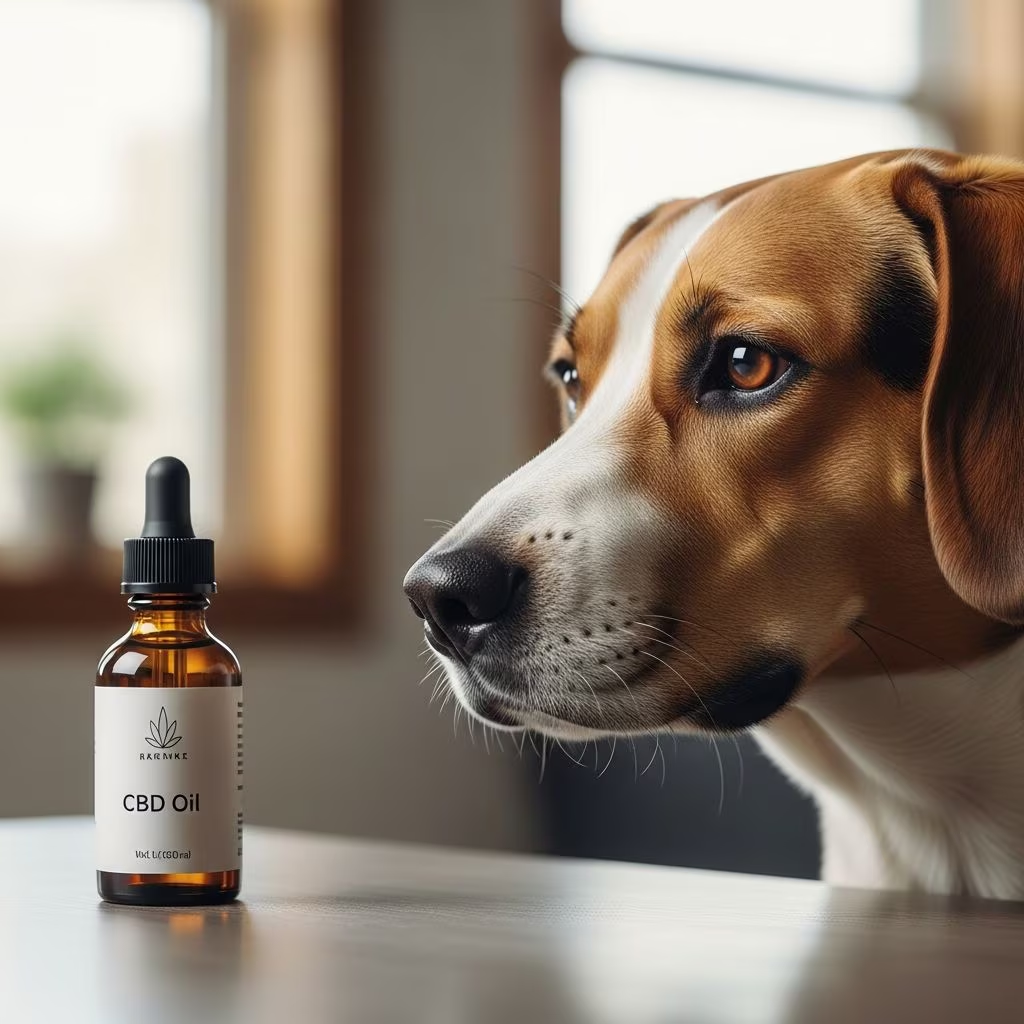
Cannabidiol (CBD), a non-psychoactive compound from hemp, shows promise in addressing various canine health challenges, including pain from osteoarthritis, epilepsy, skin conditions, and behavioral issues like aggression. Recent large-scale studies confirm its use among 7.3% of U.S. companion dogs, particularly older pets with conditions such as dementia and joint problems.
The Growing Popularity of CBD in Canine Care
Pet owners increasingly turn to CBD for its potential therapeutic effects without the high associated with THC. A study from the Dog Aging Project, involving 47,355 dogs surveyed between 2019 and 2023, revealed that frequent CBD users (5.8% of the sample) were typically three years older on average than non-users. This trend aligns with higher usage in dogs diagnosed with dementia (18.2%), osteoarthritis (12.5%), and cancer (10%). Dogs in states with legal medical cannabis for humans were also more likely recipients, suggesting owner familiarity influences adoption.
Pharmacokinetic research indicates CBD absorbs well orally in dogs, reaching peak plasma levels 1.5-2 hours post-dose with a half-life of 1-4 hours. Formulations matter: soft gel capsules may boost peak concentrations compared to oils, while transdermal creams yield lower systemic exposure. These insights guide effective dosing strategies.
Key Health Benefits Supported by Research
Multiple peer-reviewed studies highlight CBD’s efficacy across canine ailments. Below, we break down evidence for primary applications.
Pain Management and Osteoarthritis
Osteoarthritis affects many aging dogs, causing pain and reduced mobility. A landmark Cornell University study found that over 80% of dogs with osteoarthritis experienced pain reduction and increased activity after receiving CBD chews. Similarly, Gamble et al. (2018) reported significant drops in pain scores (via Canine Brief Pain Inventory) and rises in activity levels with 2 mg/kg CBD twice daily for four weeks.
Other trials confirm these findings: dogs showed improved comfort and mobility at doses of 2-8 mg/kg. A review in Frontiers in Veterinary Science summarized five studies where CBD reduced pain and enhanced quality of life.
Epilepsy and Seizure Control
For epileptic dogs, CBD offers seizure frequency reduction. McGrath et al. noted benefits, though response rates were similar to placebo in some groups. However, Garcia et al. (2023) demonstrated significant decreases in seizure frequency and days with an equal CBD/CBDA mix (2 mg/kg twice daily for 12 weeks) versus placebo. PubMed reviews affirm CBD’s role in managing epilepsy alongside osteoarthritis and pruritus.
Skin Conditions and Itching
Atopic dermatitis leads to intense itching and chewing. An Australian trial by CannPal showed 65% of CBD-treated dogs had at least 50% less itching, with half fully resolving symptoms during four weeks of treatment. Reduced scratching behavior is also documented in healthy dogs.
Behavioral and Stress Reduction
CBD may calm stress responses. In a car travel stress study, CBD (up to 4.5 mg/kg) lowered cortisol, whining, lip licking, and qualitative stress ratings compared to placebo. A massive Dog Aging Project analysis found long-term CBD users started more aggressive but showed reduced aggression over time, suggesting a calming trajectory. No significant activity changes occurred in healthy dogs. Experts note aggression often ties to stress, though anxiety metrics varied.
Safety Profile and Side Effects
CBD demonstrates good tolerability in dogs at physiological doses, with mild or unremarkable side effects in short- to medium-term studies. No impact on daily activity was seen up to 4.5 mg/kg over 21 days. A 2025 AVMA report supports efficacy for osteoarthritis and seizures but cautions against unproven behavioral claims. Long-term data remains limited, warranting further research.
Plasma concentrations post-dose averaged 489.4 ng/mL, confirming absorption without toxicity in treated groups. Veterinarians recommend starting low and monitoring, as individual responses vary.
Dosage Guidelines and Administration Tips
| Condition | Typical Dose | Frequency | Evidence Source |
|---|---|---|---|
| Osteoarthritis | 2 mg/kg | Twice daily | |
| Seizures | 2 mg/kg (CBD/CBDA mix) | Twice daily | |
| Stress/Anxiety | Up to 4.5 mg/kg | Single dose pre-event | |
| Itching/Skin | Standard chew (trial-based) | Daily for 4 weeks |
Always consult a vet for tailored dosing. Oral oils, chews, or gels are common; effects peak within hours. Males may receive it more often, per surveys.
Regulatory Status and Quality Considerations
No licensed veterinary CBD products exist yet, per recent reviews. The FDA regulates hemp-derived CBD under agricultural guidelines, but pet supplements lack standardized oversight. Owners should seek third-party tested products for purity, avoiding THC contamination. States with medical cannabis laws show higher pet use, reflecting access and acceptance.
Current Research Gaps and Future Directions
While promising, biases in small studies and short durations limit conclusions. Large cohorts like the Dog Aging Project provide real-world insights but call for controlled trials on anxiety and long-term effects. Ongoing work at institutions like Arizona State and University of Tennessee explores behavioral modulation.
Frequently Asked Questions (FAQs)
- Is CBD safe for all dogs? Generally yes at recommended doses, with mild side effects; consult vets for puppies, pregnant dogs, or those on medications.
- How quickly does CBD work for pain? Pain relief and activity improvements often appear within 2-4 weeks.
- Can CBD replace traditional meds? It’s an adjunct; studies support use alongside vet-prescribed treatments.
- What about THC in CBD products? Choose broad-spectrum or isolate to minimize THC, which can intoxicate dogs.
- Does CBD help with separation anxiety? Stress studies show potential, but behavioral therapies remain primary.
Integrating CBD thoughtfully can enhance canine well-being, backed by emerging science.
References
- Scientists studied 47,000 dogs on CBD and found a … — ScienceDaily. 2025-11-28. https://www.sciencedaily.com/releases/2025/11/251128050506.htm
- Pharmacokinetics, efficacy, and safety of cannabidiol in dogs — Frontiers in Veterinary Science. 2023. https://www.frontiersin.org/journals/veterinary-science/articles/10.3389/fvets.2023.1204526/full
- Scientific Validation of Cannabidiol for Management of Dog and Cat … — PubMed. 2023-02-01. https://pubmed.ncbi.nlm.nih.gov/36790884/
- Daily dosing of cannabidiol (CBD) demonstrates a positive effect on … — Journal of Animal Science, Oxford Academic. 2023. https://academic.oup.com/jas/article/doi/10.1093/jas/skad414/7582589
- CBD: What you need to know about its uses and efficacy — Cornell University College of Veterinary Medicine. Accessed 2026. https://www.vet.cornell.edu/departments-centers-and-institutes/riney-canine-health-center/canine-health-topics/cbd-what-you-need-know-about-its-uses-and-efficacy
- CBD for pets: navigating quality assurance, safety standards … — PMC (PubMed Central). 2024. https://pmc.ncbi.nlm.nih.gov/articles/PMC11755934/
- Do CBD Supplements for Pets Work? — University of Illinois Veterinary Medicine. Accessed 2026. https://vetmed.illinois.edu/pet-health-columns/do-cbd-supplements-for-pets-work/



