

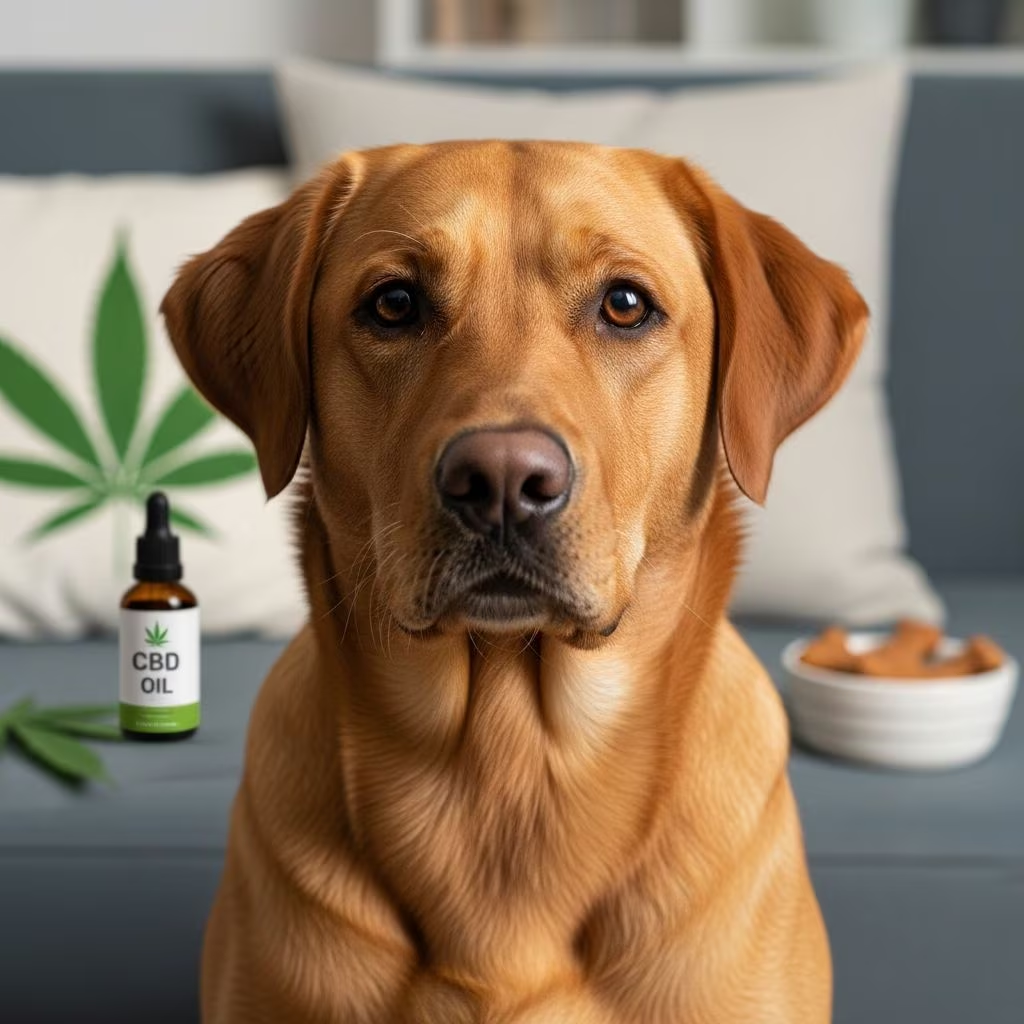
Cannabidiol (CBD), a non-psychoactive compound from hemp, shows promise in veterinary medicine for addressing common canine health issues like pain, anxiety, and seizures. Recent large-scale studies involving thousands of dogs reveal patterns in its use and potential behavioral benefits, particularly for aging pets.
The Rise of CBD in Canine Care
Pet owners increasingly turn to CBD supplements for dogs facing chronic conditions. A study analyzing data from 47,355 dogs in the Dog Aging Project found that 7.3% received CBD or hemp products, with frequent use in 5.8% of cases. These dogs were typically older by about three years and more likely to have diagnoses like dementia (18.2% usage), osteoarthritis (12.5%), or cancer (10%).
Dogs in states with legal human medical cannabis showed higher adoption rates, suggesting owner familiarity influences choices. Males were 9% more likely to receive it than females, though activity levels remained similar across groups.
How CBD Interacts with a Dog’s Body
CBD influences the endocannabinoid system, modulating receptors for effects like neuroprotection, anxiety reduction, and pain relief. Pharmacokinetic studies in dogs demonstrate good oral bioavailability, with peak plasma levels 1.5-2 hours post-dose and a half-life of 1-4 hours.
Formulations matter: soft gel capsules yield higher peak concentrations than oils, while transdermal creams show lower absorption. Microencapsulated oils may reduce maximum levels compared to standard oils.
Proven Benefits for Pain and Mobility
Osteoarthritis affects many dogs, causing pain and reduced activity. Multiple trials confirm CBD’s efficacy here. In one study, dogs given 2 mg/kg CBD twice daily for four weeks saw significant pain reductions via the Canine Brief Pain Inventory and increased activity per the Hudson scale.
Over 80% of osteoarthritic dogs in a Cornell University trial experienced pain relief, becoming more active and comfortable. Another review noted consistent improvements in pain scores and quality of life across five studies.
| Study | Dose | Duration | Key Outcome |
|---|---|---|---|
| Gamble et al. (2018) | 2 mg/kg twice daily | 4 weeks | Reduced pain, increased activity |
| Brioschi et al. (2020) | Various | Short-term | Improved mobility in OA dogs |
| Cornell OA Study | Standard chews | Variable | 80%+ pain decrease |
CBD’s Role in Managing Seizures
For epileptic dogs, CBD offers hope. A trial with 2 mg/kg CBD/CBDA twice daily for 12 weeks reduced seizure frequency and days compared to placebo. Earlier studies showed similar responder rates to placebo but overall frequency drops.
While promising, experts urge caution due to limited long-term data and potential biases in small trials.
Addressing Anxiety and Stress in Dogs
Behavioral issues like aggression and stress respond variably to CBD. Long-term users (multiple years) started more aggressive but showed reduced intensity over time versus non-users.
A car travel stress study found CBD (dosed orally) lowered cortisol, whining, lip licking, and behavioral stress ratings compared to placebo. In 83% of dogs pre-stressor, CBD chews cut anxiety behaviors. However, not all anxiety traits improved equally, with aggression more affected than general agitation.
- Cortisol reduction: Significant vs. placebo
- Behavioral calming: Lower aggression long-term
- Stress indicators: Decreased whining, yawning
Skin Conditions and Itching Relief
Atopic dermatitis causes intense itching. A CannPal trial gave CBD or placebo for four weeks; 65% of CBD dogs had ≥50% itch reduction, half fully resolving symptoms.
Other research links CBD to less scratching in pruritus cases.
Safety Profile and Side Effects
CBD appears safe at typical doses (2-8 mg/kg), with mild, unremarkable side effects in short- to medium-term studies. No major impacts on healthy dogs’ daily activity up to 4.5 mg/kg for 21 days.
Long-term data is scarcer, warranting more research. Elevated liver enzymes occurred in some high-dose trials, but most tolerated well. Always consult vets, especially with medications.
Choosing Quality CBD Products for Dogs
No FDA-approved veterinary CBD exists, so quality varies. Seek third-party tested products with certificates of analysis showing CBD content, no THC (>0.3% illegal), and contaminants absent.
Forms include oils, chews, capsules, topicals. Start low: 1-2 mg/kg twice daily, titrate based on response. Palatability and absorption differ by type.
- Verify full-spectrum vs. isolate (full may enhance via entourage effect).
- Check dog-specific labeling and dosing guides.
- Avoid human products; they may contain xylitol or high THC.
- Store cool, dark to preserve potency.
Dosing Guidelines from Research
Effective doses cluster at 2 mg/kg twice daily for OA, seizures, anxiety. Higher (up to 8 mg/kg) tested safely short-term. Weigh your dog accurately; use brand calculators.
Monitor 1-2 weeks: improvements in mobility, calm, appetite signal efficacy. Taper if no change to avoid waste.
| Condition | Starting Dose | Frequency | Evidence Level |
|---|---|---|---|
| Osteoarthritis | 2 mg/kg | Twice daily | Strong (multiple RCTs) |
| Anxiety/Stress | 1-2 mg/kg | 1-2x daily | Moderate |
| Seizures | 2 mg/kg CBD/CBDA | Twice daily | Emerging |
| Itching | 2 mg/kg | Daily | Promising |
Legal Status and Veterinary Guidance
Hemp-derived CBD (<0.3% THC) is federally legal in the US post-2018 Farm Bill. State laws vary; check locally. Vets can discuss but not prescribe unlicensed products.
The AVMA notes some efficacy for OA and seizures but insufficient for behavior alone. Integrate with standard care: meds, therapy, diet.
Limitations and Future Research
While encouraging, many studies are small or biased; long-term safety needs confirmation. No support yet for all claimed benefits like aggression standalone.
Ongoing trials via Dog Aging Project and others will clarify demographics, optimal durations, breeds.
Frequently Asked Questions
Is CBD safe for all dogs?
Generally yes at proper doses, but consult vets for puppies, pregnant dogs, or those with liver issues.
How long until I see effects?
Acute stress: 1-2 hours. Chronic: 1-4 weeks buildup.
Can CBD make my dog high?
No, pure CBD lacks THC’s psychoactive effects.
What’s the best CBD form for dogs?
Oils/tinctures for precision dosing; chews for ease.
Should I use full-spectrum CBD?
May offer broader benefits, but ensure low/no THC.
References
- Large-Scale Study Tracks CBD Use in U.S. Companion Dogs — ScienceDaily (Arizona State University). 2025-11-28. https://www.sciencedaily.com/releases/2025/11/251128050506.htm
- Pharmacokinetics, efficacy, and safety of cannabidiol in dogs — Frontiers in Veterinary Science. 2023. https://www.frontiersin.org/journals/veterinary-science/articles/10.3389/fvets.2023.1204526/full
- Scientific Validation of Cannabidiol for Management of Dog and Cat… — PubMed. 2023-02-01. https://pubmed.ncbi.nlm.nih.gov/36790884/
- Daily dosing of cannabidiol (CBD) demonstrates a positive effect on… — Journal of Animal Science (Oxford Academic). 2023. https://academic.oup.com/jas/article/doi/10.1093/jas/skad414/7582589
- CBD: What you need to know about its uses and efficacy — Cornell University College of Veterinary Medicine. Recent (post-2020). https://www.vet.cornell.edu/departments-centers-and-institutes/riney-canine-health-center/canine-health-topics/cbd-what-you-need-know-about-its-uses-and-efficacy
- CBD for pets: navigating quality assurance, safety standards… — PMC (NCBI). 2024. https://pmc.ncbi.nlm.nih.gov/articles/PMC11755934/
- Do CBD Supplements for Pets Work? — University of Illinois Veterinary Medicine. 2025. https://vetmed.illinois.edu/pet-health-columns/do-cbd-supplements-for-pets-work/



