

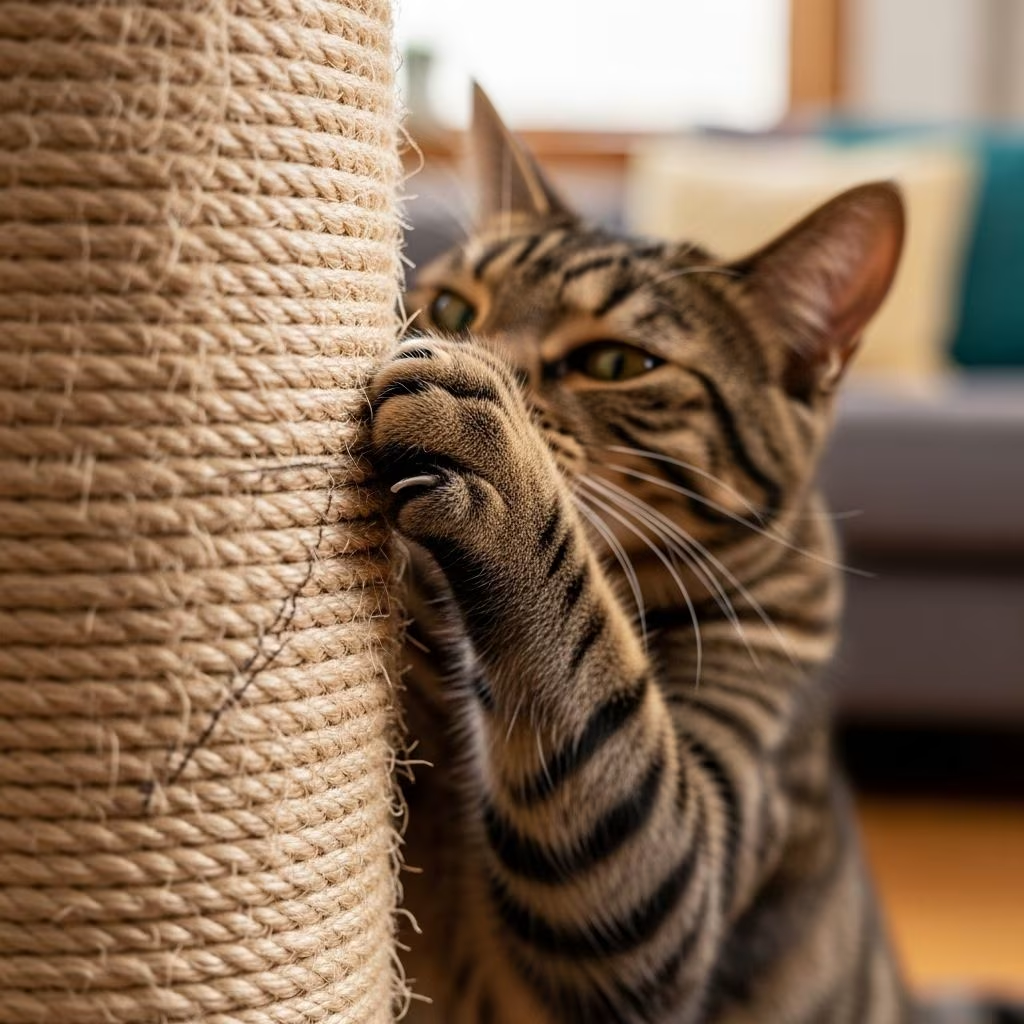
Cat scratching is one of the most common behaviors that perplex pet owners, often leading to damaged furniture and frustration. Far from being a mischievous act, this habit serves multiple vital purposes in a cat’s life, including physical upkeep, emotional regulation, and social signaling. Recent research challenges old assumptions, showing that scratching frequently links to positive states rather than just stress.
The Biological Imperative Behind Scratching
Cats’ claws continuously grow, much like human fingernails, requiring regular maintenance to stay functional. The outer sheath of each claw must be shed periodically, a process facilitated exclusively by scratching against rough surfaces. Without this, claws become blunt and overgrown, potentially causing discomfort or mobility issues.
Beyond nail care, scratching provides a full-body workout. It engages muscles in the shoulders, back, and legs, promoting flexibility and strength essential for a cat’s agile lifestyle. This stretching motion mimics the preparation for hunting or climbing, keeping indoor cats physically fit despite limited space.
- Nail shedding: Removes dead outer layers for sharp, healthy claws.
- Muscle extension: Stretches and tones key muscle groups.
- Circulation boost: Enhances blood flow to paws and limbs.
Communication Through Scratches and Scents
Scratching doubles as a form of feline messaging. Paw pads contain eccrine glands that release pheromones—chemical signals unique to each cat. When a cat drags its claws down a surface, it leaves both visible marks and invisible scent trails, declaring ownership over that space.
These markers reassure cats of their secure territory, reducing the need for confrontations with other animals. In multi-cat homes or areas with visiting pets, you’ll notice increased scratching near doorways, windows, or shared resting spots. Visual scratches combined with scents create a comforting “this is mine” announcement.
| Scratching Location | Possible Meaning |
|---|---|
| Near food bowls or beds | Comfort and security in safe zones |
| Door frames or entryways | Territorial boundary setting |
| Social areas (e.g., couches) | Affection or group integration |
Emotional Dimensions of Feline Scratching
Traditionally, excessive scratching was pegged as a stress indicator, but emerging data paints a more nuanced picture. A 2025 study surveying 1,800 cat owners found scratching most common in relaxing or playful contexts, such as post-nap or during social interactions, suggesting links to contentment rather than anxiety.
That said, scratching can express varied emotions:
- Excitement or play: High-energy sessions end with scratches to mark “play territory.”
- Stress relief: In overwhelming situations, it acts like a human stress ball.
- Attention bid: Cats learn that scratches draw human focus, positive or negative.
- Overstimulation: Sudden scratches during petting signal “enough!”
Homes without dogs showed more scratching, implying dogs’ presence might ease certain tensions, flipping the stressor narrative.
Why Your Furniture Becomes a Target
Cats gravitate toward upholstered items because they offer texture, height, and visibility—ideal for claw work and marking high-traffic human zones. Couches and chairs, where owners relax, get scented as “ours together,” blending affection with territory claims.
Texture matters: Sisal or cardboard mimics natural bark, while soft fabrics provide grip. New furniture’s clean slate tempts cats to “personalize” it immediately. Ignoring this leads to repeated damage, straining the human-cat bond.
Health Implications of Suppressing Scratching
Preventing scratching harms cats physically and mentally. Declawing, or onychectomy, removes the last bone of each toe, causing chronic pain, arthritis risk, and behavioral issues like litter avoidance. Even declawed cats “scratch” instinctively, highlighting its wired-in nature.
Punishment like yelling erodes trust without curbing the urge, potentially increasing anxiety-driven behaviors. VCA Hospitals notes new scratching sites may signal household changes or anxiety, warranting environmental checks over reprimands.
Creating an Ideal Scratching Environment
Redirecting scratching requires understanding preferences: some cats prefer vertical posts for full stretches, others horizontal pads for kneading. Place options near problem areas initially, then transition.
- Assess preferences: Offer sisal, carpet, wood, and rope varieties.
- Strategic placement: Near beds, entrances, and lounging spots.
- Make appealing: Sprinkle catnip or hang toys.
- Protect furniture: Use double-sided tape or covers temporarily.
Multi-level condos suit climbers; flat mats work for ground scratchers. Consistency pays off—cats adapt within weeks when alternatives satisfy needs.
Dealing with Scratching on People
Human-directed scratches often stem from play, fear, or boundaries. During roughhousing, cats may grab hands thinking they’re prey. Defensive swipes warn of threat perception.
Strategies:
- End interaction immediately on contact.
- Use toys, not hands, for play.
- Watch body language: twitching tail or flattened ears precede strikes.
Common Myths Debunked
Myth 1: All scratching means stress. Reality: Often tied to routine or joy.
Myth 2: Cats scratch to annoy you. Reality: Pure instinct, not spite.
Myth 3: Declawing solves problems. Reality: Leads to lifelong welfare issues.
FAQs on Cat Scratching
Why does my cat scratch more at night?
Nighttime energy peaks prompt maintenance or play scratches. Provide evening activities.
How do I stop couch scratching?
Position a sturdy post beside it, reward use, and cover the couch deterrently.
Is scratching a sign of illness?
Sudden increases with lethargy or appetite loss warrant a vet visit.
What if my cat ignores scratching posts?
Experiment with materials and locations; some need training with toys attached.
Can multiple cats share scratchers?
Provide one per cat plus extras to avoid conflicts.
Long-Term Benefits of Embracing Scratching
Accommodating this behavior strengthens bonds, reduces stress, and supports health. Observant owners note happier, more active cats with proper outlets. Track patterns in a journal to tailor solutions uniquely.
Incorporate scratching into enrichment: rotate posts, add puzzle feeders nearby. This holistic approach transforms a “problem” into a wellness routine.
References
- What Humans Need to Understand About Cat Scratching — Psychology Today. 2025-06. https://www.psychologytoday.com/us/blog/all-dogs-go-to-heaven/202506/rethinking-cat-scratching
- Why Do Cats Scratch? — San Diego Humane Society. 2023. https://sdhumane.org/resources/why-do-cats-scratch/
- Scratch It Out: Why Scratching Is Important for Your Cat’s Health — Just Cats Clinic. 2022. https://justcatsclinic.com/scratch-it-out-why-scratching-is-important-for-your-cats-health/
- Why Do Cats Scratch? — Chewy. 2024. https://www.chewy.com/education/cat/training-and-behavior/why-do-cats-scratch
- Scratch This, Not That! — IAABC Foundation Journal. 2023. https://journal.iaabcfoundation.org/scratch-this-not-that/
- Taking the Mystery Out About Why Cats Scratch — Pasadena Humane. 2022. https://pasadenahumane.org/taking-the-mystery-out-about-why-cats-scratch/
- Cat Behavior Problems – Scratching Behavior — VCA Animal Hospitals. 2024. https://vcahospitals.com/know-your-pet/cat-behavior-problems—scratching-behavior



