

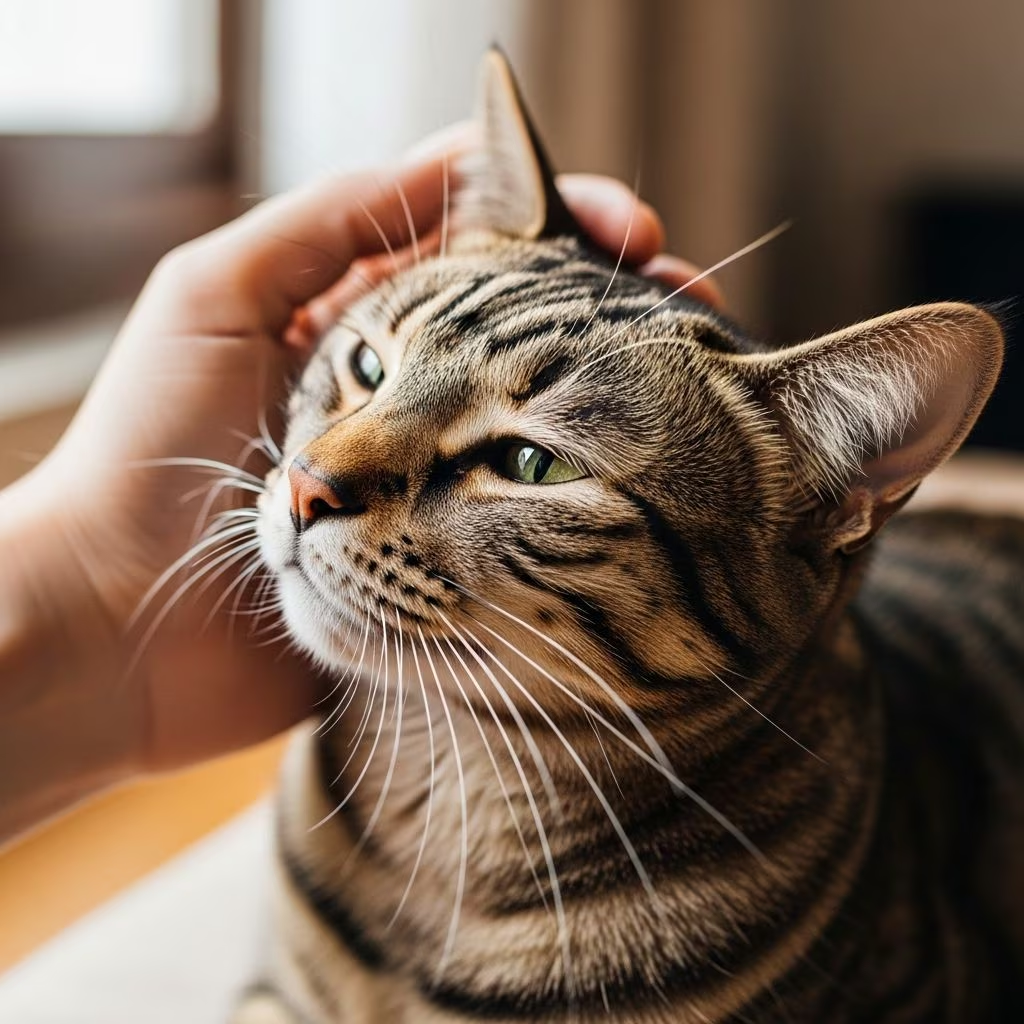
Cats often enjoy petting when done correctly, particularly on specific areas like the head and cheeks, but individual preferences vary widely based on their personality and mood.
The Science Behind Cats and Touch
Interactions involving petting cats can influence both feline and human physiology. Research indicates that petting decreases emotional arousal and parasympathetic activity in owners while increasing heart rates, suggesting an excitatory rather than purely relaxing effect. Positive correlations exist between heart rate and cortisol, as well as cortisol and oxytocin, highlighting complex hormonal responses during home interactions.
Petting behaviors negatively correlate with changes in parasympathetic activity, while playing has a positive effect, implying that stroking activates the sympathetic nervous system in owners. Despite common beliefs in stress reduction from petting, these findings reveal an arousing mechanism that may contribute to health benefits of cat ownership.
Key Areas Cats Love to Be Touched
- Cheeks and Face: Cats frequently rub their faces against hands, signaling approval through scent gland transfer known as bunting.
- Chin and Underside of Jaw: These spots trigger purring and leaning in, as they mimic grooming behaviors.
- Ears and Top of Head: Gentle scratches here often lead to head presses, indicating pleasure.
- Base of Tail (in Moderation): Some cats arch into this touch, but others find it overwhelming.
Approach slowly by offering a finger for sniffing first. If the cat pushes its face against your hand, follow its lead to the preferred zone.
Signs Your Cat Is Enjoying Petting
Positive indicators include slow blinking, kneading paws, purring, and head-butting. These behaviors show trust and contentment, strengthening the human-feline bond through mutual grooming-like interactions.
| Positive Sign | Description |
|---|---|
| Slow Blinks | Cat’s eyes half-close rhythmically, akin to a human smile. |
| Purring | Vibrations from the throat during relaxed states. |
| Head Rubbing | Bunting to mark you with facial scents. |
| Leaning In | Cat presses body toward your hand for more. |
Recognizing Overstimulation and Aggression
Cats can become overstimulated from prolonged or incorrect petting, leading to sudden aggression. This physiological response builds from sensory overload, not temperament. Watch for early warnings to end sessions positively.
- Tail Twitching: Quick, agitated flicks signal rising irritation.
- Skin Rippling: Back twitches under fur indicate discomfort.
- Ear Flattening: Ears rotate backward, preparing for defensive action.
- Dilated Pupils: Wide eyes show heightened arousal.
- Head Turns: Sudden glances at your hand may precede bites.
Petting-induced aggression, or overstimulation, causes growling, scratching, or biting after initial enjoyment. Some cats tolerate less touch due to hypersensitivity, preferring proximity over stroking.
Why Some Cats Dislike Petting
Not all cats crave touch equally. Factors include past experiences, health issues, or innate sensitivity. Certain breeds or individuals avoid belly or tail base contact entirely. Respecting boundaries prevents frustration; some felines bond through presence rather than petting.
Best Techniques for Effective Petting
Start with light strokes, increasing pressure if the cat leans in. Pet in the direction of fur growth, avoiding rough patting. Sessions should last 1-3 minutes, ending before signs appear to reinforce positive associations.
- Observe body language continuously.
- Use fingertips or flats of hands for varied sensations.
- Combine with play for balanced interaction.
- End voluntarily on a high note.
Avoid sensitive areas like paws, belly, or legs unless invited. Light scratches work better than full-hand rubs for many cats.
Individual Differences in Petting Tolerance
| Cat Type | Petting Style Preference | Tolerance Level |
|---|---|---|
| Social Butterflies | Long sessions on head/shoulders | High |
| Independent Types | Brief chin scratches | Low |
| Kittens | Playful full-body pets | Medium-High |
| Seniors | Gentle face strokes only | Variable |
Personalities shape responses; one cat may demand constant touch, another fleeing after seconds.
Building a Stronger Bond Through Touch
Consistent, respectful petting fosters trust. It mimics maternal grooming, releasing oxytocin in both parties. Misinterpreted studies once suggested petting stresses cats, but context like household dynamics mattered more.
Common Mistakes to Avoid
- Forcing interaction when the cat walks away.
- Ignoring subtle cues, leading to bites.
- Petting against the grain or too vigorously.
- Overlooking health issues mimicking behavioral aversion.
Frequently Asked Questions (FAQs)
Do all cats like being petted?
No, preferences vary. Many enjoy it selectively, others prefer no touch.
How long should I pet my cat?
Watch for cues; typically 1-5 minutes per session to avoid overstimulation.
What if my cat suddenly bites during petting?
This signals overstimulation. Stop immediately and shorten future sessions.
Can petting reduce my stress?
It excites rather than calms physiologically, but builds emotional bonds.
Why does my cat only like certain spots?
Scent glands concentrate on head/cheeks; other areas feel invasive.
Health Considerations for Petting
Consult vets for aggression tied to pain. Arthritis or skin issues heighten sensitivity. Regular check-ups ensure touch remains enjoyable.
References
- Effects of Interactions with Cats in Domestic Environment on … — PMC/NCBI. 2023-07-01. https://pmc.ncbi.nlm.nih.gov/articles/PMC10340037/
- Do Cats Like to Be Petted? — Hill’s Pet Nutrition. 2023. https://www.hillspet.com/cat-care/behavior-appearance/do-cats-like-to-be-petted
- Cat Petting 101: Avoid Overstimulation — I M Feline Fab. 2019-04-18. https://imfelinefab.com/behavior/2019/4/18/the-right-way-to-pet-your-cats
- The Not So Touchy-Feely Feline — Fundamentally Feline. N/A. https://www.fundamentallyfeline.com/the-not-so-touchy-feely-feline/
- Do cats have petting preferences? Yes! — What Your Cat Wants. N/A. https://whatyourcatwants.com/pettingprefs
- Why Petting Can Make Some Cats Aggressive — Psychology Today. 2021-06. https://www.psychologytoday.com/us/blog/fellow-creatures/202106/why-petting-can-make-some-cats-aggressive



