

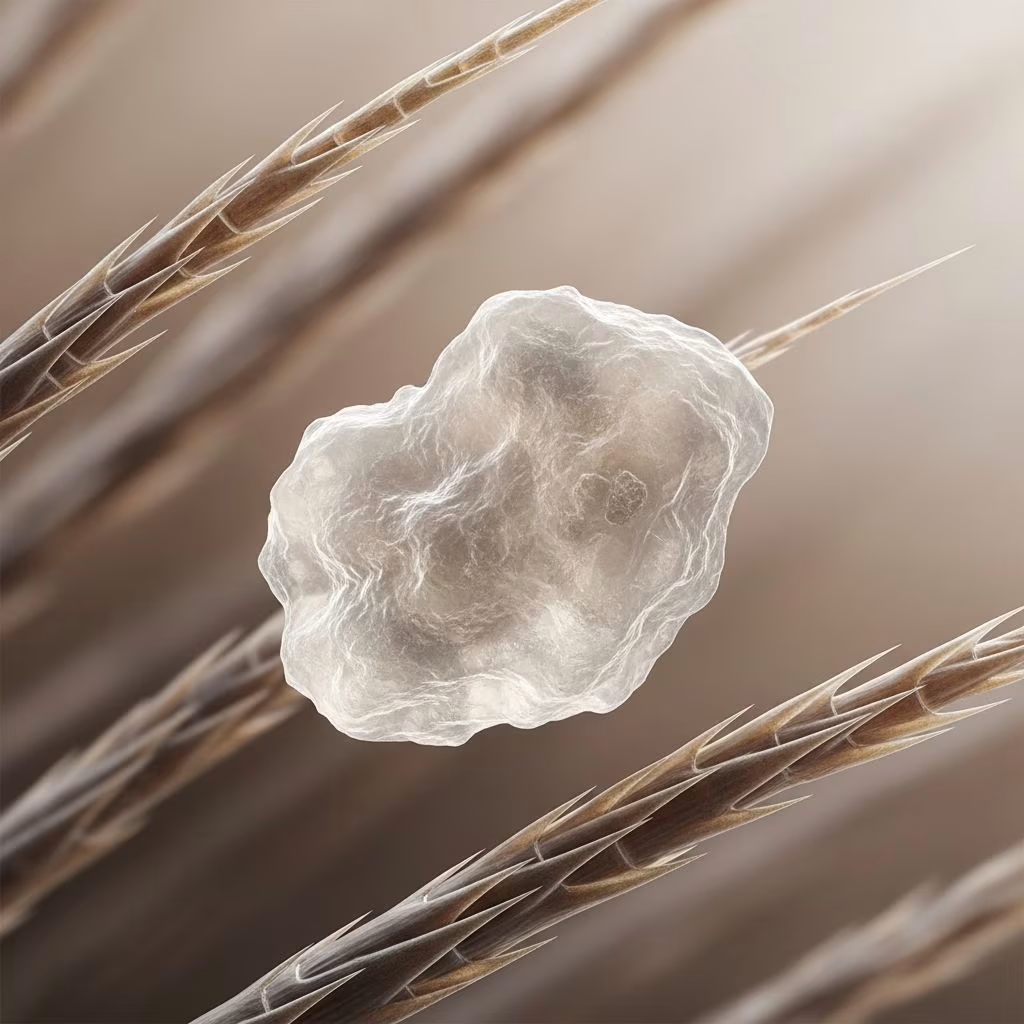
Cat dander refers to the microscopic flakes of dead skin shed by felines, often carrying proteins that trigger allergic reactions in sensitive individuals. Unlike common misconceptions, it’s not the fur itself but these tiny particles, along with saliva and urine residues, that provoke symptoms ranging from mild irritation to severe respiratory issues.
The Science Behind Cat Dander and Allergens
At the core of cat allergies lies **Fel d 1**, a specific protein produced in a cat’s salivary and sebaceous glands. This allergen spreads through grooming, where cats lick their fur, transferring saliva onto their coat, and subsequently onto dander as skin cells flake off. Urine proteins can also adhere to fur, becoming airborne when disturbed.
Dander particles are incredibly small, allowing them to linger in the air for extended periods and settle on surfaces like furniture, carpets, and clothing. Even hairless cats produce dander, debunking the myth that fur length determines allergen levels. All cats generate this protein, though production varies by individual, gender, and breed.
- Fel d 1 production sites: Primarily salivary glands, sebaceous glands, and urine.
- Spread mechanism: Grooming, shedding, and casual contact.
- Particle size: Microscopic, easily airborne and persistent indoors.
Recognizing Symptoms of Cat Dander Allergies
Exposure to cat dander elicits immune responses similar to hay fever, where the body mistakenly identifies Fel d 1 as harmful, releasing histamines that cause inflammation. Symptoms typically appear within minutes to hours of contact and can persist due to allergens sticking to fabrics and fabrics.
| Symptom Category | Common Signs | Severity Level |
|---|---|---|
| Respiratory | Sneezing, runny/stuffy nose, coughing, shortness of breath | Mild to severe (asthma trigger) |
| Ocular | Itchy, watery, red eyes | Mild |
| Skin | Rashes, hives, itchy skin (especially from saliva contact) | Mild to moderate |
| Systemic | Wheezing, asthma exacerbation | Severe |
Skin contact with saliva during petting or licking can lead to dermatitis, while inhaled dander affects airways. Children and asthmatics face heightened risks, with symptoms worsening in enclosed spaces.
Why Cat Dander Poses Unique Challenges
Unlike pollen or dust, cat dander allergens are “sticky,” adhering to walls, ceilings, and even traveling on clothing beyond the home. Studies show these proteins remain viable for months in dust samples. No cat breed is truly hypoallergenic, as all produce Fel d 1, though some like Siberian or Balinese may have lower levels.
- Highest allergen concentrations on a cat’s face and neck due to oil glands.
- Airborne persistence: Dander floats longer than larger particles like fur.
- Cross-contamination: Owners carry allergens to workplaces or public areas.
Diagnostic Approaches for Cat Allergies
Confirming cat dander as the trigger involves professional testing. Allergists use skin prick tests or blood tests measuring IgE antibodies to Fel d 1. Component-resolved diagnostics identify specific allergen components, predicting asthma risk or related conditions like pork-cat syndrome.
Rule out confounders like dust mites or pollen, which accumulate on fur. Early diagnosis enables targeted management, preventing symptom escalation.
Practical Strategies to Minimize Dander Exposure
Reducing allergens starts with environmental control. Regular cleaning traps particles before they become airborne.
- Vacuum daily: Use HEPA-filtered vacuums on floors, upholstery, and cat bedding.
- Wash fabrics weekly: Bed linens, curtains, and pet items in hot water.
- Air purification: HEPA air cleaners capture 99.97% of particles.
- Bathe cats: Weekly baths with allergen-reducing shampoos decrease Fel d 1 by up to 84% temporarily.
- Restrict zones: Keep cats out of bedrooms to protect sleep areas.
Grooming tools like slicker brushes remove loose dander. Damp mopping prevents dust re-suspension.
Innovative Dietary Solutions for Allergen Reduction
Recent advancements target Fel d 1 at its source. Specialized cat foods containing antibodies neutralize the protein in saliva, reducing airborne allergens by an average of 47% after three weeks. This non-invasive method allows allergy sufferers to maintain close bonds with pets without relocation.
Medical Interventions and Relief Options
Over-the-counter antihistamines like cetirizine alleviate mild symptoms. Nasal corticosteroids reduce inflammation for respiratory relief. Immunotherapy (allergy shots) desensitizes the immune system over 3-5 years, offering long-term remission for 80-90% of patients.
- Short-term: Antihistamines, decongestants, eye drops.
- Long-term: Sublingual drops or injections tailored to Fel d 1.
- Asthma management: Inhalers for wheezing or bronchospasm.
Consult physicians before starting treatments, especially for children or pregnant individuals.
Lifestyle Adjustments for Allergy Sufferers
Pet ownership with allergies requires commitment. Change clothes post-pet interaction, shower to rinse allergens, and use allergen-proof bedding covers. Multi-pet homes amplify exposure, necessitating scaled-up cleaning.
For severe cases, fostering or rehoming may be considered, though many thrive with diligent management.
FAQs About Cat Dander and Allergies
What exactly is cat dander?
Cat dander consists of dead skin flakes shed by cats, laden with Fel d 1 protein from saliva and glands, triggering allergies.
Can hairless cats cause allergies?
Yes, as they still produce dander and saliva containing allergens.
How long does cat dander linger in a home?
Months in settled dust; airborne with disturbance.
Are there hypoallergenic cats?
No breed is fully hypoallergenic, but some produce less Fel d 1.
Can diet really reduce cat allergens?
Yes, specific foods neutralize Fel d 1, cutting dander allergens significantly.
Should I get rid of my cat if allergic?
Not necessarily; testing and management often suffice.
Preventive Measures for New Cat Owners
Prospective owners with allergy history should spend extended time with cats pre-adoption. Monitor symptoms and prepare home with HEPA systems. Pediatricians advise against cats in homes with high-risk infants for asthma prevention.
References
- Facts About Cat Dander and Allergies — PetMD. 2023. https://www.petmd.com/cat/care/evr_ct_facts-about-cat-dander-and-allergies
- Pet Dander Allergy – What causes it and how to find relief? — Thermo Fisher Scientific. 2024. https://www.thermofisher.com/allergy/us/en/living-with-allergies/understanding-allergies/pet-dander-allergy-what-causes-it-and-how-to-find-relief.html
- Pet Dander — American Lung Association. 2024. https://www.lung.org/clean-air/indoor-air/indoor-air-pollutants/pet-dander
- Pet allergy – Symptoms & causes — Mayo Clinic. 2025-01-15. https://www.mayoclinic.org/diseases-conditions/pet-allergy/symptoms-causes/syc-20352192
- Allergic to Your Pet? Learn About Dog and Cat Allergies — Asthma and Allergy Foundation of America. 2023. https://aafa.org/allergies/types-of-allergies/pet-dog-cat-allergies/



