

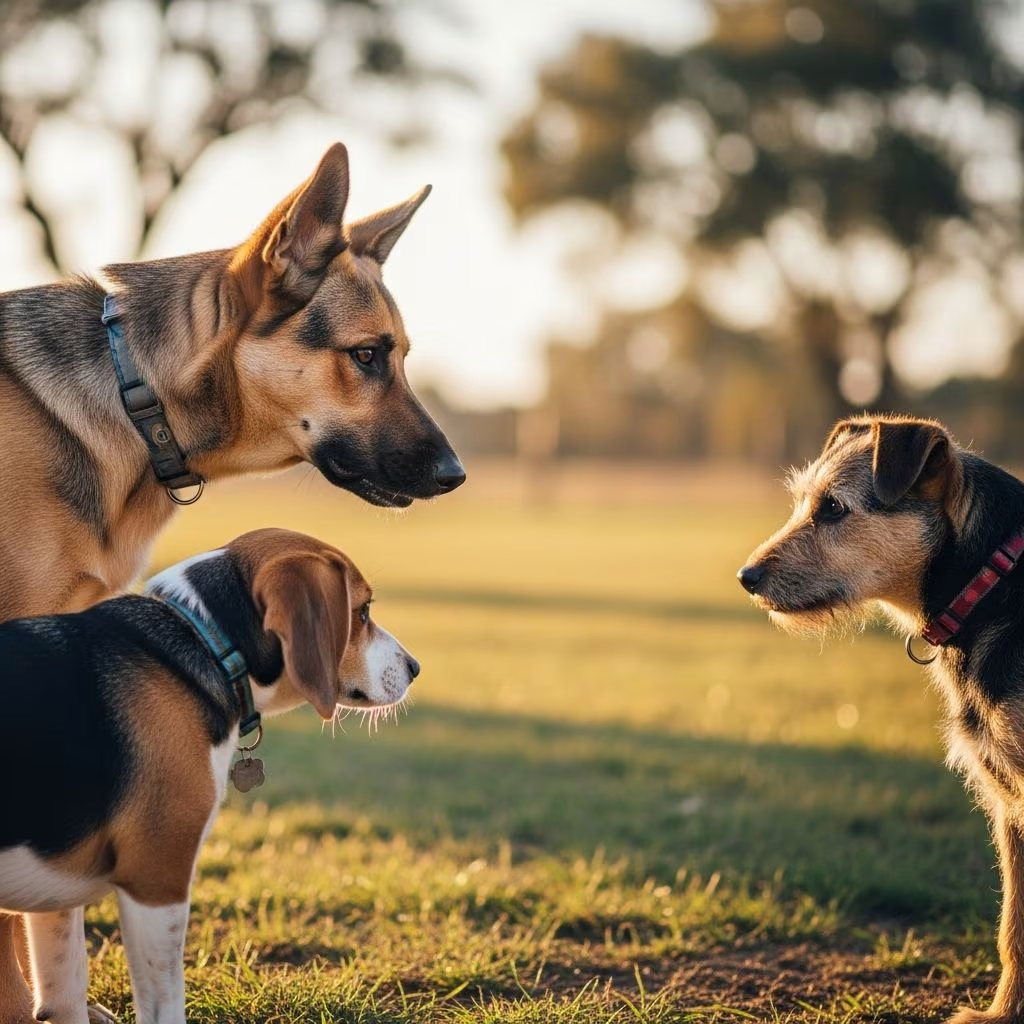
Dogs, as descendants of wolves, exhibit complex social behaviors that have long fascinated owners and experts alike. The idea of a strict “pack hierarchy” with an alpha leader dominates popular culture, but scientific understanding reveals a more nuanced picture. Canine social structures vary by context, group composition, and individual personalities, often featuring linear dominance in familiar groups but fluid, resource-based priorities in others.
In multi-dog homes, owners frequently observe one dog deferring to another—yielding toys, eating second, or greeting with lowered posture. Yet these dynamics don’t always fit a rigid ladder. This article examines observed hierarchies, communication signals, myths, and practical advice for fostering harmony.
The Dominance Theory: Origins and Controversies
The dominance theory posits that dogs vie for top rank through aggression, mirroring supposed wolf packs where subordinates challenge alphas. This model influenced training methods emphasizing human “alpha” displays like staring contests or eating first. However, ethologists now critique it as oversimplified.
Early wolf studies by Rudolph Schenkel in the 1940s observed captive packs forming linear hierarchies via fights, but these were artificial groups of unrelated adults, not natural families. Modern research on wild wolves shows breeding parents as gentle leaders, with offspring dispersing rather than overthrowing them.
For dogs, free-roaming groups (2-6 individuals) maintain stability through communication, not constant battles. Priority access to food or resting spots depends on motivation, context, and learning—not fixed rank.
Observed Hierarchies in Dog Groups
A key study of 14 neutered female shelter dogs revealed a nearly linear hierarchy. Higher-ranking dogs greeted subordinates with raised tails and erect ears; lowers responded by crouching or wagging submissively. No circular dominance occurred: if A > B and B > C, then A > C consistently.
Exceptions existed between mid-rank pairs who interacted casually without deference, suggesting familiarity allows relaxed bonds. Higher-rankers rarely aggressed; instead, they initiated contact confidently.
Wild canid packs separate sexes: alpha male over beta males, alpha female over others. Dominant members access resources first and lead activities but bear defense duties. Omegas face stress and may leave.
Dominant vs. Subordinate Roles
- Alpha (Top-Rank): Leads hunts, controls resources, initiates moves. Low stress, high privilege.
- Beta (Mid-Rank): Enforces rules, supports alpha. Flexible in changing environments.
- Omega (Lowest): Eats last, yields space. Acts as peacemaker, diffuses tension.
Subordinates thrive during pack travel, adapting quickly. Age and experience often elevate status naturally.
Canine Social Communication
Dogs convey rank via body language:
- High-Rank Signals: High tail, forward ears, direct gaze, upright posture.
- Subordinate Signals: Lowered head/tail, averted eyes, play bows, lip-licking.
- Appeasement: Rolling over, yawning, retreating.
Play maintains bonds without rank challenges. Free-roaming dogs rarely fight over resources in stable groups.
| Behavior | Dominant Display | Subordinate Response |
|---|---|---|
| Greeting | Raised tail, pricked ears | Crouched posture, tail wag |
| Resource Access | Confident approach | Yielding, avoidance |
| Conflict | Stiff posture, growl | Submission, flight |
[Adapted from observations in ]
Myths About Dog Hierarchies
Myth 1: Strict Linear Hierarchy Always Applies
No—dogs form loose associations without cooperative hunting. Structures include linear dominance, appeasement-based order, sex-separated ranks, or non-transitive pairs.
Myth 2: Humans Must Be Alpha
Dogs view owners as providers, not rivals. “Senior support” aids older dogs against puppies, mirroring wild age-based order.
Myth 3: Aggression Equals Dominance Bid
Aggression often signals fear or resource guarding, not rank quests. Healthy hierarchies minimize fights.
Pack Mentality in Modern Dogs
Domesticated dogs retain instincts for group living: hunting efficiency, predator defense, pup care. In homes, unclear leadership causes issues like:
- Resource guarding (food/toys).
- Disobedience or unruliness.
- Sibling rivalry, especially with newcomers.
Willful breeds need firm, consistent guidance—not aggression.
Multi-Dog Households: Practical Tips
Support natural order:
- Feed higher-rank dogs first if stable hierarchy exists.
- Supervise introductions; back the senior dog.
- Provide individual resources to prevent guarding.
- Use positive reinforcement for calm deference.
- Exercise together to build cooperative bonds.
Avoid destabilizing: Don’t punish subordinates excessively or favor challengers.
Frequently Asked Questions (FAQs)
What is a canine social hierarchy?
A system where dogs establish priorities for resources via communication. Often linear in stable groups but context-dependent.
Do dogs have an ‘alpha’ leader?
In some groups, yes—a top dog initiates and accesses first. But not tyrannical; more parental in wolves.
How do I know my dogs’ ranks?
Observe greetings, resource yielding, confident approaches. Mid-ranks may relax protocols.
Is dominance training effective?
Limited—focus on leadership via consistency, not confrontation. Positive methods build trust.
What causes fights in multi-dog homes?
Resource competition, unclear roles, or human interference. Stabilize with routine and support.
What We Don’t Know About Dog Hierarchy
Debate persists: Are dog hierarchies truly hierarchical or trait-based (e.g., bold vs. shy)? How do neutering, breeds, or human presence alter dynamics? Free-roaming dogs show diverse models—linear, triangular, or age-driven.
Future research may clarify via long-term wild studies, but current evidence urges viewing dogs as flexible social partners, not rigid pack warriors.
References
- Understanding Canine Social Structure — PetPlace.com. Accessed 2026. https://www.petplace.com/article/dogs/pet-behavior-training/understanding-canine-social-structure
- The Pack Mentality of Dogs — The K9 Encounter. Accessed 2026. https://thek9encounter.com/blog/the-pack-mentality-of-dogs
- Canine Social Structure – What We Know — Chaco Dog Training. Accessed 2026. https://chacodogtraining.com/canine-social-structure-what-we-know/
- Understanding Canine Social Hierarchies — Kinship. Accessed 2026. https://www.kinship.com/dog-behavior/understanding-canine-social-hierarchies
- Understanding Canine Social Structure [PDF] — University of Edinburgh. Accessed 2026. https://edwebcontent.ed.ac.uk/sites/default/files/atoms/files/1._understanding_canine_social_structure.pdf
- Dog Behavior and Training – Dominance, Alpha, and Pack Leadership — VCA Animal Hospitals. Accessed 2026. https://vcahospitals.com/know-your-pet/dog-behavior-and-training-dominance-alpha-and-pack-leadership-what-does-it-really-mean
- Social Behavior of Dogs — Merck Veterinary Manual. Accessed 2026. https://www.merckvetmanual.com/behavior/behavior-of-dogs/social-behavior-of-dogs



