

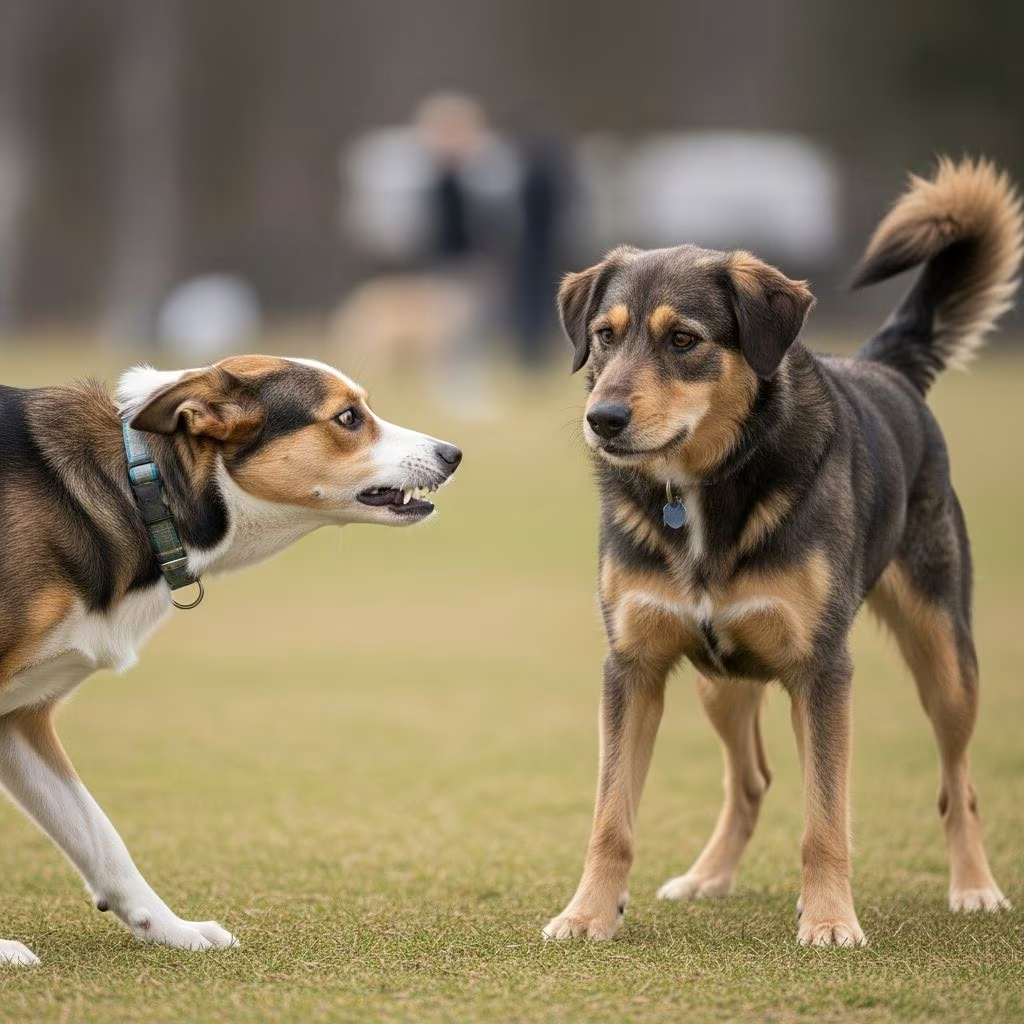
Observing your dog display hostile behaviors toward unfamiliar canines can be distressing and confusing, particularly if your pet once displayed friendly demeanor around other animals. Inter-dog aggression represents one of the most common behavioral concerns pet owners encounter, yet its underlying causes are often misunderstood. While dogs are inherently social creatures, a complex interplay of genetic predisposition, environmental conditioning, developmental history, and situational triggers can transform a naturally gregarious animal into one that exhibits fear-based or frustration-driven responses toward other dogs.
The Multifactorial Nature of Inter-Dog Reactivity
Canine aggression does not stem from a single source but rather represents a convergence of biological, psychological, and environmental factors. Understanding these interconnected elements is essential for pet owners seeking to address the problem effectively. The behavior combines innate responses to perceived threats with learned patterns that have been reinforced through repeated exposure and experience.
Each dog possesses a unique temperament shaped by hereditary traits and formative experiences. A dog with a genetically predisposed nervous disposition may inherit heightened reactivity from a mother who exhibited similar behavioral patterns. Simultaneously, the dog’s early environmental exposures—or lack thereof—during critical developmental windows establish baseline comfort levels with novel stimuli, including other animals.
Critical Socialization Windows and Long-Term Implications
The period between birth and approximately 16 weeks of age represents a critical window during which dogs demonstrate heightened behavioral flexibility and receptiveness to new experiences. During this sensitive phase, positive exposure to diverse dogs of varying sizes, temperaments, and play styles can establish a foundation of confidence and appropriate social responses.
Dogs that fail to receive adequate socialization during this window often emerge less emotionally equipped to navigate encounters with unfamiliar canines. This deficit does not necessarily manifest immediately; instead, the dog may display discomfort that escalates into defensive or aggressive responses when face-to-face meetings occur. Furthermore, a single traumatic incident during puppyhood—such as an unexpected frightening encounter with another dog—can create a lasting negative association that persists into adulthood.
Even well-socialized dogs are not immune to developing inter-dog aggression, as genetic and environmental variables continue to influence behavioral expression throughout the animal’s lifespan. This distinction is important for pet owners who may blame themselves for their dog’s aggression despite having made sincere efforts at early socialization.
Barrier-Related Frustration and Learned Reactivity
One particularly insidious trigger for dog-to-dog aggression involves repeated exposure to other dogs across barriers—fences, windows, or leashes. In these scenarios, the dog lacks the opportunity for direct social contact, and the barrier itself becomes associated with emotional frustration. The dog observes another canine but cannot approach, investigate, or interact, creating an escalating internal state of arousal.
Over time, the nervous system learns to associate the sight of another dog with the physical sensation of restraint and the emotional experience of thwarted desire. This conditioning can generalize, such that even ordinarily friendly dogs may exhibit aggressive displays when confined behind a gate, within a crate, or on a leash. Some trainers refer to this manifestation as “leash aggression” or “reactivity,” though these colloquial terms obscure the underlying frustration-based motivation.
The behavior itself becomes self-reinforcing: as the dog barks, lunges, or growls, the approaching stimulus often moves away or the dog remains separated, which the animal unconsciously interprets as a successful deterrent. This reinforcement loop strengthens the problematic behavior across successive encounters, making intervention more challenging as the habit solidifies.
Fear-Based Aggression and Defensive Communication
Fear represents one of the foundational emotional states driving inter-dog aggression. When a dog perceives threat or experiences anxiety about an approaching canine, it may initially attempt distance-increasing behaviors—yawning, freezing, or attempting to move away—to create space and signal discomfort. If these subtle warning signals are ignored or if the dog cannot physically escape the situation, it may escalate to overt aggressive displays including lunging, growling, or biting.
It is critical to recognize that aggression in this context functions as a communication tool rather than an offensive attack. The dog is essentially expressing extreme discomfort and attempting to enforce a boundary. Paradoxically, many well-intentioned owners inadvertently punish these warning behaviors, leaving the dog without a means of expressing its distress and potentially hastening the progression toward more serious aggressive acts.
Breed-Specific Traits and Communication Style Mismatches
Not all dogs “speak the same language” in terms of canine communication. Different breeds and individual dogs employ varying degrees of body language signaling, facial expressions, and vocalizations to convey their emotional state and intentions. A dog that attempts to politely signal its need for space through subtle posturing may encounter another dog that either lacks the ability to interpret these signals or deliberately ignores them.
When communication breaks down between two dogs, misunderstandings can rapidly escalate into conflict. One dog may be attempting to communicate “I need a break” through ear positioning or body tension, while the other dog continues advancing or increasing play intensity. This mismatch can trigger a defensive response that observers interpret as unprovoked aggression when it actually represents a dog’s attempt to enforce boundaries after failed diplomatic efforts.
Resource Guarding and Possession-Based Aggression
A distinctly different manifestation of inter-dog aggression involves resource guarding, wherein dogs display hostile behavior in the presence of valued items. These resources may include food, toys, treats, or even access to a particular person. A dog may behave amicably with other canines in neutral situations yet exhibit immediate aggression when another dog approaches while the first dog possesses or guards something it deems valuable.
Resource guarding likely reflects deep evolutionary drives related to survival and access to necessities. Dogs with histories of deprivation or competition for limited resources may show heightened guarding behaviors, though some dogs demonstrate these tendencies regardless of early environmental circumstances.
Predatory Drive and Non-Playful Pursuit
In rare cases, a dog’s aggressive behavior toward other dogs, particularly small dogs, may reflect predatory instinct rather than true aggression. True predatory behavior differs fundamentally from aggressive displays: the dog experiences no emotional arousal or fear but rather exhibits hunting sequences directed toward the target animal. These dogs may chase other canines in a non-playful manner with intense focus and vocalization.
It is essential to distinguish true predatory behavior from play-based aggression, as management and treatment approaches differ significantly. Predatory behavior is not classified as true aggression and is extraordinarily dangerous, necessitating strict separation and professional intervention.
Breed- and Sex-Based Selectivity
Some dogs display aggression exclusively toward dogs of a particular breed, size, or sex. A dog may react violently to poodles while remaining calm around German Shepherds, or a male dog may show aggression only toward other males. This selectivity suggests that certain visual or scent-based characteristics trigger the dog’s fear or territorial responses, while other dog types fail to activate these reaction patterns.
Medical and Pain-Related Contributors
Aggression that appears suddenly or without clear environmental trigger should prompt investigation into underlying medical conditions. Dogs experiencing chronic pain, orthopedic problems, thyroid dysfunction, adrenal imbalances, seizure disorders, or sensory deficits may display increased irritability and reactivity toward other animals. Geriatric dogs, in particular, may develop confusion and insecurity manifesting as aggressive responses.
Additionally, dogs are remarkably adept at concealing illness and injury, often appearing behaviorally normal despite experiencing significant discomfort. A dog with an undiagnosed painful condition may remain stable during solitary activities but become irritable and reactive during interactions with other dogs that involve physical contact or play.
Redirection and Secondary Aggression Toward Handlers
When dogs reach high levels of arousal and frustration directed toward another canine, they may lose accurate targeting and redirect aggressive responses toward nearby individuals, including their handlers or companion dogs. A dog intensely focused on lunging at a distant dog may suddenly snap at the person holding the leash when that person attempts to intervene or gain control.
This redirection does not indicate that the dog is intentionally aggressive toward its owner but rather reflects the dog’s neurological state during extreme arousal. To prevent injury, minimizing exposure to trigger dogs during treatment phases is advisable, or using appropriate safety equipment such as basket muzzles during situations where avoidance is impossible.
Management and Intervention Strategies
Environmental Modification
- Avoid routes and locations where the dog is likely to encounter other canines during treatment phases
- Use barriers and fencing to prevent visual exposure to passing dogs
- Maintain sufficient physical distance from other dogs to prevent triggering reactive responses
- Select low-traffic times for outdoor activities when fewer other dogs are present
Professional Training and Supervised Socialization
The most effective intervention for inter-dog aggression involves collaboration between the dog owner and experienced, qualified trainers who understand behavioral assessment and modification techniques. Group socialization conducted under professional supervision, where trained facilitators monitor body language and advocate for each participating dog’s comfort and safety, has demonstrated particular effectiveness in resolving learned aggression patterns.
Trainers skilled in recognizing subtle warning signs can intervene before escalation occurs, preventing reinforcement of aggressive responses while simultaneously building positive associations with the presence of other dogs.
Medical Evaluation
Before pursuing behavioral intervention exclusively, consultation with a veterinarian is essential to rule out medical contributors to aggression. Addressing underlying pain, thyroid abnormalities, or other physiological conditions may resolve behavioral concerns without requiring extensive behavioral modification.
Frequently Asked Questions
Can a dog that was once friendly with other dogs return to that state?
Yes, with appropriate intervention. Many dogs that have developed reactive or aggressive patterns toward other canines can rebuild positive associations and comfortable social interactions through systematic training, graduated exposure, and sometimes medical management if pain or other conditions contributed to the behavioral shift.
Is punishment effective for reducing inter-dog aggression?
Punishment, particularly directed toward warning signs, often worsens aggression rather than improving it. Punishing growls or defensive posturing removes the dog’s ability to communicate its discomfort through non-contact behaviors, potentially hastening escalation to biting. Modern behavioral approaches focus on addressing the underlying emotional states—fear, frustration, or possessiveness—rather than suppressing symptomatic displays.
Should I use a muzzle for walks with an aggressive dog?
Under specific circumstances, basket muzzles that allow normal panting and drinking can provide safety when avoidance of other dogs is impossible. However, muzzled dogs are vulnerable to injury from other dogs and should only be muzzled in environments where other dogs are reliably leashed and supervised. Muzzles represent a management tool, not a treatment, and should accompany behavioral intervention rather than replace it.
Are certain dog sizes or ages at greater risk for inter-dog aggression?
While aggression occurs across all sizes and ages, young dogs displaying aggression problems are generally considered more responsive to treatment than older dogs, making early intervention valuable. Size affects the danger level and potential damage rather than the likelihood of aggressive development.
Key Takeaways
- Inter-dog aggression stems from multiple interacting factors including genetics, early socialization experiences, learned behaviors, and situational triggers
- The critical socialization window between birth and 16 weeks significantly influences a dog’s future comfort with other canines, though genetics continue shaping behavior throughout life
- Barrier-related frustration, fear, resource guarding, communication style mismatches, and predatory drives represent distinct forms of inter-dog aggression requiring different management approaches
- Medical evaluation should precede or accompany behavioral intervention to identify pain or physiological contributors
- Professional training and supervised socialization show strong effectiveness in resolving learned aggression patterns
- Punishment of warning signs typically exacerbates rather than resolves aggression
References
- Dog Aggression Toward Unfamiliar Dogs – Diagnosis — VCA Animal Hospitals. Accessed March 2026. https://vcahospitals.com/know-your-pet/dog-behavior-problems-aggression-unfamiliar-dogs-diagnosis
- Reducing & Managing Dog Aggression Towards Other Dogs — BC SPCA. https://spca.bc.ca/pet-help-and-advice/behavior/dog-aggression/
- Aggression in Dogs — PetMD. Accessed March 2026. https://www.petmd.com/dog/behavior/aggression-in-dogs
- Redeemed Dogs: My Dog Used to Be Friendly with Other Dogs Now He’s Not — Redeeming Dogs. Accessed March 2026. https://redeemingdogs.com/dog-used-friendly-dogs-now-hes-not/
- Aggression — ASPCA. Accessed March 2026. https://www.aspca.org/pet-care/dog-care/common-dog-behavior-issues/aggression
- Dog Aggression — PDSA. Accessed March 2026. https://www.pdsa.org.uk/pet-help-and-advice/looking-after-your-pet/puppies-dogs/dog-aggression



