

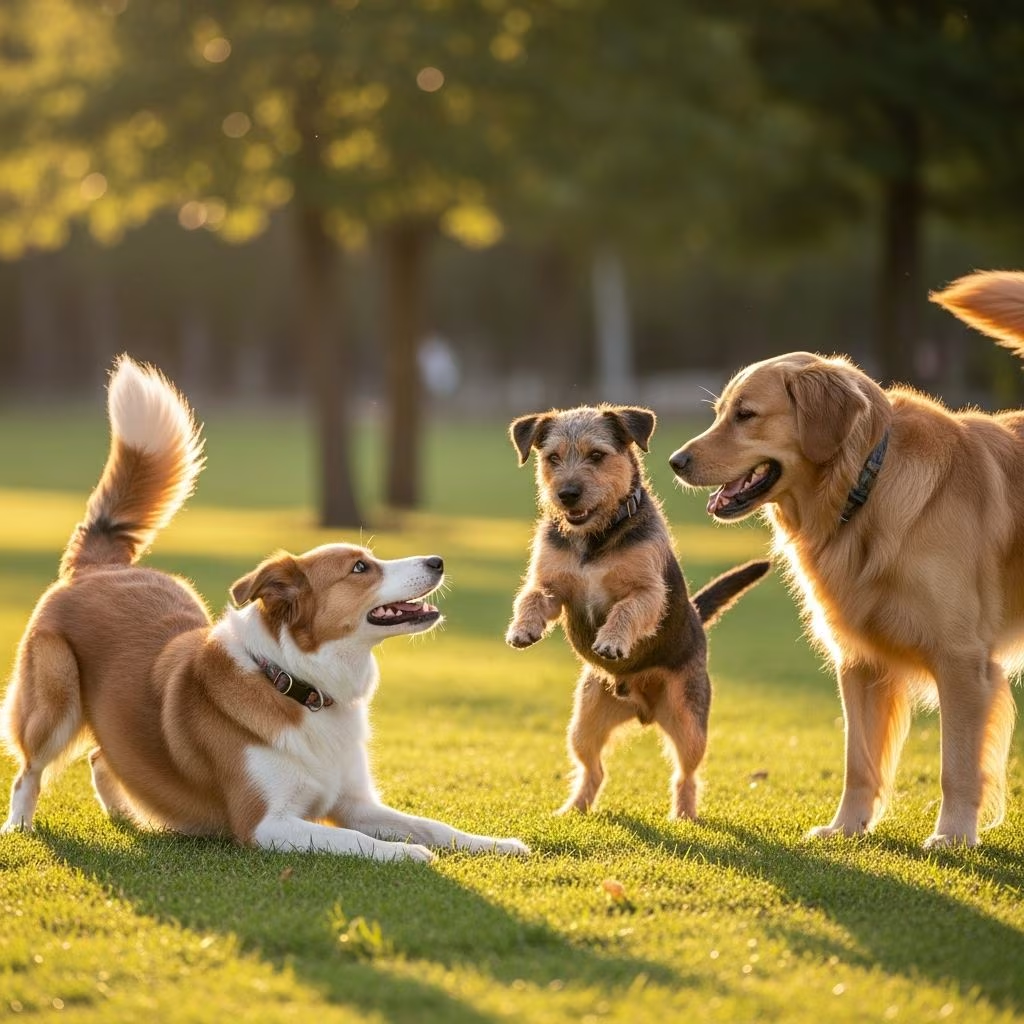
Understanding Dog Play Signs and Body Language
Dogs communicate their desire to play through a sophisticated system of signals and body language cues. These signals are essential for safe, enjoyable interactions between dogs and for strengthening the bond between dogs and their human companions. Understanding what your dog is trying to tell you through their play behaviour can enhance your relationship and ensure that playtime remains fun and safe for everyone involved.
The Importance of Play in Your Dog’s Life
Play is far more than just entertainment for dogs—it serves as a foundational element of their social development and emotional well-being. Research demonstrates that play creates the foundation of healthy relationships between dogs and their owners. A comprehensive survey found that many dog owners simply don’t spend enough time engaging in play with their pets, and this limited playtime is directly linked to behavioural problems including anxiety when left alone, disobedience, and increased aggression toward other animals.
Leading animal behaviour scientists emphasise that play teaches dogs the most important rules of social interaction: mutual trust, accepting limitations, and dealing fairly with others. During play sessions, dogs and their owners experience profound moments of connection where two different species genuinely become one. Play is not goal-oriented like training—it’s about shared joy and mutual understanding.
Dogs who engage in regular rough-and-tumble play with their owners demonstrate greater self-confidence, fewer separation anxiety issues, and improved obedience. Research has shown that dogs actually score higher in obedient attentiveness after play sessions than before them, suggesting that training following playtime can be exceptionally effective.
The Play Bow: The Universal Dog Play Signal
The play bow is the most recognisable and universally understood play signal among dogs. This distinctive posture leaves no doubt about a dog’s playful intentions. A proper play bow consists of several key elements that make it instantly recognisable:
- Elbows and the lower portion of the forelegs placed firmly on the ground
- Rear end elevated and raised high in the air
- Back often curved in a distinctive arch
- Tail held high and wagging actively
- Forelegs often turned outward to form a “V” shape rather than remaining parallel
When a dog assumes this posture, they are explicitly communicating to other dogs—and to you—that they want to play. The play bow serves as a context-setter that reframes any rough behaviour that follows as playful rather than aggressive. Even if what follows includes biting, chasing, shaking, or slamming into one another, the play bow makes clear that there is no intent to cause harm.
This signal is particularly important because it prevents misunderstandings between dogs. When dogs clearly communicate their playful intentions through signals like the play bow, rough behaviour is less likely to escalate into genuine aggression. The other dog understands the context and can respond appropriately.
Other Essential Dog Play Signals
While the play bow is the most well-known signal, dogs use several other behaviours to communicate their desire to play:
The Play Face
A dog’s play face is a relaxed, open-mouthed expression that often includes a soft gaze and relaxed facial muscles. This expression communicates friendliness and playfulness. Many dogs will display a play face while simultaneously engaging in other play behaviours, making it an important visual cue that playtime is beginning.
Gentle Paw Biting
Dogs often initiate play by gently biting the front paws of a potential playmate. This is not an aggressive action but rather a controlled, inhibited, and gentle interaction. The bite is deliberately soft and measured. Many dogs respond positively to this signal by mouthing back, chasing, or wrestling. This behaviour demonstrates the importance of bite inhibition and controlled interaction in dog communication.
Paw Batting or Boxing
Some dogs will box or bat their front paws at a potential playmate as a way to signal interest in play. This behaviour mimics a boxing motion and is a common way to get play started, particularly among certain dogs or breeds. The play that follows paw batting can take many forms—wrestling, chasing, body slamming, or mouthing at each other’s faces. Not all dogs use this signal regularly, but it’s a clear indication of playful intent when it occurs.
The Play Roll
Another important play signal involves a dog lowering themselves close to the ground and rolling. Specifically, they twist their upper body so they end up partly on their back with one shoulder, then the other, landing on the ground. They quickly move belly-up near the head of another dog. After rolling in this manner, dogs often bat their paws at the other dog’s face or deliver a very gentle, inhibited bite to the other dog’s front paws.
Bouncy Running and Chase Games
Dogs can initiate play without formal signals by simply acting playful in ways that invite others to join. Starting a chase is one such method. A dog might run toward the other dog, away from them, or in circles around them. The key distinction is that the running has a bouncy quality that differs markedly from serious running—it lacks the urgency or directness of escape or attack. Dogs may also approach and retreat multiple times, creating an obvious pattern of playful interaction.
Toy-Based Play Initiation
Dogs frequently initiate play by holding a toy and waving it near another dog or calmly approaching and offering one end of a toy for tug play. If the other dog takes the toy, the first dog waits to ensure a good grip before pulling. This method communicates clear playful intentions without formal signals.
Reading Your Dog’s Overall Body Language During Play
Beyond specific signals, understanding your dog’s overall body language during play is crucial. A dog engaged in genuine play will display:
- A relaxed, natural stance with soft muscles
- Smooth, flowing movements rather than stiff or rigid postures
- Regular breaks in play where both dogs step back and reset
- Reciprocal behaviour—taking turns being chased and chasing
- Open, forward-facing body orientation toward their playmate
- Ears in a natural, relaxed position (not pinned back or extremely forward)
- Mouth open in a soft, relaxed way rather than tight or pulled back
When play is healthy, dogs often pause periodically, check in with each other, and may even take brief breaks before resuming. This pattern indicates that both dogs are comfortable and enjoying the interaction together.
Play Signals Among Regular Playmates
Interestingly, dogs who play together regularly—especially those who live together or see each other daily—sometimes skip formal play signals entirely. These familiar playmates understand each other so well that explicit communication becomes unnecessary. They may charge at each other and immediately begin wrestling, much like human siblings who suddenly wrestle without preamble.
This skipping of signals works because there is clear established understanding between the dogs. However, the same behaviour with unfamiliar dogs can be dangerous. Charging at and wrestling with a dog you don’t know can be perceived as an attack, causing the other dog to defend themselves. This is why play signals are absolutely essential when introducing dogs to new playmates.
Building Stronger Bonds Through Play
When you learn to recognise and respond to your dog’s play signals, you strengthen your bond in several important ways:
Developing Trust
Play develops trust between you and your dog and increases the attention your dog will pay to you. Importantly, letting your dog occasionally win during play—even in tug games—demonstrates fairness and strengthens trust. Remember that play is fundamentally not goal-oriented; avoid focusing on winning or breaking records, as this transforms play into work and diminishes its positive aspects.
Joining the Pack
Dogs naturally prefer playing with humans over other dogs and are less competitive with their owners. Dogs will present and surrender toys to humans more frequently than to other dogs. Even in multi-dog households, dogs show increased rather than decreased interest in playing with their human companions, making interactive play a powerful bonding tool.
Encouraging Better Communication
Play signals develop communication skills in both directions. To signal your desire to play, hold a toy out in front of your dog, slap both hands on the ground, perform a play bow yourself, or make quick forward movements. When accompanied by playful vocalisations, human-initiated play signals are more likely to elicit a positive response from your dog.
Improving Obedience and Confidence
Dogs who frequently engage in rough-and-tumble play with their owners demonstrate fewer separation anxiety problems and increased self-confidence. Training conducted after play sessions proves highly effective, as dogs show greater obedient attentiveness following playtime compared to before play sessions.
Safety Considerations During Play
While play is beneficial, safety must always be the priority. Here are key safety guidelines:
- Always supervise play between your dog and unfamiliar dogs
- Teach your dog to respect play boundaries and respond to “stop” commands
- Watch for signs of escalating tension or genuine aggression
- Take breaks during intense play sessions
- Ensure play areas are secure and free from hazards
- Monitor all dogs involved for signs of fatigue or stress
- Never force a dog to play if they show disinterest or anxiety
Recognising the Difference Between Play and Aggression
While play signals help prevent confusion, it’s important to distinguish genuine play from aggression. In healthy play, dogs display mutual engagement, take turns, and show reciprocal behaviour. Aggressive behaviour typically features stiff body posture, pinned ears, bared teeth in a serious context, no breaks or resets, and one-sided dominance. Play signals explicitly communicate that rough behaviour is playful; aggressive dogs typically skip these signals entirely.
Frequently Asked Questions
Q: What does a play bow mean?
A: A play bow is a dog’s way of saying “I want to play” and signalling that any rough behaviour that follows is playful rather than aggressive. The dog places their elbows on the ground with their rear end elevated, tail wagging, and forelegs often turned outward.
Q: Why is my dog not showing play signals?
A: Some dogs are naturally less playful or may be anxious or unwell. If your dog suddenly stops showing play signals, consult a veterinarian to rule out health issues. Building positive associations with play through gentle encouragement can help develop this behaviour.
Q: Can I use play signals to communicate with my dog?
A: Yes! You can perform a play bow, use playful vocalisations, slap the ground, or make quick movements to signal your desire to play. These human-initiated signals often encourage your dog to engage in play with you.
Q: How much playtime does my dog need?
A: Most dogs benefit from multiple daily play sessions. The exact amount depends on age, breed, energy level, and health status. Puppies and high-energy dogs typically need more playtime than senior or lower-energy dogs.
Q: Is it safe for my dog to play rough?
A: Rough play is safe when both dogs understand play signals, show mutual engagement, take regular breaks, and have learned good bite inhibition. Supervise all play and watch for signs of genuine distress or escalating aggression.
Q: What should I do if play becomes too rough?
A: Calmly interrupt play with a command your dog knows, provide a brief timeout, and then allow play to resume if appropriate. Teaching your dog to respond to “stop” or “enough” commands helps manage play intensity.
References
- Play Together, Stay Together — Patricia McConnell. Consulted from Kinship Dog Behaviour Resources. https://www.kinship.com/dog-behavior/dog-play-bow
- 6 Dog Play Signals You Should Know — Kinship Dog Behaviour Guide. 2024. https://www.kinship.com/dog-behavior/dog-play-signals



