

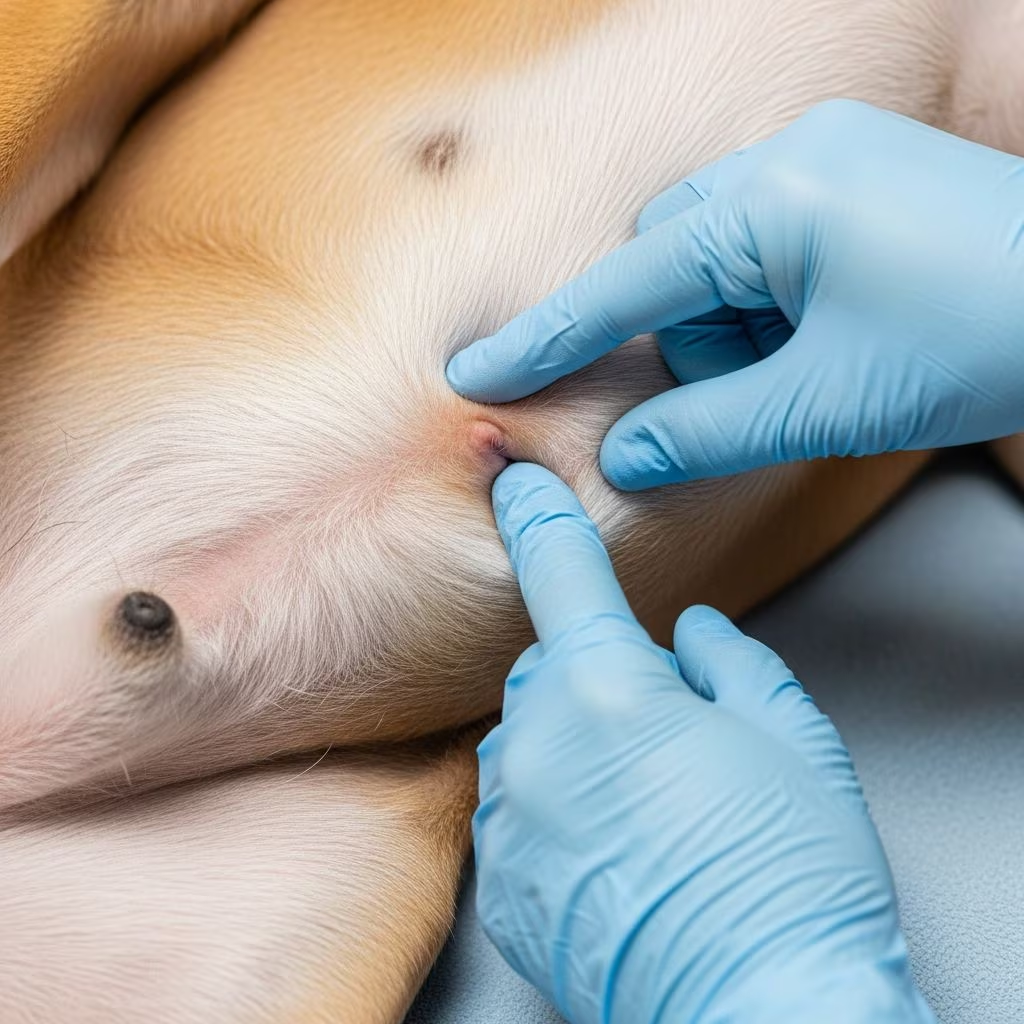
Umbilical hernias represent one of the most frequently encountered abdominal conditions in young canines, occurring when the muscular wall surrounding the belly button fails to develop properly or close completely. This condition creates an opening through which fatty tissue or, in rare cases, internal organs can protrude outward, creating a visible bulge at the navel site. While the appearance of an umbilical hernia may alarm new dog owners, understanding the condition’s nature, progression, and available treatment options can help you make informed decisions about your puppy’s health care.
What Constitutes an Umbilical Hernia and How It Develops
An umbilical hernia develops as a result of incomplete closure or weakness in the abdominal wall muscle at the umbilicus, the location where the umbilical cord was once attached during fetal development. The condition manifests as a small, often spherical swelling located directly at or near the belly button on the lower portion of the abdomen. This protrusion typically feels squishy or firm to the touch, and in many cases, gentle pressure can temporarily push the contents back inside the abdominal cavity, only to have the bulge reappear moments later.
The fundamental mechanism behind umbilical hernias involves a defect in the muscular structure that normally seals the umbilical ring following birth. This ring, which is the opening through which the umbilical cord passes during pregnancy, should naturally close within days after birth as the abdominal muscles strengthen and contract. When this closure process fails to occur properly, the protective muscular barrier becomes compromised, leaving only skin to separate the internal organs from the external environment.
Origins and Root Causes of Umbilical Hernias
Umbilical hernias in dogs stem from two distinct categories of causation: congenital factors and traumatic events.
Congenital Development Issues
Congenital umbilical hernias arise from developmental anomalies that occur during fetal formation, wherein the umbilical ring fails to close within the normal timeframe following birth. Rather than sealing shut as it should, the opening remains patent, creating a persistent gap in the abdominal musculature. This type of hernia carries a hereditary component, meaning it may run through certain family lines or breeding lineages. Puppies born to parents with histories of umbilical hernias face increased susceptibility to developing the condition themselves, suggesting a genetic predisposition that breeders should consider when making breeding decisions.
Traumatic Causes
Traumatic umbilical hernias occur when physical injury or mishandling compromises the integrity of the abdominal wall during the critical post-birth period. Excessive traction applied to the umbilical cord during delivery or too-aggressive severance of the cord can damage the surrounding muscle tissue, impairing its ability to heal properly and potentially resulting in hernia development. Additionally, if a puppy’s dam chews the umbilical cord too vigorously or removes it too close to the abdomen, this may create sufficient trauma to prevent proper navel healing and subsequent hernia formation. However, it’s important to note that breeders who claim that most puppies in a litter developed hernias due to the mother’s aggressive cord chewing may be providing inaccurate information, as this represents a relatively uncommon cause.
Recognizing Umbilical Hernia Symptoms and Signs
The most apparent indicator of an umbilical hernia is the visible swelling itself, which typically appears as a small bump or bulge at the umbilicus. These hernias are inherently obvious because they protrude from the body’s surface, making them easily detectable during physical examination. The swelling often becomes more pronounced when a dog stands, barks, cries, or strains, as increased abdominal pressure causes the contents to push harder against the weakened muscular barrier.
The majority of puppies with umbilical hernias experience no discomfort whatsoever and remain entirely unaware of the condition’s presence. These dogs display normal behavior, appetite, energy levels, and overall demeanor. However, certain situations warrant closer attention and warrant veterinary intervention.
Complications and Serious Symptoms
While rare, large hernias or those containing abdominal organs can develop serious complications. The most concerning complication is strangulation, which occurs when the hernia contents become twisted or pinched, cutting off their blood supply. This represents a medical emergency characterized by intense pain and rapid deterioration in the puppy’s condition. Affected animals may exhibit lethargy, loss of appetite, nausea, or vomiting. Strangulation is fortunately extremely rare, with most veterinarians never encountering a single case throughout their entire careers. However, when it does occur, emergency surgical intervention becomes necessary to prevent tissue death and preserve the puppy’s life.
Another potential complication involves skin trauma over the hernia site. Since hernias create a protrusion away from the body wall, the overlying skin becomes vulnerable to injury if the puppy drags against rough or irritating surfaces. Owners should monitor for signs of redness, crusting, or discharge from the hernia site and keep the area clean to prevent infection.
Diagnostic Approaches and Veterinary Evaluation
Most umbilical hernias are identified during routine veterinary examinations, with knowledgeable breeders often detecting them within the first few weeks of a puppy’s life. Veterinary diagnosis typically begins with physical palpation, wherein the veterinarian carefully examines the hernia site by touch. This hands-on assessment allows the veterinarian to determine the hernia’s diameter and ascertain whether it is reducible—meaning the contents can be pushed back inside the abdominal cavity—or irreducible, indicating the contents cannot be easily returned.
For small hernias containing only fatty tissue, physical examination alone usually provides sufficient diagnostic information. However, when a veterinarian suspects that an abdominal organ or portion of the intestinal tract may be contained within the hernia, imaging studies become advisable. X-ray radiography and ultrasound examinations can definitively identify hernia contents and help determine whether surgical correction is necessary and how urgently it should be performed.
Treatment Pathways: Observation, Manual Management, and Surgery
The appropriate treatment approach for an umbilical hernia depends on multiple factors, including the hernia’s size, its contents, the dog’s age, financial considerations, and whether complications exist.
Spontaneous Resolution and Conservative Management
Many small umbilical hernias resolve without intervention, particularly when they contain only fatty tissue rather than organs. Spontaneous closure frequently occurs by four months of age, as the abdominal muscles continue developing and strengthening. Some veterinarians suggest that gently pushing the hernia contents back inside the abdominal cavity on a daily basis may improve the likelihood of eventual closure and healing.
For puppies whose hernias do not spontaneously close, conservative management involves continued observation and monitoring for any signs of complications. During this period, owners should remain vigilant for behavioral changes, loss of appetite, vomiting, or enlargement of the hernia, any of which warrant immediate veterinary consultation.
Surgical Repair Procedures
Most umbilical hernias ultimately require surgical correction, particularly larger hernias or those containing abdominal organs. The surgical procedure involves a straightforward approach wherein the hernia contents are gently replaced within the abdominal cavity and the muscular defect is closed using strong sutures. For particularly large hernias, surgeons may place mesh over the opening rather than simply drawing the edges of the umbilical ring together, providing additional reinforcement.
Surgical timing is frequently coordinated with spaying or neutering procedures to minimize the puppy’s exposure to anesthesia and reduce overall treatment costs. This approach eliminates the need for two separate surgical procedures and general anesthetics, making treatment more economical and reducing anesthetic risk. However, when a hernia is large or contains abdominal organs, surgery should be performed as soon as possible regardless of other scheduled procedures, to prevent organ damage or life-threatening complications.
Post-Surgical Considerations
The surgical prognosis for puppies undergoing umbilical hernia repair is considered excellent, with complications rarely developing. To optimize healing and prevent complications, owners must carefully follow all post-operative instructions provided by their veterinarian. These typically include strict rest restriction, preventing the surgical site from becoming wet or dirty, and potentially utilizing a protective pet t-shirt or Elizabethan collar to prevent licking or trauma to the incision. While any surgery carries minimal risks including anesthetic complications, infection, or fluid accumulation (seroma), these risks can be substantially minimized through proper post-operative care and adherence to veterinary recommendations.
Prevention and Breeding Considerations
Because umbilical hernias carry hereditary components, particularly those resulting from congenital causes, genetic considerations become important for responsible breeding. All dogs diagnosed with umbilical hernias should be spayed or neutered to prevent passing this genetic trait to future offspring. This breeding recommendation represents a crucial component of responsible canine genetics management and helps reduce the incidence of this condition in future generations.
Key Treatment Decision Table
| Hernia Characteristic | Treatment Recommendation | Timeline |
|---|---|---|
| Small hernia, fatty tissue only | Observation and conservative management | Monitor until 4 months; reassess if persists |
| Small to medium hernia with organs | Surgical repair coordinated with spay/neuter | Schedule during routine spay/neuter procedure |
| Large hernia or strangulation suspected | Emergency surgical repair | Immediate veterinary intervention required |
Frequently Asked Questions About Umbilical Hernias
Will my puppy’s umbilical hernia close on its own?
Small umbilical hernias frequently close spontaneously, typically by four months of age. However, if closure has not occurred by this age, surgical intervention is generally recommended. The chances of spontaneous closure are higher for small hernias containing only fatty tissue, compared to larger hernias or those containing abdominal organs.
Is surgery absolutely necessary for all umbilical hernias?
No, not all umbilical hernias require surgery. Small hernias containing only fat and causing no complications may be left alone under veterinary observation. However, larger hernias, those containing organs, or hernias that fail to close spontaneously by four months of age typically benefit from surgical repair.
What happens if an umbilical hernia becomes strangulated?
Strangulation represents a medical emergency where hernia contents lose blood supply due to twisting or pinching. This causes severe pain and rapid deterioration. Emergency surgery must be performed immediately to prevent tissue death and preserve the puppy’s life. Fortunately, strangulation remains extremely rare.
Can I feel my puppy’s hernia going in and out?
Yes, many small umbilical hernias are reducible, meaning you can gently push the swelling back into the abdominal cavity. The hernia typically reappears shortly afterward as abdominal pressure pushes the contents back out through the muscular gap. This is completely normal for small hernias and does not indicate a problem.
How much does umbilical hernia surgery cost?
Surgical costs vary depending on your geographic location, veterinary facility, and whether the surgery is performed as a standalone procedure or coordinated with spaying or neutering. Coordinating hernia repair with routine spay or neuter procedures generally reduces overall costs compared to separate surgical interventions.
Living with an Umbilical Hernia: Owner Responsibilities
If your puppy has been diagnosed with an umbilical hernia that does not require immediate surgical intervention, several important responsibilities fall to you as the owner. Maintain regular veterinary monitoring to ensure the hernia is not enlarging or developing complications. Watch for any signs of behavioral change, appetite loss, or discomfort. Keep the hernia site clean and protected from trauma, and avoid activities that dramatically increase abdominal pressure if possible, though normal play and activity are generally fine.
Ensure that your puppy is scheduled for spaying or neutering, and coordinate any necessary hernia repair surgery with these routine procedures to minimize stress and expense. Discuss with your veterinarian the specific timeline for surgical intervention if the hernia has not closed spontaneously by four months of age.
Conclusion: Moving Forward with Confidence
Discovering that your puppy has an umbilical hernia need not cause excessive concern. In the vast majority of cases, these hernias represent benign conditions that resolve either spontaneously or through simple surgical repair with excellent outcomes. By understanding the condition’s nature, remaining alert for complications, and following your veterinarian’s recommendations regarding monitoring and treatment timing, you can ensure your puppy receives appropriate care and enjoys a healthy, normal life.
References
- Can Dogs Get Hernias? Causes, Symptoms and Treatment Options — CareCredit Well-U. Accessed January 2026. https://www.carecredit.com/well-u/pet-care/can-dogs-get-hernia/
- Puppy umbilical hernias: The signs, risks and treatment options — Pooch and Mutt. Accessed January 2026. https://www.poochandmutt.co.uk/blogs/puppy/umbilical-hernias
- What is an Umbilical Hernia in Canines? — My County Line Veterinary Clinic. Accessed January 2026. https://www.mycountylinevet.com/services/dogs/visiocare/what-umbilical-hernia-canines
- What To Do If Your Puppy Has An Umbilical Hernia? — Dr. Kelly’s Veterinary Surgical Unit. Accessed January 2026. https://www.drkellysvet.com/umbilical-hernia-care-for-puppies/
- Umbilical Hernias In Dogs: Everything You Need to Know — Chewy. Accessed January 2026. https://www.chewy.com/education/dog/health-and-wellness/umbilical-hernias-in-dogs-more-common-than-you-think
- Hernias in Puppies: What You Need to Know — PetMD. Accessed January 2026. https://www.petmd.com/dog/general-health/hernias-puppies-what-you-need-know



