Ultrasound Examination in Cats: Guide to Diagnostic Imaging
Complete guide to ultrasound imaging for cats: procedures, preparation, and diagnostic benefits.
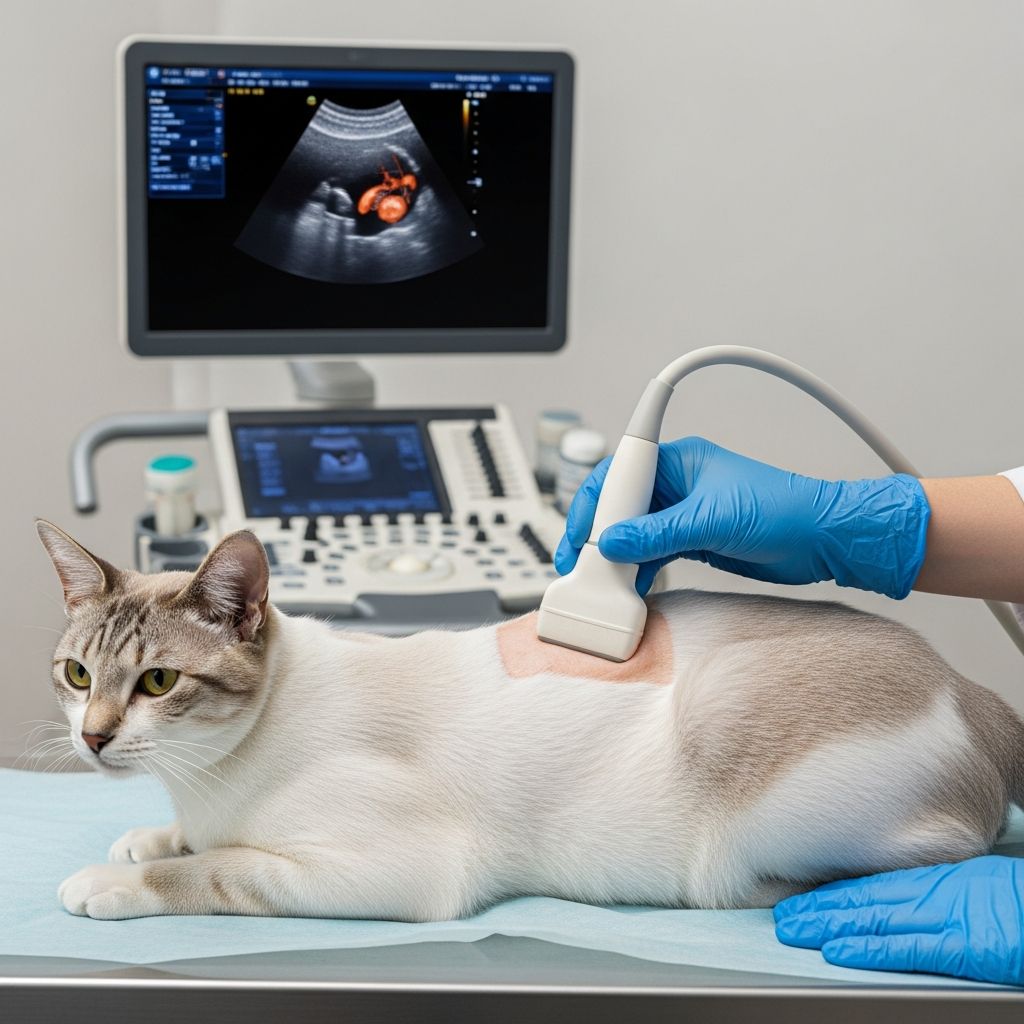
Understanding Ultrasound Examination in Cats
Ultrasound examination has become an indispensable diagnostic tool in veterinary medicine, offering non-invasive imaging capabilities that help veterinarians identify and evaluate various health conditions in cats. This advanced imaging technique uses high-frequency sound waves to create detailed images of your cat’s internal organs and structures, allowing for accurate diagnosis and treatment planning without exposing your pet to radiation.
An ultrasound machine emits and receives high-frequency ultrasound waves through a transducer, commonly known as a probe. This sophisticated equipment represents a significant advancement in feline diagnostic capabilities, enabling veterinarians to visualize internal structures with remarkable clarity and precision. The technology has evolved considerably since its introduction to veterinary medicine, transforming how veterinarians approach diagnosis and monitoring of feline health conditions.
How Ultrasound Technology Works
The fundamental principle behind ultrasound imaging involves the transmission and reception of sound waves at frequencies far too high for human hearing. When the ultrasound probe is placed against your cat’s skin, it directs these high-frequency sound waves into the body. These sound waves travel through different tissues and organs, bouncing back when they encounter boundaries between different tissue types, such as the interface between fluid and soft tissue, or tissue and bone.
The echoes that return to the transducer are converted into electrical signals, which are then processed by the ultrasound scanner. Using sophisticated computerized calculations, the machine determines the distance from the transducer to various tissue boundaries based on the time it takes for the echoes to return. This information is used to generate real-time, two-dimensional images of the tissues and organs being examined, allowing your veterinarian to observe the internal structures of your cat’s body in motion.
Key Applications of Ultrasound in Feline Medicine
Ultrasound examination provides veterinarians with valuable diagnostic capabilities across multiple organ systems and health conditions. Originally developed and first used in veterinary medicine for pregnancy diagnosis, the technology has expanded far beyond this initial application to encompass a broad range of diagnostic purposes.
Cardiac Imaging: Ultrasound is excellent for evaluating heart conditions in cats, allowing veterinarians to assess cardiac structure and function with precision. This capability is particularly important for diagnosing hypertrophic cardiomyopathy, which is common in feline patients.
Abdominal Organ Assessment: Ultrasound examination allows your veterinarian to view the internal structures of the kidneys, liver, and other abdominal organs with remarkable detail. This capability enables the recognition of cysts, tumors, and other abnormalities that might not be visible through physical examination alone.
Eye Evaluation: Specialized ultrasound techniques can evaluate ocular structures and conditions affecting feline vision.
Hollow Organ Visualization: Ultrasound is particularly excellent for viewing the interior of hollow organs such as the bladder, providing detailed images that facilitate diagnosis of urinary tract conditions.
Pregnancy Assessment: An ultrasound can assess fetal viability and development, determine the number of fetuses present, and monitor the health of pregnant cats throughout gestation.
When Your Veterinarian May Recommend Ultrasound
Your veterinarian might recommend ultrasound examination in several clinical scenarios. Cats presenting with loss of appetite, vomiting, diarrhea, urinating blood, or unexplained weight loss may benefit from abdominal ultrasound to identify underlying causes. Additionally, if your cat’s blood chemistry panel shows elevated kidney or liver enzymes, an abdominal ultrasound may be recommended to assess organ structure and function.
Hepatic lipidosis, the most common liver disease in cats, can be evaluated through ultrasound imaging. Similarly, older cats frequently affected by chronic kidney disease can benefit from ultrasound examination to assess kidney structure and detect abnormalities. The technology also proves invaluable for identifying cysts, tumors, and other structural abnormalities that might otherwise go undetected.
Understanding the Limitations of Ultrasound
While ultrasound is a powerful diagnostic tool, it does have specific limitations that veterinarians must consider when planning diagnostic imaging. Ultrasound examinations are of little value in examining organs that contain air. Since the lungs are air-filled, they cannot be studied effectively with ultrasound imaging. The exception to this rule is ultrasound study of a mass located within the lungs, which may be visualized.
Bone presents another significant limitation for ultrasound waves, as the dense mineral structure effectively blocks sound wave penetration. Consequently, the brain and spinal cord are unable to be seen with ultrasound studies, and obviously, bones themselves cannot be examined using this technology. These limitations mean that different imaging modalities, such as radiography or advanced cross-sectional imaging, may be necessary for evaluating certain conditions.
Preparation Steps for Ultrasound Examination
Proper preparation significantly enhances the quality of ultrasound images and ensures your cat remains comfortable throughout the procedure. The preparation requirements vary depending on which organs are being examined.
Cardiac Ultrasound Preparation: If your veterinarian will be performing an echocardiogram to evaluate your cat’s heart, no special preparation is needed. Your cat can eat and drink normally before a cardiac ultrasound examination.
Abdominal Ultrasound Preparation: If an abdominal ultrasound is going to be performed, food should be withheld from your cat for 8 to 12 hours before the procedure. This fasting helps reduce gas in the gastrointestinal tract, which can interfere with image quality. Your cat may typically drink water unless your veterinarian specifies otherwise.
Bladder Visualization: The urinary bladder is best visualized when it is full of urine, providing optimal acoustic windows for imaging. Therefore, do not let your cat urinate within three to six hours of the ultrasound procedure if possible. Your veterinarian may provide specific instructions about limiting water intake to help maintain a full bladder during the examination.
The Ultrasound Procedure: What to Expect
Understanding what happens during an ultrasound examination can help reduce anxiety for both you and your cat. The procedure is non-invasive and generally well-tolerated by most feline patients.
Initial Restraint and Preparation: Your cat will be gently restrained in a comfortable position during the examination. Fur is removed from the area where the scan will be placed, typically using clippers or shaving to allow better contact between the probe and skin. This step is essential for obtaining quality images, as fur creates an acoustic barrier that prevents sound waves from penetrating effectively.
Application of Ultrasound Gel: Clear gel is applied to either the probe or your cat’s skin to optimize the contact between the ultrasound transducer and your cat’s skin. This coupling medium eliminates air pockets between the probe and skin, which would otherwise reflect sound waves and prevent effective image transmission. The gel is water-soluble and easily washes off following the procedure.
Probe Movement and Scanning: Your veterinarian will move the probe around the scanning area, angling it to obtain images from different perspectives. This systematic approach allows examination of different anatomical structures and ensures comprehensive evaluation. The scan may be visible on the screen of the ultrasound machine while this is being done, and your veterinarian can explain what they are observing as they proceed.
Duration of Examination: The process generally takes 20 to 45 minutes, depending on the area being examined and the complexity of the issue. A pregnancy ultrasound might take less than five minutes, while a detailed scan of the abdomen or chest could take half an hour or more. The complexity of the condition and the number of organs requiring evaluation influence the total time required.
Anesthesia Requirements
Many cat owners express concern about whether their pet will require anesthesia for ultrasound examination. The good news is that in most cases, anesthesia is not necessary. If your cat is cooperative, no anesthesia or sedation is needed to perform ultrasound on the heart or the abdomen. The procedure is painless, and most cats tolerate it well with gentle handling and restraint.
However, anesthesia may be required in specific circumstances. If biopsies are to be taken during the ultrasound procedure, a short-acting anesthetic or a heavy sedative will be needed to help relax your pet during the procedure and prevent potential complications. This ensures your cat remains still and comfortable while samples are collected. Your veterinarian will discuss anesthesia options with you ahead of time if they anticipate that biopsies or other interventional procedures may be necessary.
Interpreting Ultrasound Results
Following the ultrasound examination, your veterinarian will interpret the images and discuss the findings with you. The interpretation requires significant expertise and experience, as veterinarians must recognize normal anatomy and identify any abnormalities present. Your veterinarian will explain what the images show, whether any concerning findings are present, and what recommendations they have for next steps in your cat’s care.
The real-time nature of ultrasound imaging allows veterinarians to assess organ function and movement, not just static anatomical structures. This dynamic capability provides information that static imaging modalities cannot offer, contributing to more complete diagnostic evaluation.
Advantages of Ultrasound Imaging
Ultrasound examination offers numerous advantages that make it an invaluable tool in veterinary medicine. The technology is non-invasive, requires no radiation exposure, and carries virtually no risk to your cat. Unlike radiography, ultrasound does not utilize ionizing radiation, making it a safer option for pregnant cats and those requiring frequent imaging studies.
The real-time imaging capability allows veterinarians to observe organ movement and function, providing dynamic information not available through static imaging. The technology is also portable and can be performed in most veterinary clinics, making it readily accessible for most pet owners. Additionally, ultrasound is cost-effective compared to advanced imaging modalities such as CT or MRI, making comprehensive diagnostic evaluation affordable for most households.
When to Consider Advanced Imaging
While ultrasound is an excellent diagnostic tool, there are situations where additional imaging modalities may be beneficial. If ultrasound findings are inconclusive, or if your veterinarian needs to evaluate structures that are not well-visualized with ultrasound, such as bone or lung parenchyma, radiography may be recommended. For even more detailed evaluation of complex conditions, your veterinarian might recommend advanced imaging such as CT or MRI, though these studies are typically reserved for cases where standard imaging is insufficient.
Frequently Asked Questions About Feline Ultrasound
Q: Will my cat experience any discomfort during an ultrasound examination?
A: No, ultrasound examination is a painless procedure. The sound waves cannot be heard by cats, and the probe application is non-invasive. Most cats tolerate the procedure well with gentle handling and restraint.
Q: How often can my cat have an ultrasound examination?
A: Since ultrasound does not utilize radiation, it can be performed as often as clinically indicated without safety concerns. Your veterinarian will determine the appropriate frequency based on your cat’s condition and diagnostic needs.
Q: Can ultrasound detect all abdominal problems?
A: While ultrasound is excellent for evaluating abdominal organs, it cannot detect all conditions. Structures containing air or bone may not be well visualized. Your veterinarian may recommend additional imaging or diagnostic tests if ultrasound findings are inconclusive.
Q: Is ultrasound safe for pregnant cats?
A: Yes, ultrasound is safe for pregnant cats and is commonly used to monitor fetal development. Unlike radiography, it uses no radiation and poses no known risks to developing fetuses.
Q: How should I prepare my cat for an ultrasound appointment?
A: Preparation depends on which organs are being examined. For abdominal ultrasound, fast your cat for 8 to 12 hours beforehand. For bladder evaluation, restrict urination for 3 to 6 hours before the procedure. Cardiac ultrasound requires no special preparation.
Q: What if my cat is very anxious about veterinary procedures?
A: Discuss your concerns with your veterinarian. While most cats tolerate ultrasound well, anxiety-reduction strategies or mild sedation may be options in some cases. Your veterinarian can help determine the best approach for your individual cat.
References
- Ultrasound Examination in Cats — VCA Animal Hospitals. https://vcahospitals.com/know-your-pet/ultrasound-examination-in-cats
- Veterinary Ultrasound in Cats — Just Cats Clinic. https://justcatsclinic.com/veterinary-ultrasound-in-cats/
- Ultrasound for Cats: Costs & Procedure Explained — Cats.com. https://cats.com/ultrasound-for-cats
- What Happens During a Veterinary Ultrasound Appointment — Garbizon Animal Clinic. https://www.garbizoanimalclinic.com/blog/what-happens-during-a-veterinary-ultrasound-appointment
- What to Expect from a Veterinary Ultrasound Exam — The inFURmary. https://www.theinfurmary.com/blog/what-to-expect-from-a-veterinary-ultrasound-exam
Similar Articles








Read full bio of medha deb