Ultimate Guide to Dog Leashes
Discover the perfect leash for your dog's size, behavior, and lifestyle with expert tips on types, materials, and features for safe, enjoyable walks.
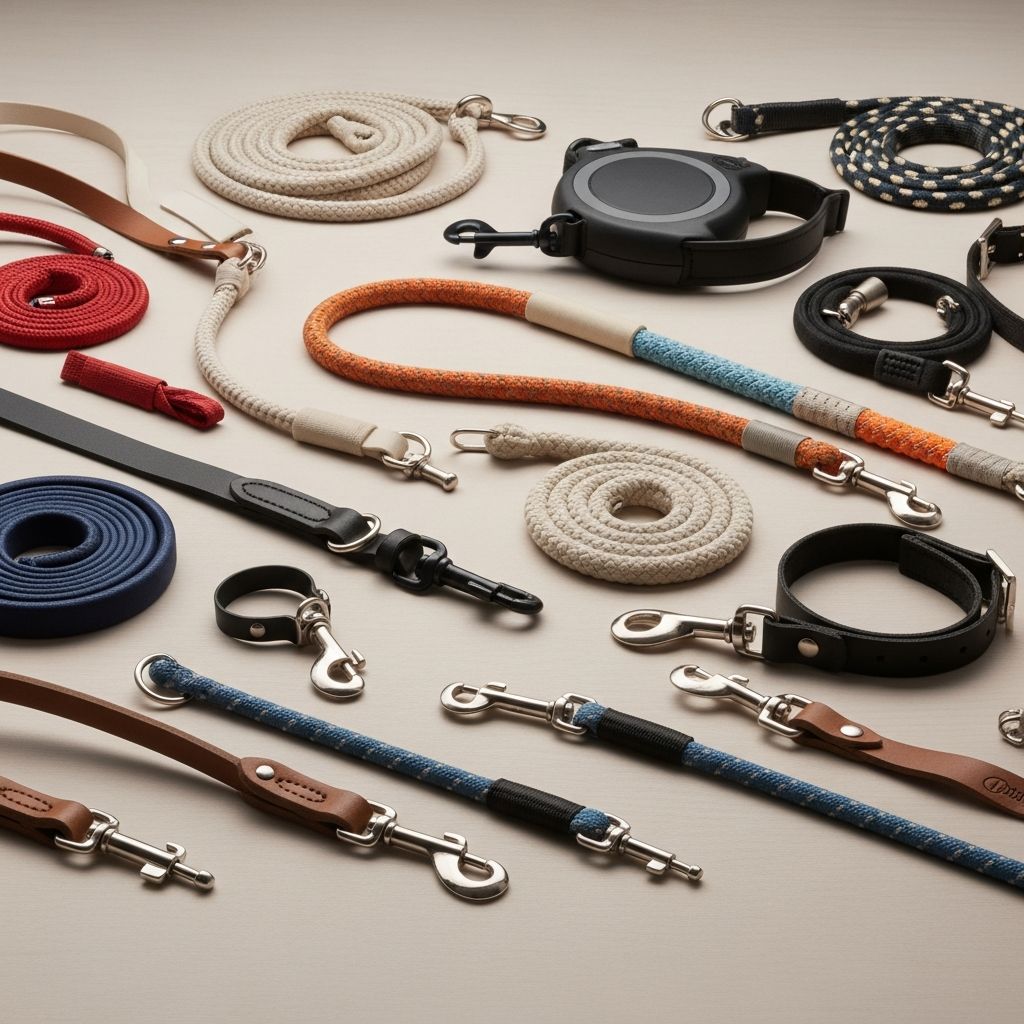
Choosing the right leash is essential for safe and effective dog walking. The best option depends on your dog’s size, strength, training level, and your walking environment. This guide covers leash varieties, materials, lengths, and specialized features to help you make an informed choice.
Why the Right Leash Matters for You and Your Dog
A quality leash promotes better control, reduces injury risk, and enhances the walking experience. Poorly chosen leashes can lead to pulls, tangles, or breaks, while the ideal one matches your routine—whether urban strolls, hikes, or training sessions. Factors like durability, comfort, and adjustability play key roles in long-term satisfaction.
Exploring Common Leash Types
Dog leashes come in diverse styles, each suited to specific needs. Understanding their strengths helps narrow options.
Standard Flat Leashes
The most popular choice for everyday use, standard flat leashes offer reliable control. Typically 4 to 8 feet long—with 6 feet being standard—they balance freedom and restraint. Made from nylon or similar weaves, they resist wear and are easy to clean.
- Ideal for trained dogs on neighborhood walks.
- Provide enough slack for sniffing without dragging.
- Often feature extra handles for crowded areas.
Bungee and Shock-Absorbing Leashes
These flexible leashes cushion sudden pulls, protecting necks and arms. The elastic section absorbs energy, making them favorites among trainers for reactive dogs.
- Great for strong pullers or enthusiastic puppies.
- Reduce strain in high-distraction zones.
- Combine with flat sections for better grip.
Retractable Leashes
Allow variable distance up to 16-30 feet, giving dogs exploration freedom. Best for well-behaved pets in open spaces, but require strong braking mechanisms to avoid accidents.
- Suitable for calm dogs in parks.
- Not recommended for pullers or busy streets.
Adjustable and Multi-Length Leashes
Versatile options let you shorten or extend as needed. Perfect for transitioning from training to casual walks or adapting to terrain.
- Bolt-style rings or sliders for quick changes.
- Common lengths: 4-6 feet for control, up to 15 feet for recall practice.
Chain and Heavy-Duty Leashes
For chewers or powerful breeds, metal chains withstand biting. Opt for rust-resistant alloys like zinc-plated steel.
- Heavy but unbreakable.
- Pair with padded handles for comfort.
Specialized Options: Hands-Free, Double, and Long Lines
Hands-free leashes wrap around waists for runners. Double leashes or couplers manage two dogs. Long lines (15-50 feet) aid off-leash training in safe areas.
- Hands-free: Ideal for joggers or cyclists.
- Long lines: Build reliable recalls without full freedom.
Leash Materials: Durability, Comfort, and Care
Material affects weight, grip, weather resistance, and lifespan. Here’s a comparison:
| Material | Pros | Cons | Best For |
|---|---|---|---|
| Nylon | Lightweight, affordable, waterproof, colorful | Can fray if chewed, holds odor if not dried | Daily walks, all dogs |
| Leather | Softens over time, stylish, strong | Heavy when wet, requires conditioning | Medium-large dogs, formal use |
| Rope/Paracord | Low-stretch, tangle-resistant, marine-grade options | Rough on hands without padding | Active lifestyles, hiking |
| Chain | Chew-proof, no fraying | Heavy, noisy, cold in winter | Chewers, escape artists |
| Biothane | Waterproof, lightweight, easy-clean | Higher cost | All-weather, working dogs |
Nylon dominates for its balance of cost and performance, but biothane excels in wet climates.
Factors to Consider When Selecting a Leash
Dog Size and Strength
Small dogs (under 25 lbs) need 3/8-inch wide leashes; medium (25-60 lbs) take 1/2-inch; large (60+ lbs) require 3/4-inch or thicker for pull resistance.
Handle and Connection Design
Ergonomic padded handles prevent blisters. Clip types: bolt snaps for security, quick-release for convenience. Traffic handles add quick control.
Length Recommendations
- 4 feet: Training, crowds, pulling dogs.
- 6 feet: Standard daily use.
- Longer: Parks, recall practice.
Safety Features
Reflective stitching boosts night visibility. Lockable carabiners prevent escapes. Avoid thin cords that could wrap around necks.
Matching Leashes to Training Stages
Beginners benefit from short, sturdy flats for focus. Intermediate dogs graduate to bungees for pull correction. Advanced pups enjoy adjustables or retractables.
Pro tip: Pair with front-clip harnesses to discourage pulling naturally.
Maintenance and Longevity Tips
Inspect regularly for frays, rust, or weak clips. Rinse after muddy walks; air-dry nylon. Condition leather monthly. Proper care extends life beyond a year of heavy use.
Top Scenarios and Leash Picks
| Scenario | Recommended Type | Why |
|---|---|---|
| Urban walks | 6ft flat with traffic handle | Control in crowds |
| Hiking/trails | Adjustable rope | Versatile length |
| Training pulls | Bungee or short flat | Absorbs shock |
| Chewy puppy | Chain or biothane | Chew-resistant |
| Running/jogging | Hands-free bungee | Freedom of movement |
Frequently Asked Questions (FAQs)
What is the best length for a dog leash?
6 feet strikes the ideal balance for most walks, offering control without restricting exploration.
Are retractable leashes safe?
They suit trained dogs in open areas but risk cord burns or failures with strong pullers.
How do I choose a leash for a pulling dog?
Opt for bungee shock absorbers or short flats paired with no-pull harnesses.
Can I use a chain leash for daily walks?
Reserve for chewers; they’re heavy for routine use but unbeatable for durability.
What’s the most durable leash material?
Biothane or paracord for weather resistance; chain for chew-proofing.
Final Thoughts on Elevating Your Walks
Investing in the right leash transforms walks into joyful bonding time. Test fits in-store if possible, prioritize safety, and consider your dog’s unique traits. With these insights, you’ll find a match that lasts.
References
- 6 Types of Dog Leashes | How To Choose The Best Dog Leash — Wag Trendz. 2023. https://www.wagtrendz.com/blogs/dog-gear-guides/types-of-dog-leashes
- Dog Leash Comparison – How to Choose the Best Dog Leash — Dog Friendly Co. 2024. https://www.dogfriendlyco.com/blogs/articles/dog-leash-comparison
- Guide to choosing the right dog leash — Non-stop Dogwear. 2023. https://www.nonstopdogwear.com/blogs/our-blogs/guide-right-dog-leash
- How to Pick the Best Dog Leash for Your Pooch — Chewy. 2024-01-15. https://www.chewy.com/education/dog/training-and-behavior/how-to-pick-the-best-dog-leash-for-your-pooch
- The Five Best Types of Leashes for Dogs — Precision Dog Trainer. 2023. https://precisiondogtrainer.com/the-five-best-types-of-leashes-for-dogs/
Similar Articles






Read full bio of medha deb