

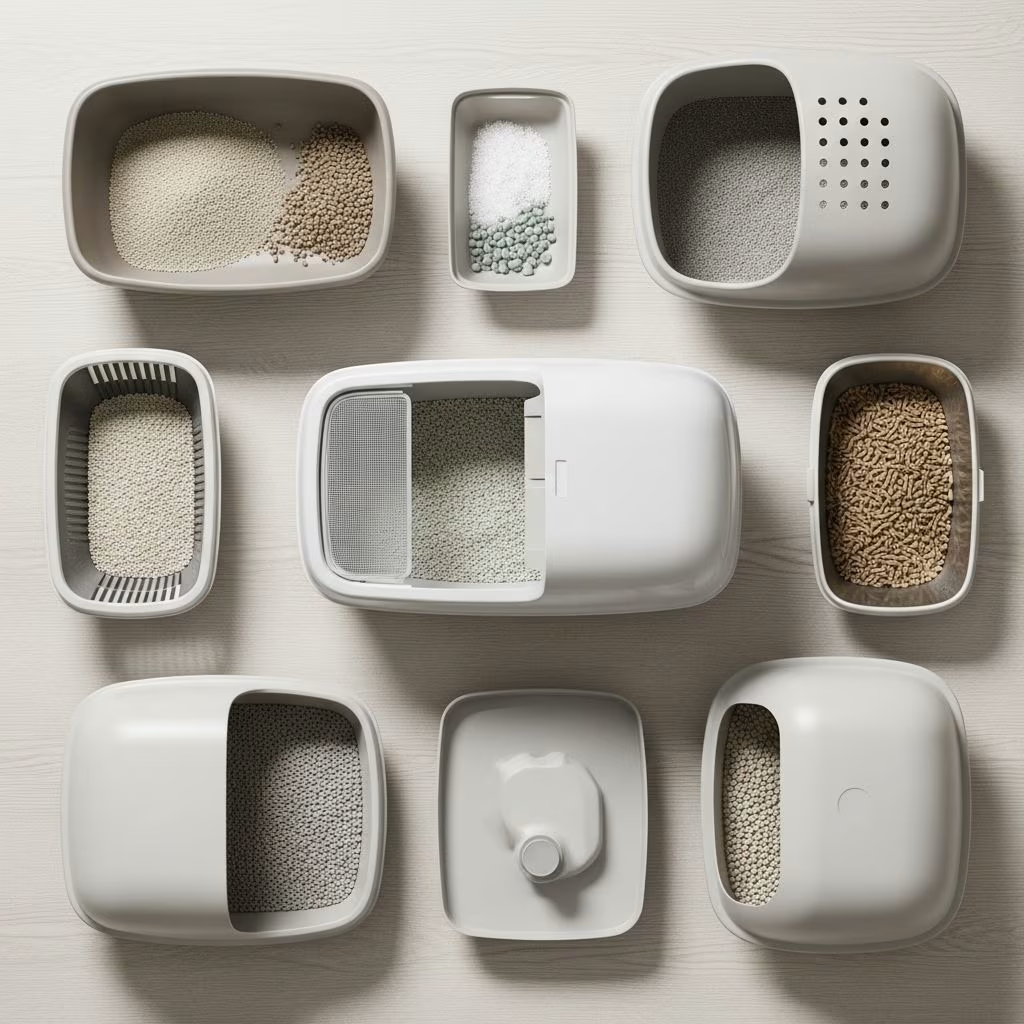
Selecting the right litter box is fundamental to your cat’s well-being and household harmony. A suitable setup prevents accidents, reduces stress, and minimizes odors. This guide examines various designs, placement strategies, litter options, and common issues to help you create an ideal feline restroom environment.
Why Litter Box Choice Matters for Cats
Cats are naturally fastidious, seeking clean, private, and spacious spots for elimination. An ill-suited box can lead to avoidance, spraying, or urinary problems. Factors like size, entry height, enclosure, and location influence usage. Matching the box to your cat’s age, size, health, and preferences ensures consistent habits and health monitoring through waste observation.
Essential Types of Litter Boxes
Diverse designs cater to different needs. Understanding pros and cons aids selection.
Open Trays: Simplicity and Accessibility
Basic open trays feature low sides and no cover, ideal for kittens, seniors, or mobility-challenged cats. They allow full visibility, reducing anxiety in timid felines.
- Advantages: Easy access, simple cleaning, low cost, natural feel.
- Drawbacks: More tracking, less odor containment, visible mess.
Upgrade with sifting systems using pellets and pads for effortless waste separation and superior odor control.
Enclosed and Hooded Models: Privacy and Containment
Hooded boxes provide enclosure with a removable top and flap entry, offering seclusion while trapping litter and smells.
- Advantages: Privacy for shy cats, reduced scatter, better odor trapping.
- Drawbacks: Harder to clean, potential claustrophobia, heat buildup.
Choose spacious jumbo sizes for multi-cat homes or large breeds to avoid territorial disputes.
High-Sided Boxes: Solution for Sprayers and Scatterers
These feature tall walls (10-20 inches) to contain high sprays, kicks, and jumps, perfect for energetic or marking-prone cats.
| Model Example | Wall Height | Key Benefit | Best For |
|---|---|---|---|
| Horizon Poly Kat Kave | ~20″ | Seamless, leak-proof | Spraying cats |
| Gefryco Jumbo | ~13″ | Extra space | Large breeds |
| Storage Bin Hacks (e.g., IRIS 132 Qt) | Variable high | Affordable DIY | Budget multi-cat |
Smooth, one-piece construction eases cleaning and prevents urine pooling.
Top-Entry Designs: Modern Mess Control
Entry via the ceiling suits agile cats, minimizing tracking as paws enter clean litter first.
- Advantages: Excellent containment, sleek look, less visible.
- Drawbacks: Not for elderly or arthritic cats, tricky initial training.
Automatic and Self-Cleaning: Tech for Busy Owners
Sensor-activated models sift waste into sealed drawers post-use, ideal for multi-cat households.
| Model | Cat Capacity | Weight Limit | Standout Feature |
|---|---|---|---|
| Litter-Robot EVO | Up to 2 | 3-19 lbs | Compact for beginners |
| Litter-Robot 5 | Up to 5 | 3-30 lbs | WasteID tech for monitoring |
Advanced units track usage patterns, aiding health detection.
Selecting the Perfect Size and Number
Rule of thumb: one box per cat plus one extra. Size should allow full stretch-out—about 1.5 times cat length. Kittens need shallow starters; adults prefer deep for digging. Multi-cat homes benefit from separated boxes to prevent conflicts.
Strategic Placement for Success
Location impacts usage. Quiet, low-traffic areas with soft footing preferred. Avoid laundry, food zones, or loud spots. Multiple levels in multi-story homes or vertical spaces for territorial cats ensure accessibility.
- Proximity to sleeping areas but not too close.
- Stable, non-slip surfaces.
- Easy human access for scooping.
Best Litters to Pair with Your Box
Litter type affects clumping, dust, odor, and tracking. Clumping clay dominates for ease; lightweight variants suit sifting. Alternatives: pine pellets for eco-friendliness, silica gels for low maintenance.
| Litter Type | Pros | Cons | Box Pairing |
|---|---|---|---|
| Clumping Clay | Tight clumps, odor control | Dusty, tracked | Open, hooded |
| Lightweight Clumping | 50% lighter, dust-free | Costlier | Sifting systems |
| Pellet/Pad Systems | Odor pads, no scooping | Learning curve | Breeze-style open/covered |
Introduce changes gradually to avoid rejection.
Detailed Setup and Maintenance Routines
Fill to 2-3 inches depth. Scoop daily, full clean weekly: dump litter, wash with mild soap, dry fully. Replace boxes every 1-2 years as they retain odors. Mats underneath capture tracks; ventilated spots curb smells.
Common Problems and Fixes
Elimination Outside the Box
Causes: Dirty box, medical issues (UTI), stress, wrong size/type. Vet check first, then clean accidents with enzymatic cleaners, add boxes, try unscented litter.
Spraying and Marking
High-sided or cornered boxes help. Neutering reduces; multiple boxes in prime spots prevent territorial sprays.
Odor Challenges
Baking soda layers, carbon filters in hoods, frequent scooping. Self-cleaners excel here.
Litter Box Avoidance
Observe preferences: diggers like deep litter, privacy-seekers hooded. Trial different types.
Special Considerations by Cat Profile
- Kittens: Low-entry, shallow litter, frequent changes.
- Seniors/Arthritic: Open, ramped entry, soft litter.
- Large Breeds: Jumbo or XL high-sided.
- Multi-Cat: Extra boxes, automatic for fairness.
Cost Comparison and Long-Term Value
Basic open: $10-30. Hooded: $20-60. High-sided/specialty: $30-80. Automatic: $500+. Factor litter savings and time—self-cleaners pay off in multi-cat setups via less waste and effort.
FAQs
How often should I clean the litter box?
Scoop daily, deep clean weekly. More frequent in multi-cat or high-use homes.
Can I use storage bins as litter boxes?
Yes, large clear bins with cut entry work well for sprayers, offering high walls cheaply.
Do covered boxes hold odors better?
Generally yes, but ensure ventilation; some cats dislike confinement.
What’s the best litter box for multiple cats?
Multiple large open or automatic models like Litter-Robot 5 for up to 5 cats.
Why is my cat not using the new litter box?
Transition slowly, check size/location/health; match prior preferences.
References
- Litter-Robot Comparison Chart – Litter-Robot 4 vs 5 — Whisker. 2026 (accessed). https://www.whisker.com/litter-robot-comparison-chart
- Litter Boxes for High Spraying Cats: 18-Year Review — Floppycats. 2026 (accessed). https://www.floppycats.com/litter-boxes-for-high-spraying-cats.html
- Best Types of Litter Boxes: Find Your Cat’s Perfect Fit — Purina US. 2026 (accessed). https://www.purina.com/articles/cat/behavior/litter/best-types-of-litter-boxes
- Cat Litter Box Types Explained — Pet Direct NZ. 2026 (accessed). https://petdirect.co.nz/blog/cat-litter-box-types-explained
- Best Cat Litter Boxes — Consumer Reports. 2026 (accessed). https://www.consumerreports.org/home-garden/pets/best-cat-litter-boxes-a7688686907/



