

The Ultimate Guide to Filtering a Pond
A pond filter system serves as the foundation of a healthy aquatic environment, working tirelessly to remove physical debris such as fish waste, decomposing plant matter, and other organic materials that accumulate in your water. Understanding how different filtration methods work is essential for maintaining crystal-clear water and ensuring the long-term health and vitality of your pond ecosystem. Whether you maintain a small goldfish pond or a large koi-filled water garden, proper filtration is the key to success.
Understanding Biological Filtration
Biological filtration represents the most critical component of any pond filtration system. According to veterinary experts specializing in aquatic health, biological filtration is essential for ponds because it houses beneficial bacteria that drive the pond’s nitrogen cycle, a process vital for converting toxic ammonia into less harmful compounds.
A biological pond filtration system utilizes a submersible pump to draw oxygen-rich water through the filter housing. The housing is filled with porous or textured filter media like foam, ceramic rings, or bio balls that provide ample surface area on which beneficial bacteria can grow and colonize. These specialized bacteria facilitate the conversion of ammonia (NH₃) into nitrite (NO₂) and then nitrate (NO₃). Nitrate is significantly less harmful to fish and can be removed from the system via water changes or absorption by aquatic plants.
For biological filtration to function effectively, the system must operate continuously during warmer months. Many pond experts recommend running bio-filters 24 hours a day when water temperature rises to 50 degrees Fahrenheit and above. This continuous operation ensures that beneficial bacteria remain active and the nitrogen cycle continues uninterrupted.
Mechanical Filtration Systems
Mechanical filtration works alongside biological filtration to trap and remove physical debris before water reaches the biological filter. This preliminary step is crucial because biological filters only function effectively when processing water that doesn’t contain large debris particles.
Several types of mechanical filters are available:
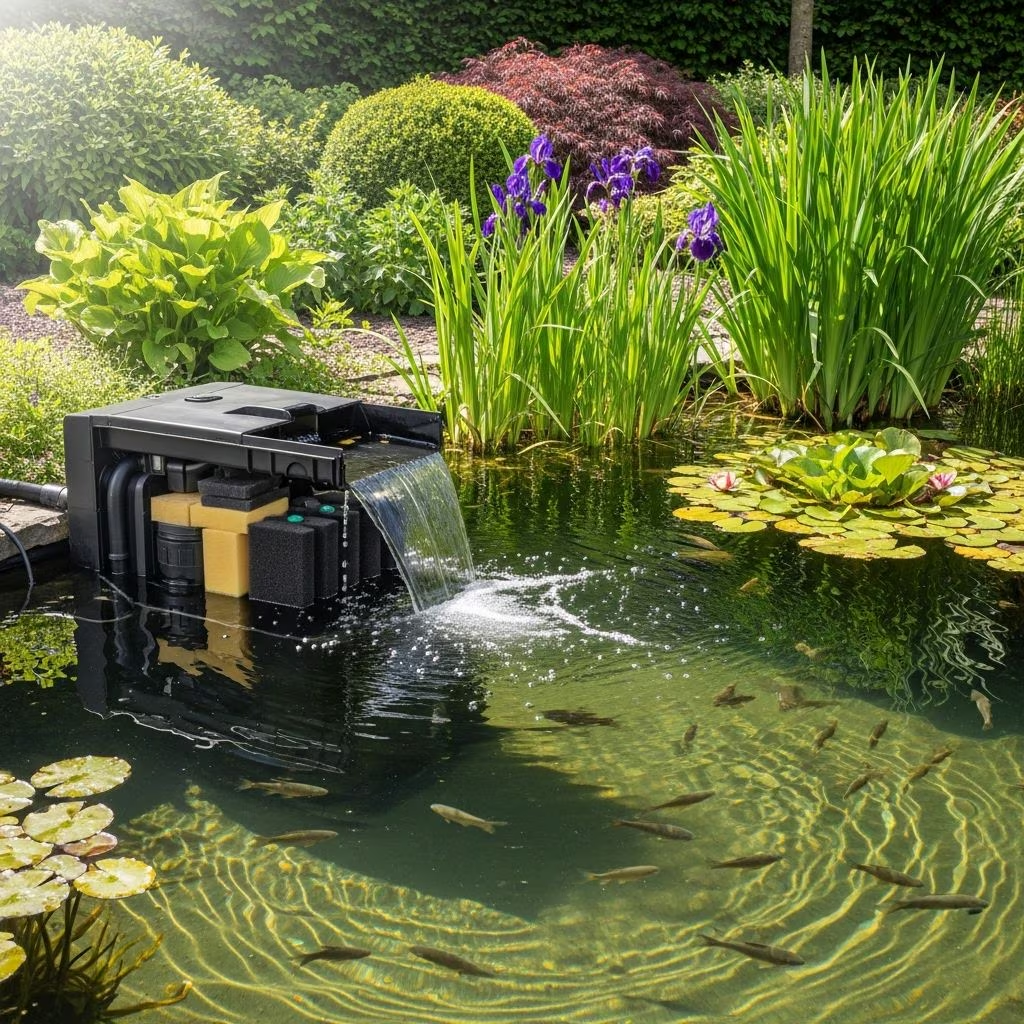
Waterfall Filters: In a waterfall filter setup, water typically passes through a dense fiber mat to catch particles before it reaches the biological filter bed. This design integrates both mechanical and biological filtration in one attractive landscape feature.
Pressurized Pond Filters: These self-contained units often use foam pads to absorb large particles and can be placed partially underground adjacent to the pond while still effectively supplying water. Pressurized filters are ideal for small and medium ponds and are easy to conceal. Many models include a backflush valve that allows you to improve efficiency by occasionally turning off the pump and opening a drainage hose to backflush the filter.
Submersible Filters: The most popular mechanical filtration option, submersible filters are mechanical setups that filter by pushing water through a filter sponge that traps debris, garbage, and other particles before the water goes to biological filters. Many submersible pond filters include a fountain kit with purchase and some models feature integrated ultraviolet (UV) sterilizer capabilities.
Pond Skimmers: These standalone mechanical filters collect debris from the water surface, preventing leaves and other floating matter from decomposing in the pond.
Pre-Filtration and System Protection
Most ponds should incorporate two levels of filtration for optimal performance. The first filter protects the pond pump through pre-filtration, which is primarily responsible for keeping the pump running smoothly but has little to no direct effect on water clarity or fish health. Pre-filters are usually attached near the intake of a pond’s pump with the express role of stopping algae, fish feces, and leaves from getting into the biological filter.
A pre-filter only needs cleaning when there is a noticeable reduction of 25% or more in the flow of water through the pump. The secondary main filter, typically a bio-filter often incorporated in a waterfall or stream, is responsible for breaking down fish waste and keeping the pond safe for fish while maintaining water clarity if adequately sized.
Bog Garden Filtration Technique
For those seeking a more natural and economical approach to pond filtration, bog filters offer an elegant solution. While aquatic plants may be adequate filters for small ponds, larger ponds typically require a more complex natural filtration system.
A bog filter uses a combination of gravel and aquatic plants to support biological filtration. Creating this system involves building a secondary pond next to or around your main pond. The bog filter should be approximately 10%-20% the size of your main pond and connected via submersible pumps and tubing. One pump runs water from the main pond into the bog pond, while another returns the filtered water back to the main pond.
Bog Filter Design Considerations:
The bog filter size depends on your pond’s stocking level. For a simple goldfish pond that is not overly stocked or fed, the bog filter should be 10% of the pond’s volume. For example, a 1,000-liter pond needs a 100-liter bog filter.
Water Flow Configuration: The upflow method pumps water into the base of the bog filter where it rises through rocks and pebbles, ensuring all water contacts the beneficial bacteria. An energy-efficient pump should run the system 24/7 to maintain consistent water quality and support beneficial bacterial colonies.
Cleaning Mechanisms: Design your bog filter for easy maintenance by incorporating a drain valve at the base for smaller filters or access points for pond vacuums on larger installations.
Comparing European and Ecosystem Filtration Approaches
Pond filtration systems generally fall into two categories: European and ecosystem styles. The European style utilizes extensive plumbing and external filters, which require frequent backflushing and routine maintenance to function optimally. While these systems provide reliable, predictable results, they demand more attention and care.
Ecosystem or natural filters, by contrast, typically require less routine maintenance. However, you will need to have an annual or biannual deep cleaning of the pond to remove accumulated debris from the gravel bed. These systems often provide a more aesthetic natural appearance while reducing the frequency of maintenance tasks.
Sizing Your Filtration System
Before choosing a filtration system, you must first calculate your pond’s volume. Measure the length, width, and average water depth of the pond, then multiply these measurements together to determine the volume. For ponds stocked with koi, the amount of water filtered per hour should be 6-8 times the volume of the pond to ensure water quality remains consistently clean.
When undersizing occurs, backflushing may become necessary with high fish loads. However, properly sized filters rarely require this additional maintenance step.
Advanced Filtration Features
Modern pond filtration systems often incorporate additional technologies to enhance water quality. Many external pressurized pond filters incorporate ultraviolet (UV) sterilizer features into their design, which further clarify and eliminate algae from pond water. Some intelligent integrated filtration systems combine mechanical filtration, UV sterilization, and water quality monitoring in single units.
External gravity filters can significantly reduce or eliminate the need to disassemble the filter for manual cleaning through backwashing. When equipped with quality backflush or drainage hoses, these systems become remarkably convenient to maintain.
Maintenance Best Practices
Proper filter maintenance ensures your system operates at peak efficiency. When cleaning your biological filter, carefully remove any debris or sludge that collected in the bottom of the filter tank, then return the media (lava rock) and foam to the filter in the same order it was originally positioned.
Many filters include a drainage hose attached to the bottom of the filter tank to aid in cleaning. If your pump hose feeds in from the top of your filter, ensure it runs all the way to the bottom, under the layers of foam and media. Adjust bags of lava rock so that no gaps exist along the sides of the filter tank that could allow water to bypass the filtering media.
Pretreatment proves very important in extending your main filter’s service life. A sedimentation tank added before the main filtration system can first settle large particles of dirt, significantly extending the filter’s operational lifespan. Rather than relying heavily on chemical agents, prioritize physical and biological filtration methods first, reserving chemical treatments for emergencies only.
Cost Considerations
Any pond filtration system can become expensive, but natural filters tend to be more economical than European-style systems requiring extensive plumbing and frequent maintenance. If you don’t have significant budgetary concerns, your choice may come down to maintenance requirements and the overall aesthetic look you want to create with your pond. Budget-conscious pond owners should consider trickle filtration, a cost-effective choice where water slowly drips through layers of filter materials like rain, allowing water and air to fully contact and helping beneficial bacteria growth.
Frequently Asked Questions
Q: How often should I clean my pond filter?
A: Pre-filters should be cleaned when water flow through the pump reduces by 25% or more. Biological filters require less frequent cleaning but typically need maintenance 1-2 times per year depending on fish load and debris accumulation.
Q: Can I use only biological filtration without mechanical filtration?
A: No. Biological filters only function effectively when processing water without large debris particles. Mechanical pre-filtration is essential to protect the biological filter and maintain system efficiency.
Q: What is the ideal size for a bog filter?
A: For a simple goldfish pond, the bog filter should be 10% of the pond’s volume. For more heavily stocked ponds, consider sizing it at 15-20% of your main pond’s volume for optimal biological filtration.
Q: How long can I leave my pond filter off during winter?
A: Run biological filters continuously from spring through fall when water temperature stays at 50°F or above. You may safely stop filtration during winter months when water temperatures drop below 50°F and fish metabolism slows significantly.
Q: Do I need a UV sterilizer with my pond filter?
A: UV sterilizers are optional but beneficial, especially if you struggle with algae blooms or cloudiness. They work best as a supplement to mechanical and biological filtration rather than as a standalone solution.
Q: What’s the difference between backflushing and manual cleaning?
A: Backflushing reverses water flow through the filter to dislodge trapped particles, while manual cleaning involves disassembling the filter to physically remove debris. Properly designed systems with backflush valves reduce the need for manual disassembly.
References
- Pond Filter Buying Guide — Pond and Garden Depot. 2024. https://pondandgardendepot.com/pages/pond-filter-buying-guide
- Beginners Guide to Backyard Ponds & Gardens – Biling Pond Filtration Guide — Biling Solar. 2024. https://www.bilingsolar.com/blogs/beginners-guide-backyard-ponds-gardens/biling-pond-filtration-guide
- The Ultimate Guide to Filtering a Pond: Techniques and Products — Chewy. 2024. https://www.chewy.com/education/fish/fish-pond/filtering-a-pond
- Pond & Water Garden Installation & Maintenance Guide — That Pet Place. 2024. https://www.thatpetplace.com/pond-and-water-garden-installation-and-maintenance-guide
- Pond Filter Media: The Ultimate Guide — Mountain Tree. 2024. https://www.imountaintree.com/the-ultimate-guide-to-pond-filter-media/
- A Quick Guide to Building a Bog Filter for Any Sized Pond — Ozponds. 2024. https://ozponds.com/a-quick-guide-to-building-a-bog-filter-for-any-sized-pond/
- What You Need to Know About Pond Filtration — Aquascape, Inc. 2024. https://www.aquascapeinc.com/water-gardening/how-to/pond-filtration



