

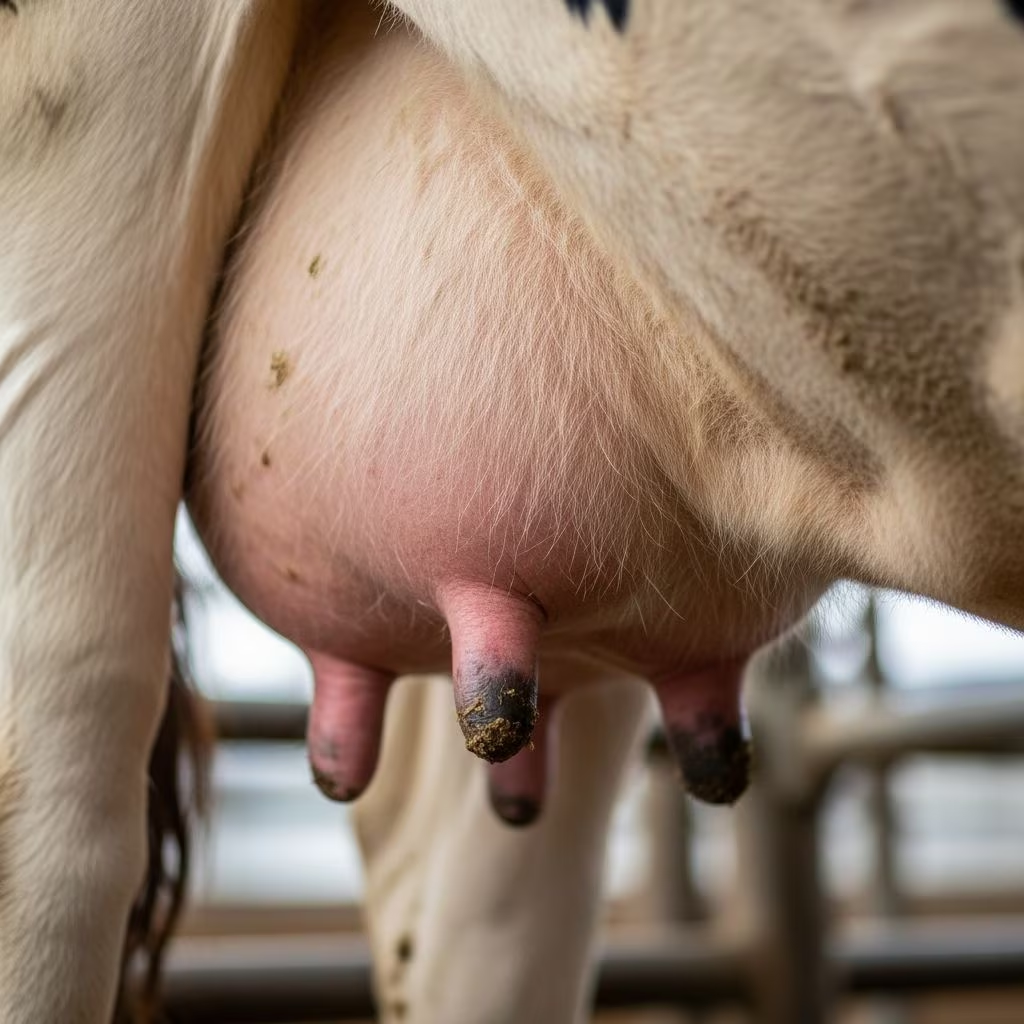
The udder, or mammary gland, is central to dairy cow productivity, comprising four independent quarters suspended in the inguinal region. Physiologic disorders disrupt normal function without infection, affecting milk yield and cow comfort. These issues stem from anatomical vulnerabilities, hormonal imbalances, or management lapses, demanding vigilant monitoring in herds.
Basic Anatomy and Support Mechanisms of the Bovine Udder
Understanding disorders requires grasping udder structure. Each quarter features glandular tissue with alveoli—microscopic sacs lined by epithelial cells that synthesize milk—surrounded by capillaries and muscle for nutrient delivery and contraction. Milk flows from alveoli through ducts into the gland cistern, then teat cistern, exiting via the teat canal guarded by sphincter muscles and a keratin plug for protection.
Support relies on layered tissues: skin, superficial fascia, coarse areolar tissue, subpelvic tendon, lateral suspensory ligaments (fibrous, less elastic), and the critical medial suspensory ligament (elastic sheets providing tensile strength at the udder’s center). These maintain stability despite weights up to 50 kg in high-producing breeds like Holsteins. Blood supply is robust, with independent arterial systems per half-udder, ensuring nutrient flow to secretory cells.
Common Physiologic Swelling: Udder Edema
Udder edema manifests as fluid accumulation in interstitial tissues, causing swelling around parturition due to hormonal shifts like elevated estrogen impairing lymph drainage. High-producing cows face heightened risk from increased blood volume and capillary pressure during late gestation.
Symptoms include puffy, cool teats and udder base, progressing to quarters if severe, hindering milking and causing discomfort. Prevention involves low-salt diets pre-calving, balanced minerals, and exercise to promote circulation. Treatment uses mild massage, diuretics like furosemide (under vet guidance), and anti-inflammatories. Persistent cases signal deeper issues like hypoproteinemia.
- Key Risk Factors: Overconditioning, twins, first lactation.
- Management Tip: Daily walks reduce stagnation.
Milk Ejection Challenges: Let-Down Failures
Milk let-down, or ejection, depends on oxytocin release triggering myoepithelial cell contraction around alveoli, propelling milk into cisterns. Physiologic failures arise from stress, pain, poor parlor hygiene, or udder mishandling, inhibiting oxytocin via sympathetic nervous override.
Cows exhibit balking, incomplete emptying, or mastitis risk from residual milk. Anatomically, each quarter drains independently through teats with sinus, canal, and muscle bundles closing between milkings. Strategies include calm routines, pre-dipping, forestripping, and oxytocin if needed (rarely). Training heifers early fosters positive associations.
| Factor | Impact on Let-Down | Solution |
|---|---|---|
| Noise/Handling Stress | Adrenaline surge blocks oxytocin | Quiet parlor, consistent handlers |
| Cold Teats | Vasoconstriction reduces flow | Warm water stimulation |
| Pain (e.g., from edema) | Inhibits contraction | Treat underlying cause |
Structural Weaknesses: Suspensory Ligament Issues
The medial suspensory ligament’s elasticity balances udder weight, but repeated stretching from heavy glands weakens it, leading to splaying or ‘swinging udders.’ Lateral ligaments, being fibrous, resist stretch but fail if forequarter attachments loosen, causing ‘breakaway’ from the abdominal wall.
Breeds like Holsteins are prone due to selection for yield over conformation. Signs: rear quarters droop, teats angle backward, risking step-on injuries and production drops. Prevention emphasizes genetic selection for strong attachments, avoiding overfeeding dry cows to limit udder fill. Surgical correction (median ligamentotomy) tightens tissues but is invasive, reserved for valuable animals.
Teat and Cistern Abnormalities
Teat cisterns store pre-letdown milk, but supernumerary teats (extra growths) or blind teats (no canal) impair function. Keratin plugs protect against bacteria, dissolving pre-parturition and reforming post-dry-off. Orifice stenosis narrows outlets, causing slow milking.
Management: Trim extras pre-first lactation; monitor for fibrosis from trauma. These congenital traits underscore breeding records’ role in herd improvement.
Nutritional and Developmental Influences on Udder Health
Udder parenchyma proliferates from puberty through five lactations, with alveoli enlarging in late gestation for peak capacity. Deficiencies in energy, protein, or minerals like selenium stunt development, predisposing to physiologic woes.
Post-peak, involution shrinks tissue, but incomplete dry periods prolong recovery. Balanced rations with adequate dry matter intake support vascular integrity and ligament resilience.
Management Strategies for Prevention
- Conformation Scoring: Evaluate suspensory strength at purchase.
- Parturition Monitoring: Check edema daily first week.
- Milking Protocols: Ensure complete evacuation to avoid stasis.
- Nutrition: Limit salt to 0.4% DM pre-calving; supplement antioxidants.
- Facility Design: Non-slip floors prevent injuries exacerbating disorders.
Diagnostic Approaches
Vets palpate for edema firmness, assess let-down via stripping test, and ultrasound ligaments for tears. Milk conductivity flags uneven quarters. Early intervention preserves yield—edema alone can slash 10-20% production initially.
FAQs
What causes udder edema in fresh cows?
Hormonal changes impair lymph flow; manage with exercise and diet.
How to improve milk let-down?
Reduce stress, use proper stimulation routines.
Can suspensory ligament weakness be fixed?
Surgery possible but select for strong genetics primarily.
Why do teats swell post-calving?
Fluid retention; resolves with massage and time.
Does breed affect udder disorders?
Yes, high-yield breeds like Holstein more susceptible due to udder size.
References
- The Cow Introduction Udder Anatomy — MilkTech International/UWM Ril. 2021-08. https://uwmril.wisc.edu/wp-content/uploads/sites/306/2021/08/1_TECH_1_CowIntroUdderAnatomy.pdf
- Anatomy of mammary gland — Groupe ESA. Accessed 2026. https://www.groupe-esa.com/ladmec/bricks_modules/brick01/co/ZBO_Brick01_2.html
- Sheep and goat udders: understanding the basics of anatomy — About Small Ruminants. Accessed 2026. https://aboutsmallruminants.com/sheep-goat-udder-basics-anatomy-physiology/
- Anatomy of the mammary gland — Cornell CCE/NY Dairy Admin. Accessed 2026. https://nydairyadmin.cce.cornell.edu/uploads/doc_113.pdf
- Udder Anatomy and Physiology — PBS Wisconsin/University Place. Accessed 2026. https://pbswisconsin.org/video-stub-for-udder-anatomy-and-physiology/
- Udder anatomy and physiology — University of Minnesota Large Animal Surgery. Accessed 2026. https://open.lib.umn.edu/largeanimalsurgery/chapter/udder-anatomy/



