

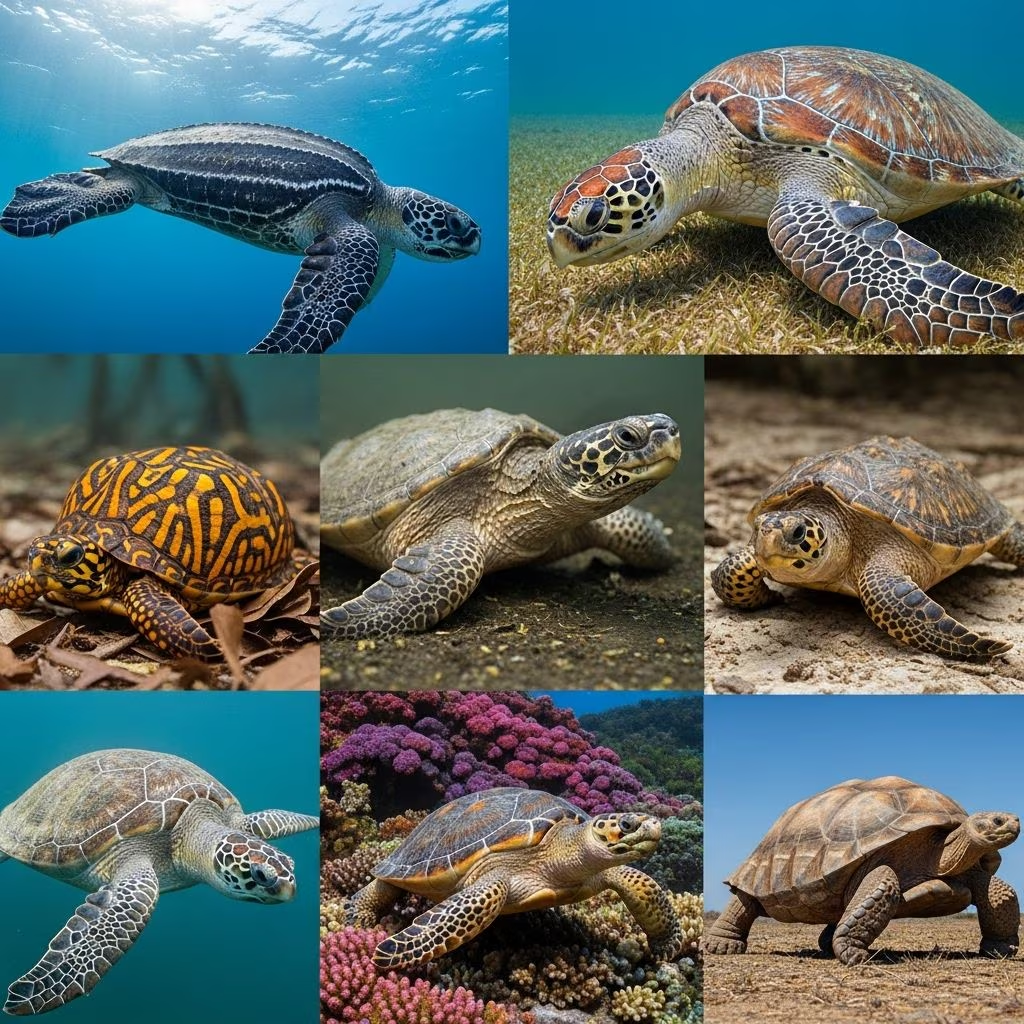
Understanding Turtle Classification and Types
Turtles are among the most fascinating reptiles on Earth, representing a diverse group of creatures that have evolved over millions of years. The term “turtle” refers to any reptile of the order Testudines, a classification that encompasses more than 356 species living across various habitats worldwide, except Antarctica. These remarkable reptiles have adapted to thrive in diverse environments, from tropical rainforests to arid deserts, freshwater lakes to open oceans. Understanding the different types of turtles helps us appreciate their incredible diversity and the important ecological roles they play in their respective ecosystems.
The classification of turtles is based on several key characteristics, with the primary distinction being how they retract their heads into their shells. This fundamental difference divides turtles into two main suborders, each with distinct anatomical features and evolutionary histories. All turtles, regardless of subspecies, possess eight cervical vertebrae, but the way these vertebrae fold determines their suborder classification.
The Two Main Suborders of Turtles
Cryptodira: Hidden-Neck Turtles
Cryptodira, meaning “hidden neck,” represents the largest and most diverse suborder of turtles. These turtles are characterized by their ability to retract their heads vertically into their shells in an S-shaped motion. This suborder includes sea turtles, freshwater turtles, snapping turtles, tortoises, and soft-shelled turtles. The vertical head retraction mechanism provides these turtles with enhanced protection from predators, allowing them to completely enclose their heads within the protective shell.
Cryptodiran turtles display remarkable diversity in size, habitat preference, and dietary habits. From the massive leatherback sea turtle weighing over 1,500 pounds to tiny bog turtles measuring just 3-4 inches, cryptodires demonstrate an impressive range of adaptations. This suborder thrives in virtually every aquatic and terrestrial environment, making them the most successful turtle group in terms of species distribution and abundance.
Pleurodira: Side-Necked Turtles
Pleurodira, meaning “side neck,” represents a smaller but equally fascinating suborder of turtles. These turtles cannot retract their heads vertically into their shells; instead, they fold their necks laterally, allowing the head to bend sideways into the shell. This unique adaptation represents a different evolutionary strategy for head protection compared to their cryptodiran cousins.
Pleurodiran turtles contain three families and are primarily found in the southern hemisphere, with the majority being freshwater species. Today, all known pleurodiran turtles are freshwater dwellers, though fossil evidence suggests their ancestral range once extended across the globe and included marine environments. These turtles include families such as the Pelomedusidae, Podocnemididae, and Chelidae, each with distinct characteristics and adaptations to their specific habitats.
Sea Turtles: Ancient Mariners of the Ocean
Sea turtles represent one of the most iconic and ancient groups of reptiles, with an evolutionary lineage dating back at least 110 million years. These magnificent creatures belong to two distinct families within the cryptodiran suborder, each with unique characteristics and adaptations to oceanic life.
Family Cheloniidae: Hard-Shelled Sea Turtles
The family Cheloniidae comprises six species of hard-shelled sea turtles. These turtles are characterized by horny plates called scutes that cover their shells, providing protection and hydrodynamic advantages for marine locomotion. Each species within this family has evolved specific adaptations for particular ecological niches within the ocean environment.
Green Sea Turtle (Chelonia mydas): The green sea turtle possesses the most numerous and widely dispersed nesting sites among all sea turtle species. Named for the greenish color of their fat, these turtles were historically hunted extensively for this characteristic fat, which was used in the preparation of green turtle soup. Although trading these turtles has become illegal in many parts of the world, green turtles and their eggs continue to face pressure from illegal harvesting in some regions.
Loggerhead Turtle (Caretta caretta): Named for their exceptionally large heads, loggerhead turtles possess powerful jaws adapted for crushing hard-shelled prey. Their robust build and strength make them distinctive among sea turtle species.
Kemp’s Ridley (Lepidochelys kempii): This species is recognized as one of the most critically endangered sea turtles, with conservation efforts playing a crucial role in their survival. These turtles are distinguished by their small size and specific nesting behaviors.
Olive Ridley (Lepidochelys olivacea): The olive ridley represents one of the most abundant sea turtle species, named for the olive-colored appearance of their shells. These turtles are known for their synchronized mass nesting events called arribadas.
Hawksbill (Eretmochelys imbricate): Named for their distinctive hawk-like beak, hawksbill turtles possess a narrower head and specialized feeding adaptations. Their beautiful shells have unfortunately made them targets for illegal trade.
Flatback (Natator depressus): The flatback turtle is endemic to Australian waters and represents a unique sea turtle species with specific ecological requirements and breeding behaviors distinct from other sea turtle species.
Family Dermochelyidae: The Leatherback Turtle
The family Dermochelyidae consists of a single living species: the leatherback sea turtle (Dermochelys coriacea). This remarkable turtle represents a unique evolutionary lineage within sea turtles, distinguished by its lack of scutes. Instead of horny plates, the leatherback’s shell is covered with leathery skin, giving it a texture unlike any other marine turtle. Additionally, the leatherback’s backbone is not attached to the inside of its shell, a characteristic that makes it anatomically distinct from all other sea turtle species.
The leatherback is the largest turtle alive today, representing an impressive adaptation to open ocean life. These ancient mariners dive deeper than any other sea turtle and travel vast distances across ocean basins, making them one of the most remarkable reptiles on Earth.
Freshwater and Terrestrial Turtles
Tortoises: Land Specialists
Tortoises, members of the family Testudinidae, represent turtles that have become completely adapted to terrestrial life. These herbivorous reptiles live exclusively on land and possess anatomic features distinguishing them from other turtles, including sturdy, columnar legs and domed shells designed for terrestrial locomotion rather than swimming. Tortoises exhibit remarkable longevity, with some species living over 100 years, making them among the longest-lived vertebrates on Earth.
Terrapins: Amphibious Adaptors
The term “terrapin” originally referred to any aquatic turtle but is now largely restricted to specific species like the edible diamondback terrapin (Malaclemys terrapin) of the eastern United States. Terrapins represent turtles that split their time relatively evenly between aquatic and terrestrial environments, possessing adaptations that allow them to thrive in both settings. The family Emydidae contains many terrapin species, including sliders, painted turtles, and map turtles.
Freshwater Turtles
Freshwater turtles comprise the largest and most diverse turtle group, inhabiting rivers, lakes, ponds, and wetlands worldwide. These turtles include numerous families and species, each adapted to specific freshwater environments. From the common snapping turtle with its powerful bite to the soft-shelled turtles with their flexible, leathery shells, freshwater turtles demonstrate remarkable diversity.
Specialized Turtle Families
Soft-Shelled Turtles (Family Trionychidae)
Soft-shelled turtles possess shells that lack the scutes found in hard-shelled turtles. Their flexible, leathery shells provide unique advantages in muddy river bottoms where they often bury themselves. These turtles are highly aquatic and possess a distinctive appearance that makes them easily recognizable from any other turtle species.
Snapping Turtles and Relatives
The family Chelydridae includes common snapping turtles and alligator snapping turtles, known for their powerful jaws and aggressive dispositions. These turtles represent formidable predators in freshwater ecosystems, capable of delivering powerful bites and occupying top predator roles in many aquatic food webs.
Box Turtles and Wood Turtles
While the term tortoise typically refers to terrestrial Testudinidae species, box turtles and wood turtles represent other terrestrial testudines that have evolved similar ecological roles to true tortoises. These turtles demonstrate the diversity of terrestrial adaptations within the broader turtle order.
Size Variation in Turtles
Turtles display remarkable size variation, ranging from some of the smallest to the largest reptiles. This diversity reflects their successful adaptation to virtually every ecological niche available to reptiles. Some turtle species remain as small as four inches throughout their entire lives, while others grow to four feet or more. The leatherback sea turtle represents the extreme end of this size spectrum, with individuals weighing over 1,500 pounds and measuring up to 6 feet in shell length. This dramatic size variation enables turtles to occupy diverse ecological roles, from consuming tiny invertebrates to hunting substantial fish and marine organisms.
Geographic Distribution and Habitat Preferences
Turtles demonstrate remarkable geographic distribution, inhabiting all continents except Antarctica. Different turtle species have evolved specific preferences for distinct habitats based on their evolutionary history and physiological adaptations. Aquatic species thrive in freshwater lakes, rivers, and wetlands, while sea turtles traverse vast ocean basins. Terrestrial species inhabit diverse landscapes ranging from tropical rainforests to arid deserts. This geographic and ecological diversity reflects millions of years of turtle evolution and adaptation to available environmental niches.
Evolutionary Significance and Conservation
Turtles represent an ancient lineage with a fossil record extending back approximately 200 million years. Sea turtles specifically have maintained their evolutionary lineage for at least 110 million years, surviving multiple mass extinction events and environmental changes that eliminated many other reptile groups. This evolutionary success reflects the exceptional adaptability and resilience of the turtle body plan.
Today, many turtle species face conservation challenges from habitat loss, climate change, pollution, and illegal trade. Understanding turtle diversity and classification helps inform conservation efforts targeting specific species and populations. Protected areas, breeding programs, and legislation restricting illegal trade represent important strategies for ensuring turtle survival for future generations.
Frequently Asked Questions About Turtles
Q: What is the main difference between turtles, tortoises, and terrapins?
A: The primary difference between these three types relates to their habitats. Turtles spend most of their lives in water, tortoises live exclusively on land, and terrapins divide their time relatively equally between aquatic and terrestrial environments.
Q: How many species of turtles exist?
A: There are approximately 356 species of turtles living worldwide. Sea turtles specifically include seven species and one subspecies that scientists recognize, divided between two families.
Q: What determines whether a turtle is a cryptodire or pleurodire?
A: The primary distinction is how the turtle retracts its head into its shell. Cryptodires fold their necks vertically in an S-shape, while pleurodires fold their necks laterally to the side. Both groups possess eight cervical vertebrae, but they manipulate these vertebrae differently.
Q: What makes leatherback sea turtles unique?
A: Leatherback sea turtles are unique because they lack scutes and instead have leathery skin covering their shells. Additionally, their backbone is not attached to the inside of their shell, making them anatomically distinct from all other sea turtles. They are also the largest living turtle species.
Q: Where do different types of turtles live?
A: Turtle species inhabit diverse environments across all continents except Antarctica. Sea turtles live in oceans, freshwater turtles inhabit rivers and lakes, tortoises live on land, and terrapins occupy both aquatic and terrestrial environments depending on the species.
Q: How large can turtles grow?
A: Turtle sizes vary dramatically, ranging from as small as 3-4 inches to over 6 feet in length. Some species remain tiny throughout their lives, while others like leatherback sea turtles can weigh over 1,500 pounds.
Q: Which sea turtle families exist today?
A: Two families of sea turtles exist today: Cheloniidae, which includes six hard-shelled species with scutes, and Dermochelyidae, which contains only the leatherback turtle with its distinctive leathery shell.
References
- About Sea Turtles – Scientific Classification — United Parks & Resorts. Accessed 2025. https://seaworld.org/animals/all-about/sea-turtles/classification/
- Testudines | INFORMATION — Animal Diversity Web. Accessed 2025. https://animaldiversity.org/accounts/Testudines/
- Sea Turtle Species — The State of the World’s Sea Turtles (SWOT). Accessed 2025. https://www.seaturtlestatus.org/meet-the-turtles
- Turtle | Species, Classification, & Facts — Britannica. Accessed 2025. https://www.britannica.com/animal/turtle-reptile
- All 14 Families of Turtles & How They Are Related — YouTube. Accessed 2025. https://www.youtube.com/watch?v=dxCDG3-vKHA
- Turtles – Exactly What Kind of Animal Are They? — Whites Burg Animal Hospital. Accessed 2025. https://www.whitesburganimalhospital.com/site/blog/2023/04/15/turtle-reptile
- Turtles — Mass Audubon. Accessed 2025. https://www.massaudubon.org/nature-wildlife/reptiles-amphibians/turtles



