

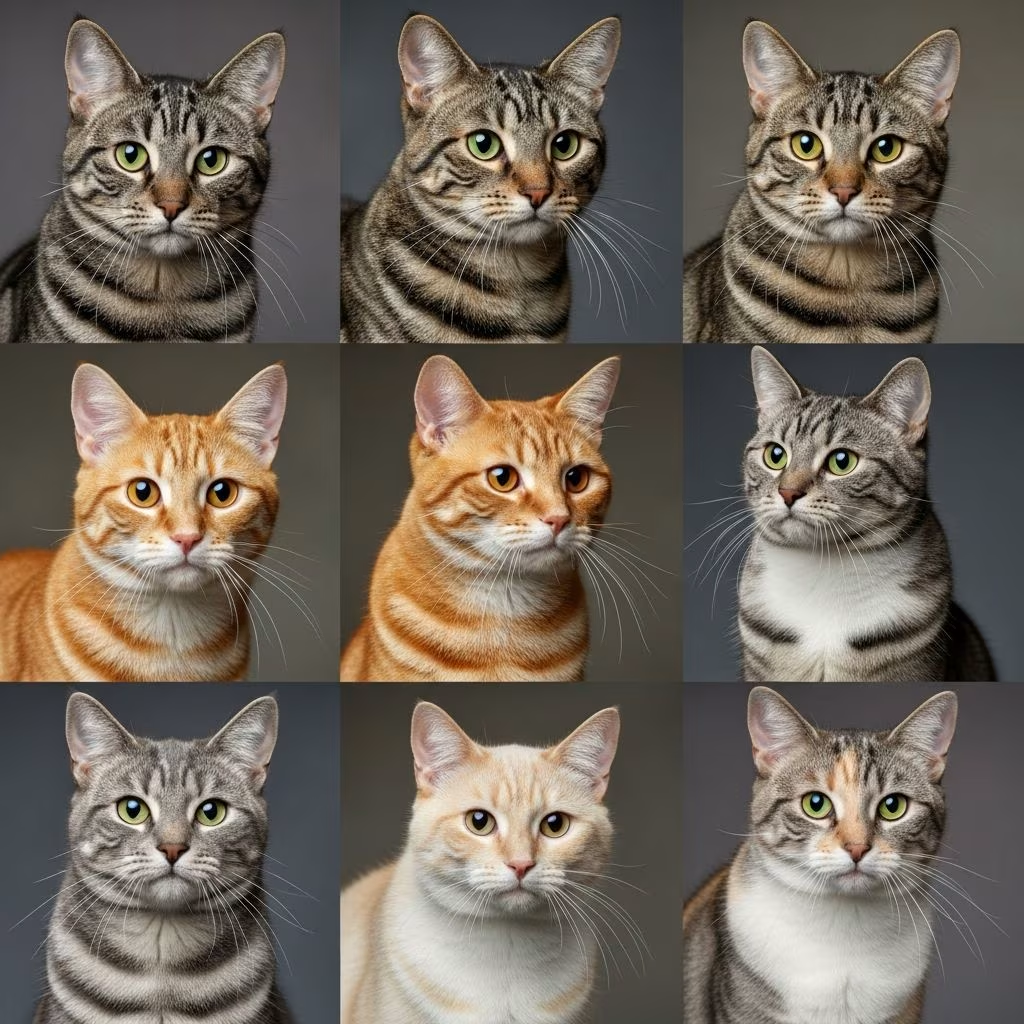
Tabby cats rank among the most beloved felines worldwide, celebrated for their striking coats adorned with bold stripes, swirls, spots, and the iconic **M-shaped marking** on their foreheads. Importantly, tabby does not denote a specific breed but rather a distinctive coat pattern that manifests across numerous breeds and color variations. Every tabby shares the signature forehead ‘M’ and **agouti hairs**—individual strands featuring alternating bands of light and dark pigmentation that produce the tabby’s characteristic banded appearance.
These patterns arise from specific genetic factors: the four primary tabby patterns—mackerel, classic (blotched), ticked, and spotted—are genetically distinct, while a fifth emerges from combinations with patched colorations like calico or tortoiseshell. Tabby markings often appear more vivid in kittens and along the tail in adults, with the agouti gene influencing pigment distribution. Additional shared traits include thin ‘pencil’ lines on the face, dark ‘eyeliner’ around pale eye fur, pigmented lips and paw pads, a pinkish nose outlined in darker pigment, and lighter chins or bellies.
This guide delves into the **10 common tabby cat colors and patterns**, detailing their unique aesthetics, genetics, and charm to help you identify and appreciate these patterned wonders.
The 10 Common Tabby Cat Colors & Patterns
1. Classic Tabby
The **Classic Tabby**, also known as blotched or marbled tabby, showcases a bold, swirling design resembling a butterfly across the shoulders, transitioning into thick, curved bands along the back and sides. A prominent bullseye-like circle often graces the flank, creating a randomized, fingerprint-unique marbled effect. This recessive pattern features three thin stripes along the spine (the center darkest), thick leg and tail bands, and cheek stripes. Seen in breeds like American Shorthairs, its earthy swirls evoke artistic elegance.
2. Mackerel Tabby
Dubbed the ‘tiger tabby’ or ‘fishbone tabby,’ the **Mackerel Tabby** displays sleek, parallel stripes: a bold dorsal stripe runs spine-length, with narrower stripes branching sideways like fish skeleton ribs. Uniform stripes confer an athletic vibe, often paired with belly spots for playfulness. This dominant pattern is the most prevalent, appearing in diverse colors with clear agouti banding between markings.
3. Spotted Tabby
The **Spotted Tabby** transforms stripes into distinct, rounded spots scattered across the body, resembling a wild feline like the African wildcat. Spots align in rows along the spine and sides, blending mackerel-like elements with broken stripes. Less common than classic or mackerel, this pattern yields a leopard-esque allure, with spots clearest on legs, flanks, and belly.
4. Ticked Tabby
Least resembling typical tabbies, the **Ticked Tabby** (or Abyssinian/Agouti tabby) sports a solid, shimmering coat from multi-banded agouti hairs in 2+ light-dark shades, erasing overt stripes or spots. Subtle ghost markings may linger on legs, face, belly, or tail tip, alongside the ‘M’ forehead and dorsal line. This ‘salt-and-pepper’ effect mimics wild sands, dominant in Abyssinian breeds.
5. Patched Tabby
**Patched Tabbies** fuse any base pattern (classic, mackerel, etc.) with irregular red or cream splotches, creating a patchwork quilt effect. These vivid contrasts highlight tabby stripes within colored zones, yielding dynamic, multicolored coats popular in mixed-breed cats.
6. Tortoiseshell Tabby (Torbie)
A mesmerizing hybrid, the **Tortoiseshell Tabby**—or ‘Torbie’—merges tortoiseshell’s mottled black, brown, and red (or diluted gray/buff) patches with tabby stripes, most prominent on face, legs, and tail. Tabby details can fade into color blotches but shine through on extremities, producing a tortie-tabby fusion of complexity and vibrancy.
7. Brown Tabby
Evoking the archetypal tabby image, the **Brown Tabby** layers dark brown, olive, or ochre stripes over a tawny, beige, caramel, or cream base for an earthy palette. Solid dark ear and paw fur enhances contrast; genetically often ‘black tabby’ with agouti clarity making markings pop against the base.
8. Red or Orange Tabby
**Red or Orange Tabbies** blaze from pale ginger to fiery auburn, with darker overlay stripes adding dimension. All orange cats are inherently tabby-linked, as the orange gene (O allele) mandates tabby patterning via pheomelanin over eumelanin. Iconic like Garfield, they exude bold playfulness; patterns gleam brightest in kittens or under light.
9. Silver Tabby
**Silver Tabbies** deliver a metallic sheen with dark gray/black stripes or swirls over a pale silver base, sometimes graduating subtly. White roots in silver classic variants amplify glow. This cool-toned elegance suits diverse patterns, from stark contrasts to soft gradients.
10. Calico Tabby (Caliby)
**Calico Tabbies**, or ‘Calibies,’ interweave white, orange, and black patches with embedded tabby stripes, including the forehead ‘M’. Stripes emerge vividly between color blocks, crafting an artistic tapestry. Like calicos, this tri-color pattern ties to genetics blending tabby with white spotting.
Genetics Behind Tabby Patterns
Tabby coats stem from the **agouti gene (A)**, promoting banded hairs, and tabby alleles like **TaM** (mackerel, dominant) versus **TaB** (classic, recessive). Ticked arises from Ta^t, spotted from modifiers breaking stripes. Colors span black-based (brown tabby) to chocolate, blue, etc., with red (O gene) always tabby-expressed. Patched/tortie/calico add X-linked orange and white spotting for combos. These interact to yield endless variations across breeds.
| Pattern | Genetic Basis | Key Features |
|---|---|---|
| Classic/Blotched | Recessive (ta^b) | Swirls, bullseye, butterfly |
| Mackerel | Dominant (Ta^M) | Stripes, fishbone |
| Spotted | Modifier on mackerel | Round spots in rows |
| Ticked | Ta^t allele | Banded hairs, no stripes |
Identifying a Tabby Cat
- ‘M’ Forehead Mark: Universal tabby hallmark.
- Agouti Banding: Hairs with light/dark segments.
- Facial Lines: Pencil whiskers, eyeliner, pale surrounds.
- Pigmented Pads/Nose: Dark-outlined pink nose.
- Light Underbody: Pale chin, belly.
Even ticked tabbies retain these, though fainter.
Frequently Asked Questions (FAQs)
What is a tabby cat?
A tabby is a coat pattern, not breed, defined by stripes/spots/swirls and agouti hairs across colors/breeds.
Are all orange cats tabbies?
Yes—the orange gene mandates tabby patterning.
What are torbies and calibies?
Torbies blend tortie patches with tabby stripes; calibies add white to orange/black tabby zones.
Which tabby pattern is most common?
Mackerel, due to its dominant genetics.
Can tabbies be solid-colored?
No—agouti prevents solids; closest are ticked with subtle banding.
References
- 10 Types of Tabby Cat Colors & Patterns (With Pictures) — Catster. 2023. https://www.catster.com/lifestyle/types-of-tabby-cat-colors-patterns/
- Cat coat: tabby and genetics — The Little Carnivore. 2023. https://thelittlecarnivore.com/en/blog/cat-coat-tabby-patterns-genetics
- Tabby cat — Wikipedia. 2024-01-10. https://en.wikipedia.org/wiki/Tabby_cat
- Cat Identification | Coat Colors & Patterns — University of Florida Shelter Medicine (.edu). 2011. https://sheltermedicine.vetmed.ufl.edu/files/2011/11/identification-and-coat-colors-patterns.pdf
- All About Tabby Cats — Alley Cat Allies. 2023. https://www.alleycat.org/all-about-tabby-cats-on-national-tabby-day/



