

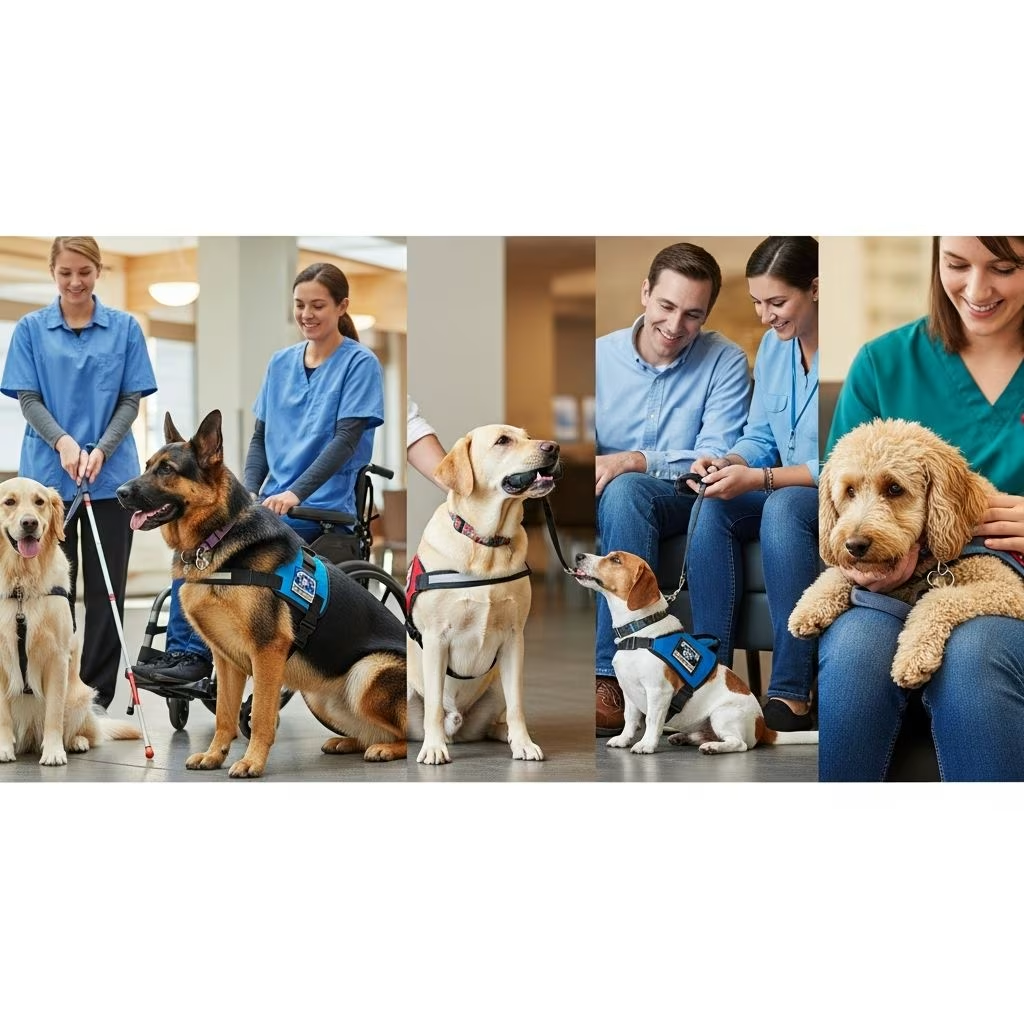
Service dogs transform lives by performing specific tasks for people with disabilities, enabling greater autonomy in daily activities. Under the Americans with Disabilities Act (ADA), these dogs are trained to mitigate the effects of various physical, sensory, or mental health conditions through targeted skills.
Defining Service Dogs and Their Core Role
A service dog is any dog individually trained to perform work or tasks directly related to a person’s disability, distinguishing them from emotional support or therapy animals. Unlike pets, these dogs must execute practical actions such as retrieving objects, alerting to medical events, or providing physical balance support. Training often spans 1-2 years, involving socialization from puppyhood and advanced task-specific instruction.
Organizations like Assistance Dogs International (ADI) outline standards for programs, ensuring dogs are reliable in public settings. Handlers typically receive their dog after a matching process, followed by team training to customize skills.
Guide Dogs for Visual Impairments
Guide dogs, often called seeing eye dogs, lead individuals who are blind or visually impaired safely through environments. These dogs learn to navigate obstacles, stop at curbs, and obey voice commands while ignoring distractions. Training begins with puppy raisers who socialize the dog for 14-18 months, followed by formal harness work at specialized schools.
Common breeds include Labrador Retrievers, Golden Retrievers, and German Shepherds due to their calm demeanor and intelligence. They wear harnesses to signal their working status and help handlers cross streets by responding to traffic sounds.
Hearing Alert Dogs for Auditory Challenges
Hearing dogs alert deaf or hard-of-hearing individuals to key sounds like doorbells, alarms, or approaching vehicles. Trained to recognize 20+ audio cues, they paw or nudge their handler and lead them to the sound source. Many come from shelters as small to medium mixed breeds, ideal for apartments and less physically demanding tasks.
These dogs undergo socialization similar to guide dogs but focus on auditory response drills. Post-training, they bond with handlers in 2-4 week programs, learning personalized alerts.
Mobility Assistance Dogs for Physical Support
Mobility dogs aid those with limited movement due to conditions like spinal injuries, arthritis, or muscular dystrophy. Tasks include pulling wheelchairs, providing counterbalance for stability, retrieving dropped items, opening doors, and turning on lights. Larger breeds like Labradors or Great Danes excel here for their strength.
For wheelchair users, dogs retrieve canes or phones; for ambulatory handlers, they brace during transfers or stairs. This support fosters independence in homes and public spaces.
Seizure Response and Medical Alert Dogs
Seizure response dogs stay close during episodes, then bark for help or fetch medication. Some detect oncoming seizures via scent changes, providing 20-45 minutes warning. Diabetic alert dogs sense blood sugar fluctuations through volatile organic compounds in sweat, alerting via pawing or barking for insulin or food.
Medical alert dogs cover broader needs, like heart event detection. Poodles, with their scent prowess across sizes, suit these roles well.
Psychiatric and Emotional Regulation Service Dogs
Psychiatric service dogs (PSDs) assist with PTSD, anxiety, depression, or panic disorders. They perform tasks like deep pressure therapy by leaning in, creating space in crowds, interrupting nightmares, or retrieving grounding items. PTSD dogs might paw at night to wake handlers from distress.
These dogs differ from therapy animals by actively countering symptoms, not just providing comfort. Breeds like Golden Retrievers offer gentle temperaments.
Autism Support Dogs and Sensory Processing
Autism service dogs help children or adults on the spectrum manage sensory overload, self-injurious behaviors, or social challenges. They interrupt meltdowns with nudges, provide deep pressure hugs, or anchor handlers in crowds to prevent wandering. Tasks promote calm and facilitate interactions.
Often Labrador mixes, these dogs learn to recognize agitation cues early, intervening proactively.
Allergy Detection and Specialized Alert Dogs
Allergy alert dogs sniff out life-threatening allergens like peanuts or latex in food or environments, alerting before exposure. Trained on specific scents, they prevent anaphylaxis in severe cases. Social signal dogs, overlapping here, aid in discreet exits from overwhelming social situations by mimicking potty signals.
These niche roles demand precise scent discrimination, often using small, agile breeds.
Ideal Breeds and Selection Criteria
| Breed/Type | Best For | Key Traits |
|---|---|---|
| Labrador Retriever | Guide, Mobility, Seizure | Intelligent, calm, versatile |
| Golden Retriever | Psychiatric, Autism | Gentle, empathetic |
| German Shepherd | Guide, Mobility | Strong, focused |
| Poodle (various sizes) | Alert, Hearing | Scent-driven, adaptable |
| Mixed Breeds | Hearing, Autism | Socialized, shelter-friendly |
No breed is legally restricted; temperament, trainability, and size match tasks best. Small dogs suit alerts; large ones, mobility.
The Rigorous Training Journey
Service dog training starts at 8 weeks with obedience and socialization. Advanced phases teach 50-100 commands, public access reliability, and disability-specific tasks. Only 50% of candidates graduate due to high standards. Costs range $20,000-$50,000, often grant-funded.
- Puppy Raising: 12-18 months exposure to stimuli.
- Task Training: 6-12 months skill-building.
- Team Bonding: 2-4 weeks handler-dog pairing.
Legal Rights and Public Access
ADA grants service dogs access to public places, housing, and transport without fees, provided they behave. Handlers need not disclose disability details; staff can ask only if it’s a dog and what task it performs. Vests/leashes identify them, but aren’t required.
Facilities must accommodate unless dog poses direct threat. Emotional support animals lack these rights.
Frequently Asked Questions (FAQs)
What qualifies a dog as a service dog?
A dog trained for disability-related tasks; no certification needed under ADA.
Can any breed be a service dog?
Yes, based on training and temperament, not breed.
How long does training take?
1-2 years typically.
Are service dogs free?
Programs charge or fundraise; some waitlists are long.
What’s the difference from therapy dogs?
Service dogs perform tasks for one handler; therapy dogs comfort groups.
Future Trends in Service Dog Development
Advancements include AI collars for enhanced alerts and cross-training for multiple disabilities. Research into scent detection expands medical roles, while inclusive programs train shelter dogs more.
References
- The 10 Most Common Types of Service Dogs — The Academy of Pet Careers. 2023. https://www.theacademyofpetcareers.com/blog/10-types-of-service-dogs/
- Service Dog Training 101 — American Kennel Club (AKC). 2024-01-15. https://www.akc.org/expert-advice/training/service-dog-training-101/
- Looking for an Assistance Dog — Assistance Dogs International (ADI). 2025. https://assistancedogsinternational.org/main/looking-for-an-assistance-dog/
- Types of Service Dogs and How They Help Their Humans — PetMD. 2024-06-10. https://www.petmd.com/dog/general-health/types-of-service-dogs
- Service Animals — U.S. Department of Justice (ADA.gov). 2023-07-20. https://www.ada.gov/topics/service-animals/



