

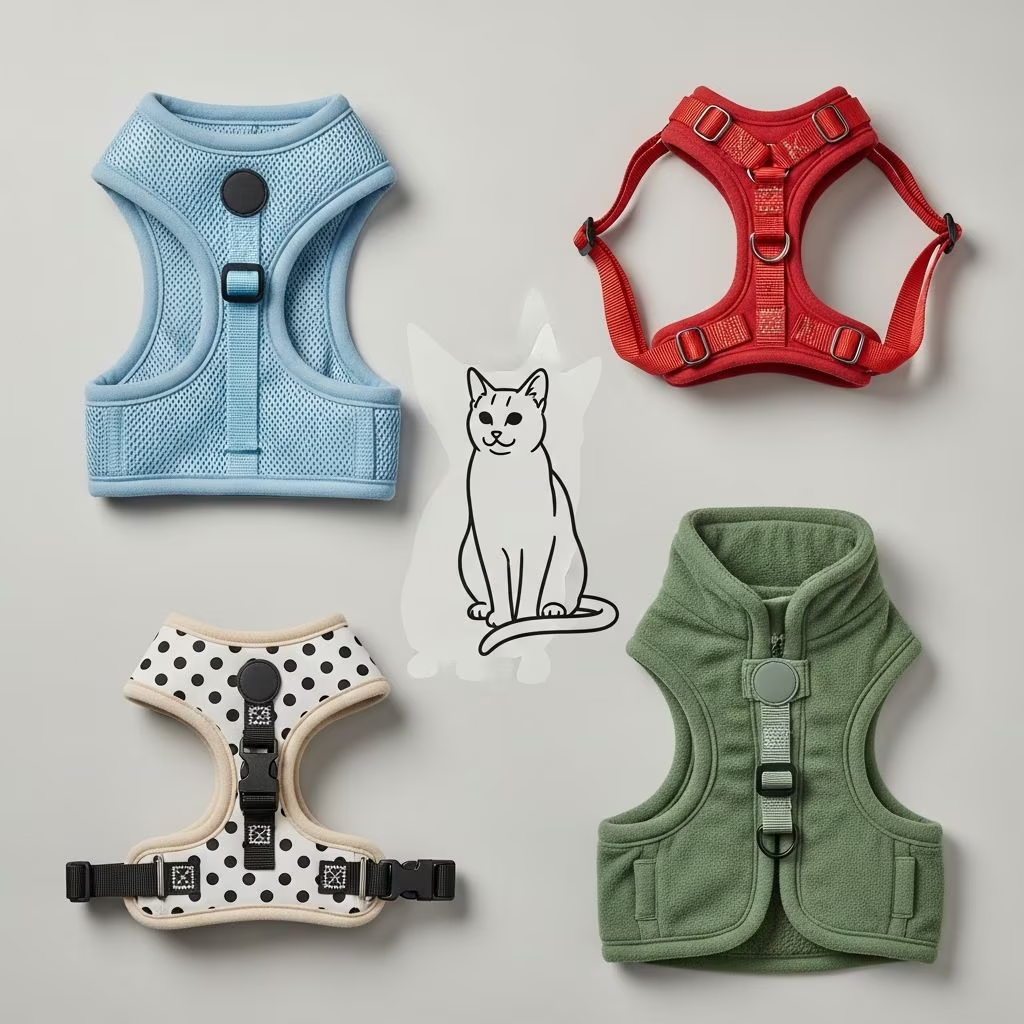
Cat harnesses allow indoor cats to safely explore outdoors, providing exercise and stimulation while preventing escapes. Unlike collars, harnesses distribute pressure across the chest, reducing injury risk during walks or training. Choosing the right type depends on your cat’s size, temperament, and activity level.
Why Use a Cat Harness?
Harnesses offer a secure alternative to collars for leashed walks, harness training helps cats adapt to outdoor environments gradually. They prevent choking by shifting pull pressure from the neck to the body, ideal for curious or escape-prone cats. Regular use promotes physical health, mental enrichment, and bonding with owners.
Types of Cat Harnesses
Several harness designs exist, each with unique features. Common types include H-style, vest-style, step-in, figure-8, and martingale. Vest and H-style are most popular for beginners due to adjustability and comfort.
H-Style Harness
The **H-style harness** resembles the letter ‘H’, with straps around the neck, chest, and girth connected by a back strap. It’s minimalistic, making it ideal for beginner cats unaccustomed to gear. Pros include lightweight design and less body contact; cons are potential pressure on neck/shoulders if the cat pulls hard, lacking a chest piece for even distribution.
- Best for: Slim or first-time harness cats.
- Examples: RC Pets Adventure Kitty Harness – fully adjustable with reflective strips for visibility.
Vest-Style Harness
**Vest-style harnesses** cover more of the cat’s torso like a jacket, evenly distributing weight to prevent strain. They come in pull-over-head or step-in varieties. Pros: Superior comfort, escape resistance, and pull distribution; cons: Bulkier, may take longer to fit.
- Best for: Active cats or those who pull.
- Examples: Kitty Holster – breathable cotton, machine-washable, no plastic clips for sensitive skin.
Step-In Vest Harness
Step-in vests allow cats to ‘step’ into position before securing around the neck and belly. They offer a tighter neck fit without head-pulling stress. Pros: Easy on/off, secure for wiggly cats; cons: Less adjustable for odd shapes.
- Best for: Cats averse to head-entry designs.
- Examples: Voyager Step-In – affordable with multiple sizes/colors.
Figure-8 Harness
The **figure-8 harness** uses crossed straps forming an ‘8’ shape: smaller loop around neck, larger around abdomen. Leash attaches at shoulders. Pros: Simple, adjustable; cons: Can pressure throat on pulls without chest support.
- Best for: Small, calm cats.
Minimal/Y-Style Harness
Similar to H-style but with an extra neck-to-chest strap for better shoulder pressure distribution. Thin straps make it lightweight but less ideal for strong pullers.
Martingale Harness
Martingale designs cinch at the top for escape-proofing but may discomfort sensitive cats. Considered aversive by some trainers; use cautiously.
Other Styles
Jacket-style or custom harnesses like OutBound provide full motion and tailored fits for unique body types.
Pros and Cons of Each Type
| Type | Pros | Cons |
|---|---|---|
| H-Style | Lightweight, easy for beginners, minimal contact | Neck/shoulder strain on pulls, less secure |
| Vest-Style | Even weight distribution, comfortable, escape-proof | Bulkier, harder to fit initially |
| Step-In | Quick application, tight neck fit | Limited adjustability |
| Figure-8 | Simple design, affordable | Throat pressure risk |
| Martingale | Anti-escape cinch | Potentially uncomfortable |
How to Measure Your Cat for a Harness
Accurate sizing prevents escapes and discomfort. Measure neck (base), chest girth (behind front legs, widest part), and belly (just behind ribs). Use a soft tape; add 1-2 inches for growth/movement. Common sizes: XS (neck 5-9″, chest 10-14″), S/M (9-12″, 13-17″), up to XL.
- Have cat stand relaxed.
- Measure twice for consistency.
- Check manufacturer charts – sizes vary by brand.
Fitting a Cat Harness Properly
A well-fitted harness allows two fingers between straps and body. Secure all buckles/velcro; leash clip should sit between shoulders. Test by gently tugging – no slipping or rubbing. Introduce gradually with treats for positive association.
- Adjust neck snug but not tight.
- Chest strap behind legs, not too low.
- Monitor for chafing during first wears.
Top Recommended Cat Harnesses
Based on testing and reviews, here are standout options across budgets.
- Rabbitgoo Cat Harness: Budget-friendly, breathable mesh, 4 sizes/13 colors, includes leash. Durable for beginners.
- PetSafe Come With Me Kitty: Adjustable sternum slide, bungee leash, lightweight.
- Kitty Holster: Vest with cotton lining, escape-resistant, made in USA.
- Sleepypod: Durable mesh, secure buckles.
- Houdini Escape-Proof: Adjustable, anti-slip design.
- RC Pets Adventure Kitty: Reflective, great pull distribution.
Tips for Harness Training Your Cat
Start indoors: Let cat wear harness for short sessions with play/treats. Progress to leash dragging, then supervised walks. Patience is key – some cats take weeks. Use high-value rewards; avoid forcing.
- Session length: 5-10 minutes initially.
- Choose calm environments first.
- Never leave harness on unsupervised.
Frequently Asked Questions (FAQs)
What’s the best type of cat harness for beginners?
H-style or lightweight vest like Rabbitgoo for minimal contact and easy fitting.
Are vest harnesses better than strap-style?
Yes, vests distribute pressure evenly, reducing injury risk compared to thin straps.
How do I know if the harness fits my cat?
Two fingers should fit under straps; no gaping or rubbing when tugged gently.
Can all cats be trained to wear a harness?
Most can with positive reinforcement, though Houdini-like escape artists need secure designs.
Is a matching leash necessary?
Not essential, but sets ensure compatibility; bungee leashes reduce jerking.
Conclusion
Selecting the right cat harness enhances safety and enjoyment during outdoor time. Prioritize fit, material, and your cat’s needs – vest styles excel for most. With proper training, harness walks become a cherished routine.
References
- Top 8 Cat Harnesses Purchased and Tested — Cats.com. 2023. https://cats.com/best-cat-harness
- Cat Harnesses – Your Ultimate Guide — Chumka’s Corner. 2023. https://www.chumkascorner.com/cat-harnesses-your-ultimate-guide/
- Kitty Holster Cat Harness — Jackson Galaxy. 2023. https://www.jacksongalaxy.com/products/kitty-holster-cat-harness
- Cat Harness Types: Ultimate Guide — KittyCatGo. 2023. https://kittycatgo.com/how-to-pick-out-a-cat-harness/
- Teddy’s Harness Recommendations — Theoretically Teddy. 2021-05-22. https://theoreticallyteddy.com/2021/05/22/teddys-harness-recommendations/
- What is the Best Cat Harness? — Cat School. 2023. https://www.catschool.co/cat-training-articles/what-is-the-best-cat-harness



