

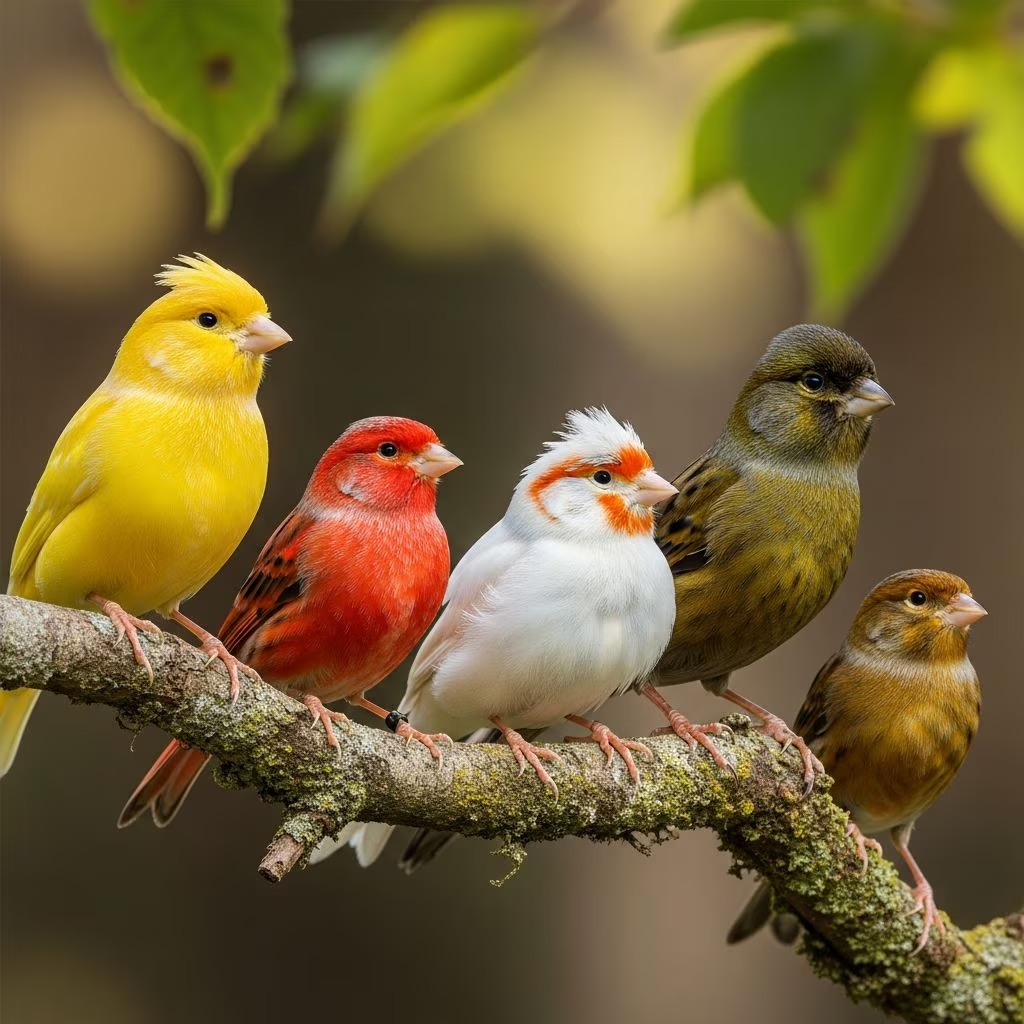
Types of Canaries: Understanding the Three Main Categories
Canaries are among the most popular pet birds in the world, cherished for their vibrant colors, melodious songs, and charming personalities. What many people don’t realize is that there are numerous canary breeds, each with distinct characteristics and breeding purposes. Domestic canaries have been selectively bred for centuries, resulting in three broad categories of canaries: those bred for their singing abilities, those bred for their spectacular colors, and those bred for their unique physical type and posture.
Understanding these three main categories is essential for anyone interested in canaries, whether as a potential owner, breeder, or enthusiast. Each category has developed specific traits that make them special and appealing to different people. Some canary lovers are captivated by the melodious songs of singing breeds, others are drawn to the dazzling array of colors available in color canaries, while still others appreciate the distinctive physical characteristics that define type canaries.
Song Canaries: The Musical Masters
Song canaries represent some of the most prized canary breeds, developed specifically for their exceptional vocal abilities. These birds produce complex, melodious songs with distinct patterns, rhythms, and tonal qualities. Breeders have worked for generations to cultivate and refine the singing characteristics of these remarkable birds.
The Harz Roller
The Harz Roller is one of the most prestigious song canary breeds, first developed in the Harz Mountains of Germany. This breed represents the pinnacle of canary singing excellence, known for its gentle, melodic song produced with a closed beak and inflated throat. The Harz Roller sings in the bass register with a lower pitch and narrower frequencies compared to wild canaries. Its deep, soothing song can output at least 40 notes per second, creating a continuous, mesmerizing rhythm.
The Spanish Timbrado
The Spanish Timbrado, pronounced “tim-braw-dough,” represents an evolution of the wild canary and has been established as a distinct breed since the early 20th century. This songster possesses one of the loudest and most powerful songs among all song canary breeds, featuring a metallic voice with a high tonal range and an open-beak singing style. The Spanish Timbrado’s song consists of 12 distinct notes with short verses in constant alteration, creating a repertoire with contrasting tonal layers. Remarkably, female Spanish Timbrados can also sing, though not with the same bravado as the males.
The American Singer
The American Singer emerged during the 1930s and 1940s as American bird enthusiasts sought to develop a canary suited to their preferences. Created by crossing German Roller and Border Canaries in a genetic ratio of 3:1, the American Singer has become the most commonly kept canary type in the United States. These cheerful, easy-to-keep birds produce songs that include high and low notes, chops, and rolls to great effect, making them beloved companions for pet owners.
Color Canaries: A Rainbow of Possibilities
Color canaries are bred specifically for their stunning plumage, resulting in an almost endless variety of hues and patterns. These birds tend to be smaller than type canaries, typically measuring around 5.5 inches tall. Through selective breeding, the basic colors found in wild canaries—yellow, green, and black—have been manipulated into a spectacular palette of colors and variations.
Understanding Color Mutations
Wild canaries naturally display three distinct layers of color: yellow as the base, underlying green, and black that appears partly green. Through generations of selective breeding, aviculturists have developed numerous color mutations and combinations. These include melanin canaries, which display melanin colors such as Ino, Eumo, Satinette, Bronze, Ivory, Onyx, Mosaic, and Brown variations.
Popular Color Canary Types
Color canaries come in an impressive array of variations. Some of the most popular include white recessive, intense red with white wings, black red mosaic, brown white, agate red, phaeo yellow intense, black onyx white, achat opal, red mosaic, satinette red mosaic, phaeo red intense, and agate yellow varieties. Additionally, there are distinctions between yellow lipochrome mutations, which create the loss of brown and black pigment leaving only yellow ground color, and yellow melanin mutations showing yellow ground color with brown and black pigment.
White Canaries
White canaries represent a fascinating color category, resulting from two different mutations: recessive white and dominant white. These two types are distinguished by their genetics: a dominant white canary always retains some traces of yellow or red in its flight feathers, while a recessive white canary is completely white throughout its plumage.
Type Canaries: Distinctive Physical Characteristics
Type canaries, also known as posture canaries, are bred for their unique physical shape, conformation, and distinctive features rather than song or color. These breeds may be larger or smaller than common canaries and often feature remarkable morphologies, including crests, frills, and other unusual physical traits.
Crested and Plumed Type Canaries
Among the most visually striking type canaries are those with distinctive head crests. The Gloster is one of the most popular show birds, featuring a charming feathered crest on its head and a short, squat stature. The parentage of Glosters includes Border, Herz, and Crested canaries. Within the Gloster category, there are two types: Consorts without a crested head and Coronas with a feathered crest. An important genetic note is that if two Coronas are mated together, the chicks will not survive due to genetic factors.
The German Crested (Deutsche Haube) is an old breed and the only type of posture canary that combines color characteristics of color canaries with a specific type of crest. These birds formed the basis of English Lancashire, Gloster, and Crested breeds. Unlike English breeds featuring round and full crests, the German breed displays a broad, oval-shaped crest measuring 13.5 to 14.5 centimeters, with feathers extending flat in all directions from a small center point.
The Frill canary represents a unique mutation resulting in birds that appear to have been caught in a windstorm, with feathers curling in all directions. The most popular variety is the Paris Frill, which can reach up to 8.25 inches tall and is known for being exceptionally showy. No canary show is complete without these spectacular birds.
Large Upright Type Canaries
The Yorkshire canary stands as one of the most impressive type canaries, reaching approximately 6 inches tall. Its natural upright stance earned it the nickname “the guardsman,” and the variety was identified in the mid-1800s in Bradford, Yorkshire. The Yorkshire’s commanding presence and dignified posture make it a popular show bird.
The Bernois canary takes its name from its original breeding ground in Bern, Switzerland. These tall birds, measuring around 6 inches, maintain a distinctly upright posture and feature distinctive heads with feathers growing flat on top. The Scotch Fancy, developed in the early 19th century from Belgian stock, focuses on a distinctive bowed back as its defining characteristic.
Compact and Distinctive Type Canaries
The Norwich canary is a breed with a compact, stocky build and a length of approximately 6.5 inches, available in all sorts of colors. Often affectionately nicknamed “John Bull,” the ideal Norwich is described as having a very short neck and nape, a curvy belly, and a broad back with rounded shapes on all sides and thick feathering.
The Border or Border Fancy became a distinct variety in the early 19th century and was originally called the “wee-gem.” The Crested canary features crest feathers that flow in a circular pattern from a center point on its head, partially draping on the tip of the beak and eyes without obstructing vision. The Crested measures a minimum of 6.75 inches long.
The Lizard canary displays striking mottled plumage suggestive of a reptile’s scaly coat. Birds of this breed have an oval or thicker-than-usual feathering on top of the head, giving the appearance of a cap. The spangling coloration of the feathers is most pronounced during the adolescent year before the first molt, which is why show birds are typically young and pre-molt.
The Belgium canary was one of the first shape canaries bred for their appearance rather than for song. This bird has a distinctive vulture-like stoop to its posture. The Fife represents another small, active type canary that is a prolific breeder requiring no specialized treatment, making it easy to breed.
Additional Type Canary Varieties
The world of type canaries extends far beyond these popular breeds. Additional varieties include the Irish Fancy, Lancashire, and Spanish Raza, among numerous other variations of color and shape. Each of these breeds brings unique characteristics and appeals to different enthusiasts, demonstrating the remarkable diversity possible within the canary species through selective breeding.
Domestic Canaries: The Popular Pet
The domestic canary represents a domesticated variety of wild canaries, originating as fashionable pet birds bred in the royal courts of Spain and England before spreading to other regions. These beautiful birds can grow to sizes ranging from 12 to 20 centimeters and display a vast array of colors including white, red, brown, black, yellow, and orange. Domestic canaries produce a variety of soft and loud melodies and songs, and their diet typically consists of grasses, fig seeds, and a variety of small plants and insects.
Comparative Overview of Canary Types
| Canary Category | Primary Characteristic | Typical Size | Notable Examples |
|---|---|---|---|
| Song Canaries | Exceptional singing ability and vocal patterns | Variable | Harz Roller, Spanish Timbrado, American Singer |
| Color Canaries | Vibrant plumage and color variations | ~5.5 inches | White, Red Mosaic, Agate varieties |
| Type Canaries | Distinctive physical shape and conformation | Variable (5-8+ inches) | Gloster, Norwich, Yorkshire, Lizard |
Choosing Your Canary: Considerations
When selecting a canary as a pet or breeding project, potential owners and breeders should consider their specific interests and goals. Those who appreciate musical qualities should explore song canary breeds, particularly the American Singer, which offers excellent singing abilities with easy care requirements. Color enthusiasts will find endless possibilities among color canary varieties, each offering unique and stunning plumage. Those interested in distinctive physical characteristics and show competition should investigate type canary breeds, each with its own charm and appeal.
Each category offers its own rewards and challenges. Song canaries require careful listening and appreciation of their unique vocal characteristics. Color canaries demand knowledge of genetics and selective breeding to maintain and develop color mutations. Type canaries require understanding of breed standards and physical characteristics for successful showing and breeding.
Frequently Asked Questions About Canaries
Q: What is the difference between the three categories of canaries?
A: Canaries are divided into three main categories based on their breeding purposes: song canaries bred for their vocal abilities, color canaries bred for their plumage colors and patterns, and type canaries bred for their distinctive physical shape and conformation.
Q: Which canary breed is best for beginners?
A: The American Singer is often considered the best choice for beginners due to its cheerful temperament, easy care requirements, and pleasant singing ability. The Fife canary is also popular for beginners as it is prolific, requires no specialized treatment, and is easy to breed.
Q: Can female canaries sing?
A: While male canaries are typically the primary singers, some female canaries can sing as well. Female Spanish Timbrados, for example, are capable of singing, though usually not with the same intensity and bravado as the males.
Q: What is the typical lifespan of a canary?
A: While specific lifespan varies by breed and individual care, canaries typically live 10-15 years in captivity, with some living even longer with proper care, nutrition, and veterinary attention.
Q: How do color mutations occur in canaries?
A: Wild canaries display three basic color layers: yellow, green, and black. Through selective breeding over generations, breeders have developed numerous color mutations and combinations, including white, red, bronze, and many other variations.
Q: What makes the Gloster canary special?
A: The Gloster canary is popular as a show bird due to its charming feathered crest and short, squat stature. The breed includes two types: Consorts without a crest and Coronas with a crest. However, breeding two Coronas together results in chick mortality due to genetic factors.
References
- Breeds of Canary’s — Songbird Grange. https://songbirdgrange.com/breeds-of-canarys/
- Types of canary birds and what is the difference between them? — Petaholic. https://petaholic.sa/en/blog/Types-of-birds—canaries/a-96365155
- Domestic canary — Wikipedia. https://en.wikipedia.org/wiki/Domestic_canary
- Canaries — Exotic Bird Hospital. https://exoticbirdhospital.com/portfolio/canaries/



