Types of Assistance Dogs
Discover the diverse roles of assistance dogs, from guiding the visually impaired to alerting for medical emergencies, and learn how these trained companions transform lives.
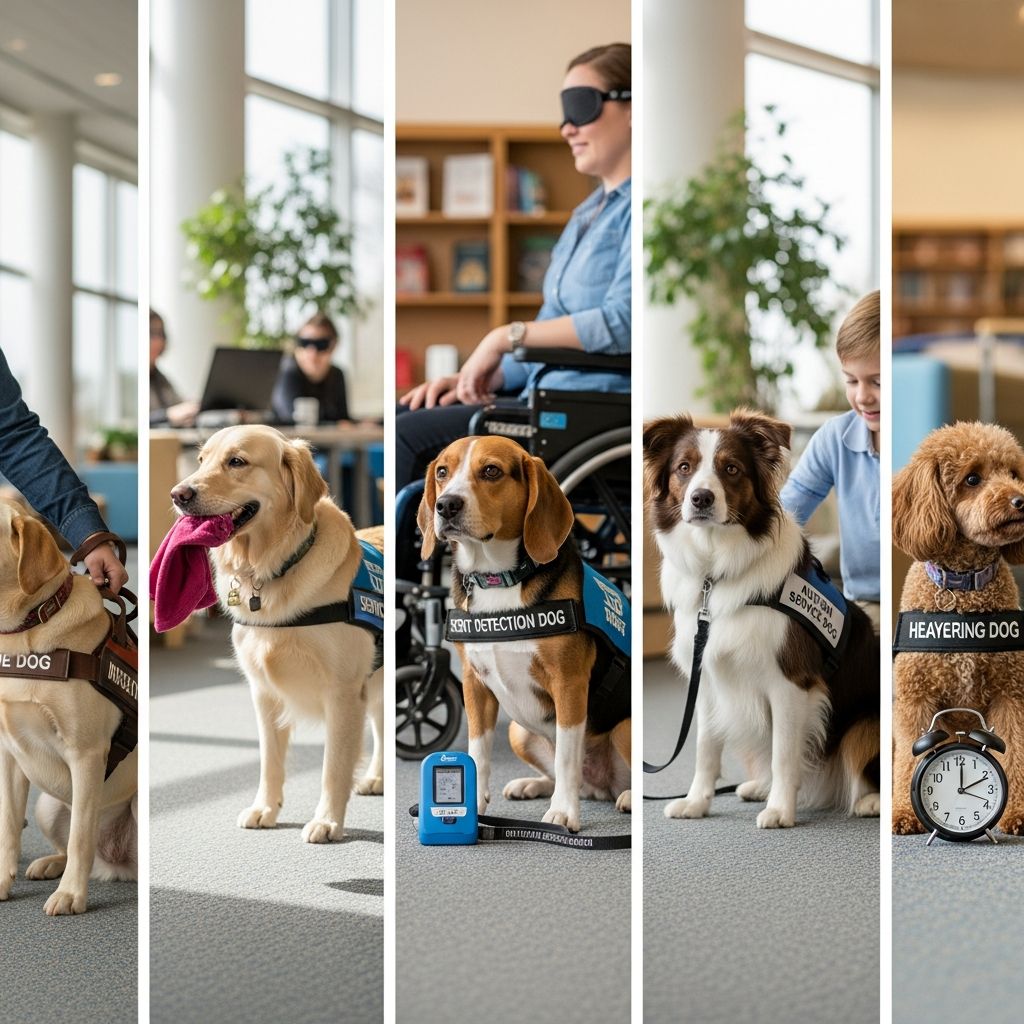
Assistance dogs play a vital role in enhancing the independence and quality of life for people with disabilities. These highly trained canines perform specific tasks tailored to their handler’s needs, distinguishing them from pets or other companion animals. From navigating public spaces to detecting medical emergencies, each type serves a unique purpose backed by rigorous training programs.
Understanding Assistance Dogs and Their Categories
Assistance dogs encompass several categories, primarily
service dogs
,therapy dogs
, andemotional support animals (ESAs)
. Service dogs are legally protected under the Americans with Disabilities Act (ADA) to perform tasks directly related to a disability. Therapy dogs provide comfort in controlled settings like hospitals, while ESAs offer emotional benefits without task-specific training.- Service Dogs: Trained for public access to mitigate disabilities.
- Therapy Dogs: Visit facilities to interact with multiple people.
- ESAs: Provide companionship in housing/travel with documentation.
Guide Dogs: Navigating the World for the Visually Impaired
Guide dogs, also known as seeing-eye dogs, assist individuals who are blind or have severe visual impairments. These dogs are trained to lead their handlers safely through environments, avoiding obstacles and finding destinations. They learn intelligent disobedience, refusing unsafe commands like crossing against traffic.
Training begins with puppy raisers who socialize the dogs for 12-18 months, followed by 4-6 months of professional guide work. Breeds like Labrador Retrievers and Golden Retrievers excel due to their calm temperament and focus. Guide dogs enable handlers to travel independently, boosting confidence and mobility.
| Key Tasks | Description |
|---|---|
| Obstacle Avoidance | Guide around hazards like curbs or furniture. |
| Destination Finding | Locate doors, stairs, seats, or elevators. |
| Street Crossing | Stop at curbs and align for safe passage. |
Mobility Assistance Dogs: Support for Physical Limitations
Mobility assistance dogs help people with physical disabilities, such as spinal cord injuries, arthritis, or amputations. These dogs provide balance support, retrieve items, and operate everyday devices. They can pull wheelchairs short distances if appropriately sized and trained.
Tasks include bracing for stability during transfers, opening/closing doors, turning lights on/off, and carrying supplies in backpacks. Large breeds like Labradors or Great Danes are preferred for strength. These dogs reduce fall risks and promote daily independence.
- Retrieve dropped objects like phones or keys.
- Press elevator buttons or activate switches.
- Assist in dressing by pulling socks or sleeves.
Hearing Alert Dogs: Bridging the Silence
Hearing dogs alert deaf or hard-of-hearing individuals to important sounds. Trained to recognize doorbells, alarms, phones, or names being called, they nudge or paw their handler to direct attention to the source.
These dogs enhance safety and social participation by preventing isolation. Smaller breeds like Cocker Spaniels suit this role due to agility. Public access is granted under ADA as service dogs when performing alerts.
Medical Alert and Response Dogs: Lifesaving Companions
Seizure Alert and Response Dogs
These dogs detect oncoming seizures through scent or behavioral changes, providing warnings up to 45 minutes in advance. During a seizure, they fetch medication, activate help summons, or lie protectively to prevent injury.
Diabetic Alert Dogs
Diabetic alert dogs smell blood sugar fluctuations, alerting handlers to highs or lows. This prevents diabetic comas, with accuracy rates over 90% in trained dogs. Breeds with strong noses, like Bloodhounds, are ideal.
Allergy Detection Dogs
Emerging in this category, these dogs identify allergens like peanuts, enabling safe navigation in public.
Psychiatric Service Dogs: Mental Health Allies
Psychiatric service dogs assist with conditions like PTSD, anxiety, or depression. Tasks include deep pressure therapy (leaning to calm), interrupting nightmares, or creating space in crowds. They differ from ESAs by performing proactive tasks.
Veterans benefit greatly, with programs like America’s VetDogs providing free dogs. These canine partners reduce symptoms and encourage therapy adherence.
Autism Service Dogs: Fostering Safety and Social Skills
Autism service dogs support children and adults on the spectrum by preventing elopement (wandering), providing a calming anchor during meltdowns, and facilitating social interactions. They use techniques like tethering for safety in public.
Studies show improved communication and emotional regulation. Tasks include alerting caregivers to distress or blocking harmful behaviors.
Facility Dogs and Dual-Purpose Dogs: Versatile Helpers
Facility dogs work in professional settings like courts or hospitals, comforting witnesses or patients under handler supervision. Dual-purpose dogs combine roles, such as guiding while alerting for seizures, maximizing utility.
Training and Public Access Rights
Assistance dogs undergo 1-2 years of training, often starting with volunteer puppy raisers. Public access laws protect service dogs in the U.S., Canada, and EU, requiring only task performance, not vests or certification.
| Type | Legal Access | Training Requirement |
|---|---|---|
| Service Dogs | Full public access | Task-trained |
| Therapy Dogs | Invited only | Basic obedience |
| ESAs | Housing/travel | Prescription |
Selecting Breeds and Care for Assistance Dogs
Common breeds include Labrador Retrievers (versatile), Golden Retrievers (gentle), German Shepherds (alert), and Poodles (hypoallergenic). Lifespan is 8-12 years, with ongoing training and health checks essential.
- Regular vet care for joint issues from tasks.
- Mental stimulation to prevent burnout.
- Handler-dog bonding for effectiveness.
FAQs About Assistance Dogs
What is the difference between a service dog and an emotional support animal?
Service dogs perform specific tasks for disabilities and have public access rights; ESAs provide comfort but no tasks or access.
Can any dog be trained as an assistance dog?
No, dogs need stable temperament, health, and trainability. Professional assessment is key.
Are assistance dogs allowed everywhere?
Service dogs yes, under ADA; others depend on venue policies.
How much does an assistance dog cost?
$20,000-$30,000, often covered by nonprofits for qualified handlers.
Can owner-trained dogs qualify?
Yes, if they reliably perform tasks; no certification required.
References
- Types of Assistance Dogs — Service Dog Express. 2023. https://www.servicedogexpress.com/types-assistance-dogs/
- Breeds and Types of Assistance Dogs — Paws For Support. 2024. https://pawsforsupport.com.au/breeds-and-types-of-assistance-dogs/
- A Guide to the Types of Service Dogs — Putnam Service Dogs. 2023. https://www.putnamservicedogs.org/blog/a-guide-to-the-types-of-service-dogs/
- Types of Service Dogs and How They Help Their Humans — PetMD. 2025-01-15. https://www.petmd.com/dog/general-health/types-of-service-dogs
- Type of Assistance Dogs — Guide Dog Foundation. 2024. https://www.guidedog.org/PuppyRaising/PuppyRaiserManual/Resources/Type_of_Assistance_Dogs.aspx
Similar Articles








Read full bio of medha deb