

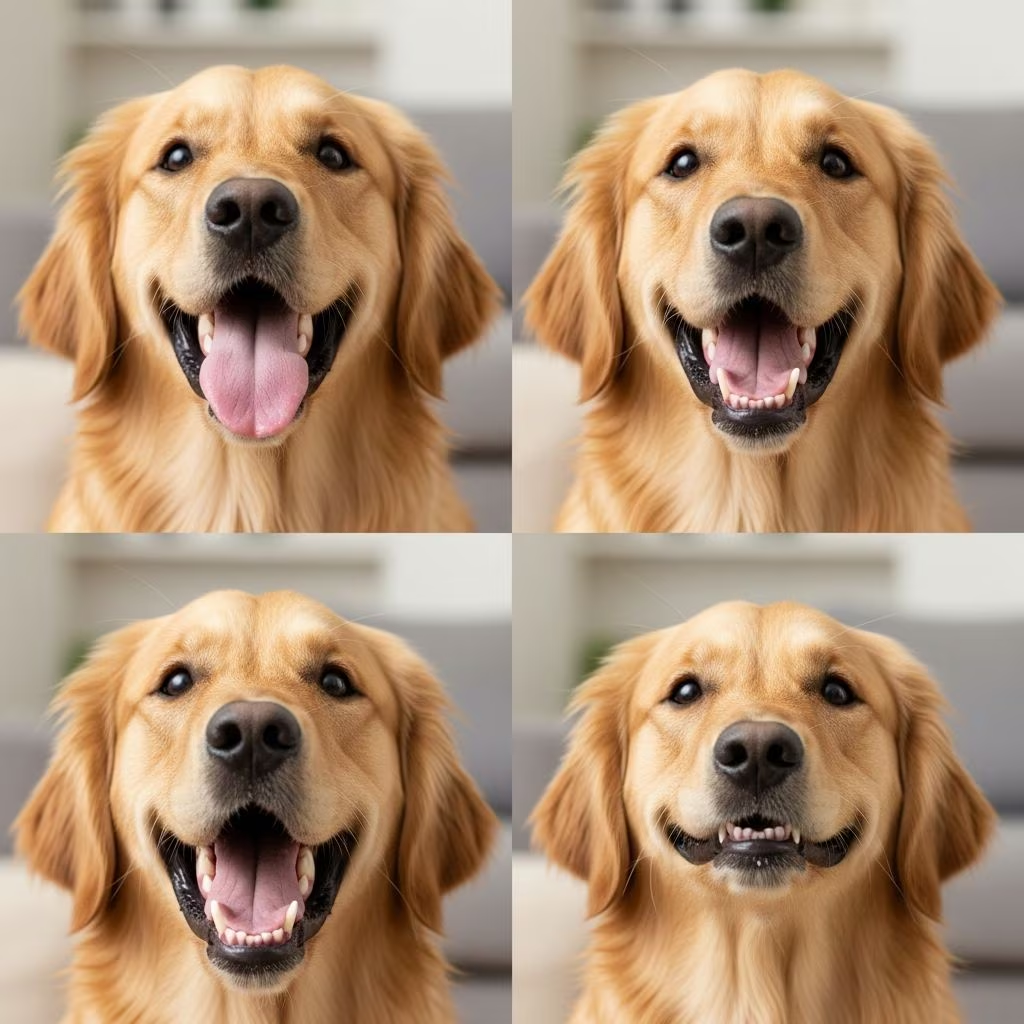
Dogs communicate a wealth of emotions through their facial expressions, and what we perceive as **dog smiles** reveal insights into their feelings, from pure joy to submission or stress. Unlike human smiles, canine grins serve specific social functions, often blending mouth position with body language to convey safety, playfulness, or deference. Understanding these **types of dog smiles** helps owners foster stronger bonds and avoid misinterpreting signals that could lead to tension.
Research shows dogs have evolved facial muscles similar to humans, enabling expressions that mirror our own for better interspecies communication. A relaxed open-mouth display, for instance, signals non-threat and happiness, while lip curls can indicate submission. Always observe the full context—ears, tail, posture—to accurately decode these grins.
What Does a Dog Smile Mean?
A **dog smile** isn’t always synonymous with happiness; it’s a spectrum of expressions rooted in evolutionary social signaling. The core idea is that dogs use mouth configurations to diffuse tension, invite play, or show respect. For example, breeds like Golden Retrievers naturally appear to smile due to their mouth shape, but true emotional smiles pair with relaxed bodies.
Neuroscience studies confirm dogs process human smiles positively, often mirroring them to strengthen bonds. This ‘contagion effect’ means your grin can elicit a canine response, enhancing mutual trust. However, misreading a tense smile as joy risks overlooking stress.
Types of Dog Smiles
Dogs exhibit several distinct **types of dog smiles**, each tied to specific emotions and contexts. Here’s a breakdown:
- Relaxed Panting Smile: Characterized by soft panting, open mouth, and lolling tongue, this is the canine hallmark of contentment. Seen during play or affection like belly rubs, it pairs with wagging tails and loose posture.
- Submissive Grin: Lips curl to expose front teeth (incisors), often with a scrunched nose. Far from aggression, it signals deference and trust, common when greeting owners or during mild scolding.
- Play Face: Wide-open mouth with visible teeth and tongue, during bows or chases. This invites interaction, blending excitement with non-threat.
- Tension Smile: Closed-mouth with dimples or slight lift, amid stiff body, staring eyes, or flat ears—indicating anxiety rather than joy.
- Happy Grin: Relaxed mouth corners lifted, gentle pant, soft eyes. Pure joy, often learned from human interaction.
Relaxed Panting Smile
The **relaxed panting smile** is dogs’ closest equivalent to a human grin of bliss. With jaw loose, tongue out, and even breaths, it appears post-exercise or during cuddles. Body cues like circular tail wags and squinty eyes confirm positivity. This expression reduces social tension, telling others, “All good here!”.
Owners report this smile most after rewarding activities, underscoring its role in bonding. Unlike stressed panting (rapid, tense), the relaxed version flows softly.
Submissive Grin
Often mistaken for snarling, the **submissive grin** features raised upper lip showing teeth, but with wagging tail, averted gaze, and playful body. It’s an appeasement gesture: “I’m no threat; please don’t be mad.” Common in young dogs or after mischief, it builds trust.
Video analyses differentiate it from aggression by front teeth only and active, bouncy posture versus stiff hackles. Responding calmly reinforces the dog’s security.
Play Face
The **play face** screams fun: mouth agape, teeth visible, eyes bright during bows. It’s universal in social play, signaling boundaries to prevent fights. Paired with ‘play bows’ (front down, rear up), it invites roughhousing safely.
This expression leverages dogs’ social intelligence, evolving from wolf packs to domestic harmony.
Tension Smile
Beware the **tension smile**—subtle mouth lift or dimples with rigid posture, tense ears, whale eye (whites showing). It masks unease, like at vets or with strangers. Intervene gently to de-escalate.
Distinguish by absence of wag or softness; it’s a freeze response, not joy.
Other Variations: Aggressive Grin and Learned Smiles
The **aggressive grin** bares all teeth stiffly, hackles up—warning, not smile. Contrast with submissive by body stiffness.
Dogs also **learn smiles** from humans, mimicking for rewards, blending innate and acquired behavior.
How to Tell If Your Dog Is Really Smiling
To verify a true happy **dog smile**, scan holistically:
- **Eyes:** Soft, squinting vs. hard stare.
- **Ears:** Relaxed vs. pinned.
- **Tail:** Loose wag vs. stiff or tucked.
- **Body:** Fluid vs. tense.
- **Context:** Play/affection vs. fear/scolding.
Tables aid comparison:
| Smile Type | Mouth | Body Language | Meaning |
|---|---|---|---|
| Relaxed Pant | Open, tongue out | Loose, wag | Happy/content |
| Submissive Grin | Lip curl, teeth | Wag, averted eyes | Deference/trust |
| Play Face | Wide open | Bow, bouncy | Invite play |
| Tension Smile | Closed, dimples | Stiff, stare | Anxious |
Practice observing builds intuition.
Why Do Dogs Smile?
**Dogs smile** for social bonding, stress relief, and mimicry. Evolution favored readable faces for human coexistence. They read our cues, grinning back for positivity. Functions include conflict avoidance and affection signaling.
Canine Body Language Beyond Smiles
Smiles integrate with full **dog body language**: yawning calms, squinting shows love (if relaxed), growls warn.
Frequently Asked Questions (FAQs)
Why does my dog show teeth when smiling?
That’s often a **submissive grin**—teeth signal peace, not threat, with wagging tail.
Do all dogs smile the same way?
No; breeds vary (e.g., Bulldogs’ natural look), but core types persist.
Is a panting dog always happy?
Not if tense—check body for **relaxed panting smile** vs. stress.
What if my dog’s smile looks aggressive?
Stiff posture means true aggression; submissive has loose wag.
Can dogs smile from guilt?
No ‘guilty grins’—it’s submission to your frustration cues.
Strengthening Your Bond Through Smile Reading
Mastering **dog smiles** deepens empathy. Mirror positivity, reward grins, respect signals. Consult trainers for persistent tension.
References
- Understanding Your Canine Companions Smiles — 30adogtrainers.com. 2023. https://30adogtrainers.com/blog/understanding-your-canine-companions-smiles/
- What Do These 15 Dog Facial Expressions Mean? — Rover.com. 2024-05-15. https://www.rover.com/blog/dog-facial-expressions/
- The Science of Dog Grins: What Different Canine Smiles Really Mean — Pettsie.com. 2024. https://www.pettsie.com/blogs/blog/the-science-of-dog-grins-what-different-canine-smiles-really-mean
- Dog Smile Secrets: How to Read Your Pets Expressions — Devildogpetco.com. 2024-08-20. https://devildogpetco.com/blogs/the-devil-dog-blog/dog-smile
- A Dog’s Submissive Grin: What To Know — Petsbestlife.com. 2023-11-10. https://petsbestlife.com/blog/submissive-grin-in-dogs/
- Dog Body Language: The Submissive Grin: Smiling vs Snarling (Transcript) — YouTube/ThrivingCanine.com. 2014-02-07. https://www.youtube.com/watch?v=LRCA4-n5NLo
- Pet Owner’s Guide: What Does Your Dog’s Smile Mean? — VOSD.in. 2023. https://www.vosd.in/pet-owners-guide-what-does-your-dogs-smile-mean/
- Do Dogs Smile? — Psychology Today. 2025-02-01. https://www.psychologytoday.com/us/blog/canine-corner/202502/do-dogs-smile



