
Type IV Immune Reactions In Dogs: A Complete Owner’s Guide
Explore how cell-mediated immunity drives Type IV hypersensitivity in dogs, from contact dermatitis to autoimmune threats.
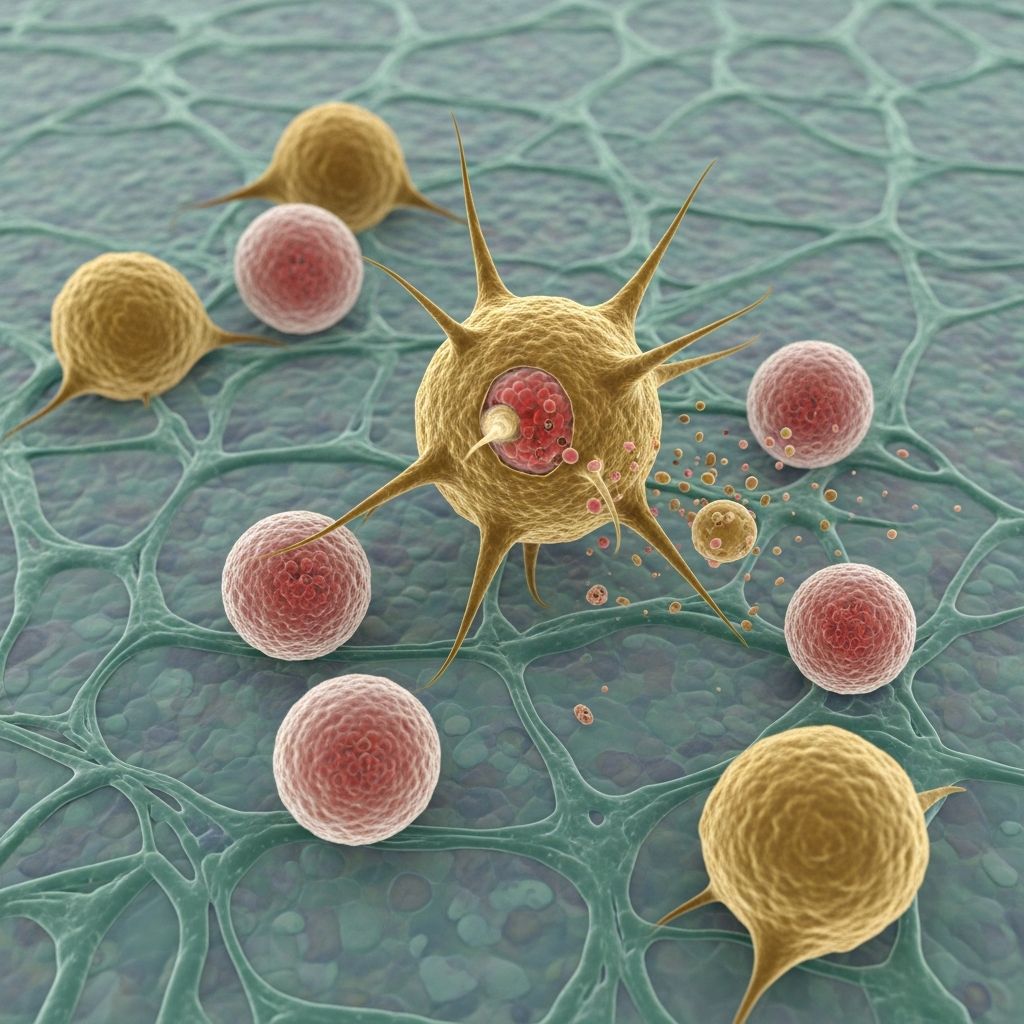
Cell-mediated immunity plays a pivotal role in defending dogs against intracellular pathogens, but when dysregulated, it triggers Type IV hypersensitivity reactions. These delayed-type responses involve T cells and macrophages rather than antibodies, leading to inflammation hours or days after exposure.
Foundations of Cell-Mediated Immunity in Canines
The canine immune system distinguishes between adaptive branches: humoral immunity via B cells and antibodies, and cell-mediated immunity driven by T lymphocytes. Cytotoxic T cells (CD8+) target virus-infected cells by releasing granzymes that induce apoptosis, sparing healthy tissue. Helper T cells (Th1) amplify this by secreting interferon-gamma (IFN-γ), activating macrophages.
Memory T cells ensure rapid responses upon re-exposure, underpinning vaccine efficacy. Dendritic cells direct this: DC1 subtypes promote Th1 pathways for intracellular threats, while DC2 favor antibody production. In dogs, this balance protects against viruses and certain bacteria but can misfire into hypersensitivity.
Mechanisms Behind Type IV Hypersensitivity
Type IV reactions classify as delayed hypersensitivity, peaking 48-72 hours post-antigen encounter. Sensitized T cells recognize haptens or antigens presented by major histocompatibility complex (MHC) class II on antigen-presenting cells. This recruits macrophages, releasing cytokines like TNF-α and IL-1, causing tissue damage through inflammation.
- Sensitization phase: Initial exposure primes memory T cells without immediate symptoms.
- Elicitation phase: Re-exposure activates CD4+ T cells, leading to mononuclear cell infiltration.
Unlike immediate allergies (Types I-III), no IgE or complement involvement occurs; it’s purely cellular. Studies in dogs show IFN-γ-secreting cells responding to viral peptides, highlighting T cell durability, though waning over months.
Common Manifestations in Dogs
Dogs exhibit varied Type IV disorders, often targeting skin, lungs, or organs.
Contact Dermatitis and Allergies
Environmental haptens like nickel in collars or plants trigger eczematous reactions. Lesions appear on paws or ventral abdomen, with erythema and vesicles evolving to lichenification. Patch testing confirms allergens.
Granulomatous Inflammation
Persistent antigens form granulomas: macrophages aggregate into epithelioid cells, sometimes with multinucleated giants. Canine examples include feline infectious peritonitis-like responses or fungal infections like blastomycosis.
| Disorder | Key Features | Common Triggers |
|---|---|---|
| Contact Dermatitis | Localized erythema, pruritus | Metals, chemicals, plants |
| Granulomatous Disease | Nodular lesions, organ involvement | Mycobacteria, fungi |
| Drug Reactions | Systemic rash, fever | Antibiotics, NSAIDs |
Autoimmune Skin Conditions
Pemphigus foliaceus involves autoantibodies but features T cell orchestration, causing pustules and crusts. Interface dermatitis sees basal cell damage from cytotoxic T cells.
Respiratory and Systemic Involvement
Lung lobes in beagles demonstrate localized cell-mediated responses post-immunization, with T cell influx paralleling antibody decline. Sarcoidosis-like syndromes or hypersensitivity pneumonitis from inhaled molds cause dyspnea and cough.
Systemic repercussions include immune-mediated hemolytic anemia extensions, where T cells destroy erythrocytes. Aberrant responses attack self-tissues, mimicking infections.
Diagnostic Approaches for Owners
Veterinarians employ intradermal testing for contactants, biopsy for granulomas revealing lymphocytic infiltrates, and flow cytometry for T cell subsets. IFN-γ ELISPOT assays detect antigen-specific cells, as in SARS-CoV-2 studies where only 22% retained responses long-term.
- Biopsy: Gold standard for histopathology.
- Serology: Rules out humoral parallels.
- Culture: Excludes infections.
Early differentiation from bacterial pyoderma prevents chronicity.
Treatment Strategies and Management
Immunosuppression targets T cell hyperactivity. Corticosteroids like prednisone suppress cytokine storms; cyclosporine inhibits IL-2, halting T proliferation.
| Therapy | Mechanism | Dosage Notes | Side Effects |
|---|---|---|---|
| Glucocorticoids | Reduce inflammation | 1-2 mg/kg daily, taper | Polyuria, iatrogenic Cushing’s |
| Cyclosporine | T cell signal block | 5 mg/kg BID | |
| Azathioprine | Purine synthesis inhibit | 2 mg/kg daily | Myelosuppression |
Allergen avoidance is cornerstone for contact cases. Supportive care includes antibiotics for secondary infections. Long-term, monitor with bloodwork.
Preventive Measures for Dog Owners
Minimize exposures: Use hypoallergenic bedding, rinse paws post-walks. Vaccinations bolster memory T cells against viruses. Nutritional support with omega-3s modulates Th1/Th2 balance.
Prognosis and Long-Term Outlook
With prompt intervention, many achieve remission. Chronic cases risk fibrosis, but 70-80% respond to combo therapy. Owner vigilance prevents flares.
Frequently Asked Questions (FAQs)
What triggers Type IV reactions in dogs?
Common culprits include metals, drugs, infections, and autoantigens, provoking T cell memory responses.
How does it differ from food allergies?
Food allergies are often Type I (immediate), IgE-mediated; Type IV is delayed, T cell-driven.
Can vaccines cause these reactions?
Rarely; they induce protective memory, but adjuvants might hypersensitize in predisposed dogs.
Is breed predisposition noted?
Yes, retrievers and shepherds show higher dermatologic incidences.
When to seek emergency care?
For facial swelling, dyspnea, or rapid lesion spread, indicating severe involvement.
Understanding Type IV reactions empowers owners to collaborate with vets for tailored care, enhancing life quality.
References
- A Comprehensive Study of Cellular and Humoral Immunity in Dogs… — PMC. 2024. https://pmc.ncbi.nlm.nih.gov/articles/PMC12016888/
- Comparison of cell-mediated and humoral immunity in the dog lung… — PubMed. 1986-10-01. https://pubmed.ncbi.nlm.nih.gov/3456402/
- Adaptive Immunity in Animals — MSD Veterinary Manual. 2026. https://www.msdvetmanual.com/immune-system/the-biology-of-the-immune-system/adaptive-immunity-in-animals
- Immune-Mediated Diseases — Purdue University College of Veterinary Medicine. N/A. https://vet.purdue.edu/hospital/small-animal/resources/immune-mediated-diseases.php
- Immunosuppressive Therapy — University of Missouri Veterinary Health Center. N/A. https://vhc.missouri.edu/small-animal-hospital/small-animal-internal-medicine/diseases-and-treatments/immunosuppressive-therapy/
Similar Articles








Read full bio of medha deb




