

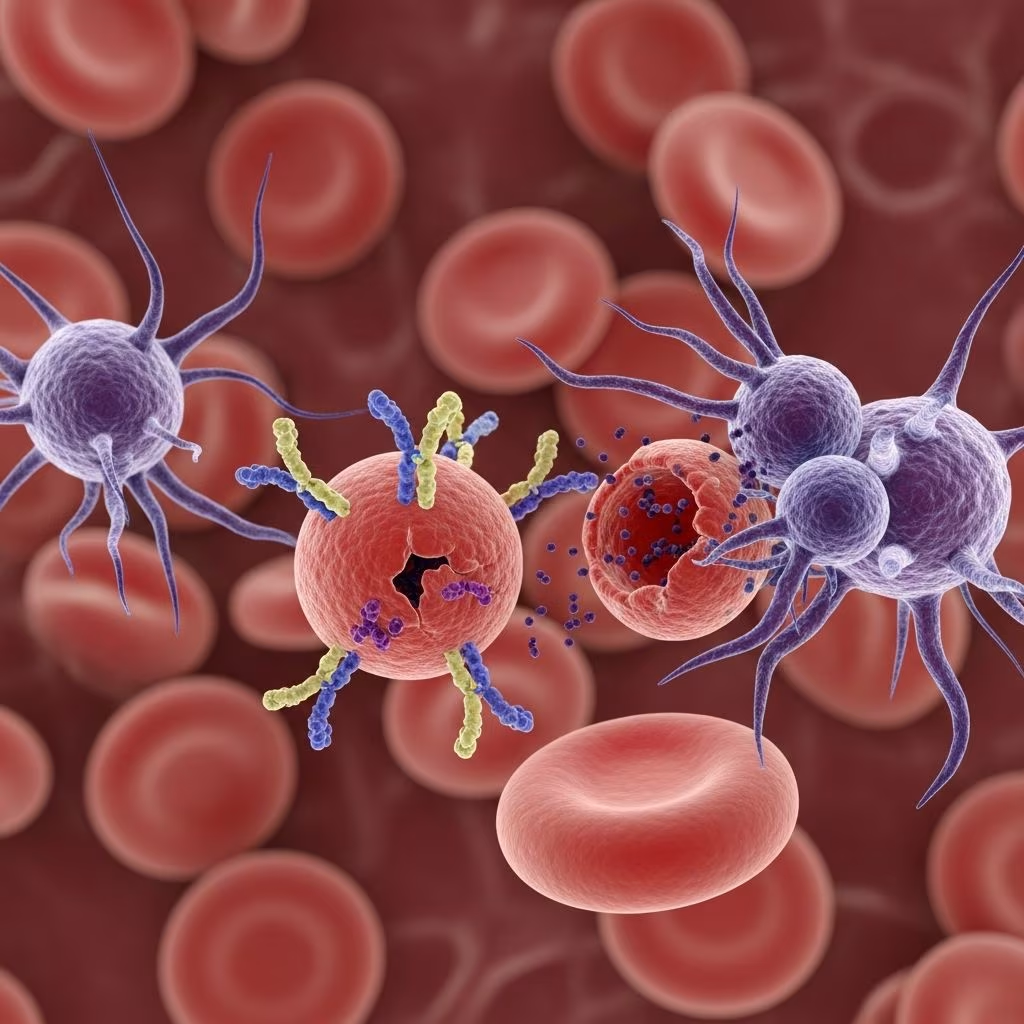
Antibody-driven assaults on a dog’s own cells define Type II hypersensitivity reactions, leading to destruction of red blood cells, skin layers, or other tissues. These conditions arise when the immune system mistakenly produces antibodies against self-antigens, triggering complement activation or phagocytosis that damages vital structures.
Fundamentals of Antibody-Mediated Cell Damage
In Type II reactions, immunoglobulins bind directly to cell surfaces or matrix components, marking them for elimination. This contrasts with other hypersensitivities by targeting fixed cellular elements rather than soluble allergens. Cytotoxic effects stem from antibody-dependent cellular cytotoxicity (ADCC), where natural killer cells or macrophages attack coated targets, or from classical complement pathway initiation causing membrane lysis.
The process often begins with a breakdown in T-cell suppression of B-cell activity. Factors like viral infections, vaccinations, or genetic predispositions disrupt self-tolerance, allowing autoantibody formation. For instance, IgG or IgM antibodies attach to erythrocyte membranes, leading to extravascular hemolysis in spleen or liver macrophages. In severe cases, intravascular lysis occurs via complement fixation, spilling hemoglobin into plasma.
Primary Blood-Related Disorders
Immune-mediated hemolytic anemia (IMHA) stands as the most frequent Type II manifestation in dogs, with antibodies coating red blood cells (RBCs) provoking their rapid clearance. Affected dogs exhibit sphere-shaped erythrocytes under microscopy, alongside hemoglobinuria and reticulocytosis in about one-third of cases. Coombs’ tests confirm IgG presence on RBCs in roughly 75% of patients, though negative results do not exclude the diagnosis.
- Symptoms include lethargy, pale gums, rapid breathing, and icterus from bilirubin buildup.
- Severity varies; non-regenerative anemia signals bone marrow suppression.
- Triggers encompass infections, drugs, or idiopathic autoimmunity.
Another critical syndrome involves Evans’ phenomenon, characterized by in-saline RBC agglutination, disseminated intravascular coagulation (DIC), and thrombocytopenia. Here, cold-reactive IgM antibodies cause direct clumping, evading standard Coombs’ detection. Laboratory hallmarks feature elevated fibrin degradation products and reduced antithrombin III.
Skin and Mucous Membrane Involvement
Cytotoxic interface dermatitis (CID) represents a spectrum where antibodies infiltrate epidermal junctions, recruiting cytotoxic T-cells and neutrophils. Conditions like pemphigus foliaceus feature autoantibodies against desmogleins in keratinocyte bridges, yielding pustules, crusts, and footpad hyperkeratosis. Biomarker studies reveal upregulated CXCL8 and CSF3R genes, driving neutrophil influx.
Discoid lupus erythematosus (DLE), or cutaneous lupus, shows interface dermatitis with basal cell vacuolation and IgG deposits. IFNG overexpression heightens keratinocyte apoptosis via JAK/STAT pathways. Epitheliotropic lymphoma mimics CID through TRAT1 elevation and T-cell dominance.
| Condition | Key Biomarkers | Cell Infiltrates | Clinical Signs |
|---|---|---|---|
| Pemphigus Foliaceus | CXCL8, CSF3R | Neutrophils | Pustules, crusts |
| Discoid Lupus | IFNG, CXCL10 | T-cells, B-cells | Ulcers, scaling |
| Epitheliotropic Lymphoma | TRAT1 | Cytotoxic T-cells | Erythema, plaques |
Neonatal and Reproductive Complications
Neonatal isoerythrolysis emerges when maternal IgG antibodies, sensitized by prior mismatched transfusions or fetal antigens, cross into colostrum and destroy puppy RBCs. Puppies present with jaundice, weakness, and hemoglobinuria within days of birth. Breeds like Quarter Horses show analogies, but canine cases demand blood typing before breeding.
Pure red cell aplasia (PRCA) involves antibodies blocking erythroid precursors, yielding non-regenerative anemia without hemolysis. Thymic influences or drugs precipitate this rare entity.
Diagnostic Approaches
Confirming Type II reactions requires multifaceted testing. Direct Coombs’ assay detects cell-bound immunoglobulins or complement, though saline agglutination tests cold antibodies separately. Flow cytometry phenotyping distinguishes CD4+ helper from CD8+ cytotoxic T-cells, aiding CID classification. CBC reveals spherocytosis, autoagglutination, or schistocytes in microangiopathic cases.
- Saline tube test for primary agglutinins.
- Antiglobulin test specifics: IgG, IgM, C3.
- Biopsy with immunofluorescence for skin lesions.
Advanced IHC identifies plasma cell IgG in CID tissues, while gene expression profiling spots IFNG or CXCL10 upregulation.
Treatment Protocols and Management
Immunosuppression forms the cornerstone, starting with high-dose glucocorticoids like prednisone at 2-4 mg/kg/day. Non-responders advance to azathioprine, cyclosporine, or mycophenolate. For Evans’ syndrome, immediate heparin and aspirin combat DIC, paired with cyclophosphamide to curb agglutinin production.
JAK inhibitors like oclacitinib target IFNG-driven DLE, showing promise in trials. IVIG serves refractory IMHA by blocking Fc receptors. Supportive care encompasses blood transfusions (cross-matched), oxygen therapy, and thromboembolism prophylaxis with clopidogrel.
- Initiate steroids promptly.
- Monitor PCV, platelets weekly.
- Taper immunosuppression over months.
Prognosis Factors
Survival hinges on early intervention; IMHA mortality exceeds 30% acutely, improving with combination therapy. DIC presence worsens outlook, demanding aggressive anticoagulation. Chronic CID responds variably to targeted biologics, with neutrophil-dominant pemphigus faring better than T-cell lymphomas.
Frequently Asked Questions
What triggers Type II reactions in dogs?
Common inciters include infections, vaccines, neoplasia, or genetics disrupting T-cell regulation.
How is IMHA distinguished from other anemias?
Spherocytes, positive Coombs’, and regenerative response post-therapy differentiate it.
Can neonatal isoerythrolysis be prevented?
Yes, via dam blood typing and avoiding breeding with incompatible sires.
Are there breed predispositions?
Yes, Springer Spaniels for IMHA, Collies for DLE.
What supportive care aids recovery?
Fluids, antioxidants like SAMe, and low-fat diets reduce oxidative stress.
Preventive Strategies for Owners
Vigilance post-vaccination or infection aids early detection. Routine CBC screening in at-risk breeds proves invaluable. Nutritional support with omega-3s modulates immunity without suppression.
References
- A review of immunologic diseases of the dog — PMC. 2020-03-15. https://pmc.ncbi.nlm.nih.gov/articles/PMC7119806/
- Evaluating biomarkers in canine cytotoxic interface dermatitis — Frontiers in Veterinary Science. 2024-10-01. https://www.frontiersin.org/journals/veterinary-science/articles/10.3389/fvets.2024.1471590/full
- Hypersensitivity Diseases in Animals – Immune System — MSD Veterinary Manual. 2023-01-01. https://www.msdvetmanual.com/immune-system/immunologic-diseases/hypersensitivity-diseases-in-animals
- Flow Cytometry — Immunophenotyping in Dogs — Bio-Rad Antibodies. 2022-05-10. https://www.bio-rad-antibodies.com/flow-cytometry-immunophenotyping-in-dogs.html
- A scoping review of autoantibodies as biomarkers for canine diseases — Journal of Veterinary Internal Medicine. 2021-11-01. https://onlinelibrary.wiley.com/doi/full/10.1111/jvim.16392



