

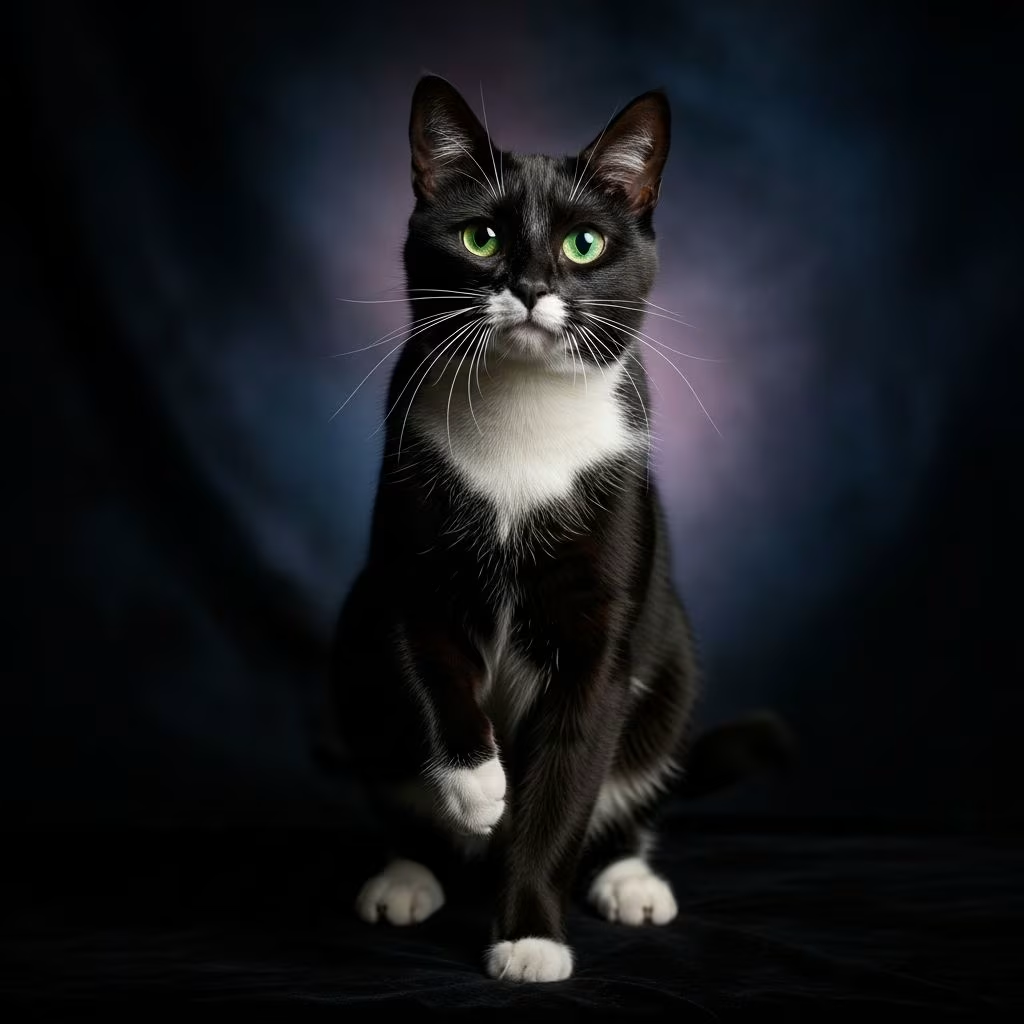
Tuxedo cats, with their sharp black coats accented by crisp white patches, evoke the sophistication of formal evening wear. These bicolor felines, often called “tuxies,” captivate owners worldwide through their striking appearance and spirited demeanor. Not a distinct breed but a coat pattern found across many domestic cats, tuxedo markings feature predominantly black fur with white on the chest, paws, belly, and sometimes the chin, mimicking a bow tie and dress shirt.
The Genetic Blueprint of Dapper Coats
The hallmark tuxedo pattern arises from specific genetic mechanisms involving the KIT gene, which regulates melanocyte migration during embryonic development. This gene, when mutated, causes “white spotting,” preventing pigment cells from reaching certain areas, resulting in white patches on an otherwise solid black (or sometimes orange or gray) coat. Unlike calico or tortoiseshell patterns linked to sex chromosomes and predominantly female, tuxedo cats occur equally in males and females because the white spotting is not sex-linked.
Genetic inheritance is versatile: a kitten can inherit the pattern even if neither parent displays it fully, as long as black (or alternate color) and white spotting genes are present. The piebald effect stems from inhibited melanin production in targeted zones, creating the formal “suit” illusion. Recent studies clarify that sluggish cell migration isn’t the sole cause; faulty KIT gene replication disrupts uniform pigment distribution.
- Key Genetic Factors: KIT mutation for white spotting; recessive agouti allele for solid color base (no tabby stripes).
- Pattern Variations: Classic black-white; less common gray-white or orange-white “tuxedos.”
- Embryonic Origin: Melanocytes fail to populate all follicles, leaving random white zones.
Ancient Lineage and Cultural Reverence
While pinpointing exact origins is challenging due to their non-breed status, tuxedo-like cats trace to early domestication from wildcats like Felis silvestris lybica, around 9,000 years ago in the Near East. Artistic depictions in ancient Egyptian tombs and hieroglyphs show bicolor felines, though myths exaggerate their dominance—nearly 70% claims are overstated, as most depicted cats were tabby-coated wild ancestors, not modern tuxedos.
Ancient Egyptians revered cats broadly for pest control and as symbols tied to goddess Bastet, mummifying them and portraying them in art. Tuxedo patterns likely emerged naturally through genetic variation post-domestication. Contrary to lore, no evidence supports exclusive worship of black-and-white cats; surviving dark bronze statues may fuel misconceptions. Over millennia, these cats spread globally, appearing in folklore from Europe to Asia as bringers of luck.
Iconic Tuxedo Felines in History and Pop Culture
Tuxedo cats have rubbed shoulders with luminaries, cementing their cultural cachet. Composer Ludwig van Beethoven owned a tuxedo companion that prowled his Vienna apartment. Playwright William Shakespeare shared his home with one, inspiring feline references in works. Physicist Sir Isaac Newton credited his tuxedo cat for companionship during experiments. Even U.S. President Bill Clinton brought Socks, a famed tuxedo tabby, to the White House in 1993, where the cat became a media darling.
| Famous Tuxedo Cat | Owner | Notable Detail |
|---|---|---|
| Socks | Bill Clinton | White House resident; frequent photo ops. |
| Unnamed | Beethoven | Muse during symphony composition. |
| Puck | William Shakespeare | Inspired theatrical cat imagery. |
| Unnamed | Sir Isaac Newton | Lab companion amid discoveries. |
In modern media, Felix the Cat (1919 cartoon) epitomizes the tuxedo look with his mischievous grin. T.S. Eliot’s Old Possum’s Book of Practical Cats popularized “Jellicle cats” in the UK for black-and-white felines, later adapted into Cats the musical. These icons highlight tuxies’ enduring charm.
Personality Traits and Behavioral Quirks
Tuxedo cats often display bold, vocal personalities—playful, intelligent, and sometimes sassy. Owners report higher energy levels, curiosity, and dog-like loyalty compared to solid-color cats. They thrive on interaction, excelling in puzzle toys and fetch games. Vocalizations range from chirps to demanding meows, earning them “talkative” reputations.
- Common Traits: Affectionate yet independent; agile hunters; social butterflies.
- Myths Busted: No scientific link to superior intelligence, but anecdotal evidence suggests attentiveness.
- Activity Level: High; prone to zoomies and vertical leaps.
Gender balance allows diverse temperaments, though individuals vary by breed background (e.g., calm British Shorthair tuxies vs. energetic American Shorthairs).
Breeds That Sport the Tuxedo Look
The pattern graces numerous breeds, enhancing their appeal:
- American Shorthair: Rugged, adaptable with classic tuxedo.
- British Shorthair: Plush coat; teddy-bear face.
- Maine Coon: Giant, sociable fluffballs.
- Scottish Fold: Folded ears; gentle demeanor.
- Turkish Van/Angora: Swimming enthusiasts with white bases.
Some standards (e.g., Siamese) disallow it, preserving solid colors.
Health Insights and Longevity
Tuxedo cats mirror domestic averages: 12-15 years lifespan. No pattern-specific diseases, but white patches raise deafness risk if linked to dominant white genes (rare in tuxies). Monitor for obesity, dental issues common in talkers. Breeds like Maine Coons may carry HCM; regular vet checks advised.
Care Essentials for Your Tuxie
Provide high-protein diet for coat sheen; brush weekly (more for longhairs). Enrich environment with scratching posts, perches. Socialize early for well-adjusted adults. Spay/neuter prevents marking behaviors.
- Grooming: Minimal for shorthairs; focus on paws, ears.
- Exercise: 30+ minutes daily play.
- Vet Tips: Annual exams; dental cleanings.
Frequently Asked Questions
Are tuxedo cats a specific breed?
No, it’s a coat pattern occurring in many breeds and mixes.
Why do tuxedo cats have white paws and chests?
White spotting gene (KIT mutation) inhibits pigment in those areas.
Do tuxedo cats have unique personalities?
Often bold and vocal, but varies individually.
Can tuxedo kittens come from non-tuxedo parents?
Yes, via inherited color and spotting genes.
Are tuxedo cats prone to health problems?
No more than averages; watch for breed-specific issues.
Embracing the Tuxedo Charm
From genetic marvels to historical stardom, tuxedo cats blend elegance and vivacity. Their pattern, born of ancient evolution, continues enchanting modern homes. Whether lounging like a gent or pouncing playfully, tuxies offer timeless companionship.
References
- The Fascinating World of Tuxedo Cat Personality — Basepaws. 2023. https://basepaws.com/blog/the-fascinating-world-of-tuxedo-cat-personality
- 10+ Facts About Tuxedo Cats [Personality, History, Health & More] — Rawz Natural Pet Food. 2024. https://rawznaturalpetfood.com/tuxedo-cats/
- Fascinating Facts About Tuxedo Cats! — YouTube (Pet-related channel). 2023. https://www.youtube.com/watch?v=cMMr01EWLd0
- The Tuxedo Cat — Cat in the Box LLC. 2024. https://thecatisinthebox.com/blogs/kitty-contemplations/the-tuxedo-cat
- Bicolor cat — Wikipedia. 2025. https://en.wikipedia.org/wiki/Bicolor_cat



