

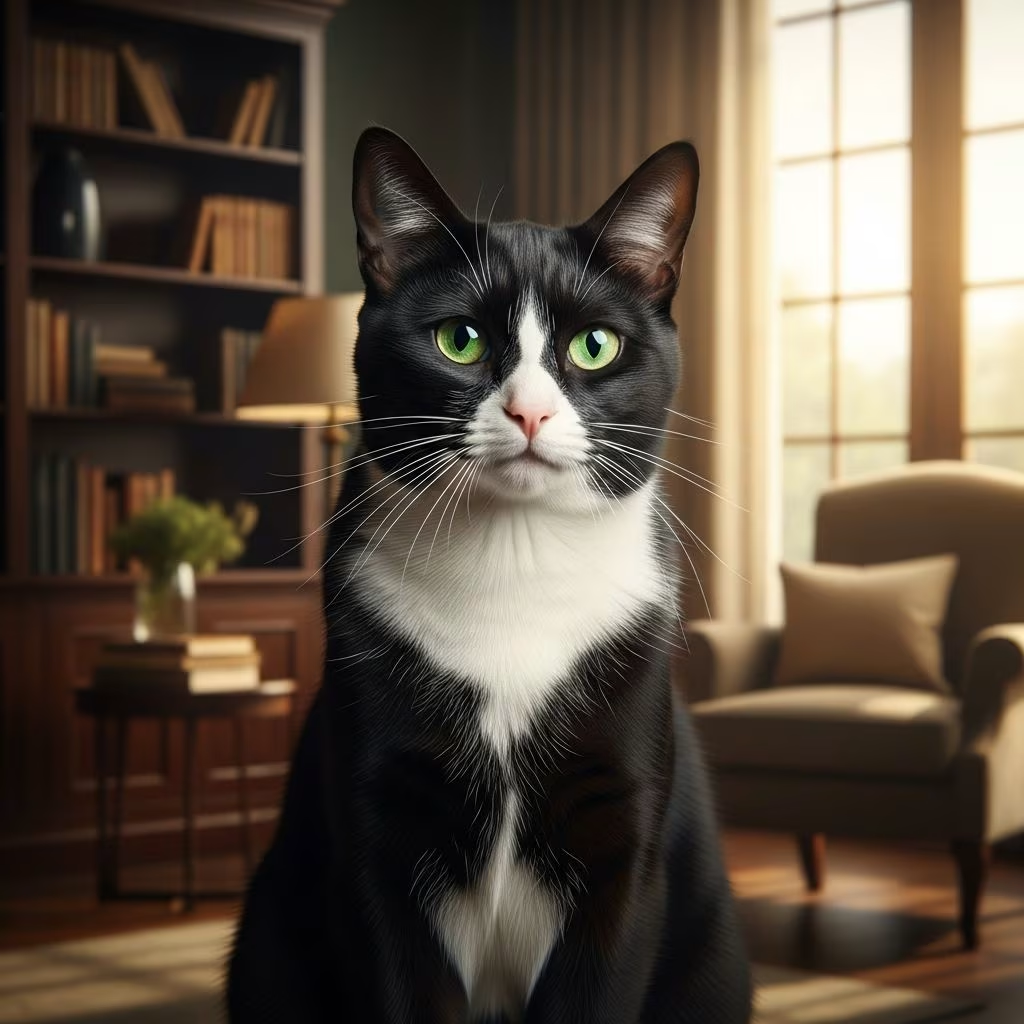
Tuxedo cats, with their sharp black coats accented by crisp white patches, captivate cat enthusiasts worldwide. Far from rare, these bicolor beauties appear in roughly 30-50% of domestic cats, owing to a dominant genetic trait that spreads easily through populations.
Understanding the Tuxedo Pattern
The tuxedo coat mimics a formal suit, featuring a predominantly dark body—usually black—with white accents on the chest, paws, belly, throat, and often the face. This pattern arises not from breed specifics but from the white spotting gene (S), which suppresses pigment in targeted areas during fetal development.
Geneticists classify tuxedo as a low-to-medium white spotting grade, distinguishing it from higher-grade patterns like the Van (mostly white with colored head and tail). The S gene’s dominance means even one copy produces visible white, explaining its ubiquity in mixed-breed cats.
- Classic Markers: White ‘shirtfront’ on chest, ‘socks’ on paws, inverted ‘V’ on face.
- Variations: Subtle goatees under chin, mutton-chop whiskers, or tail tips.
- Color Flexibility: Traditional black-white, but also blue (diluted black), red, or tabby bases.
How Common Are Tuxedo Cats Really?
Contrary to myths of exclusivity, tuxedo patterns thrive in shelters and streets globally. Surveys from cat registries indicate 20-40% of random-bred cats display bicolor traits, with tuxedos comprising a significant share due to the pattern’s appeal in breeding.
In the U.S., organizations like the Cat Fanciers’ Association note tuxedos in 25% of domestic shorthair entries. Europe and Turkey report similar frequencies, with ancient art suggesting persistence over millennia.
| Region | Estimated Tuxedo Prevalence | Source Factors |
|---|---|---|
| United States | 25-35% | Shelter data, breed shows |
| Europe | 30-40% | Historical records, street cats |
| Ancient Egypt | ~70% in art | Tomb depictions |
| Global Mixed Breeds | 20-50% | Genetic surveys |
This accessibility stems from no breeding barriers—tuxedos emerge across purebreds like American Shorthairs, Maine Coons, and Persians, plus countless mongrels.
Genetic Foundations of the Tuxedo Look
At the core lies the piebald or white spotting allele (S), inherited autosomally. Homozygous SS cats show more white; heterozygous Ss yield classic tuxedos. Paired with black (B) genes, it creates the signature contrast.
Embryonic migration of melanocytes (pigment cells) falters under S influence, leaving white patches. This random process explains marking uniqueness—no two tuxedos match precisely.
Breeds amplify traits: Turkish Angoras display finer whites, while British Shorthairs boast denser blacks. Yet, the pattern transcends breed, uniting diverse lineages.
A Timeless Legacy in Feline History
Tuxedo cats trace to early domestication around 9,000 years ago in the Near East, where African wildcats (Felis lybica) interbred with varied mutants. Egyptian reverence peaked 3,000 BCE, with 70% of tomb cats tuxedo-patterned, symbolizing protection.
Medieval Europe chronicled them in manuscripts; Victorian Britain adored their ‘dressed’ elegance. The 1920s Felix the Cat cartoon immortalized the archetype, boosting popularity.
- Notable Figures: Trixie, loyal Tower of London visitor (1801).
- Tuxedo Stan: Halifax mayoral candidate advocating spay/neuter (1980s).
- White House: Occasional residents like Socks under Clinton.
Today, they symbolize sophistication across cultures, from Turkish nobility to American pop icons.
Distinctive Physical Attributes
Beyond coats, tuxedos share medium builds: sleek musculature, rounded heads, and luminous eyes in gold, green, copper, or odd shades. Noses stay pink amid black fur; tails balance gracefully.
Size varies by ancestry—petite from Siamese crosses, robust from Maine Coons—but all exude poise. Fur feels soft, shedding moderately.
Common Physical Features
- Body: Lean to muscular, 8-15 lbs.
- Eyes: Vibrant hues, almond-shaped.
- Face: Mask-like black with white blaze/mustache.
- Paws: White mittens or boots.
- Chest: Broad white bib or bowtie.
Unraveling Tuxedo Personalities
“Tuxitude” captures their bold, witty essence: intelligent explorers blending play with cuddles. Owners report heightened smarts—problem-solving doors, vocal demands—surpassing averages by anecdotal 200% in some claims.
Males energize with hunts; females nurture protectively. Social butterflies, they bond dog-like, chatty with families, tolerant of kids/dogs.
| Trait | Description | Breed Influence |
|---|---|---|
| Intelligence | High; quick learners | Universal |
| Sociability | Outgoing, loyal | Maine Coon boost |
| Playfulness | Energetic, curious | Turkish Angora |
| Affection | Lap-loving, vocal | American Shorthair |
| Independence | Balanced, not clingy | Mixed breeds |
Variations tie to lineage; purebreds inherit breed quirks atop pattern.
Health and Longevity Insights
Averaging 12-20 years, tuxedos mirror domestics, resilient sans breed extremes. Monitor for obesity, dental issues; whites risk deafness (minor in low-spot).
Vet care mirrors standards: vaccines, neuter, balanced diet. Their vitality shines with enrichment.
Care Essentials for Tuxedo Owners
Groom weekly to tame sheds; provide puzzles for minds, vertical spaces for athletes. Multi-cat homes thrive; they mediate peaceably.
- Diet: High-protein kibble/wet food.
- Exercise: Interactive toys, scratching posts.
- Vet: Annual checkups, flea prevention.
Tuxedo Cats in Culture and Media
From Felix’s mischief to Disney’s Figaro, tuxedos steal scenes. Literature hails them as omens of luck; modern memes celebrate ‘tuxitude.’
Frequently Asked Questions
Are tuxedo cats a specific breed?
No, it’s a coat pattern appearing in many breeds and mixes.
Do tuxedo cats have unique health issues?
Generally healthy; low white spotting minimizes risks like deafness.
Why are tuxedo cats so popular?
Their elegant looks, smarts, and friendly vibes draw admirers.
Can tuxedo patterns be bred selectively?
Yes, via S gene carriers, common in fanciers.
How do I adopt a tuxedo cat?
Shelters abound with them—check local rescues.
Tuxedo cats blend accessibility with allure, proving rarity lies in hearts won, not numbers found.
References
- The Fascinating World of Tuxedo Cat Personality — Basepaws. 2023. https://basepaws.com/blog/the-fascinating-world-of-tuxedo-cat-personality
- Tuxedo Cat | Traits, Appearance, General, Character — Vetamerikan. 2024. https://www.vetamerikan.org/our-best-friends/cat-types/tuxedo-cat
- History of Tuxedo Cats – Taking a Look at Their Past — Catster. 2023. https://www.catster.com/lifestyle/history-of-tuxedo-cats/
- Bicolor cat — Wikipedia (referencing genetic standards). 2025. https://en.wikipedia.org/wiki/Bicolor_cat
- Tuxedo Cats Personality, Lifespan And Facts — Cats.com. 2024. https://cats.com/tuxedo-cat



