

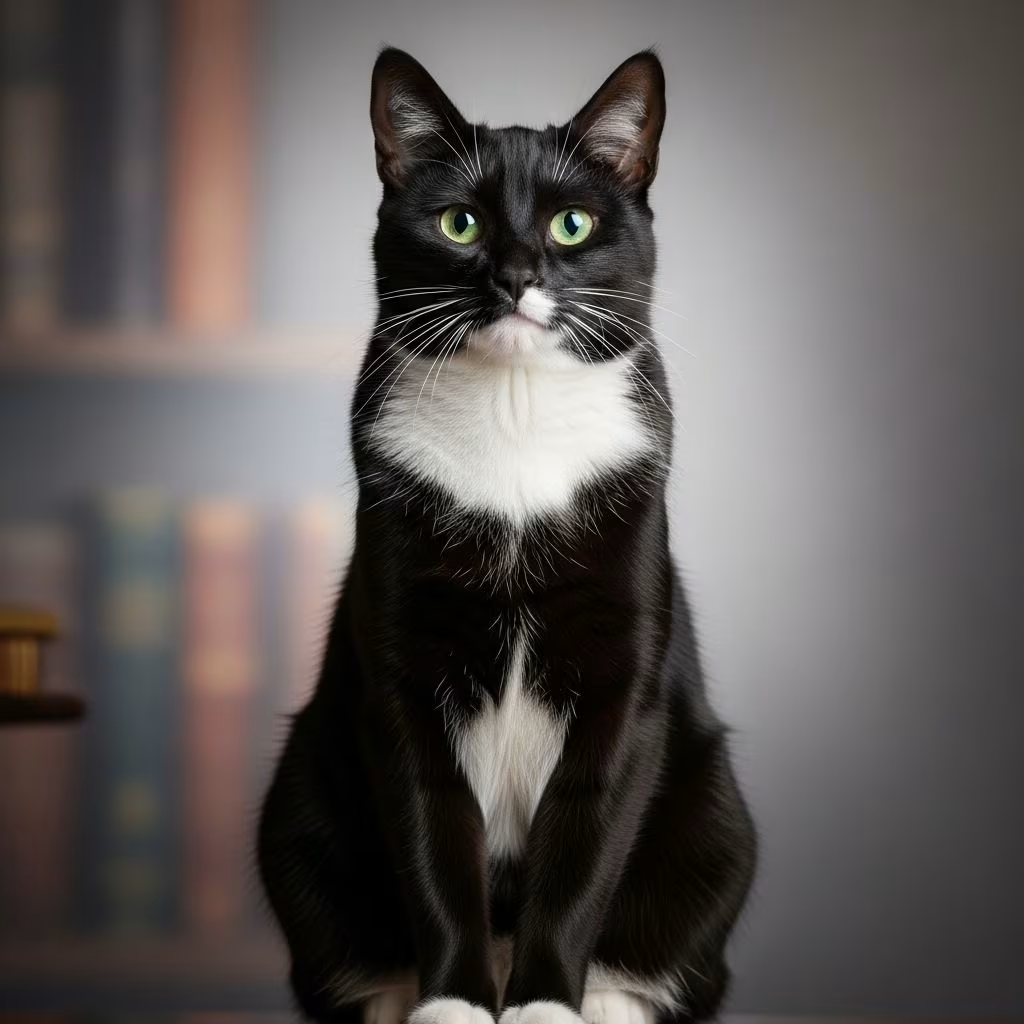
What Exactly Is a Tuxedo Cat?
When discussing tuxedo cats, it’s crucial to understand a fundamental concept: tuxedo is not a cat breed itself, but rather a distinctive coat pattern that can appear across numerous different cat breeds. The term “tuxedo” comes from the resemblance of the black and white markings to formal evening wear, complete with what many describe as a “mustache” marking on some cats’ faces.
This bicolor or piebald coat pattern is the result of specific genetic factors rather than breed lineage. The distinctive appearance results from a faulty KIT gene that controls the development of pigmentation in a cat’s fur. This gene doesn’t function at a typical rate, leading to incomplete pigmentation coverage and creating the signature white patches against a predominantly black coat.
Unlike calico and tortoiseshell cats, which are predominantly female, tuxedo cats can be either male or female, making them more common in the general feline population.
Visual Characteristics and Appearance Variations
Tuxedo cats present a remarkable variety of appearances, even though they share the fundamental black and white coloring. The specific manifestation of the tuxedo pattern depends largely on the underlying breed genetics.
Coat Pattern Distribution
The classic tuxedo pattern features a predominantly black body with distinctive white markings appearing in predictable locations. These white areas typically include:
- The chest and belly region, often extending down the front of the body
- The paws, which display what many call “sock-like” white markings
- The face, where white may appear around the nose and eyes, creating a mask-like appearance
- The tail tip, though not all tuxedo cats display white at the tail’s end
However, not all tuxedo cats follow this classic distribution. Some display more asymmetrical or erratic patterns, sometimes called “cow cats,” which feature non-symmetrical patches that differ from the formal tuxedo aesthetic. Others are “mitted,” meaning they are entirely black except for white paws.
It’s important to note that true tuxedo cats are always black and white; gray and white patterns, while visually similar, technically fall outside the classic tuxedo definition.
Fur Length and Texture
The tuxedo pattern appears in both short-haired and long-haired cat breeds. The specific coat structure depends entirely on the cat’s underlying breed rather than the tuxedo pattern itself. Some tuxedo cats have soft, shiny short coats, while others possess luxurious long fur. This variation in coat length means grooming requirements can differ significantly between individual tuxedo cats.
Facial Features and Eye Color
Tuxedo cats often feature striking facial characteristics that make them particularly appealing. Many display a distinctive white “mask” pattern across their face. The head shape varies depending on the cat’s breed, as does their overall build and body structure.
Eye color in tuxedo cats tends toward vibrant hues. Research suggests a connection between the gene responsible for the tuxedo coat and eye color. Most tuxedo cats display bright green, golden green, bluish-green, gold, or yellowish eyes. Green appears to be the most commonly observed eye color among tuxies, creating a beautiful contrast against their dark fur.
Genetic Foundations of the Tuxedo Pattern
Understanding the genetics behind tuxedo coloring provides insight into why this pattern appears across so many different breeds. The tuxedo pattern results from what’s known as the bicolor gene, a genetic inheritance that passes down through a cat’s lineage.
Early scientific theories attributed the bicolored markings to sluggish genes that moved too slowly to cover the cat’s entire coat during development. However, contemporary research has identified more precise genetic mechanisms. Scientists now recognize that a faulty KIT gene—responsible for determining whether white will appear in a cat’s coat—causes the tuxedo pattern.
This gene functions at a slower-than-normal rate, meaning it cannot multiply or spread pigmentation across the entire coat. As a result, certain areas remain unpigmented, displaying as white, while other areas retain full black coloration.
Importantly, the bicolor gene affects only external appearance; it does not directly determine a cat’s personality, intelligence, or behavioral traits. This genetic distinction is essential when adopting a tuxedo cat—personality characteristics depend on breed rather than coat pattern.
Which Cat Breeds Most Commonly Display Tuxedo Markings
While the tuxedo pattern can theoretically appear in many domestic cat breeds, certain breeds produce tuxedo cats with notably higher frequency. Three breeds in particular stand out as frequent bearers of the tuxedo pattern:
American Shorthair
The American Shorthair ranks among the most common tuxedo cat breeds. These cats are characterized as easygoing, loving, and playful. While they enjoy interactive play sessions, American Shorthairs lack the intense energy levels of some other breeds like Bengals. They make excellent family companions, particularly for households seeking a balanced temperament without overwhelming activity demands.
Other Prominent Tuxedo-Producing Breeds
Beyond the American Shorthair, the tuxedo pattern appears commonly in several other recognized breeds. Each brings its own temperament and care requirements to the tuxedo pattern, creating diversity in personality even among cats with identical markings.
Personality and Behavioral Traits
A frequent misconception holds that tuxedo cats share consistent personality traits due to their coloring. However, since tuxedo is a coat pattern rather than a breed, personality depends entirely on the cat’s underlying breed genetics.
That said, tuxedo cat owners anecdotally report certain behavioral tendencies that appear relatively common across the pattern:
Social and Affectionate Nature
Many tuxedo cats demonstrate remarkable affection and loyalty toward their human families. They frequently seek attention, follow their guardians throughout the house, and enjoy lap time, though some prefer staying close without remaining seated on laps indefinitely. Notably, many tuxedo cats greet their humans at the door with enthusiasm similar to dogs.
Vocal Communication
Tuxedo cats are frequently described as talkative, engaging their human companions with vocalization more than some other coat patterns. This tendency toward communication makes them interactive household members who actively participate in family life.
Intelligence and Curiosity
Tuxedo cats often exhibit heightened intelligence and curiosity. They demonstrate interest in exploring new spaces, investigating unfamiliar objects, and potentially learning tricks. This intelligence, while often seen as admirable, can also mean these cats are motivated to open doors, access cabinets, and generally investigate their environment thoroughly.
Activity Levels and Athleticism
Many tuxedo cats possess natural athleticism, making them excellent jumpers and quick runners. Their playful nature provides entertainment but also necessitates adequate mental and physical stimulation to prevent boredom-related behavior issues.
Friendliness and Social Compatibility
Tuxedo cats generally get along well with children, visitors, and other household members. They’re typically not aggressive and readily accept social interaction across various contexts.
Important Distinctions: Why Breed Matters More Than Pattern
While tuxedo cats may share anecdotal personality traits, individual cats vary considerably based on their specific breed. For example, intelligence levels don’t depend on the tuxedo pattern; rather, they reflect breed characteristics. Turkish Angoras are known for intelligence regardless of coat color, while Siamese, Abyssinians, and Bengals rank among the smartest breeds despite not typically displaying black-and-white coloring.
Similarly, affection levels don’t depend on color markings. A tuxedo cat’s personality, energy level, and behavioral tendencies will closely mirror those of its underlying breed rather than its distinctive pattern.
Health Considerations for Tuxedo Cats
Since tuxedo cats derive from various different breeds, no specific health ailments apply universally to all tuxies. Health concerns depend on the cat’s underlying breed genetics rather than the coat pattern itself.
However, veterinary and genetic research continues exploring whether the KIT gene responsible for tuxedo markings carries any broader health implications. To date, the tuxedo pattern itself doesn’t appear associated with particular health vulnerabilities.
Caring for Your Tuxedo Cat
Proper care for a tuxedo cat depends primarily on its breed. Coat maintenance, for instance, varies significantly depending on whether the cat has short or long hair. Similarly, exercise requirements, diet, and healthcare needs reflect breed-specific considerations rather than color-based requirements.
When adopting a tuxedo cat, research its specific breed thoroughly to understand appropriate care protocols, expected health concerns, and personality characteristics. This breed-focused approach provides far more reliable information than focusing solely on the tuxedo appearance.
Frequently Asked Questions About Tuxedo Cats
Is a tuxedo cat a specific breed?
No. Tuxedo refers to a coat pattern, not a breed. The pattern can appear in many different cat breeds.
Are all tuxedo cats male or female?
Unlike calico and tortoiseshell cats that are predominantly female, tuxedo cats can be either male or female.
What causes the tuxedo pattern?
The pattern results from a faulty KIT gene that controls pigmentation and doesn’t function at a normal rate, leaving certain areas unpigmented while others retain full coloration.
Do tuxedo cats have specific personality traits?
While owners anecdotally report common traits like friendliness and intelligence, personality depends on the cat’s underlying breed rather than its coat pattern.
What breeds most commonly have tuxedo patterns?
American Shorthairs are among the most common tuxedo cat breeds, though the pattern appears across many different breeds.
Are tuxedo cats more intelligent than other cats?
Intelligence depends on breed, not coat pattern. Tuxedo cats are no inherently smarter than cats with other coat patterns, though certain breeds are known for high intelligence.
Conclusion
Tuxedo cats captivate cat lovers with their distinctive formal appearance and charming personalities. However, understanding that tuxedo represents a coat pattern rather than a breed is essential for prospective owners. When considering adopting a tuxedo cat, focus your research on the specific breed rather than the color pattern alone. This approach ensures you select a cat with temperament, energy level, and care requirements suited to your household. By appreciating both the aesthetic appeal of the tuxedo pattern and the breed-specific characteristics that truly define individual cats, you’ll be better prepared to provide excellent care and enjoy a rewarding relationship with your formal-looking feline companion.
References
- Tuxedo Cat | Traits, Appearance, General, Character — Veterinary Association. Accessed January 29, 2026. https://www.vetamerikan.org/our-best-friends/cat-types/tuxedo-cat
- 10+ Facts About Tuxedo Cats [Personality, History, Health & More] — Rawz Natural Pet Food. Accessed January 29, 2026. https://rawznaturalpetfood.com/tuxedo-cats/
- Tuxedo Cat 101: What to Know Before Adopting One — YouTube. Accessed January 29, 2026. https://www.youtube.com/watch?v=VFgZJfdkCQ0
- Tuxedo cat personality: how this dapper cat stands out — PetScreening. Accessed January 29, 2026. https://www.petscreening.com/blog/tuxedo-cat-personality
- Tuxedo Cats Personality, Lifespan And Facts — Cats.com. Accessed January 29, 2026. https://cats.com/tuxedo-cat



