

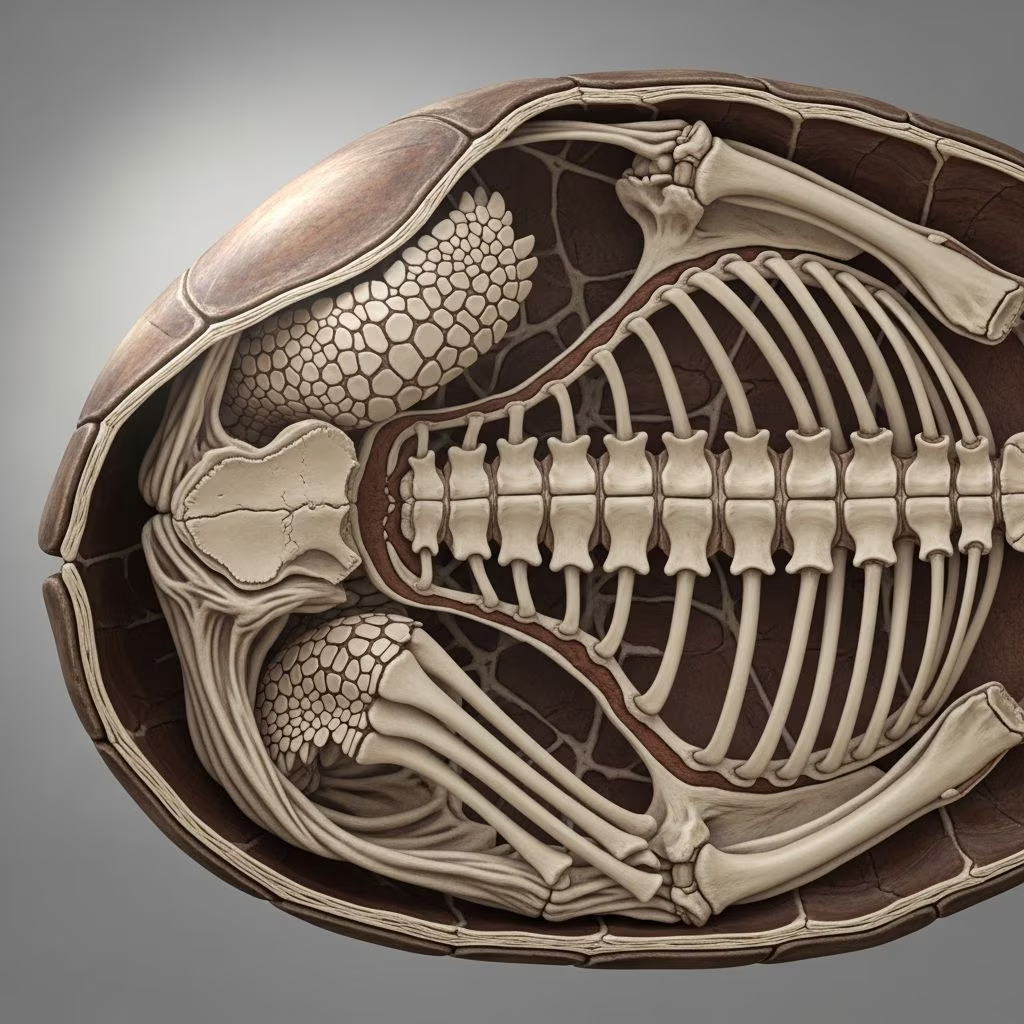
Understanding the Turtle Shell: A Complete Anatomical Guide
The turtle shell is one of nature’s most fascinating and complex structures. Unlike what many believe, a turtle cannot simply crawl out of its shell because the shell is actually an integral part of the turtle’s skeleton. The shell has evolved over more than 200 million years to become a cohesive unit composed of ribs, vertebrae, and the sternum that form one of the most effective protective systems in the animal kingdom. This remarkable adaptation combines skeletal, dermal, and epidermal tissues to create a structure that is both protective and flexible enough to support the turtle’s unique physiology.
The Two Main Sections of the Turtle Shell
The turtle shell is divided into two primary sections that work together to provide complete protection and structural support. Understanding these two components is essential to appreciating the complexity of turtle anatomy.
The Carapace: The Dorsal Shell
The carapace is the dorsal, or upper, portion of the turtle shell that covers the turtle’s back. This section is constructed from the turtle’s broadened and fused ribs, which are fused together with dermal bone through a process called ossification. The spine and expanded ribs of the turtle merge with dermal plates beneath the skin to form this hard, protective shell. The carapace is covered on the outside by scutes, which are horny plates composed of keratin—the same material found in human fingernails and hair. These scutes provide an additional layer of protection, shielding the shell from scrapes, bruises, and other environmental damage.
The structure of the carapace varies among different turtle species based on their habitat and lifestyle. For example, aquatic turtles like the green sea turtle have shells that are dorsal-ventrally flattened, which provides a hydrodynamic advantage in water and allows them to move more efficiently through their aquatic environment. In contrast, terrestrial turtles typically have more domed carapaces that provide better protection from predators and environmental hazards on land.
The Plastron: The Ventral Shell
The plastron is the nearly flat, ventral (bottom) portion of the shell that forms the belly of the turtle. This section is composed of the rib cage and sternum of the turtle, creating a protective underbelly. The plastron is made up of nine bones, including the two epiplastra at the anterior border, which are homologous to the clavicles found in other tetrapods. Like the carapace, the plastron is also covered with scutes that provide protection and support.
The plastral scutes are arranged symmetrically and join along a central seam that runs down the middle of the plastron. The relative lengths of these seam segments are unique to each species and can be used to help identify different turtle species. This distinctive pattern makes the plastron particularly useful for species identification and scientific study.
The Skeletal Composition of the Turtle Shell
The skeletal framework of the turtle shell is a marvel of evolutionary adaptation. The bones of the shell are named according to standard vertebrate elements, reflecting their evolutionary origins.
Carapace Bone Structure
The carapace consists of several distinct bone components that work together to create its protective structure:
- Eight Pleurals on Each Side: These bones are a combination of ribs and fused dermal bone that form the lateral portions of the carapace.
- Nuchal Bone: Located at the anterior of the shell, this single bone sits at the forward edge of the carapace.
- Paired Periphals: A series of twelve paired peripheral bones extend along each side of the shell.
- Pygal Bone: Positioned at the posterior of the shell, this bone forms the rear section of the carapace.
- Suprapygal: Nested behind the eighth pleurals, this bone provides additional structural support.
- Neural Bones: Situated between each pleural, these bones are always present but not always visible in all turtle species.
Plastron Bone Structure
The plastron’s skeletal elements are largely paired and organized into distinct sections:
- Anterior Section: Two epiplastra at the front, followed by the hyoplastra that enclose the singular entoplastron. The hyoplastron contains the anterior bridge strut.
- Posterior Section: Two hypoplastra containing the posterior bridge strut, with a pair of xiphiplastra at the rear.
Some turtle species, particularly those in the Pelomedusid family, have additional bones called mesoplastra located between the carapace and plastron in the bridge area. These extra bones provide additional structural integrity where the two shell sections meet.
The Scute System: Keratinous Armor
Overlying the bony elements of the shell are scutes, which are made of keratin and are similar to horn or nail tissue. The scute system provides an important additional layer of protection and helps distribute stress across the shell surface.
Carapace Scutes
The carapace features a distinctive arrangement of scutes that includes:
- Five Vertebral Scutes: Located in the center of the carapace, running down the middle.
- Four Pairs of Costal Scutes: Positioned on either side of the vertebral scutes.
- Twelve Pairs of Marginal Scutes: Forming the edge of the shell around its perimeter.
Plastron Scutes
The plastron features a different arrangement of scutes that progresses from head to tail:
- Two Gular Scutes: Located at the front of the plastron.
- Pectoral Scutes: Found across the chest area.
- Abdominal Scutes: Positioned in the middle section.
- Femoral Scutes: Located near the rear legs.
- Anal Scutes: Positioned at the very rear of the plastron.
A notable variation exists in Pleurodiran turtles, which have an intergular scute between the gulars at the front, giving them a total of 13 plastral scutes compared to the 12 found in Cryptodiran turtles.
The Epidermis: A Critical Protective Layer
Beyond the skeletal and scute components, the turtle shell includes an important epidermis layer that is vital to the shell’s overall strength and functionality. This layer is composed of cells that form an outer protective barrier for the entire shell structure.
Research has shown that the epidermis layer can be as thin as two to four cells in some areas, yet this seemingly minimal thickness provides significant benefits. The epidermis allows the shell to experience deformation without sustaining permanent damage, providing the shell with additional support and flexibility. This layer is present in both the carapace and plastron sections, with the epidermis being notably thicker in critical areas that experience more stress and pressure. A thicker epidermis allows the shell to withstand higher stress forces without experiencing permanent deformation or critical failure.
Shell Functions Beyond Protection
While protection is the most obvious function of the turtle shell, this remarkable structure serves multiple critical purposes for turtle survival and physiology.
Support and Structure
The shell functions as an external skeleton that provides structural support for the turtle’s internal organs. This is particularly important for aquatic turtles, where the shell helps them maintain proper buoyancy and body shape in water. The overlapping arrangement of scutes and bony plates provides increased structural integrity, allowing the shell to distribute weight and stress evenly across its surface.
Metabolic and Physiological Functions
In some turtle species, the shell plays a surprising role in oxygen storage and metabolism. When turtles are submerged and unable to access oxygen for extended periods, their shells act as mineral storage centers. The calcium and other minerals stored in the shell are utilized to buffer the lactic acid produced during anaerobic respiration. When this occurs, the minerals bind with lactic acid to form calcium lactate, which is then deposited directly into the turtle’s skeleton and shell. Once the turtle returns to the surface and can resume aerobic respiration, the calcium lactate is slowly released from the shell and skeletal system back into the bloodstream and eventually expelled from the turtle’s body at a safe rate. This adaptation allows some turtles to effectively hold their breath for extended periods using their shells as a physiological buffer system.
Adaptations for Different Environments
Different turtle species have evolved shell structures specifically adapted to their environments. Leatherback sea turtles, for example, have a uniquely specialized shell structure that differs significantly from other turtle species. Unlike other sea turtle species, the leatherback’s spine is not fused with its carapace, and it lacks a traditional bony shell. Instead, it is covered with leathery skin supported by a mosaic of tiny bones. These specialized adaptations allow leatherbacks to dive to depths of up to 3,000 feet below the ocean surface, where the tremendous water pressure would crush a less flexible shell structure. This demonstrates how shell evolution has created diverse solutions to environmental challenges.
Shell Variations Across Turtle Species
Not all turtle shells are identical. Different species have evolved unique characteristics based on their specific environmental needs and lifestyle requirements. Some box turtle species, for instance, have evolved a hinge mechanism on their plastron that allows them to completely close their shell for protection. This hinge is controlled by muscles located beneath the bridge of the shell, giving these turtles an additional defensive advantage against predators.
The patterns and shapes of scutes vary considerably among species, providing a reliable method for identifying different turtle types in the field. Marine biologists use the distinctive scute patterns on the carapace to quickly identify sea turtles when observed at sea, demonstrating how shell characteristics serve as important diagnostic features in wildlife research and conservation efforts.
The Bridge: Connecting the Two Sections
The carapace and plastron are connected by an area called the bridge, which plays a crucial role in the structural integrity of the entire shell. The suture between the bridge and the plastron is called the anterior bridge strut on the front section and the posterior bridge strut on the rear section. These struts provide critical attachment points and load-bearing support where the two main shell sections meet, ensuring that the shell functions as a single, unified protective structure.
Frequently Asked Questions
Q: Can a turtle leave its shell?
A: No, a turtle cannot leave its shell. The shell is an integral part of the turtle’s skeleton, fused to the spine, ribs, and other skeletal elements. It is as much a part of the turtle as your ribcage is part of you.
Q: What are scutes made of?
A: Scutes are made of keratin, the same material that comprises human fingernails, hair, and animal horns. These horny plates provide protection and help distribute stress across the shell surface.
Q: How long have turtles had shells?
A: Turtle shells have evolved over more than 200 million years, making them one of the most successful evolutionary adaptations in vertebrate history. This extended development period has resulted in the highly specialized structures we see today.
Q: Why are some turtle shells flattened?
A: Aquatic turtle species, such as sea turtles, have evolved flattened shells that are dorsal-ventrally compressed. This hydrodynamic design allows them to move more efficiently through water compared to the more domed shells of terrestrial species.
Q: What is the difference between the carapace and plastron?
A: The carapace is the upper, dorsal portion of the shell that covers the turtle’s back, while the plastron is the lower, ventral portion that forms the belly. Together, these two sections provide complete protection for the turtle’s body.
Q: Do all turtles have the same number of scutes?
A: No, different turtle species have different numbers and arrangements of scutes. For example, Pleurodiran turtles have 13 plastral scutes, while Cryptodiran turtles have 12. These variations help scientists identify different turtle species.
References
- Turtle shell — Wikipedia. Accessed 2025-11-28. https://en.wikipedia.org/wiki/Turtle_shell
- What the shell? — Zoo Atlanta. https://zooatlanta.org/what-the-shell/
- Sea Turtle Anatomy — Turtle Time, Inc. https://turtletime.org/sea-turtles/anatomy/
- Sea Turtle Anatomy — ECOMAR. https://www.ecomarbelize.org/anatomy.html



