

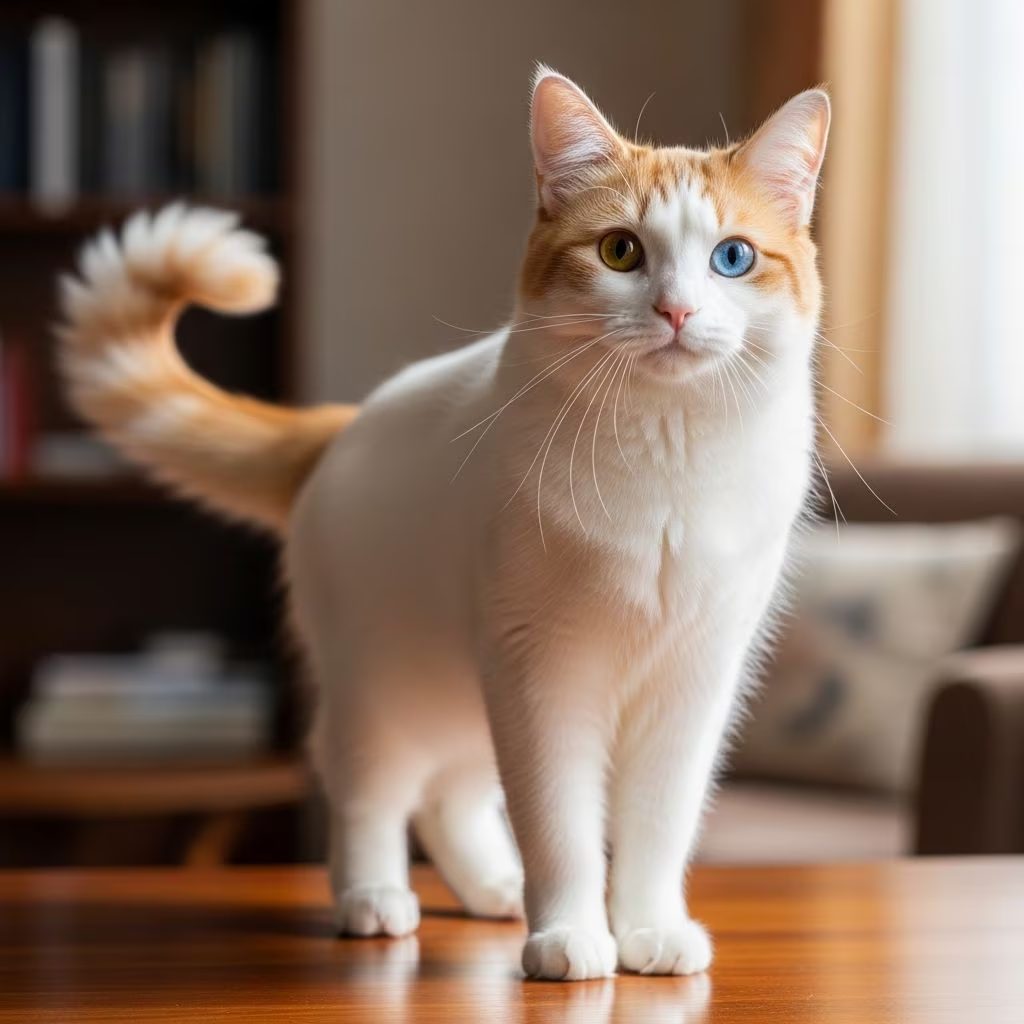
The Turkish Van stands out as a captivating semi-longhaired breed celebrated for its predominantly white coat accented by vivid markings on the head and tail, earning it the nickname “swimming cat” due to its remarkable affinity for water. Originating from the harsh landscapes around Lake Van in eastern Turkey, this robust feline combines ancient heritage with a playful, intelligent demeanor ideal for active households.
Origins and Historical Journey
Tracing back thousands of years, the Turkish Van is among the world’s oldest natural cat breeds, with evidence suggesting its presence in the Armenian highlands and eastern Anatolia as early as 6,000 B.C.. Artifacts depicting similar white cats with colored extremities have been unearthed, hinting at their longstanding role in regional folklore and daily life. The breed’s development was shaped by the extreme climates of the Lake Van region, where scorching summers and frigid winters fostered a water-repellent coat and sturdy physique.
In modern times, the breed’s global recognition began in 1955 when British photographers Laura Lushington and Sonia Halliday received two cats during a trip to Turkey. These unrelated felines, featuring the signature Van pattern, were brought to the UK, mated, and formed the foundation stock. Lushington pursued further imports to establish breed standards, leading to official acknowledgment by the Governing Council of the Cat Fancy (GCCF) in 1969 as the Turkish Van, distinguishing it from the Turkish Angora. The International Cat Association (TICA) followed in 1985, and the Cat Fanciers’ Association (CFA) in 1988. Today, in Turkey, these cats are national treasures protected by institutions like the Turkish College of Agriculture and Ankara Zoo.
Distinctive Physical Features
Turkish Vans are large, muscular cats that mature slowly, reaching full size between three and five years. Males typically weigh 10-20 pounds, females 7-12 pounds, with a broad chest, long body, and strong legs supporting their athletic build. Their head is wedge-shaped with large, oval eyes in shades of amber, blue, or odd-eyed combinations, often linked to the piebald white spotting gene causing partial leucism.
The hallmark Van pattern requires at least 80% white coat coverage, with color confined to the head and a plush, plumed tail—never exceeding 20% of the body. Accepted colors include black, red, blue, cream, and tabby variants, though solid white specimens (Van Kedisi) exist without markings. The semi-longhair coat boasts a cashmere-like texture: single-layered with no undercoat, it repels water and dirt while shedding seasonally—short in summer, lush in winter with protective paw tufts.
| Feature | Description |
|---|---|
| Size | Large; 7-20 lbs, matures 3-5 years |
| Coat | Semi-long, water-repellent, Van pattern |
| Eyes | Oval, amber/blue/odd-eyed |
| Build | Muscular, broad-chested |
Personality and Behavioral Traits
Renowned for high energy and intelligence, Turkish Vans are lively companions who thrive on interaction and mental stimulation. Affectionate yet independent, they bond deeply with family, often shadowing their favorite human while enjoying pets but resisting prolonged cuddles. Their constantly wagging tails signal good moods rather than agitation, adding to their clownish charm.
- Playful Explorers: These cats love games, puzzles, and fetch, showcasing dog-like loyalty.
- Water Enthusiasts: Unlike most felines, Vans eagerly swim, splash in baths, or hunt fish, thanks to their waterproof coat.
- Social Butterflies: High attention needs make them poor candidates for solitude; they flourish with kids, dogs, and other pets.
- Mischievous Cleverness: Intelligent pranksters who open doors, hide items, or demand playtime.
Expect a lifespan of 11-15 years with proper care, though their active nature requires secure environments to channel boundless energy.
Grooming and Everyday Maintenance
Despite the semi-long coat, grooming is straightforward due to minimal undercoat. Weekly brushing prevents mats, distributes oils, and captures seasonal shed fur, with daily sessions during spring/fall transitions. Baths are rare—Vans self-clean adeptly and relish water play, simplifying hygiene.
Nail trims every 10-14 days, weekly ear checks, and monthly teeth brushing maintain health. Their active lifestyle keeps them lean, but provide climbing trees, interactive toys, and scratching posts to prevent boredom-induced mischief.
Health Considerations and Wellness
Robust genetics yield few breed-specific issues, but vigilance for hypertrophic cardiomyopathy (HCM), hip dysplasia, and hearing loss (tied to white coats/blue eyes) is advised. Annual vet exams, balanced diet, and dental care promote longevity past 13 years.
Genetic diversity from natural origins minimizes inbreeding risks, but reputable breeders screen for HCM via ultrasounds. At-home monitoring includes weight checks, gum inspection, and play assessments for mobility.
Bringing a Turkish Van into Your Home
Rare status means limited availability; seek TICA/CFA-registered breeders or rescues emphasizing health testing. Kittens cost $800-$2000+, reflecting purity and lineage. Prepare with tall perches, water features, and enrichment to match their vigor.
Adopting adults offers known temperaments, easing integration. Early socialization ensures adaptability to multi-pet homes.
Fun Facts and Cultural Impact
- Van Kedisi: Solid white variant revered in Turkey.
- Piebald Gene: Drives the 80/20 color ratio and eye variability.
- National Symbol: Protected as living heritage.
- Slow Maturers: Playful youth extends into adulthood.
Frequently Asked Questions (FAQs)
Do Turkish Vans like water?
Yes, uniquely among cats, they adore swimming and playing in water due to their water-resistant coat.
How big do Turkish Van cats get?
They are large, with males up to 20 pounds and full maturity at 3-5 years.
Are Turkish Vans good with children?
Absolutely—their gentle, playful nature suits families.
What’s the Van pattern?
A white body (80%+) with color only on head and tail, from the piebald gene.
How often to groom a Turkish Van?
Weekly brushing suffices; daily in shedding seasons.
References
- Turkish Van Cat Guide — CWVC Limited. 2018-01-03. https://www.cwvet.co.uk/blog/2018/01/03/turkish-van-cat-guide/
- Turkish Van — Wikipedia. N/A. https://en.wikipedia.org/wiki/Turkish_Van
- The Truth About The Turkish Van Cat — Cat Wisdom 101. N/A. https://catwisdom101.com/truth-about-van-cats/
- Turkish Van & Turkish Vankedisi — The Governing Council of the Cat Fancy. N/A. https://www.gccfcats.org/getting-a-cat/choosing/cat-breeds/turkish-van-turkish-vankedisi/
- Turkish Van — The International Cat Association (TICA). N/A. https://tica.org/breed/turkish-van/
- Turkish Van Breed Information — Basepaws. N/A. https://basepaws.com/cat-breeds/turkish-van
- Turkish Van — The Cat Fanciers’ Association (CFA). N/A. https://cfa.org/breed/turkish-van/



