

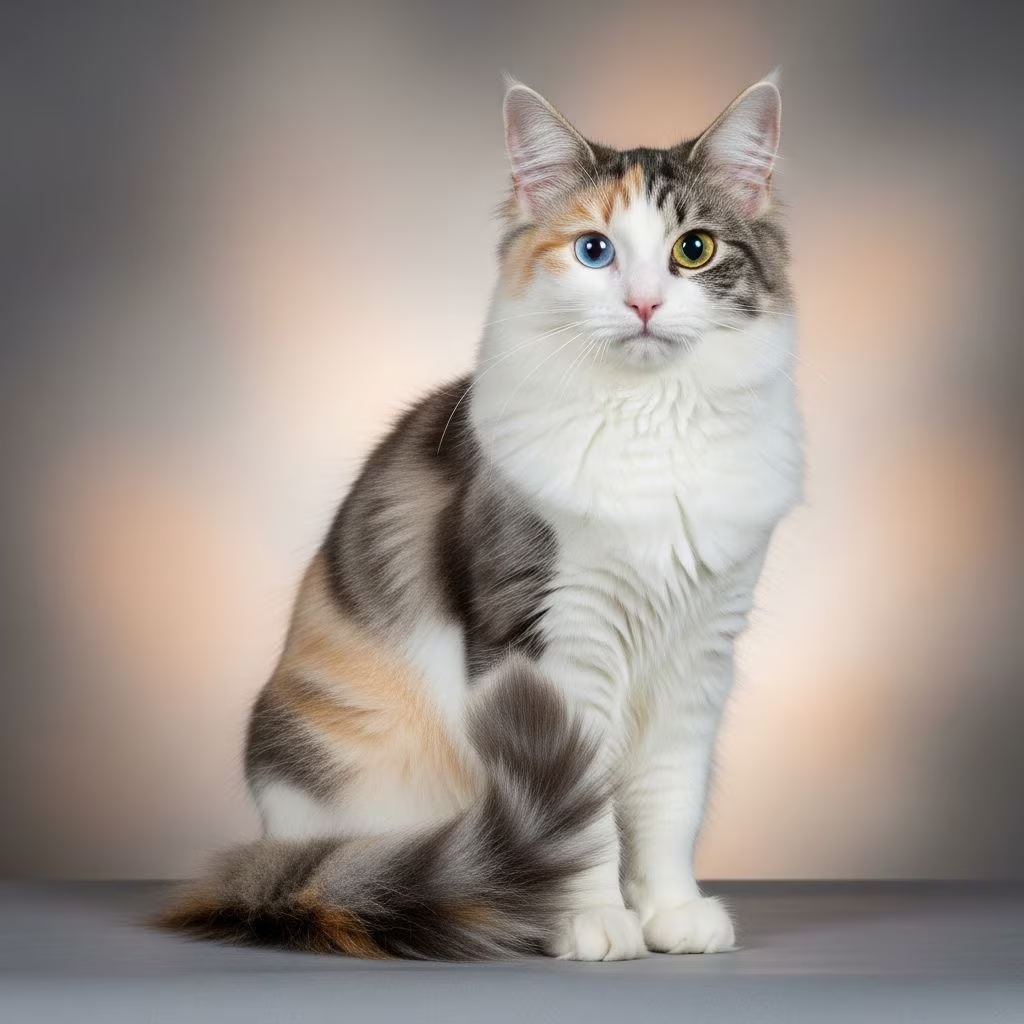
The Turkish Angora is an ancient breed renowned for its elegant, silky coat and playful personality. While the pure **white Turkish Angora** is the most iconic, this breed dazzles in a wide spectrum of colors and patterns, from solid hues to intricate tabbies and multicolored calicos. Understanding these variations helps enthusiasts appreciate the breed’s diversity and select the perfect companion.
Originating from Turkey, Turkish Angoras were once exclusively white, but modern breeding has expanded their palette while adhering to standards that exclude colors like chocolate, lilac, or pointed patterns indicative of hybridization. This article explores **15 Turkish Angora cat colors and patterns**, their characteristics, and care considerations, drawing from breed registries like CFA and TICA.
The 15 Turkish Angora Cat Colors & Patterns
Turkish Angoras exhibit an astonishing range of coat colors, each with unique base tones, markings, nose leather, and eye colors. Here’s a detailed breakdown:
1. White
The **pure white** Turkish Angora remains the breed’s hallmark, prized for its lustrous, silky fur. These cats often have vivid blue, green, or odd-colored eyes. However, their light coat makes them susceptible to sunburn and skin cancer, particularly on ears, nose, and eyelids where fur is sparsest. Owners should apply pet-safe sunscreen and limit sun exposure.
2. Black
Solid **black** Turkish Angoras feature a deep, glossy ebony coat from root to tip. Their nose leather and paw pads are black, complementing copper or golden eyes. This color offers a striking contrast to the breed’s fine-boned elegance.
3. Blue
**Blue** (diluted black) Angoras have a pale blue-ivory base with deep blue markings. The nose leather and paw pads are old rose, creating a soft, harmonious look. Eyes are typically copper, enhancing their gentle appearance.
4. Red
**Red** Turkish Angoras boast a vibrant, even red base and deeper red markings. Brick-red nose leather and paw pads pair with amber eyes, exuding warmth and vitality.
5. Cream
**Cream** is a pale, warm tone with darker cream markings. Pink nose leather and paw pads suit their soft demeanor, often with green or gold eyes.
6. Silver
**Silver tabby** is a standout, with a pure pale silver base and jet-black markings. Brick-red nose and green eyes make this pattern especially eye-catching on the Angora’s long coat. The reverse triangle head and slicked-back ears confirm the breed.
7. Brown
**Brown tabby** displays a rich copper-brown base with black markings. Black or brown nose leather and pads, paired with green eyes, give a wild, exotic vibe.
8. Calico
**Calico** patterns blend three colors, typically black, red, and white-dominant patches. Any tri-color combo qualifies, showcasing the breed’s genetic versatility. Nose and pads vary by dominant hues.
9. Dilute Calico
**Dilute calico** softens calico tones to blue (dilute black), cream (dilute red), and white or silver-gold. This pastel version is rarer and equally charming.
10. Blue-Cream
**Blue-cream**, a dilute tortoiseshell, mixes blue and cream without white. One blue face side and one cream is ideal. Nose leather patches rose to blue.
11. Solid Color
Beyond white, **solid colors** include black, blue, red, and cream—uniform from root to tip. These showcase the Angora’s silky texture without patterns.
12. Bicolor
**Bicolor** cats pair any color with white, like black-and-white or blue-and-white. White ideally covers feet, legs, chest, muzzle, and belly, with an inverted V on the face.
13. Tabby
**Tabby** patterns mimic wild cats with an ‘M’ on the forehead. Variants include classic, mackerel, spotted, and ticked in brown, silver, blue, red, or cream. Owners note tabbies as intelligent yet aloof.
14. Smoke
**Smoke** colors like red smoke have white bases with deeply tipped hairs (e.g., red). Calico smoke adds black/red patches; dilute versions use blue/cream. Nose leather matches the tips.
15. Shaded
**Shaded** patterns feature white bases shading to mantle colors: blue-shaded silver, red-shaded cameo, tortoiseshell (black/red), or blue-cream. Rose or matching nose/pads, with blue eye outlines desired.
Turkish Angora Colors And Markings
Beyond basics, Turkish Angoras display specialized markings:
- Odd-Eyed: One blue eye and one green/gold/amber—highly prized, especially in whites.
- Tabby Whites: Tabby patterns with white bib, paws, belly (one-third white ideal).
- Cameo: Off-white base with red markings; cream cameo uses darker cream.
- Blue-Silver: Pale bluish-silver base, deep blue markings, rose nose/pads.
- Patched Tabbies: Include cream patches, e.g., blue-silver patched.
Eye colors range widely: blue (sky to sapphire), green (gooseberry to emerald), amber, or odd-eyed. CFA standards emphasize no ghost tabby markings on smokes/shades as cats mature. TICA accepts all traditional colors equally.
Care Tips for Turkish Angora Colors
Different colors influence care:
- White Cats: Use UV-protective sunscreen; monitor for skin issues.
- Long Coats: Weekly brushing prevents mats, regardless of color.
- Light Colors (Silver, Cream): Regular bathing maintains sheen.
- Dark Colors (Black, Brown): Less shedding visible but same grooming.
All Angoras are active, loving, and hypoallergenic-adjacent due to single coats. Feed high-protein diets for coat health.
Turkish Angora Breed Standards on Colors
Key registries define acceptability:
| Registry | Accepted Colors | Excluded |
|---|---|---|
| CFA | All except chocolate, lilac, pointed | Himalayan patterns |
| TICA | All traditional | None specified beyond hybrids |
| General | Solids, tabbies, particolors | Outcross signs |
These ensure purebred integrity while celebrating diversity.
Frequently Asked Questions (FAQs)
What is the most common Turkish Angora color?
The **pure white** coat is most iconic and common.
Are all Turkish Angora colors accepted in shows?
Most yes, except chocolate, lilac, pointed per CFA.
Do color patterns affect personality?
No direct link, but tabbies are often described as aloof.
Which color is rarest?
**Blue-cream** and odd-eyed whites are among the rarest.
Can Turkish Angoras have odd eyes?
Yes, highly prized: one blue, one other color.
How do I care for a white Angora’s coat?
Apply sunscreen, brush weekly, avoid peak sun.
References
- Turkish Angora Cat Colors – Cat Breeds info — Cat-Breeds-Info.com. Accessed 2026. https://www.cat-breeds-info.com/cat-colors-turkish-angora-cats.html
- 15 Turkish Angora Cat Colors & Patterns (With Pictures) — Catster. Accessed 2026. https://www.catster.com/lifestyle/turkish-angora-cat-colors/
- Turkish Angora Breed Standard — Cat Fanciers’ Association (CFA). Accessed 2026. https://cfa.org/breed/turkish-angora/
- Turkish Angora — The International Cat Association (TICA). Accessed 2026. https://tica.org/breed/turkish-angora/



