

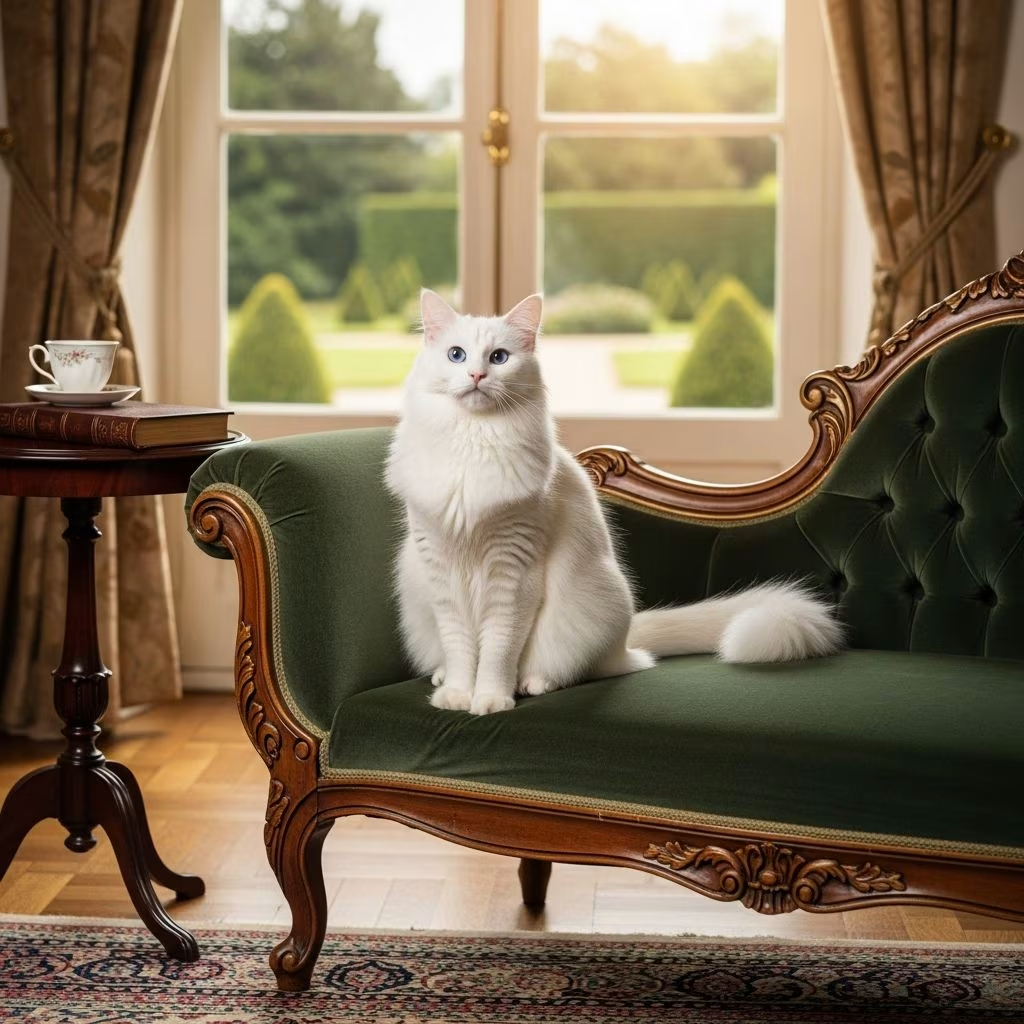
When Disney’s animated classic The Aristocats premiered in 1970, audiences fell in love with Duchess, the refined white mother cat navigating Paris with grace and sophistication. While the film never explicitly identifies her breed, the character design and personality traits point unmistakably to one of the world’s most elegant and ancient cat breeds: the Turkish Angora. This connection between animated character and real-world feline has captivated cat enthusiasts for decades, inspiring many to learn more about the breed’s distinctive characteristics and fascinating history.
Ancient Origins and Historical Journey
The Turkish Angora represents one of the oldest naturally occurring cat breeds with documented ancestry spanning centuries. The breed’s name derives from Ankara, an ancient city in Anatolia that is now Turkey’s capital. Historical evidence suggests that Turkish Angoras were imported to the region long ago by the Tartars and eventually became recognized as a true national treasure of Turkey.
The breed’s international prominence grew significantly during the 17th century when European nobility became enchanted with these elegant felines. Specimens were imported to Europe, where they became particularly celebrated in France. The French aristocracy embraced Turkish Angoras with such enthusiasm that the breed dominated the salons of high society, establishing itself as a symbol of wealth, refinement, and cultured taste. This historical association with European nobility provides perfect context for understanding why Duchess, as the beloved pet of Madame Adelaide Bonfamille, a retired opera singer, would be represented as this particular breed.
The breed’s influence extended beyond France. Turkish Angoras traveled to Portugal, where they interbred with European wildcats, contributing to the development of modern European cat populations. Roman expansion further facilitated the breed’s spread across the continent, reaching as far as England. Despite their beauty and prestige, Turkish Angoras experienced challenging periods throughout history, particularly during the Middle Ages when superstitions led to their persecution.
Physical Characteristics That Define Elegance
The Turkish Angora’s appearance embodies aristocratic refinement in every detail. The breed is characterized by a distinctly long, slender body supported by fine, muscular structure that conveys grace and athleticism simultaneously. This elegant physique contributes to their natural, flowing movements that appear almost balletic in their fluidity.
One of the breed’s most striking features is its silky, medium-length coat that cascades beautifully along the body. The texture is notably soft and flows with a natural luster that catches light beautifully. While white remains the most iconic and recognized coloring for the breed—particularly associated with Duchess—Turkish Angoras actually come in various colors and patterns, sometimes displaying multi-colored combinations. However, the pristine white coat with sapphire-blue eyes represents the quintessential Turkish Angora appearance that captures public imagination.
Turkish Angoras possess another distinguishing feature: their high, plumed tail that seems to express their aristocratic bearing. This tail carries itself with natural pride and sophistication, often held in an elegant position that emphasizes the cat’s refined demeanor. Combined with their alert, intelligent expression and fine facial features, Turkish Angoras present an unmistakably noble appearance that perfectly suits a character like Duchess.
Behavioral Traits and Personality Characteristics
Beyond physical beauty, Turkish Angoras exhibit personality characteristics that align remarkably well with Duchess’s portrayal in The Aristocats. These cats demonstrate exceptional intelligence and quick learning ability, suggesting they possess sophisticated cognitive capacities. Turkish Angoras show strong social inclinations and genuine devotion to their families, becoming deeply attached to their human companions.
The breed is known for its graceful and elegant movement—they navigate their environment with purposeful poise rather than the typical feline playfulness. Despite their refined demeanor, Turkish Angoras maintain a gentle yet assertive personality that balances affection with independence. They demonstrate natural maternal instincts, making them devoted and protective parents, much like Duchess is portrayed caring for her three kittens in the film.
Turkish Angoras also showcase remarkable adaptability to different living situations and social contexts. This flexibility, combined with their intelligence and social nature, makes them responsive companions who thrive in households where they receive attention and mental stimulation. They are affectionate without being overly demanding, maintaining a dignified composure while still engaging warmly with their families.
Why Duchess Perfectly Represents the Turkish Angora Breed
The character design of Duchess embodies nearly every characteristic associated with authentic Turkish Angoras. Her pristine white coat, sapphire-blue eyes, and slender, graceful frame reflect the breed’s physical standards. More importantly, her personality—elegant, devoted, intelligent, and protective—captures the essence of Turkish Angora temperament.
Duchess’s role as the pet of Madame Adelaide Bonfamille, a wealthy retired opera singer living in a Parisian mansion, aligns perfectly with the breed’s historical associations with European aristocracy and high society. Her refined manners, appreciation for music and culture, and dignified bearing reflect qualities traditionally associated with Turkish Angoras in European salons. The gold, jeweled collar she wears—studded with diamonds—emphasizes her status as a valued companion of wealth and refined taste, consistent with how Turkish Angoras have historically been treasured by nobility.
The animated portrayal also captures the breed’s devotion to family and maternal instincts through Duchess’s caring relationship with Marie, Berlioz, and Toulouse. Her attempts to encourage her kittens to develop into proper members of society reflect the gentle guidance Turkish Angoras naturally provide.
Comparison Table: Duchess Character Traits vs. Turkish Angora Breed Standards
| Characteristic | Duchess (Character) | Turkish Angora Breed |
|---|---|---|
| Coat Color | Pure white | Primarily white, various colors possible |
| Eye Color | Sapphire blue | Typically blue, green, or amber |
| Body Type | Slender, graceful | Long, muscular, elegant |
| Personality | Refined, devoted, intelligent | Affectionate, smart, social |
| Maternal Nature | Caring, protective parent | Strong maternal instincts |
| Social Tendencies | Gracious, family-devoted | Highly social, family-oriented |
The Broader Significance of Breed Selection in Character Design
The choice to design Duchess as a Turkish Angora demonstrates thoughtful character development in animated filmmaking. The breed’s historical association with European nobility provided authentic cultural context for a story set in Paris during 1910. By selecting a breed with centuries of prestige and aristocratic connections, the animators reinforced Duchess’s status as a refined, cultured character without requiring extensive exposition.
This breed selection also enhanced the visual storytelling of The Aristocats. The Turkish Angora’s distinctive silhouette—characterized by the long, flowing coat and elegant proportions—made Duchess immediately recognizable and visually distinctive among the film’s other characters. The breed’s natural grace translated beautifully into animated movement, allowing animators to convey Duchess’s personality through her fluid, elegant way of moving through scenes.
Understanding Turkish Angora Care and Characteristics
For those inspired by Duchess to learn more about Turkish Angoras as potential companions, understanding their care requirements is essential. These cats require regular grooming to maintain their silky coats and prevent matting. Their high intelligence demands mental stimulation through interactive play, puzzle toys, and environmental enrichment. Turkish Angoras thrive in households where they receive substantial attention and engagement from their human families.
The breed’s energy level requires regular play sessions and opportunities for climbing and exploring. Unlike some more sedentary breeds, Turkish Angoras maintain active, playful dispositions throughout their lives. They appreciate vertical spaces, window perches for bird watching, and interactive toys that engage their problem-solving abilities.
Frequently Asked Questions
What breed is Duchess from Disney’s The Aristocats?
Duchess is designed as a Turkish Angora cat, recognizable by her elegant white coat, sapphire-blue eyes, and graceful demeanor. While the film never explicitly states her breed, the character design and personality traits align with authentic Turkish Angora characteristics.
Are Turkish Angoras good family pets?
Yes, Turkish Angoras make excellent family companions. They are highly social, intelligent, and devoted to their families. Their playful yet dignified nature makes them suitable for households that can provide appropriate attention, mental stimulation, and interactive engagement.
How much grooming do Turkish Angoras require?
Turkish Angoras require regular grooming to maintain their silky coats. Brushing several times weekly prevents matting and keeps their coat healthy and lustrous. During shedding seasons, more frequent grooming may be necessary.
Do Turkish Angoras have specific health concerns?
Turkish Angoras are generally healthy cats, though like all breeds, they may be prone to certain conditions. Prospective owners should work with reputable breeders who conduct health testing and screening.
How do Turkish Angora personalities differ from other white cat breeds?
While several white cat breeds exist, Turkish Angoras are particularly known for their exceptional intelligence, high energy levels, and strong social bonds with their families. They tend to be more interactive and demanding of attention than some other breeds.
Conclusion: Legacy of an Elegant Breed
The Turkish Angora’s representation through Duchess in Disney’s The Aristocats has introduced countless people to this remarkable ancient breed. The character embodies the breed’s defining qualities—elegance, intelligence, devotion, and grace—making her an accurate ambassador for Turkish Angora characteristics. Whether appreciated as an animated character or as a real-world feline companion, the Turkish Angora represents a breed whose beauty and personality have captivated humans for centuries, from Turkish palaces to European salons to modern households worldwide.
References
- Duchess from The Aristocats: The Elegant Turkish Angora — PetsCare. Accessed January 2026. https://www.petscare.com/news/post/duchess-elegant-turkish-angora
- 6 Disney Cat Breeds — The Mouse Stories. Accessed January 2026. https://www.themousestories.com/6-disney-cat-breeds/
- Duchess | Disney Wiki — Fandom. Accessed January 2026. https://disney.fandom.com/wiki/Duchess
- Facts, Features, and Personality Traits of Turkish Angora Cats — World’s Best Cat Litter. Accessed January 2026. https://www.worldsbestcatlitter.com/blog/turkish-angora-cat-facts/
- Chartreux Cats: Personality, Care, and Names — ASPCA Pet Insurance. Accessed January 2026. https://www.aspcapetinsurance.com/resources/chartreux/



